
Wedding Guest Dresses: How to Pick the Right Fit
What Actually Determines the Right Wedding Guest Dress
Choosing among wedding guest dresses starts with the invitation, not your closet. A countryside reception in Umbria and a formal ceremony in a Milan cathedral call for different levels of formality, and the venue itself usually tells you more than any generic style guide can.
Time of day matters just as much. A morning or early-afternoon ceremony photographed in natural daylight favors different tones and fabric weights than an evening reception lit by candles or string lights. What reads as elegant at noon can look flat or overly bright once the sun goes down.
Fit and movement deserve equal weight to style. A dress that pulls when you sit, restricts your stride on gravel, or catches on cobblestones will show up in nearly every candid frame of the day. We see this constantly when reviewing footage from destination wedding photography across Italy: comfort translates directly into how natural someone looks on camera.
Finally, if the couple has specified wording like “black tie,” “garden party,” or “destination casual,” treat that as the final word. It overrides any generic wedding guest dress advice you’ll find online, including much of what follows here.
Dressing for the Season: Summer, Winter, and Everything Between
Summer wedding guest dresses need to survive strong midday sun and hours outdoors. Breathable natural fibers, lighter linings, and colors that don’t wash out under harsh light are the practical baseline for most outdoor Italian ceremonies between May and September.
Winter wedding guest dresses introduce a different problem: layering without ruining the silhouette. A well-chosen coat or shawl should complement the dress’s line rather than bulk it up, especially since group photos tend to capture guests standing close together.
Floral wedding guest dresses work beautifully for spring and early summer daytime events, but they can visually compete with an already floral-heavy venue. A garden ceremony surrounded by real blooms doesn’t always need a dress with the same print fighting for attention.
It’s worth remembering that fabric weight, not color alone, is what actually separates a warm-weather dress from a cold-weather one. A dark, heavy dress in August will feel wrong regardless of how sophisticated the shade looks on a hanger.
Dressing for the Venue: Beach, Garden, or Formal Reception
Beach wedding guest dresses need more than the right look. Hemlines that won’t drag in sand, fabrics that hold their shape in wind, and footwear that won’t sink during the ceremony all matter more once you’re standing on the actual location.
Wedding reception dresses aren’t always identical to what a guest wears for the ceremony. Some people change accessories, swap a jacket, or add jewelry once the formal part of the day gives way to dancing and a longer evening.
Venue architecture and lighting play a bigger role than most guests expect. It’s the same consideration we weigh when scouting locations for our couples: stone interiors, open vineyards, and coastal terraces all reflect color and light differently, which affects how a dress reads in photos versus how it looks in a fitting room mirror.
Italian weather can shift within a single afternoon, so anyone attending an outdoor venue should have a rain or heat contingency. A packable layer or a change of shoes has saved more than one guest’s day at events we’ve covered.
Choosing the Right Silhouette and Length
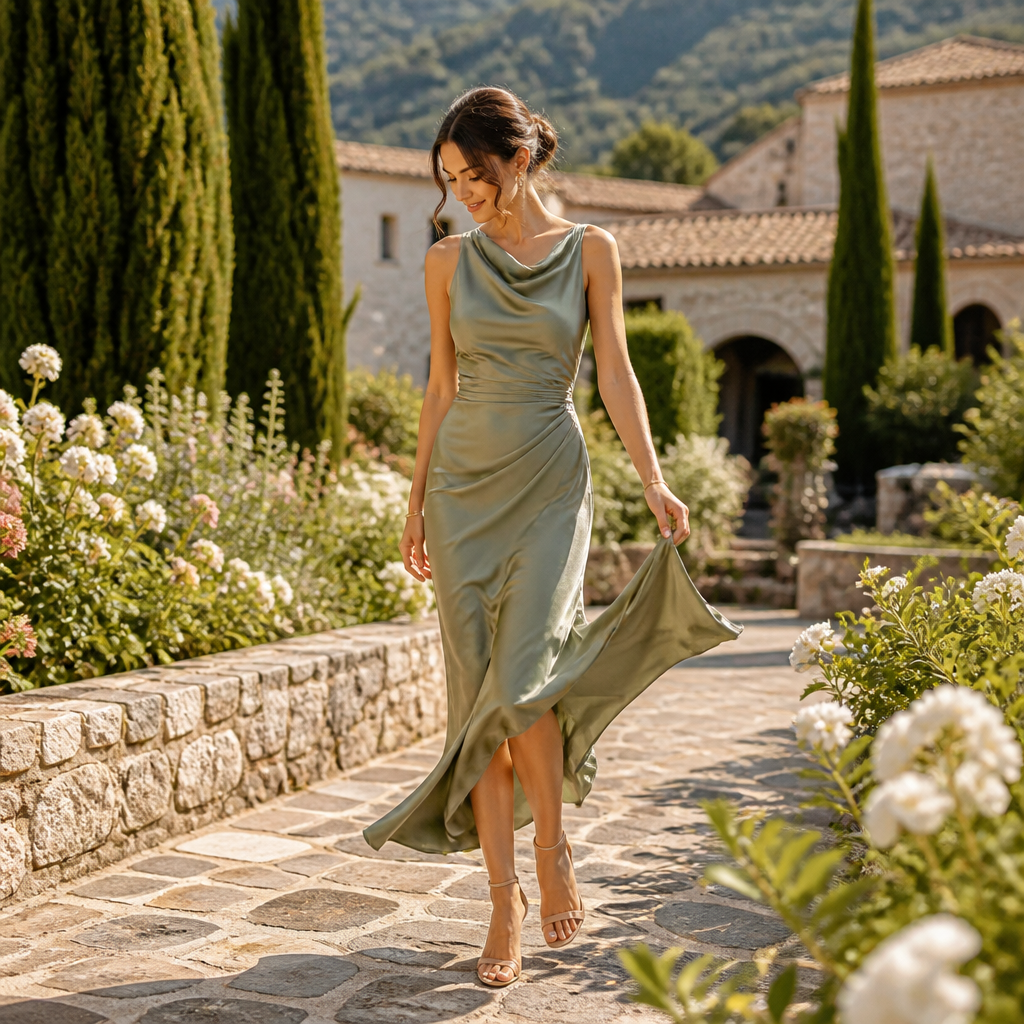
Wedding guest midi dresses have become the default safe choice for good reason. The length flatters a wide range of body types, suits most dress codes without overdressing or underdressing, and allows for easy movement through a ceremony, a reception, and a dance floor.
Maxi dresses lean formal and photograph well at black-tie or destination events with a more polished aesthetic. Mini lengths suit relaxed, daytime celebrations but can feel out of place at a traditional church ceremony or a formal seated dinner.
For guests who want one versatile piece rather than planning a costume change, a midi dress in a fabric that holds its structure through several hours is usually the most practical answer among dresses for wedding guests.
When the wedding itself leans editorial, with a strong visual concept and considered styling, a more tailored or structured silhouette can suit the setting better than something soft and flowing. It’s a similar decision to the ones we make on set for editorial photography projects, where the shape of a garment needs to hold up under direct, considered lighting.
A Photographer’s Perspective: Colors and Patterns That Actually Photograph Well
We generally advise against white, ivory, or head-to-toe black for ceremony photos. White and ivory read as too close to the bride’s dress in most lighting, and solid black can flatten a guest into a silhouette in group shots, particularly outdoors.
Saturated jewel tones and muted pastels tend to render more consistently across both daylight ceremonies and dimly lit indoor receptions. They hold their color in a way that very pale or very dark shades often don’t.
Busy patterns and high-contrast florals can visually compete with the couple in wide shots. Across the destination wedding galleries we’ve produced, the guests who photograph most naturally are usually wearing simpler patterns or solid colors that don’t pull focus.
If the couple has shared a color palette, loosely coordinating is a thoughtful gesture, but matching the bridal party’s exact shades should be avoided. The goal is harmony in the photos, not uniformity.
A Practical Checklist Before You Buy or Book a Fitting
Before committing to a dress, it helps to ask a few direct questions: Is the venue indoor or outdoor? Is there a dance floor? Will the day involve significant walking, standing, or navigating uneven ground?
Comfort across a full day is often underestimated. A dress that looks perfect for twenty minutes in a fitting room needs to also hold up through hours of sitting, dancing, and shifting temperatures between ceremony and reception.
For destination weddings especially, keep a lightweight backup layer or a second pair of shoes on hand. Weather and terrain can change faster than a schedule allows, and having options prevents discomfort from showing on your face in photos.
Finally, it’s worth looking at real coverage rather than styled catalog images. Browsing the destination weddings we’ve filmed and photographed across Italy gives a far more realistic sense of how certain fabrics, colors, and silhouettes actually appear once the day is captured on film.
Show Less