
Choosing a wedding videography studio means weighing style, equipment and editing against a freelance alternative, and here's what to ask before you book.
← Back to Editorial
← Back to Editorial
Choosing a Wedding Videography Studio: Questions to Ask
October 19, 2026
What a Wedding Videography Studio Actually Does
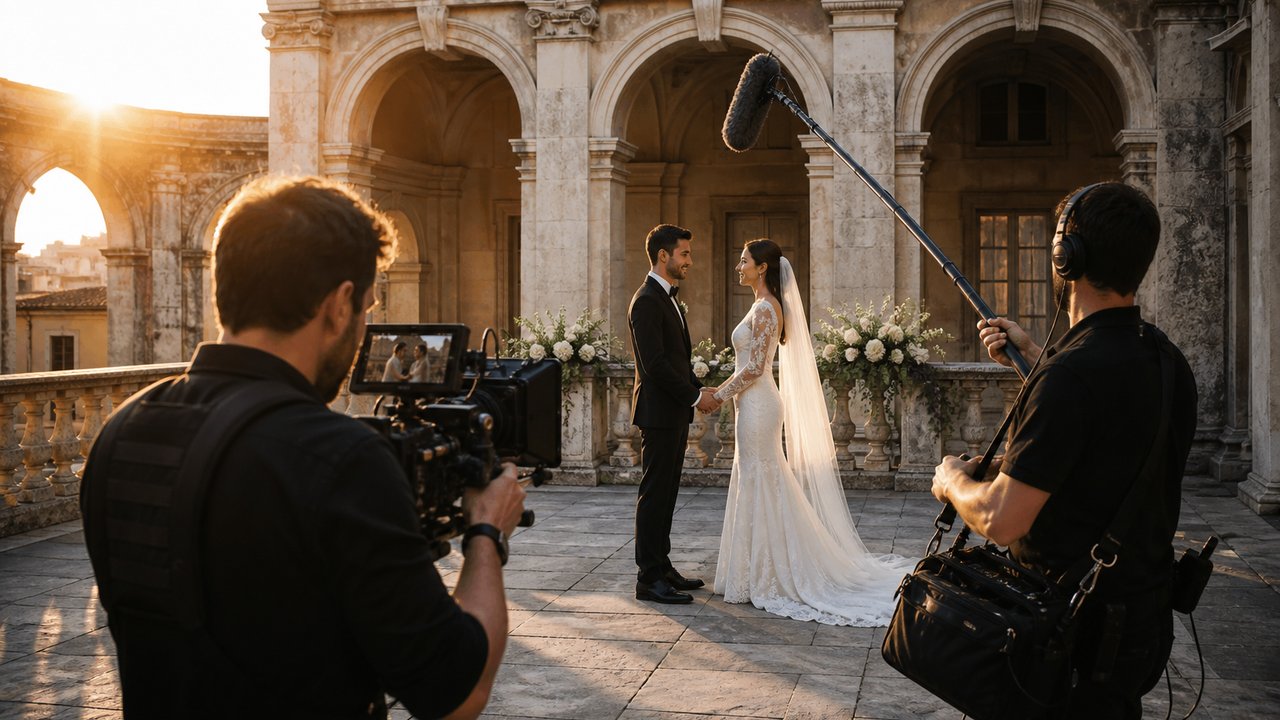
A wedding videography studio is not just someone who shows up with a camera and films the ceremony. The work spans cinematography, sound design, color grading and editing, all treated as one connected process rather than a series of separate tasks handed off between people who never speak to each other. When these pieces are managed under a single creative direction, the final film feels coherent from the first frame to the last.
Many studios, including the ones working across destination weddings in Italy, pair photography and film under a single visual direction. This matters more than couples often realize. Two vendors shooting the same day independently will produce two different color palettes, two different pacing choices and two different interpretations of the same wedding. A single studio overseeing both disciplines keeps the imagery consistent, which is part of why some couples choose to commission photography and film together rather than stitching vendors together themselves.
It also helps to understand the difference between documentary-style videography and a more crafted, narrative-driven cinematography approach. Documentary coverage follows the day as it happens, with minimal direction and a focus on capturing speeches and reactions in sequence. Cinematography leans into composition, lighting and pacing, often shaping the footage into something closer to a short film than a recording of events.
Neither approach is wrong, but they produce very different films. This distinction should shape how you compare studios later, because a portfolio full of documentary coverage will not tell you much about a studio’s ability to deliver a crafted, cinematic narrative, and vice versa.
Wedding Videography Studio vs Freelance Editor: How to Choose
One of the first decisions couples face is whether to book a full studio or hire a freelance wedding video editor to work with footage shot by someone else, perhaps a friend, a second photographer, or even themselves on a phone. Both are legitimate paths, but they suit different situations.
Wedding Videography Studio vs Freelance Wedding Video Editing
| Attribute | Wedding Videography Studio | Freelance Wedding Video Editing |
|---|---|---|
| Scope of work | Filming, sound, editing and direction as one process | Post-production only, working from existing footage |
| Best fit | Multi-day or destination weddings with coordinated coverage | Tight budgets or footage already shot by someone else |
| Crew and backup | Second shooters and backup equipment usually included | Single editor, no on-site presence |
| Style consistency | High, since one creative vision runs through filming and editing | Depends on how well the editor matches the original footage |
| Coordination needed | Higher, with contracts, timelines and crew logistics | Lower, mostly a single point of contact |
| Main risk | Cost and coordination overhead for a full crew | Inconsistent style if hired without a clear brief |
A full studio team makes the most sense for multi-day destination weddings, where coordinated photo and film coverage and a backup crew matter if something goes wrong. A freelance editor is a reasonable choice for post-production touch-ups, tighter budgets, or projects where someone has already filmed the raw material and needs it shaped into a finished piece.
The main risk with a freelancer hired late in the process is a mismatch between the footage’s original style and the editor’s instincts. The main risk with a full studio is the extra coordination it requires, from scheduling to logistics, especially for destination events.
Questions to Ask Before You Book a Studio
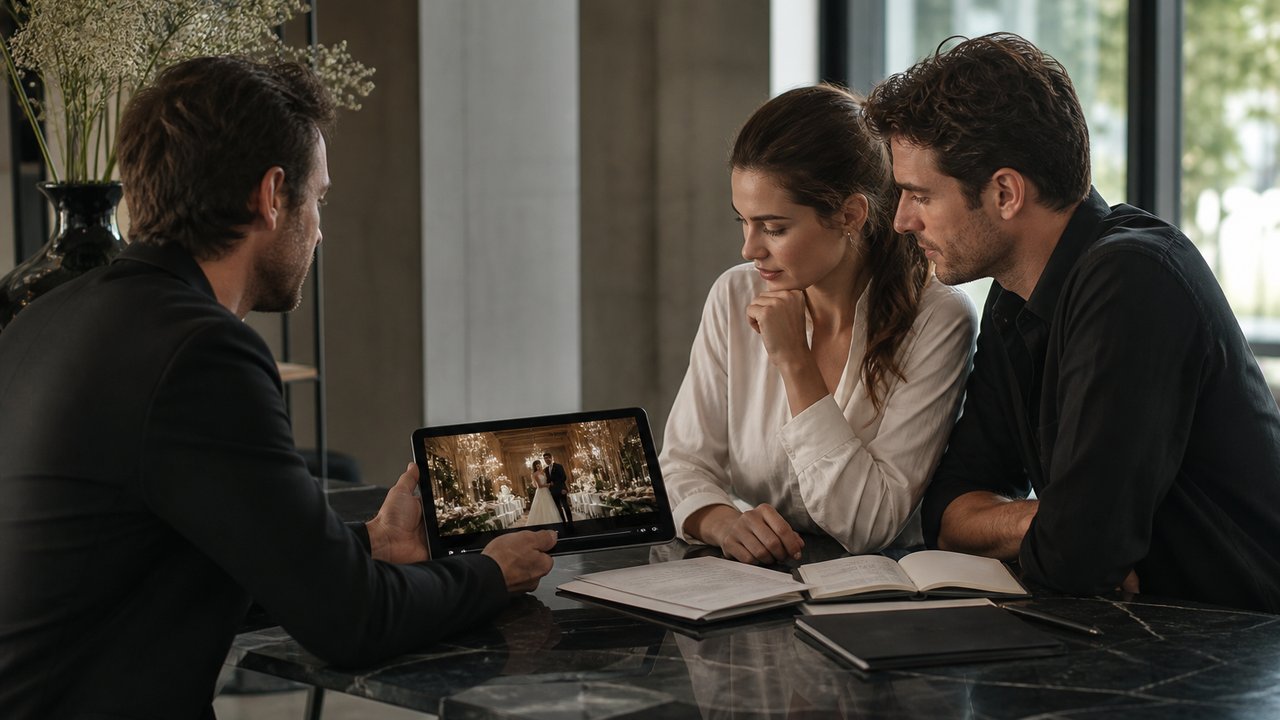
Once you have a shortlist, the consultation stage is where real differences surface. I’d recommend writing these questions down ahead of time. It is easy to get swept up in a tasting of showreels and forget to ask the practical things that matter once the wedding day actually arrives.
Portfolio and Style Questions
Ask to watch complete wedding films, not just highlight trailers. A two-minute reel can make almost any studio look accomplished, because it is built from the best thirty seconds of several weddings. A full-length film reveals pacing, how speeches are handled, and whether the color grading holds up consistently across an entire day rather than just in the best-lit moments.
Equipment and Backup Questions
Ask about second shooters, backup gear, and drone licensing if aerial footage is part of the plan. Also ask directly what happens if the lead filmmaker becomes ill before the date. A studio with a real answer, rather than a vague reassurance, is one that has planned for contingencies rather than hoping nothing goes wrong.
Delivery, Editing and Rights Questions
Ask for a realistic turnaround range rather than an aspirational one, who retains the raw footage after editing, whether revisions are included in the price, and in what resolution the final film will be delivered. These details rarely come up unless you ask, and they are the ones most likely to cause frustration months later if left unclear.
- Can I see three or four full wedding films, not just a highlight reel?
- Who is the backup filmmaker if the primary one cannot attend?
- Is drone footage licensed and insured where required?
- What is the realistic delivery window, and what happens if it slips?
- Do I receive raw footage, only the edited film, or both?
Full-Length Film vs Highlight Montage: Choosing the Deliverable
Beyond choosing who films the wedding, couples need to decide what kind of film they actually want delivered. The two most common formats are a full-length wedding film and a highlight montage, and they serve different purposes.
Full-Length Wedding Film vs Highlight Montage
| Attribute | Full-Length Wedding Film | Highlight Montage |
|---|---|---|
| Typical length | Twenty minutes to over an hour | Two to six minutes |
| Purpose | Preserve the full narrative of the day, speeches included | Share a condensed, high-energy summary |
| Editing complexity | Higher, with full sound mixing and pacing across hours of footage | Lower, focused on peak moments and music timing |
| Best fit | Couples who want a complete record to revisit for decades | Social sharing or a quick keepsake |
| Tools sometimes used | Professional editing software with a colorist involved | Wedding montage video maker apps for simple self-editing |
| Main risk | Can feel long if pacing is not well managed | Loses context and emotional build-up of the day |
Some couples experiment with a wedding montage video maker themselves for a quick personal edit, which is a reasonable option if the goal is simply a fast share for social media. For a more considered result, best video editing for wedding footage is judged on pacing, sound mixing and color consistency, not on filters or flashy transitions, and that level of craft usually comes from an editor with real experience in the format.
There is also a lighter alternative worth knowing about: the photo-to-video hybrid. If you are wondering how to make a wedding photo video, the basic idea is to sequence still images to music with simple transitions, which works well when full filming was not booked but a moving, shareable piece is still wanted from the photography.
Creative Extras: Green Screen and Visual Effects
Green screen wedding video effects come up occasionally, usually for stylized backdrops or a creative intro sequence that places the couple against an invented setting. Used sparingly, this can add a distinct, editorial touch to an otherwise straightforward film.
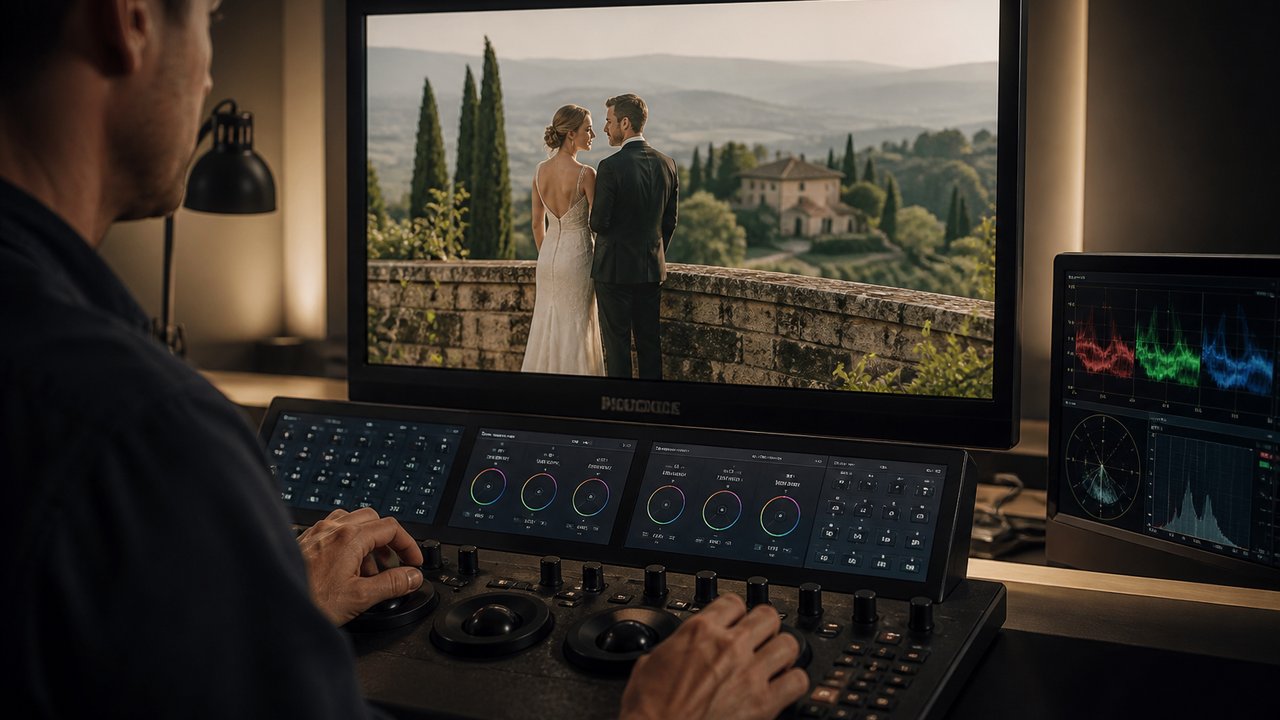
The caution here is straightforward: effects should support the narrative of the film, not substitute for strong cinematography and lighting. A couple standing against a composited skyline for ten seconds is a detail. A whole film leaning on effects to compensate for flat lighting or weak composition is a warning sign.
A studio with a creative direction background, one used to building a visual concept before the camera rolls, is generally better placed to use effects with restraint. A studio that treats green screen as a novelty add-on tends to use it because it is available, not because the story calls for it.
How to Read Reviews and Judge a Studio’s Past Work
Reading a wedding videographer review critically means looking past the enthusiasm and paying attention to the specifics. Comments about communication, responsiveness during planning, and whether the final film arrived within the promised window tell you far more than a five-star rating on its own.
I’d also recommend watching several complete films from a studio’s past weddings rather than relying on a single demo reel. Consistency across multiple projects, different venues, different light conditions, is a better indicator of reliability than one polished example.
Established names such as Shutter & Sound Wedding Videography have built reputations on a consistent, recognizable style over many weddings, which makes them a useful reference point when sizing up less familiar studios. You are not necessarily hiring that name, but studying what consistency looks like at that level gives you a benchmark.
If reviews feel thin or recent, it is reasonable to ask the studio directly for a recent client reference. A studio confident in its work will not hesitate to connect you.
Restoring and Re-Editing Old Wedding Footage
Old wedding video editing is its own category of work, separate from filming a new wedding. It typically involves digitizing VHS or tape formats, stabilizing shaky handheld footage, and correcting faded or shifted color that comes with decades-old film stock.
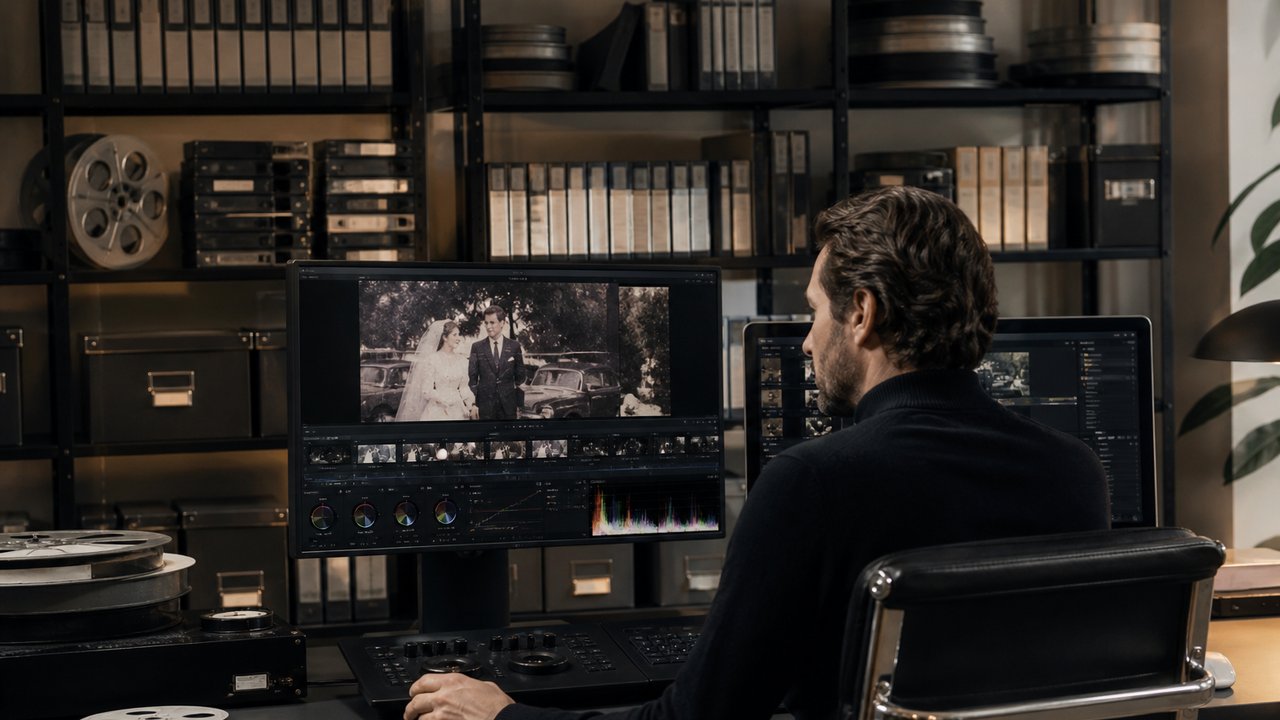
This kind of restoration is more often handled by freelance editors or specialized labs than by full production studios, since it calls for different tools and a different skill set than shooting and editing a current wedding. If this is what you need, look specifically for editors experienced in archival formats rather than assuming a wedding videography studio will offer it as a matter of course.
One request that comes up more often now is blending old footage with a new anniversary film, stitching together grainy clips from decades ago with fresh cinematography shot today. It is a thoughtful way of connecting past and present, though it depends on the quality of the original material surviving well enough to restore.
What Drives the Cost of Wedding Videography
Rather than quoting numbers that vary enormously by market and scope, it is more useful to understand what actually drives the price of a wedding film.
- Hours of coverage: a few hours around the ceremony costs less than full-day coverage from preparation through the reception.
- Number of filmmakers on site: a single operator is priced differently than a team with a second shooter and a dedicated drone operator.
- Equipment used: drone cinematography, specialized lenses or additional lighting all add to the production cost.
- Editing complexity: a full-length narrative film with sound mixing and color grading takes considerably more post-production time than a short highlight edit.
A full-day destination wedding with a coordinated photo and film team is priced differently than a few hours with a single videographer, because the logistics, crew size and editing workload are not comparable. When comparing quotes, look at the deliverables and turnaround time each studio promises rather than comparing day rates alone. Two quotes that look similar on the surface can represent very different amounts of actual work.
This article was powered by RepGet
