

Compare editorial photography vs commercial photography, including their purpose, lighting, creative direction, color grading, licensing, deliverables, advantages, and which approach is right for your project.
← Back to Editorial
 ← Back to Editorial
Editorial photography vs commercial photography, explained
August 23, 2026
Editorial and commercial photography get used interchangeably in pitch decks and Instagram captions, but they describe genuinely different jobs with different lighting choices, color treatments, deliverables, and client expectations. If you are hiring a photographer for a wedding, a bridal campaign, or a brand shoot, understanding the split helps you brief the right person and avoid paying for the wrong style of image.
Quick answer: how editorial photography vs commercial photography options compare
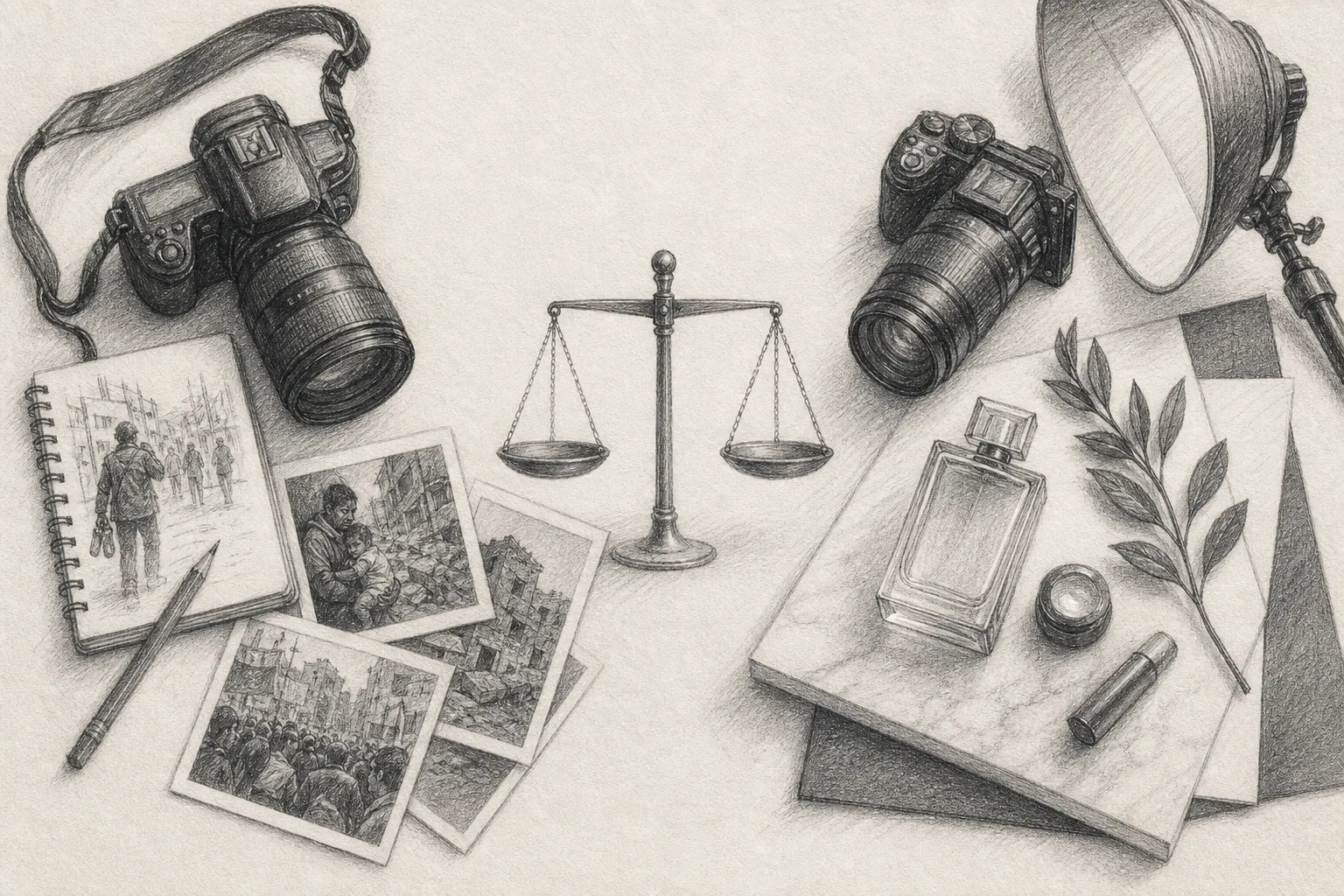
The short version of editorial photography vs commercial photography is that editorial work tells a story and leans on mood, while commercial work sells a product or service and leans on clarity. The editorial meaning in photography is rooted in magazine and publication traditions, where images support a narrative rather than a sales message. Commercial photography exists to make a product, venue, or service look desirable to a buyer, with lighting and composition built around that goal.
Fashion editorial photographers often work with more creative freedom, using natural or moody lighting, unconventional angles, and color grading that favors atmosphere over accuracy. Commercial photographers usually work under tighter briefs, matching brand guidelines, true-to-life color, and consistent lighting across a shoot. Neither approach is “better,” they simply solve different problems, and the right choice depends on what the images need to do once delivered.
Editorial photography vs commercial photography compared at a glance
| Criteria | Editorial photography | Commercial photography |
|---|---|---|
| Best fit | Storytelling projects, magazine-style features, bridal editorials | Advertising, product shoots, brand campaigns |
| Ideal use case | Building a mood or narrative around a subject | Showcasing a product or service clearly for a buyer |
| Main strength | Creative freedom, atmosphere, distinctive visual voice | Consistency, brand alignment, repeatable results |
| Key tradeoff | Less predictable output, more artistic interpretation | Less room for experimentation, tighter creative brief |
This table is a starting point, not a rulebook. Many projects, including weddings, borrow from both approaches depending on which images are being captured and how they will be used.
Compare editorial photography vs commercial photography by the criteria that matter
Buzzwords aside, the practical differences between editorial photography vs commercial photography show up in a handful of consistent places: who the work is for, how it is lit and graded, and what gets delivered at the end.
Fit and use case
Editorial photography fits projects where the goal is a story, not a sale. A bridal editorial shot for a magazine feature or a couple’s personal archive uses editorial meaning in photography in its truest sense: images that build a narrative around the day, the dress, the setting, without needing to promote a specific product.
Commercial photography fits projects with a clear promotional goal. A venue wanting marketing images, a bridal boutique needing catalog shots, or a brand wanting content for paid ads all sit in commercial territory. Fashion editorial photographers may still be involved in commercial shoots, but their brief shifts from “tell a story” to “make this product look good and on-brand.”
For couples exploring wedding photography options, this distinction matters because editorial-style wedding imagery and commercial-style venue photography often come from the same photographer but require different conversations about mood, pacing, and final use.
Value and tradeoffs
The value of editorial photography vs commercial photography depends on what you need the images to do. Editorial work tends to offer more creative latitude and a distinctive visual voice, which is valuable when you want images that feel personal or artistic rather than polished for a catalog. The tradeoff is less predictability. A fashion editorial photographer working with dramatic light and unconventional framing will produce striking images, but the exact look is harder to specify in advance.
Commercial photography trades some of that creative freedom for consistency. Brand guidelines, accurate color, and repeatable lighting setups mean a client can expect a dependable outcome across many images, which matters for catalogs, websites, and ad campaigns. The tradeoff here is that heavily art-directed commercial work can feel less spontaneous and more controlled than editorial storytelling.
Bridal clients weighing editorial wedding imagery against more standard coverage should think about whether they want an artistic narrative or dependable, brand-consistent documentation of the day.
Limitations and deal-breakers
Editorial photography becomes a poor fit when a client needs strict brand consistency, accurate product representation, or predictable turnaround for commercial use. If a boutique needs product shots that match their existing catalog exactly, an editorial approach’s mood-driven lighting and grading can work against that goal. Price and value for editorial photography vs commercial photography also shift here, since editorial work is priced around creative vision, not standardized deliverables.
Commercial photography hits its limits when the goal is genuinely artistic or narrative-driven. A rigid, brand-safe lighting setup can flatten the emotional impact that fashion editorial photographers are trained to create. If a couple wants images that feel like a magazine spread rather than a polished brochure, a purely commercial approach will fall short of that vision.
Decision rule for editorial photography vs commercial photography
Choosing between editorial photography vs commercial photography comes down to one question: are you telling a story or selling something? If the priority is mood, narrative, and a distinctive visual voice, lean editorial, and expect more creative interpretation in the final images. If the priority is consistency, brand alignment, and images that clearly showcase a product or service, lean commercial.
For weddings and bridal work specifically, many couples want a blend: editorial-style images for their personal album and social sharing, paired with cleaner, more commercial-style shots for vendors or press features. Reviewing a photographer’s portfolio of campaign and bridal work before booking helps confirm whether their default style matches the story-first or sell-first approach you actually need.
FAQ about editorial photography vs commercial photography
What is the difference between editorial use and commercial use?
Editorial use means images support a story or news context without promoting a product, while commercial use means images are used to advertise or sell something. The distinction affects licensing, model releases, and how the images can be published.
What counts as editorial photography?
Editorial photography includes images made for magazines, feature stories, or narrative-driven projects like bridal editorials, where the goal is storytelling rather than direct promotion. Fashion editorial photographers often shoot this kind of work for publications.
What’s the difference between editorial and commercial photography?
Editorial photography prioritizes narrative and mood, often with more creative freedom in lighting and grading, while commercial photography prioritizes clarity, brand consistency, and selling a product or service.
Can you give me an example of editorial photography?
A magazine-style bridal feature that documents a wedding through a storytelling lens, rather than a straightforward product or venue shoot, is a common example of editorial photography.
How much money do editorial photographers make?
Earnings vary widely by market, experience, and whether the photographer also takes commercial work, so there is no single reliable figure to cite here.
Who are some famous editorial photographers?
Editorial photography has a long history tied to major fashion and lifestyle publications, though naming specific individuals is outside the scope of a general comparison like this one.
What should readers know first about editorial photography vs commercial photography?
Start by identifying whether your priority is storytelling or selling, since that single distinction shapes lighting, color grading, and deliverable format more than any other factor.
How do you choose the right editorial photography vs commercial photography approach?
Match the approach to your end use: choose editorial for narrative-driven personal or publication work, and commercial for brand-consistent marketing or product imagery.
Recommended next steps
Before booking a photographer, decide whether your project needs a storytelling approach, a sell-focused approach, or a blend of both, then ask to see examples that match that specific goal. Reviewing a studio’s commercial and editorial project work side by side is one of the most practical ways to confirm their range actually covers what your project requires.
Related
- Film and production company: is there actually a difference
- Production of a film, from the first brief to final delivery
About the author
Image Studio
Films. Photographs. Stories
Creative filmmaking studio, photography and director focused on cinematic storytelling and editorial visual aesthetics. With more than 14 years of experience, our work combines film production, fashion-inspired direction and emotional storytelling across weddings, commercials, music videos and digital campaigns. Through Image Studio, we collaborate with brands, artists and private clients across Italy and worldwide.
Wedding color gradingReels and short-form video editsWedding PhotographyWedding FilmmakerCinema LevelProducerDirectorFilm Production
