

Discover the benefits of cinematic video for global brands, from emotional storytelling and premium positioning to stronger engagement, full-funnel marketing performance, and long-term brand equity that drives measurable business results.
← Back to Editorial
← Back to Editorial
Why Global Brands Use Cinematic Video to Win
July 14, 2026
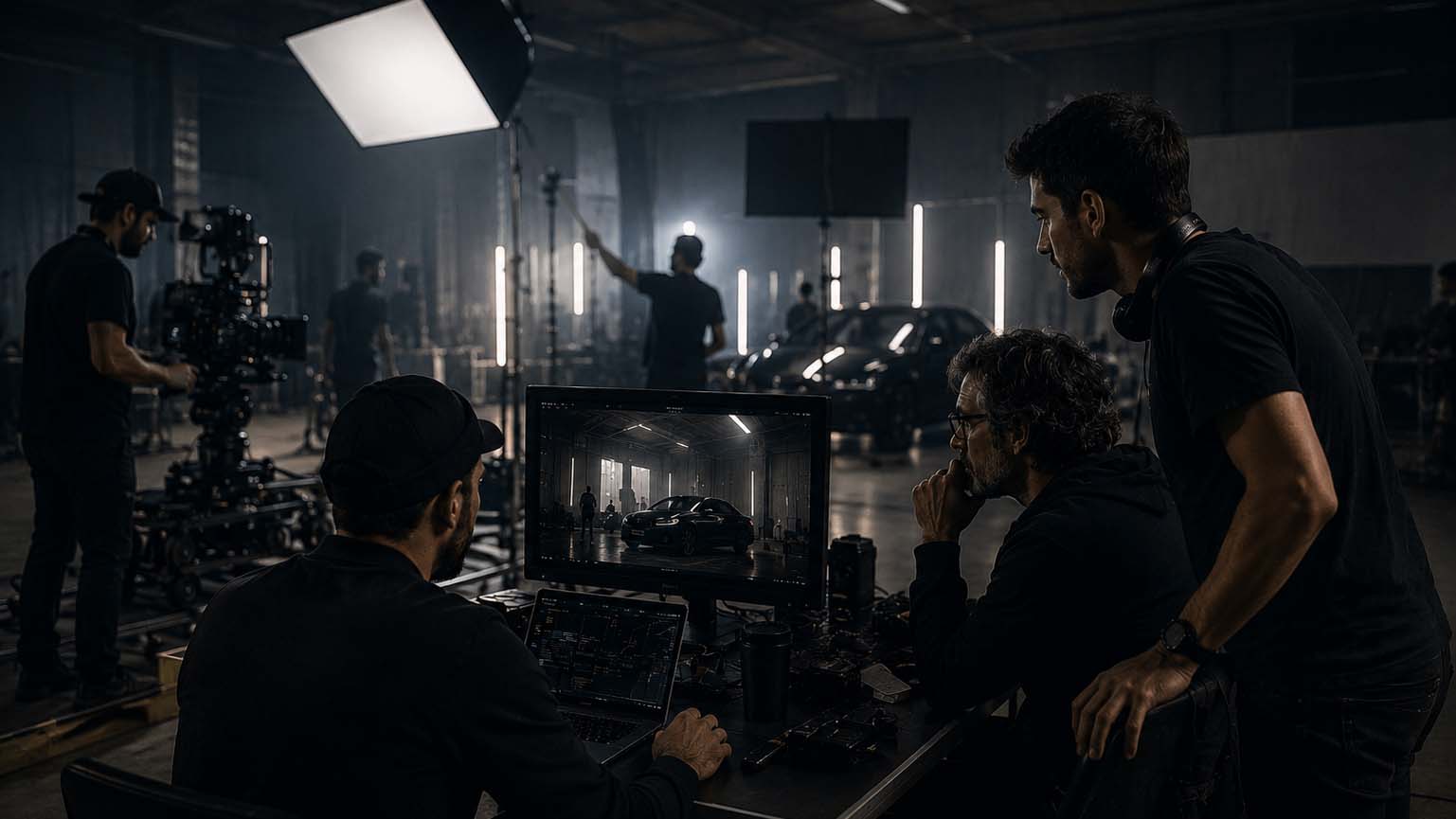
Cinematic video is defined as high-production visual storytelling that uses film-grade composition, lighting, and narrative structure to create emotional impact at scale. Global brands use cinematic video because it builds emotional trust, creates a distinct visual identity, and drives measurable results that static ads and short-form content simply cannot match. YouTube ads deliver 23% higher ROI than social media and 109% higher than linear TV. Those numbers explain why brands like Coach and Unilever have made cinematic storytelling the foundation of their global video strategy, not an occasional creative experiment.
Why global brands use cinematic video: the core benefits
Cinematic video works because it triggers emotion before it delivers information. Neuroscience confirms that emotional responses drive purchase decisions more reliably than rational arguments. A well-crafted brand film does not just show a product. It makes the viewer feel something about the brand, and that feeling sticks long after the ad ends.
The benefits of cinematic video for global brands include:
- Emotional resonance. Film-grade storytelling creates empathy and aspiration that static images cannot replicate. Viewers remember how a brand made them feel, not the product specs they were shown.
- Premium brand positioning. High production value signals quality. When a brand invests in cinematic craft, audiences perceive the brand itself as premium, regardless of price point.
- Trust and credibility. Cinematic video builds brand trust more effectively than direct-response ads because it prioritizes the viewer’s experience over the brand’s immediate sales goal.
- Cultural capture. Brands that align cinematic campaigns with cultural moments, the way Unilever used YouTube Mastheads alongside creator partnerships during high-impact cultural events, generate brand desire at a scale that no single paid placement can achieve alone.
- Asset longevity. Brand films remain effective for many months. Traditional performance clips and UGC decay rapidly in frequency and impact, while a cinematic film continues to earn attention.
Pro Tip: Brief your cinematic video around a single emotional truth, not a list of product features. The feeling you want viewers to carry out of the film is the brief.
The importance of video in branding comes down to one reality: audiences are flooded with content. Cinematic quality is the filter that makes a brand worth watching.
How do global brands integrate cinematic video into their marketing funnels?
The most effective brands treat cinematic video as the top of a creative stack, not a standalone asset. The film anchors the funnel emotionally. Everything below it, UGC, testimonials, performance clips, and retargeting ads, borrows credibility from that emotional foundation.
Here is how leading brands structure that integration:
- Produce the cinematic anchor. A 60-to-90-second brand film establishes the emotional world of the campaign. This is the asset that defines tone, color, and narrative for everything downstream.
- Cut performance derivatives. Pull 15-second and 6-second versions from the cinematic master. These shorter cuts carry the emotional memory of the full film into paid placements.
- Layer in UGC and creator content. Cinematic storytelling paired with creator content compounds trust. Creators give the brand cultural credibility; the film gives the campaign visual authority.
- Activate AI-powered optimization. Brands using AI-driven video ad tools see 17% higher ROAS compared to standard placements. AI identifies which creative variants resonate with specific audience segments and allocates budget accordingly.
- Invest in paid distribution. A cinematic film sitting passively on an owned channel delivers almost nothing. Paid amplification and ecosystem coordination are what turn a great film into a growth asset.
Coach’s 29% top-line growth, driven in part by YouTube video anchoring, is a direct example of this full-funnel approach working at scale. The brand did not simply run ads. It built a cinematic ecosystem.
Pro Tip: Plan your distribution budget before you finalize your production budget. A $200,000 film with a $10,000 media buy will underperform a $50,000 film with a $150,000 paid amplification plan every time.
AI-enhanced video production is accelerating this model. Brands can now test multiple cinematic variants at speed, identify the highest-performing emotional hooks, and scale those hooks across markets without rebuilding creative from scratch.
What are common pitfalls in cinematic video production for brands?
The most common mistake is writing a direct-response brief for a cinematic film. Effective cinematic briefs focus on emotional architecture, the feeling the viewer should carry out of the film, not the features the brand wants to communicate. When a brief lists product specs, price points, and calls to action, the resulting film feels like a long commercial. It loses the emotional authority that makes cinematic storytelling worth the investment.
Other pitfalls brand strategists consistently encounter include:
- Visual inconsistency. A cinematic film that does not align with packaging, product photography, and social assets creates cognitive dissonance. Brands that coordinate visual identity across all touchpoints see measurable uplift in brand cohesion, and a 31% increase in customer unboxing videos that match the film’s visual tone.
- Treating the film as a one-off. A single brand film is a starting point, not a complete strategy. Building a planned narrative arc across multiple films compounds storytelling impact significantly. Each film deepens the audience’s relationship with the brand world.
- Ignoring distribution from the start. Production teams and media teams often work in silos. When distribution is not planned alongside production, the film is optimized for the wrong formats and lengths.
The brands that get cinematic video right treat the brief, the production, and the distribution as one connected process. Separating them is where campaigns fall apart.
How does cinematic video perform compared to other advertising formats?
The performance data for cinematic and high-production video is clear. Cinematic videos generate 3.2x more qualified leads than static ads, hold viewer attention 48% longer, and deliver a 28% lower cost-per-lead. Those are not marginal gains. They represent a fundamentally different level of campaign effectiveness.
| Format | Qualified leads vs. static | Engagement duration | Cost-per-lead |
|---|---|---|---|
| Cinematic video | 3.2x higher | 48% longer | 28% lower |
| Standard social video | Moderate lift | Average | Average |
| Static display ads | Baseline | Shortest | Highest |
| Linear TV | Brand recall lift | Passive | High CPM |
Digital video drives both short-term conversion and long-term brand loyalty, with a single exposure generating an estimated 1%–5% long-term brand spend increase. That rivals the brand-building effect of traditional television, at a fraction of the cost and with far better targeting.
“Brands that underinvest in video for brand building are leaving a significant opportunity gap on the table. Digital video is no longer a supplementary channel. It is the primary vehicle for building lasting brand equity at scale.”
The impact of video marketing on platform algorithms also compounds these gains. Platforms reward content that holds attention, and cinematic video consistently outperforms other formats on watch time and completion rate. That organic amplification adds reach on top of paid performance.
Key Takeaways
Cinematic video is the most effective format for global brands because it combines emotional storytelling, superior engagement metrics, and long-term brand equity that no other advertising format currently matches.
| Point | Details |
|---|---|
| Cinematic video outperforms static ads | It generates 3.2x more qualified leads and holds attention 48% longer than static formats. |
| Full-funnel integration is required | Brand films work best as emotional anchors feeding performance derivatives and UGC downstream. |
| Distribution must be planned upfront | Paid amplification determines a film’s reach; production quality alone does not drive growth. |
| Emotional briefs outperform feature briefs | Briefs focused on feeling and narrative arc produce films that build genuine brand affinity. |
| Visual consistency multiplies impact | Aligning film tone with packaging and social assets drives organic UGC and brand cohesion. |
What I’ve learned about cinematic video after years in the field
The conversation around cinematic video often gets stuck on production quality. Brand strategists debate budgets, directors, and equipment. What actually determines whether a brand film works is something harder to quantify: cultural relevance.
Unilever’s decision to align campaigns with cultural windows, rather than running evergreen content year-round, reflects a truth that most brands resist. Audiences do not engage with brands on a brand’s schedule. They engage when a brand shows up inside a moment that already matters to them. Cinematic video is the format that earns that kind of attention, because it respects the viewer enough to tell a real story.
The other thing I have seen consistently is that brands treat their first cinematic film as a test. They produce one film, measure it against short-term ROAS, and conclude that cinematic storytelling is expensive and slow. That framing misses the point entirely. A single film is not a campaign. A narrative arc across three or four films, each deepening the brand world, is where compound storytelling impact actually shows up. The brands winning with cinematic brand storytelling are the ones playing a long game, not optimizing for the next 30 days.
The future of this format sits at the intersection of cinematic craft and AI-driven optimization. Brands that combine genuine emotional storytelling with data-driven distribution will have a significant and durable advantage over those treating video as a commodity.
— Image Studio
Imagestudio’s cinematic production services for global brands
Imagestudio brings over 14 years of high-end film production experience to brands that need more than a video. With 250+ projects and over 150 million views, the studio has built a track record of cinematic work that earns attention and drives results.
Imagestudio’s cinematic brand film production integrates advanced production techniques with AI-powered content creation, giving marketing teams the creative depth of a world-class film studio and the scalability modern campaigns demand. From National Geographic collaborations to award-winning festival films, Imagestudio produces work that functions as a long-term brand asset, not a disposable ad. If your brand is ready to build a cinematic video strategy that performs across the full funnel, Imagestudio is the production partner built for that work.
FAQ
What is cinematic video in brand marketing?
Cinematic video in brand marketing is high-production visual storytelling that uses film-grade techniques, including professional lighting, composition, and narrative structure, to create emotional impact and build brand identity at scale.
Why do global brands choose cinematic over standard video ads?
Cinematic video generates 3.2x more qualified leads and holds viewer attention 48% longer than static ads, while also building long-term brand equity that standard performance ads cannot replicate.
How does cinematic video fit into a full-funnel marketing strategy?
Cinematic brand films serve as emotional anchors at the top of the funnel, with shorter performance derivatives, UGC, and retargeting ads drawing on the film’s emotional authority to convert audiences downstream.
What ROI can brands expect from cinematic video on YouTube?
YouTube video ads deliver 23% higher ROI than social media placements and 109% higher than linear TV, with brands using AI-powered video ad tools seeing an additional 17% improvement in ROAS.
How long does a cinematic brand film remain effective?
Cinematic brand films remain effective for many months after launch, significantly outlasting the rapid frequency decay of standard UGC and performance clips, making them a durable long-term brand asset.
