Learn why hiring a local Italy production partner reduces permitting delays, labor costs, and production risks. Discover how experienced local teams manage film permits, location scouting, union-compliant crew, insurance, VAT recovery, and regional logistics to keep commercial, cinematic, and photography productions on schedule and on budget.
Hiring photographers and production partners with on-the-ground Italian knowledge materially reduces permitting delays, labor risk, and location costs. A shoot at a Ministero della Cultura (MIC) heritage site without pre-clearance can stall for weeks. The Roma Capitale Cinema Office processes permits on its own timeline, and regional film commissions across Campania, Tuscany, and Sicily each operate differently. Knowing which office to call first is the difference between a compressed pre-production and a blown schedule.
Immediate actions to protect your schedule and budget:
Pre-clear heritage sites with MIC before finalizing your shot list
Engage the relevant regional film commission early — they can facilitate approvals and unlock grants
Initiate insurance binding at least four weeks out; documentation requirements can add unexpected weeks
Build two contingency days per shoot week into your calendar for permit and weather variables
Pro Tip:The single highest-leverage early hire is a fixer who also scouts. They compress permit lead-times, flag union exposure before contracts are signed, and often deliver multiples of their fee in avoided delays.
Table of Contents
How Italian crew costs and union rules affect your budget
When is the best time to scout and shoot in Italy?
What non-EU crews need to know about insurance and work authorization
How local conditions reshape your production timeline and budget
Why language and cultural protocols change what gets approved
Legal risks every commercial shoot in Italy must address
How VAT recovery works for foreign productions in Italy
How to plan around Italian labor strikes and political events
Real production risks that local expertise prevents
Pre-production checklist for integrating local photographers
What to look for when choosing a local production partner
Imagestudio brings 14+ years of Italy production experience to your shoot
Key Takeaways
The case for local knowledge, from the ground up
Useful sources for deeper research and operational follow-up
How Italian crew costs and union rules affect your budget
Italian freelance crew combines base pay with significant social charges, union-mandated shift rules, and overtime rates. Standard shifts have defined lengths with mandatory lunch breaks; exceeding them triggers overtime at premium rates. Night-work premiums apply from a set hour and can add meaningfully to daily crew costs, especially when MIC-imposed early-morning shooting windows push call times before dawn. Heritage-site restrictions commonly require early-hour shoots, which raises labor premiums and reduces daily shooting productivity. A local production manager who knows these rules can structure call sheets to minimize exposure before a single frame is shot.
When is the best time to scout and shoot in Italy?
Shoulder seasons — April through May and September through October — offer the most favorable combination of soft light, manageable tourist crowds, and cooperative weather. Peak summer concentrates visitors at every iconic location, making crowd-control permits harder to secure and background clearance nearly impossible without early-morning slots. A local photographer or scout knows which Venetian canal or Sicilian coastal road empties by 6 AM and which Roman piazza never does. Seasonal lighting windows matter too: the golden hour in Tuscany in late September lasts longer and sits lower than in July, which changes lens choices and location priorities entirely.
What non-EU crews need to know about insurance and work authorization
Non-EU crew members need work authorization before arrival, and the process is not uniform across roles. Directors, photographers, and key creatives typically require different documentation than support crew. Italian production insurance brokers are often a critical-path item; specific documentation or medical examinations can add weeks to binding a policy. Starting the insurance process four to six weeks before principal photography is the safe minimum. A local partner who has existing broker relationships can compress that timeline considerably.
How local conditions reshape your production timeline and budget
Permit lead times vary widely by region and site type, with MIC approvals being the biggest variable and commonly adding multiple weeks. Sequential permitting — waiting for one approval before submitting the next — is the most common budget leak on Italy shoots. Parallel workstreams, run by someone who knows which offices accept simultaneous submissions, can cut calendar time significantly. Per diems, accommodation, and fixer day-rates also vary by city; choosing a region without an active film commission routinely adds costs through longer permit timelines and extra scouting days.
Why language and cultural protocols change what gets approved
Most professional Italian crew speak working English, but permit officers, property owners, and municipal liaisons often do not. A fixer who communicates in Italian and understands the unwritten protocols — when to follow up, when to wait, how formal to be with a Soprintendenza official — moves applications forward where a foreign production manager stalls. Regional film commissions are government-backed and tourism-focused; they respond to relationships, not just paperwork. Early, respectful engagement often unlocks procedural shortcuts that no amount of documentation can substitute.
Legal risks every commercial shoot in Italy must address
Commercial photography in Italy carries specific image-rights obligations. Recognizable individuals captured in commercial content require written release forms compliant with Italian civil law. Architectural works by living architects may also require clearance. GDPR applies to any personal data collected on set, including model releases stored digitally. A local legal advisor or production partner familiar with Italian privacy law can structure your release workflow before the shoot, not after a complaint arrives.
How VAT recovery works for foreign productions in Italy
Foreign productions operating in Italy pay Italian VAT (IVA) on local services and equipment rentals. EU-based companies can reclaim IVA through the standard EU VAT refund mechanism. Non-EU productions, including US-based companies, can recover IVA under Italy’s reciprocal refund provisions, though the process requires proper invoicing, a local fiscal representative in some cases, and timely filing. A local accountant or production service company familiar with the process prevents invoicing errors that make recovery impossible after the fact.
How to plan around Italian labor strikes and political events
Italy’s labor landscape includes periodic strikes across transport, public services, and occasionally film industry unions. A local partner monitors union bulletins and can flag risk windows during pre-production. Political events — state visits, national holidays, major sporting finals — can close public spaces with little notice. Building a location backup list with your scout, rather than relying on a single hero location, is the most practical mitigation. Contingency days and a flexible call-sheet structure give you room to pivot without rescheduling the entire shoot.
Real production risks that local expertise prevents
A fashion campaign shot at a MIC-protected palazzo without the correct permit category was halted mid-day and required a full reshoot at an alternative location — a cost that dwarfed the original permit fee. On a separate commercial shoot, an international crew arrived without night-work clauses in their local crew contracts; the overtime bill for a single evening exterior session exceeded the entire fixer budget for the project. These are not edge cases. They are the predictable result of skipping local expertise, and they appear consistently across productions that treat Italy as a generic European location rather than a jurisdiction with its own rules.
Pre-production checklist for integrating local photographers
Week 1: Hire a local fixer or production service company; confirm regional film commission contact
Week 2: Submit location scouting brief; identify MIC-protected sites and flag for parallel permit submission
Week 3: Initiate insurance binding; confirm crew contracts include union-compliant shift and overtime language
Week 4: Finalize permit applications; confirm work authorizations for non-EU crew
Week 5: Lock call sheet structure around permit windows and early-morning slots; build backup location list
Week 6: Confirm VAT invoicing structure with local accountant; brief all crew on GDPR and image-release workflow
What to look for when choosing a local production partner
The right partner has verifiable permit experience across multiple Italian regions, not just one city. Ask for a list of MIC-approved shoots they have managed and the permit timelines achieved. Union compliance is non-negotiable: confirm they structure crew contracts with correct shift lengths, overtime clauses, and night-work premiums. Check that they have existing relationships with at least one regional film commission and one local insurance broker. Portfolio credits from internationally recognized clients signal that they operate at the standard international brands require. Finally, ask how they handle contingency: a partner with no backup location list and no strike-monitoring process is not production-ready.
Imagestudio brings 14+ years of Italy production experience to your shoot
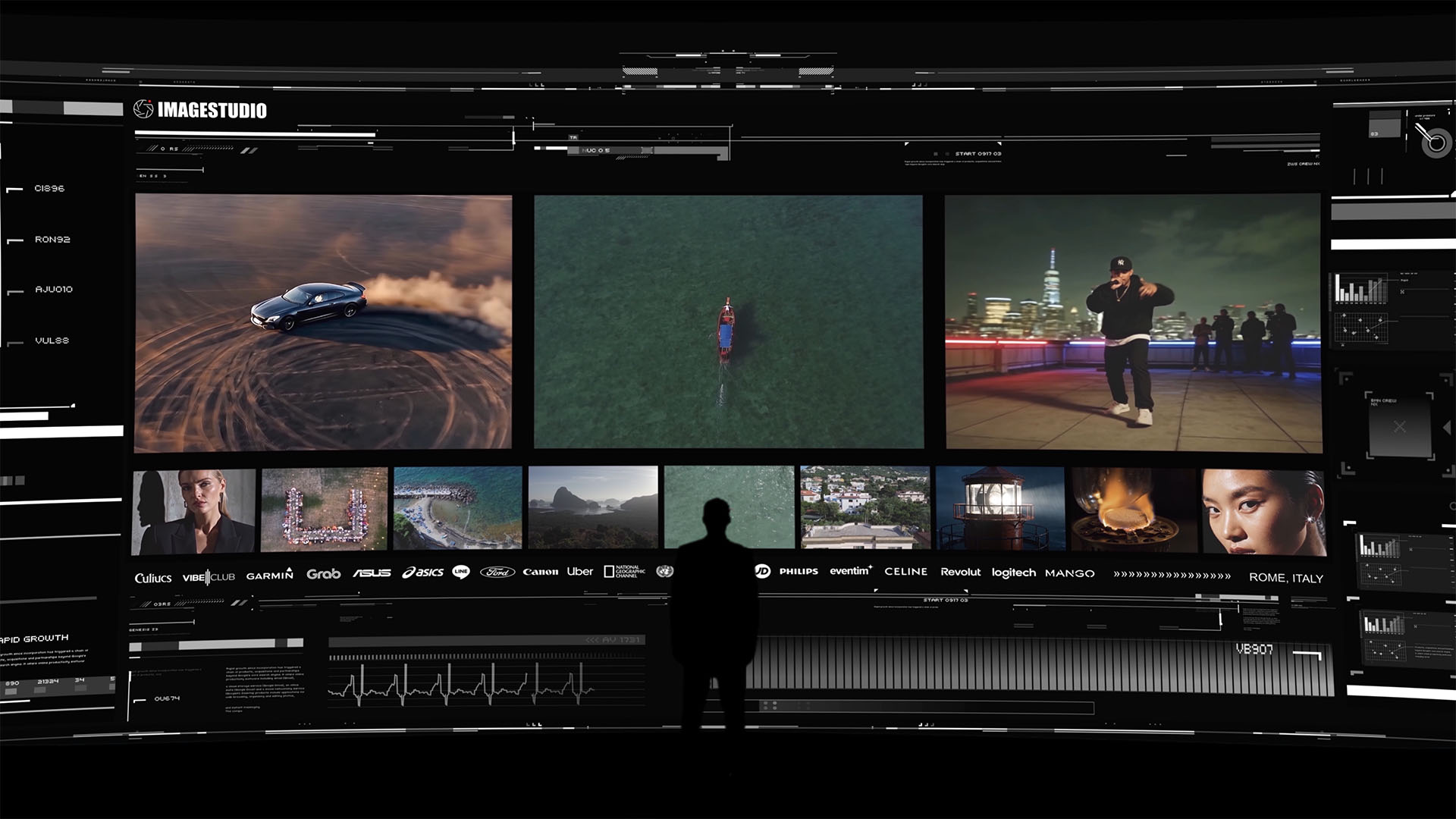
Imagestudio’s cinematic production team handles the full operational stack for high-end shoots in Italy: permit submission across MIC and regional offices, union-aware local crew contracts, fixer services, location liaison, equipment rental coordination, and insurance and tax paperwork support. With 250+ completed projects, credits including National Geographic, and awards from prestigious film festivals, Imagestudio delivers compressed timelines and fewer permit rejections on shoots where the stakes are high.
A high-end cinematic portfolio experience by Image Studio featuring automotive visuals, aerial cinematography, urban storytelling, and premium brand collaborations.
The concrete ROI shows up in permit lead-time compression, avoided crew overtime and holiday premiums, and insurance coverage that is complete before principal photography begins. When you request a proposal, ask for: fixed costs by phase, contingency allowance, permit handling scope, and the insurance broker contact. To start, book an initial scoping call and request a sample location packet and pre-production audit from the Imagestudio team.
Key Takeaways
Local photographer and production knowledge in Italy reduces permitting delays, labor cost overruns, and location rejection risk across every phase of a commercial or cinematic shoot.
Point
Details
Permit lead times vary widely
MIC heritage approvals are the biggest variable; parallel workstreams compress calendar time.
Union rules drive crew costs
Shift lengths, overtime, and night-work premiums require union-aware contracts before shoot day.
Insurance is a critical-path item
Binding a policy can take four to six weeks; start before locations are confirmed.
Regional commissions unlock access
Early engagement with film commissions speeds approvals and can unlock grants and introductions.
Imagestudio as Italy partner
14+ years, 250+ projects, and National Geographic credits back a full-service Italy production offering.
The case for local knowledge, from the ground up
The most expensive mistake a production manager makes in Italy is treating local knowledge as optional. The permit system, the union structure, and the cultural protocols around public spaces are not obstacles — they are the operating environment. Productions that engage a local partner before scouting, not after a problem surfaces, consistently come in closer to schedule and budget. Imagestudio’s 14+ years and 250+ projects across Italy reflect exactly that approach: local expertise built into every phase, from the first location brief to the final VAT filing. For brands and agencies planning their next Italy shoot, the practical next step is requesting a pre-production audit and sample location packet directly from the Imagestudio team.
Useful sources for deeper research and operational follow-up
Ministero della Cultura (MIC) — Filming Permits Portal: The primary source for heritage-site permit categories, required documentation, and processing timelines. Send this to your line producer at the start of pre-production.
Regional Film Commissions Network (Italy): Each commission publishes facilitation services, grant criteria, and local-spend requirements. Request the checklist for your target region before finalizing your location list.
Roma Capitale Cinema Office: Covers permits for shoots within Rome’s municipal boundaries, including piazzas, streets, and public monuments. Processing timelines differ from MIC; confirm both if your shoot overlaps.
Italy Film Location Scouting — Permits and Regional Costs Reference: A practical industry reference covering permit lead-times by region, fixer cost ranges, and crew cost structure including union mandates and night-work premiums. Useful for building your contingency budget.
Production Service Network — Shoot in Italy FAQs: Covers crew language capabilities, department strengths, and practical logistics for international productions. A good briefing document for agency clients new to Italy shoots. For productions also planning long-term discoverability of their Italy work, photographer SEO services can extend the reach of location-specific content beyond the shoot itself.