20 Hotel Photography Ideas That Book More Rooms, With Exact Shot Rules
September 14, 2026
Discover more than 20 hotel photography ideas for rooms, suites, pools, restaurants, spas, exteriors, lifestyle scenes, and aerial shots, with practical guidance on lighting, composition, lenses, styling, and shot planning.
Shoot the hero wide angle first, follow it with three to five supporting frames per room, add one detail close-up, then close with a single lifestyle shot that gives the space a human pulse. That mix, repeated with discipline across every room type and public area, is what separates a gallery that converts from one that just documents square footage. Below are more than 20 specific ideas, paired with the technical rules that make each one work.
TL;DR:
Most hotel galleries lack human context images that help guests envision themselves in the space, which is more impactful than pure architectural shots.
Shooting should follow a disciplined sequence starting with exteriors and dusk shots, then moving to public spaces, guest rooms, and details based on natural light and schedule flexibility.
Equipment choices, like a 16 to 24mm lens and a level tripod, are critical; avoiding wider lenses prevents distortions that shrink or warp small rooms.
Seasonal styling of key spaces, using consistent framing and only changing decor and lighting, extends the relevance of images without frequent reshoots.
Hiring a professional studio is often necessary for large or complex properties to ensure consistency, manage lighting, and handle multiple locations efficiently.
Imagestudio
imagestudio.com
Make Your Hotel Story Cinematic
Image Studio creates high-end photography and film for brands seeking engaging, impactful visual storytelling that resonates with audiences.
Hotel Photography Ideas For Every Corner Of The Property
Think of this as a working shot list, not inspiration to admire once and forget. Each idea below is tagged so you know whether it needs a model, a prop kit, or just patience and good light.
Corner-angle hero shot of the standard room (architectural) — the frame every other image supports.
Evening facade with lit windows (architectural) — shoot at dusk, not full dark.
Pool at golden hour (architectural/lifestyle hybrid) — water color shifts fast, so time this tightly.
Breakfast tray on the bed (lifestyle) — needs food styling and a fast setup before condensation ruins it.
Bathtub styled with petals or candles (lifestyle) — props required, low effort otherwise.
Robe draped with a small floral accent (lifestyle) — a quiet detail shot that reads as luxury.
Champagne glasses on the nightstand (lifestyle) — needs a model’s hand or a styled still life.
Hands wrapped around a coffee cup near a window (lifestyle) — a model required, and it is worth the time.
Bar detail with bottles and glassware backlit (architectural) — no model needed, just staging.
Concierge assisting a guest (lifestyle) — requires a release for any recognizable face.
Panoramic corridor shot (architectural) — a wide lens and a level tripod matter here.
Rooftop sunset silhouette (lifestyle) — golden hour only, plan the timing around sunset.
Guest arrival scene at the entrance (lifestyle) — coordinate with front desk timing.
Amenity close-ups (spa oils, pool towels folded) (architectural) — fast to shoot, high payoff.
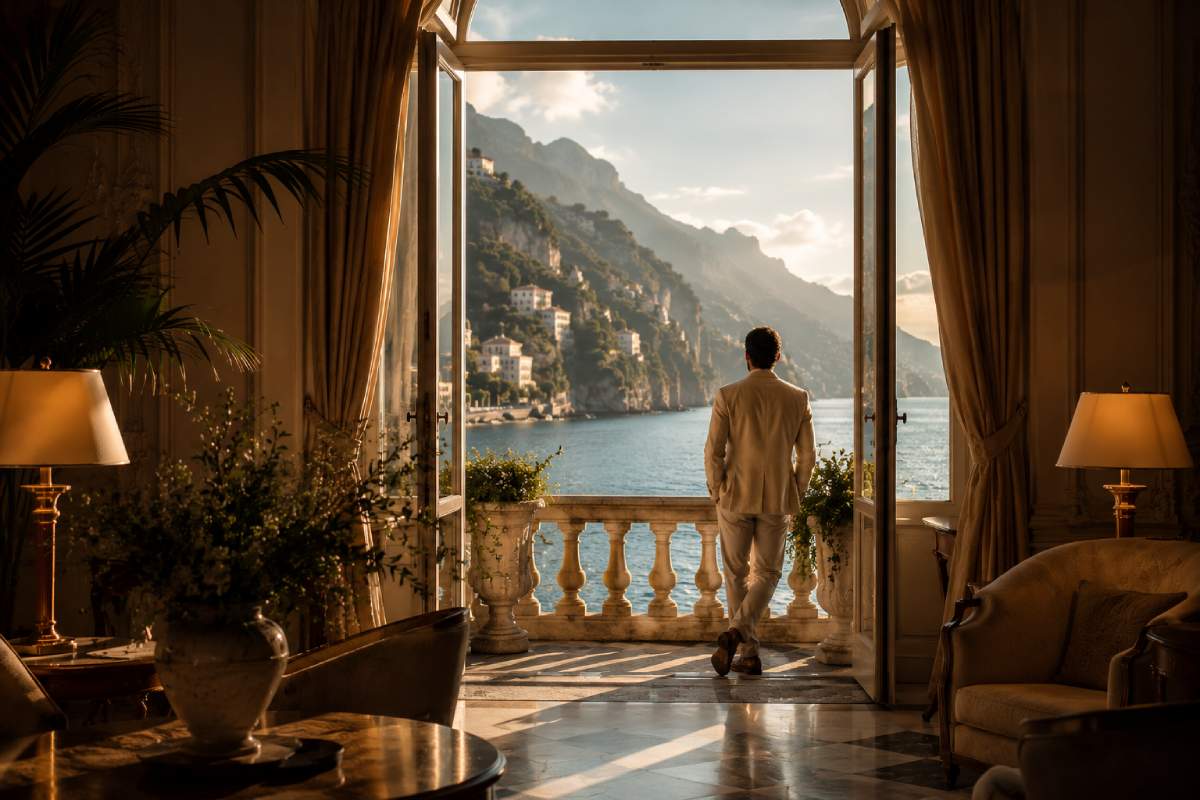
Local landmark visible from a window or balcony (architectural) — location context sells the neighborhood.
Staff preparing breakfast in the kitchen (lifestyle) — needs staff cooperation and a release.
Turn-down service tray with chocolate (lifestyle) — a small prop moment, quick to capture.
Couple on the balcony at dusk (lifestyle) — models and timing both required.
Meeting room set up for a small event (architectural) — useful for corporate bookings.
Rooftop bar silhouette against the skyline (lifestyle) — pairs well with the sunset shot above.
Light, Composition, And Lenses: The Rules Behind The Ideas
None of the ideas above work without three fundamentals: preparation, light, and camera position. Get those right and even a modest room photographs like a boutique property.
Start with the tripod. A chest-height setup, roughly four to five feet off the ground, shot from a room corner or doorway, produces the most natural sense of depth and scale. It is the single most repeatable rule in interior photography, and it works whether you are shooting a $90 roadside inn or a five-star suite.
Light comes next. Overcast days are a secret advantage for interiors: cloud cover acts like a giant softbox, filling rooms with even light and preventing blown-out windows. When you are stuck with harsh sun, position your camera so window light hits the room at roughly 45 degrees, turn on interior lamps to match color temperature, and let the mix feel warm rather than clinical. Exteriors flip the rule: save those for golden hour, when low sun flatters facades and pools alike.
For tricky light, bracket exposures and blend them, or use flambient (flash plus ambient) when a straight HDR blend looks unnatural. The blend should be invisible. If a viewer can tell you used HDR, you have overdone it.
Lens choice matters more than most photographers admit. Avoid going wider than a 24mm equivalent. Anything wider distorts room proportions and can make a small room look distorted rather than spacious. Keep the tripod level so vertical lines like door frames and headboards stay straight.
Pro Tip:Shoot a test frame in every room before styling, check the histogram for blown windows, and adjust your bracket spread before you commit to the full setup. It saves far more time than fixing it in post.
How Many Photos Does Each Room Type Actually Need?
Planning a shoot without a shot-count target is how photographers run out of daylight halfway through a property. A workable model:
Set a floor of a concise, essential photo set for a small hotel. That covers hero exterior, lobby, standard room angles, bathroom, one amenity shot, one lifestyle frame, one local-context shot, and a handful of details.
Scale up by room category, not room count. A full-service hotel with multiple room types typically needs a finished library in the 60 to 100 image range; a small independent property can work comfortably with 25 to 40.
Apply the same formula to each room type: one hero wide corner shot, three to five supporting angles, one or two detail shots, and one lifestyle image. Suites earn extra angles because guests expect to see more of what they are paying for.
Shoot in an order that protects your light. Start with exteriors and dusk shots, move to public spaces, then work through guest rooms grouped by window orientation, and save detail shots for last when light is least critical.
The Pre-Shoot Checklist That Prevents Costly Reshoots
Most reshoots trace back to the same handful of oversights, and every one of them is preventable with a checklist run the morning of the shoot.
Fresh linens with no visible wrinkles, pillows plumped and squared.
Matching bulb temperature across every lamp in the frame.
Remotes, cables, and tissue boxes hidden or removed entirely.
Bathroom chrome polished and countertops cleared of personal products.
One life signal per frame: a book, a folded newspaper, a steaming cup.
Signage and directional placards removed unless they are part of the brand story.
Logistics matter as much as styling. Schedule housekeeping ahead of the shoot window, time each room for its best natural light rather than shooting rooms in numerical order, and confirm any stylist or prop delivery the day before, not the morning of. If a recognizable person appears in frame, whether a guest or staff member, get a signed release before you leave the property.
Pro Tip:For speed shoots with no stylist on hand, carry a small kit: a white orchid stem, two matching robes, and a neutral coffee mug. Those three props cover most of the lifestyle ideas above without a dedicated styling budget.
Editing And Exporting Images That Load Fast And Sell Rooms
Post-processing exists to make a room look like it did when the light was best, not to invent a room that never existed. Blend your bracketed exposures so window and interior light balance without a visible seam, and lean on flambient when a straight HDR blend still looks flat. Straighten verticals in every architectural frame and unify color temperature across the full set so the gallery feels like one cohesive property, not five different shoots stitched together.
Correct converging verticals before anything else; crooked door frames are the fastest way to look amateur.
Match white balance across rooms shot at different times of day.
Export at the pixel dimensions each platform recommends, and keep JPEGs light, ideally under roughly 400 KB, so listing pages load quickly.
Name files and write alt text with the room type and property name for search visibility.
Treat your first five images per channel as merchandising, not a single recycled hero shot. An OTA thumbnail and a website hero often need different crops and different lead images entirely, chosen for how each platform displays them.
When Hotel Photography Calls For A Professional Studio
DIY works for a quick refresh of one or two rooms. It runs into limits fast once a property needs dusk exteriors, event spaces, multiple public areas, and a consistent style across dozens of rooms shot over several days. That is the point where the math shifts toward hiring a production team.
A professional studio has spent more than a decade producing visual work across hundreds of projects with a large combined audience, including collaborations with major clients. That kind of range comes from repetition: knowing how to plan a shot list, manage a lighting kit across changing rooms, and keep a full property’s imagery visually consistent from lobby to penthouse suite.
Hiring a studio typically means a documented shot list before the crew arrives, on-site styling, a lighting kit built for mixed natural and artificial light, a realistic timeline, and finished deliverables sized correctly for OTAs and a direct booking site. For a property planning a full rebrand or a first-time gallery, that structure alone often saves more time than it costs.
Seasonal And Event Styling That Reflects Your Promotions
A photo library frozen in one season stops working the moment your promotions shift, and most hotels re-run the same handful of images long after the offer they were shot for has expired. Building a small seasonal set solves this without a full reshoot each quarter.
Shoot a winter version of your lobby or fireplace lounge styled with warm textiles and low lamp light, alongside a summer version of the same space with brighter, cooler tones and open windows. A holiday turn-down tray, a champagne setup for New Year’s packages, or a styled breakfast tray tied to a seasonal menu each give marketing teams fresh assets without touching the base architectural shots. Keep the room’s core composition identical across seasonal variants. Same tripod position, same corner, same lens. Only the styling and light should change, which keeps the gallery visually coherent even as promotional imagery rotates. This also means you can plan two or three seasonal add-on shoots per year rather than a full property reshoot, which is a smaller cost for a much longer shelf life on your promotional imagery.
Photographing Spas, Pools, And Restaurants Without Making Them Look Generic
Amenity photography fails most often because it defaults to an empty, static wide shot: a pool with no ripples, a spa table with no towels, a restaurant with no place settings. Each of these spaces needs its own version of the hero-plus-lifestyle formula.
For spas, pair a wide architectural shot of the treatment room with a close detail of rolled towels, stone accents, or a single lit candle. Steam and water droplets photograph beautifully but move fast, so plan for several takes. Pool photography benefits enormously from golden hour timing. The water shifts from flat blue to a warm gradient in the span of twenty minutes, so shoot your architectural wide first, then wait for the color shift before capturing the lifestyle frame with a guest or a styled poolside setup. Restaurant photography needs both an empty architectural shot for space-and-design marketing and a styled table with food for appetite appeal. Shoot the empty room first while light is even, then bring in the food styling for the close-up detail shots once the room’s ambient light is locked.
Using Drone Photography For Aerial Hotel Shots
An aerial shot answers a question ground-level photography cannot: how does this property actually sit within its surroundings? A drone shot of a coastal resort showing the pool deck, the shoreline, and the building footprint in one frame tells guests something a lobby photo never will.
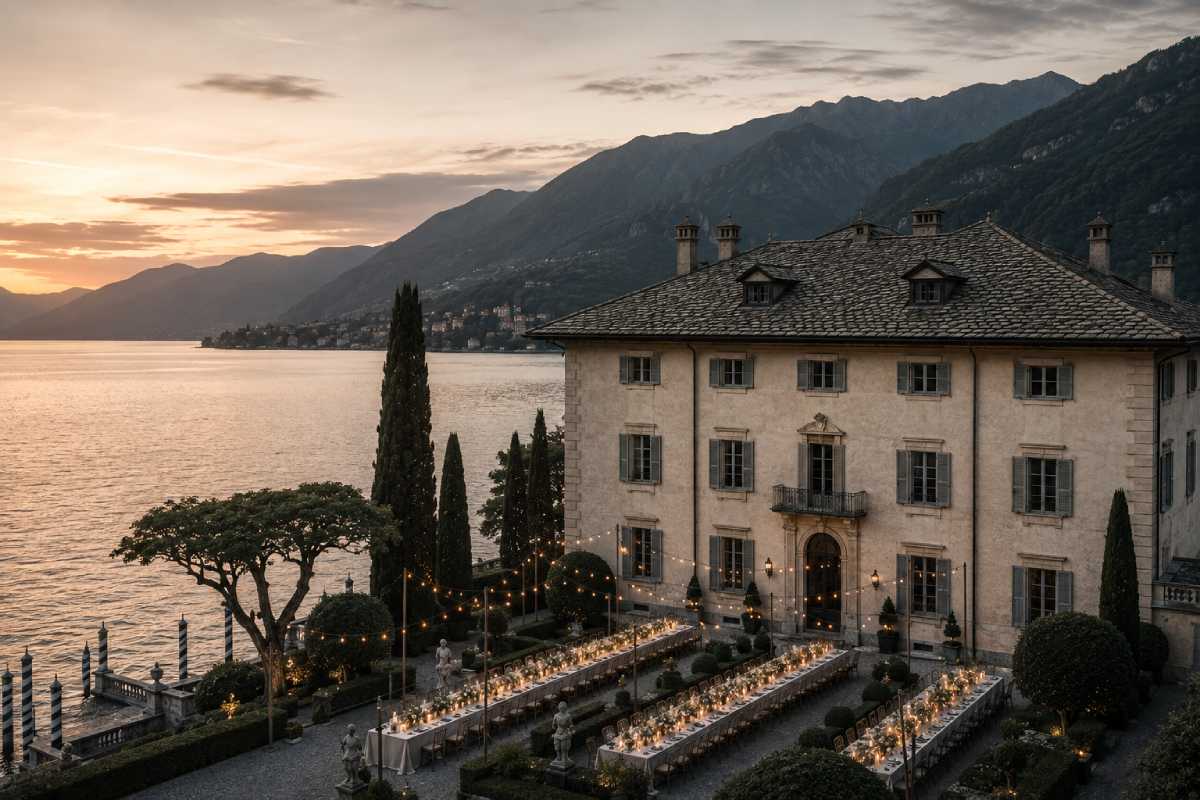
Villa Balbiano at sunset, where Lake Como, historic architecture and an extraordinary multi-day celebration come together.
The best aerial results come at golden hour, same as ground-level exteriors, since low-angle light brings out texture in rooflines, landscaping, and water that flat midday light flattens out. Shoot straight-down top shots for a graphic, map-like view of pool decks and gardens, then angle the drone lower for a three-quarter view that shows both the building and its context, like a beach, a mountain range, or a city skyline. Local drone regulations vary by jurisdiction and by property, so confirm airspace permissions and any hotel-specific restrictions before a flight, not the morning of the shoot.
Equipment That Actually Matters For Hotel Photography
Gear obsession wastes more budget in this niche than almost any other. A short, deliberate equipment list matters more than an exhaustive one.
A wide-angle lens in the 16 to 24mm equivalent range covers nearly every interior shot without introducing the distortion that anything wider creates. A tilt-shift lens is worth the investment for photographers shooting exteriors regularly. It corrects converging verticals in-camera on tall facades, which saves substantial time in post. A sturdy tripod that locks level quickly is non-negotiable given how much of this work depends on precise, repeatable framing. For lighting, a basic speedlight or two, paired with light stands and warming gels to match interior bulb color, covers most flambient work without a full studio kit. A drone with at least a mechanical shutter, rather than a rolling shutter, avoids the warped-line artifacts that ruin architectural aerials shot from a moving platform.
What Most Hotel Photography Advice Gets Wrong
Most guides treat hotel photography as a technical exercise: get the exposure right, get the lines straight, move on. That misses the actual failure point. The properties whose galleries underperform almost always have technically competent, completely lifeless images. Every room is empty, every surface is staged into sterility, and nothing in the frame suggests a person has ever enjoyed the space.
The fix is not more gear or a better lens but better visual storytelling techniques. It is one human-context frame per space, deployed with intention rather than as an afterthought. A hand around a coffee cup, a couple on a balcony, a concierge mid-conversation. These images do the work that architectural shots cannot: they let a guest picture themselves there. Skip this and even a beautifully lit, perfectly composed gallery reads as inventory rather than invitation.
The second mistake is treating a photo library as a one-time asset. Seasonal styling, amenity refreshes, and a periodic gallery audit matter more than most marketing teams budget for. A gallery shot once and never revisited ages faster than the property itself.
— Image Studio
Ready To Book A Hotel Photography Shoot?
If the checklist above feels like more coordination than your team has time for, that is precisely the gap a production studio closes. A production studio can work with hospitality brands to plan the shot list, manage lighting across public spaces and guest rooms, and deliver a consistent gallery covering all areas of the property, relieving your team from scheduling and lighting timing challenges. Getting started is simple: send a brief describing your property and room count to any professional studio, which can then provide a sample shot list and estimate before scheduling. Explore the film production and photography services to see how a full shoot comes together from first brief to final delivery.
FAQ
How Do You Take Good Hotel Photos?
Shoot from a chest-height tripod in a room corner, favor overcast or 45-degree window light, and pair every architectural shot with at least one lifestyle or detail frame so the gallery feels lived-in rather than empty.
What Are Some Creative Ideas For A Hotel Room Photoshoot?
Strong options include a breakfast tray styled on the bed, hands wrapped around a coffee cup near natural light, a robe draped with a small floral accent, and a couple silhouetted on the balcony at dusk.
What Is The 20 60 20 Rule In Photography?
Definitions vary across sources, and it is not a standard rule specific to hotel photography. Most hotel galleries are better served by the hero, supporting, detail, and lifestyle shot-count model covered above than by trying to force this ratio.
What Are Some Unique Hotel Photo Concepts Worth Trying?
Rooftop silhouettes at sunset, a staff member preparing breakfast in the kitchen, and a panoramic corridor shot each stand out because most competing hotel galleries skip them entirely in favor of standard room angles.
How Many Photos Does A Hotel Actually Need?
A small independent property can work with 25 to 40 finished images, while a full-service hotel typically needs 60 to 100 to cover every room type, amenity, and public space consistently.