Italian Wedding Photography Styles: A Cinematic Guide
July 30, 2026
Explore the most popular Italian wedding photography styles, from documentary and editorial to fine art and cinematic storytelling. Learn how to choose the right approach based on your venue, region, lighting, and wedding vision while planning a luxury destination wedding in Italy
The three primary wedding photography styles in Italy are documentary (also called reportage), editorial (fashion-inspired), and fine art (poetic realism), with many photographers blending these approaches. The single decision that drives everything else: does your client want presence (uninterrupted experience, candid coverage) or precision (curated, magazine-quality portraits)? That answer determines your crew size, lighting plan, and how many production blocks you need to schedule.
Three quick cues to choose your direction:
Venue and architecture: Historic palazzos with low light and no-flash rules favor documentary or fine art. Open coastal terraces invite editorial control.
Client preference for staging: Couples who want to feel the day favor documentary. Couples who want to look the day favor editorial.
Production time available: Editorial and fine art require dedicated styling and scouting windows. Documentary can flex around a tighter timeline.
Brief-to-style map:
Multi-day vineyard elopement → hybrid documentary + fine art
Fashion-forward couple at a Florentine palazzo → editorial with cinematic overlay
Intimate Amalfi ceremony → documentary with fine art post-production
Full luxury production with brand deliverables → editorial + cinematic film hybrid
Table of Contents
What are the main Italian wedding photography styles?
How do you execute a cinematic, high-end Italian wedding shoot?
How does Italian region and venue type shape your style choices?
How do you brief a photographer for a cinematic Italian wedding?
What does a cinematic wedding-day shot list and timeline look like?
How Imagestudio approaches Italian wedding productions
Key Takeaways
The balance between watching and directing
Imagestudio’s cinematic Italian wedding services
What are the main Italian wedding photography styles?
The three core styles—documentary, editorial, and fine art—have distinct visual grammars, and knowing their hallmarks helps you brief a photographer or evaluate a portfolio with real precision.
1. Documentary/reportage
Candid framing, available-light emphasis, and observational sequencing define this approach. The photographer stays present but invisible, letting moments unfold rather than directing them. Documentary style works naturally in Italian settings because it emphasizes atmosphere over posed perfection. Think: a grandmother’s expression during the ceremony, the chaos of confetti, a stolen glance across a vineyard table.
2. Editorial/fashion
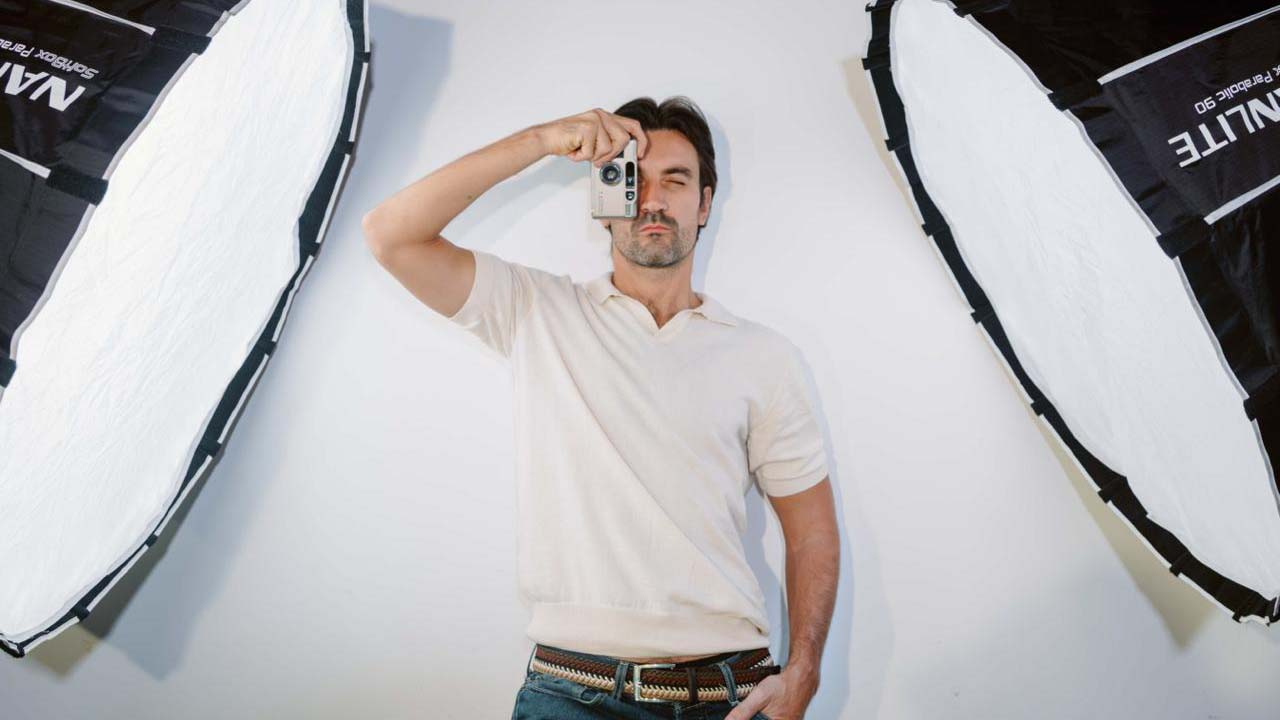
Posed composition, controlled lighting, and fashion-led framing distinguish editorial work. This style has real production implications: scouting access, hair and makeup coordination, lighting assistants, and dedicated portrait windows of at least 10–40 minutes per block. Editorial treats light and architecture as design elements. As photographers who work in this mode often put it:
3. Fine art/poetic realism
Filmic color palettes, painterly light, soft contrast, and deliberate lens choices give fine art its timeless quality. Photographers using this approach often shoot on film or apply film emulation in post to achieve soft highlights, natural skin tones, and a palette that suits historic Italian venues. The result feels less like a photograph and more like a still from a Visconti film.
How cinematic functions as an overlay
“Cinematic” is not a fourth style. It is an aesthetic layer applied across any of the three: specific lens choices (anamorphic, vintage glass), color grading with filmic curves, camera movement for video elements, and a narrative sequencing that treats the wedding day as a story with acts. When you see “cinematic” in a portfolio, evaluate whether the photographer is observing (documentary instinct) or directing (editorial instinct). That balance is what actually separates strong work from marketing language.
How do you execute a cinematic, high-end Italian wedding shoot?
Production quality at this level is planned, not improvised. Here is the framework Imagestudio and other high-end teams use.
Pre-production checklist
Scout the venue at the same time of day as the ceremony and portrait blocks.
Confirm permits for historic sites (many Florentine and Venetian venues restrict tripods and artificial lighting).
Build a lighting plan that accounts for interior low-light conditions and exterior contrast shifts.
Schedule hair and makeup windows before the scouting-informed portrait blocks, not after.
Prepare a weather contingency: identify interior backup locations with comparable light quality.
Technical format recommendations
Lenses: 35mm and 50mm primes for documentary coverage; 85mm for editorial portraits; a 24–70mm zoom as a flexible second-shooter workhorse.
Aperture: f/1.4–f/2.0 for depth and skin rendering in low-light interiors; stop down to f/4–f/5.6 for full-scene editorial frames.
Workflow: A hybrid film and digital approach gives you the widest tonal range. Film scans supplement RAW files for texture and highlight roll-off that complement Italy’s varied light conditions.
Pro Tip:Shoot your editorial portrait blocks on film and your documentary coverage on digital. The contrast in texture between the two formats actually reinforces the narrative arc when you sequence the final gallery.
Crew and gear roles
Primary photographer: editorial direction and key documentary moments
Second shooter: parallel coverage (ceremony details, guest reactions)
Lighting assistant: modifiers, reflectors, and off-camera flash for editorial blocks
Digital tech (optional but recommended for luxury productions): instant proofs and on-site backup
Post-production approach
Grade toward filmic curves with subdued saturation and warm shadow tones. Prioritize skin tone accuracy before any stylistic grading. Deliver RAW files and film scans as separate archival formats so the client has both the processed gallery and source material.
How does Italian region and venue type shape your style choices?
Region
Light Character
Best Shoot Time
Key Modifier
Venue Constraint
Tuscany
Soft, nostalgic golden-hour tones
1 hour before sunset
Silk diffuser for open shade
Vineyard access usually flexible
Amalfi Coast
High-contrast coastal light, bright highlights
Early morning or last light
ND filter + reflector
Crowd management; narrow terraces
Venice
Diffused canal light, cool blue tones
Sunrise or golden hour
Minimal; use ambient
Strict no-tripod rules in many sites
Florence
Rich interior light, dramatic shadows
Mid-morning for interiors
Portable LED panel
No-flash rules in historic palazzos
Lake Como/Garda
Even, soft lakeside light
Morning or late afternoon
Reflector for fill
Boat logistics for multi-location shoots
Regional timing matters more than most briefs acknowledge. Venice and Florence reward early-morning and golden-hour planning. Coastal and cliffside locations like Amalfi require early starts to avoid crowds and the punishing midday contrast that flattens skin tones and kills detail in white dresses.
A few tactical notes:
In Tuscany, the nostalgic light suits fine art and documentary equally. You rarely need heavy modification.
On the Amalfi Coast, the bold, sculptural light is editorial by nature. Work with it rather than fighting it with fill.
In Venetian or Florentine palazzos, portable LED panels and fast primes are your best friends. Many venues prohibit flash entirely.
How do you brief a photographer for a cinematic Italian wedding?
A strong brief prevents scope creep and protects the creative vision. Use this structure.
Brief template fields
Event type and duration (single day, multi-day, elopement)
Venue(s) with access windows and any known restrictions
Preferred style with three to five sample images from real portfolios
Must-have shots (cultural rituals, specific family groupings, key details)
Deliverables: gallery count, film deliverables, resolution and format specs
Timeline with hair/makeup schedule and daylight windows marked
Essential questions to ask your photographer
Do you have scouting access before the wedding day?
How do you handle cultural rituals that require specific coverage (e.g., a traditional Italian blessing or regional ceremony customs)?
What is your backup plan for low-light interiors without flash access?
How do you coordinate with hair and makeup to protect portrait windows?
Deliverables and rights checklist
Deliverable
Standard Expectation
Edited photo gallery
High-resolution JPEGs, web-optimized versions
Film scans (if applicable)
Unretouched and retouched versions
Proof turnaround
Highlight selects within 7–14 days
Full gallery delivery
6–12 weeks post-event
Archival formats
RAW files and/or film negatives retained by photographer
Usage rights
Full personal use; commercial use negotiated separately
Pre-wedding shoots are a smart investment for cinematic productions. They let the couple and photographer develop rapport, and they give the team a chance to test locations and light before the actual day.
What does a cinematic wedding-day shot list and timeline look like?
Prioritized shot list (by emotional and cinematic value)
Pro Tip:Build the golden-hour block into the contract as a protected window. Receptions have a way of running long, and that 10-minute light window disappears fast if it is not scheduled explicitly.
Crew coordination is the difference between a smooth editorial block and a rushed one. Use a shared run sheet, confirm timing with the venue coordinator the morning of, and keep communication tight between the primary photographer and second shooter throughout the day.
How Imagestudio approaches Italian wedding productions
Imagestudio brings 14+ years of experience, 250+ projects, and 150M+ views to high-end destination productions, with collaborations including National Geographic and recognition from prestigious film festivals.
For luxury Italian shoots, Imagestudio organizes production around several core principles:
Scouting first: Every production includes a dedicated scouting day to map light windows, access restrictions, and architectural details worth integrating into composed frames.
Cultural navigation: Imagestudio’s team coordinates directly with venue managers on access windows and understands the regional customs that shape ceremony coverage.
Hybrid film and digital workflows: Combining film scans with RAW digital files gives the final gallery a tonal range that neither format achieves alone.
Multi-day storytelling: For extended productions, Imagestudio structures coverage across days to build a narrative arc rather than a single-day highlight reel.
Delivery standards: Galleries, film deliverables, and social assets are delivered on agreed timelines with full archival formats included.
The most effective approach to Italian wedding photography is a hybrid model that blends documentary authenticity with editorial precision for portraits, planned around regional light and venue-specific constraints.
Point
Details
Choose presence vs. precision first
This single decision drives crew size, lighting plan, and production block scheduling.
Plan golden-hour blocks in the contract
Protect the 8–12 minute editorial window explicitly or it will be lost to reception timing.
Match style to region
Tuscany suits fine art; Amalfi rewards editorial; Venetian palazzos demand fast primes and no flash.
Use a hybrid film and digital workflow
Film scans add highlight roll-off and texture that complement Italy’s varied light conditions.
Imagestudio for cinematic productions
14+ years, 250+ projects, and 150M+ views across luxury Italian destination shoots.
The balance between watching and directing
There is a tendency in high-end wedding photography to treat “cinematic” as a style category. It is not. It is a commitment to narrative, and that commitment shows up in decisions made weeks before the wedding day: which lens you pack, which light you wait for, which moment you let breathe and which one you shape.
The productions that hold up over time are the ones where the photographer knew when to disappear into the room and when to step in and direct. A restricted-access palazzo in Florence will teach you that lesson fast. You cannot set up a three-light editorial rig in a 16th-century chapel. You adapt, you find the window light, and you make the constraint part of the composition.
Imagestudio welcomes production consultations for destination wedding projects. Client-specific details remain confidential, but the team is happy to walk through approach, workflow, and what a cinematic Italian production actually requires from a logistics standpoint.
Imagestudio’s cinematic Italian wedding services
Imagestudio delivers cinematic film production and luxury wedding photography for destination clients across Italy, with packages built around the specific demands of high-end productions.
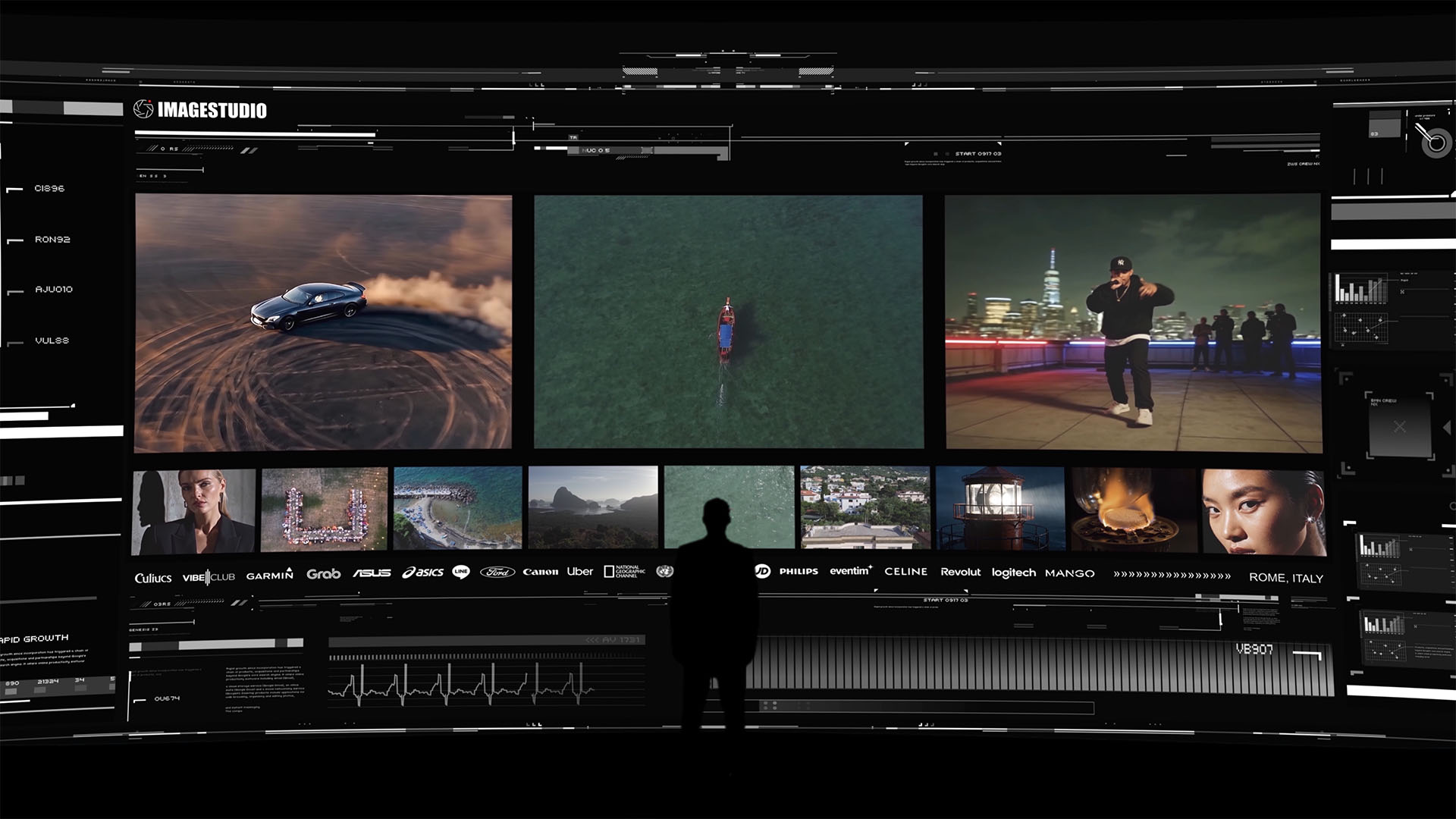
A high-end cinematic portfolio experience by Image Studio featuring automotive visuals, aerial cinematography, urban storytelling, and premium brand collaborations.
Services include film production, luxury wedding photography, multi-day content experiences, and social media assets extracted from the full production. Every engagement draws on 14+ years of experience, 250+ projects, National Geographic collaborations, and film festival recognition. The team handles scouting, cultural coordination, hybrid film and digital workflows, and full delivery from RAW files to finished galleries.
To discuss your Italian wedding production, reach out through imagestudio.com or request a consultation directly with the production team.