
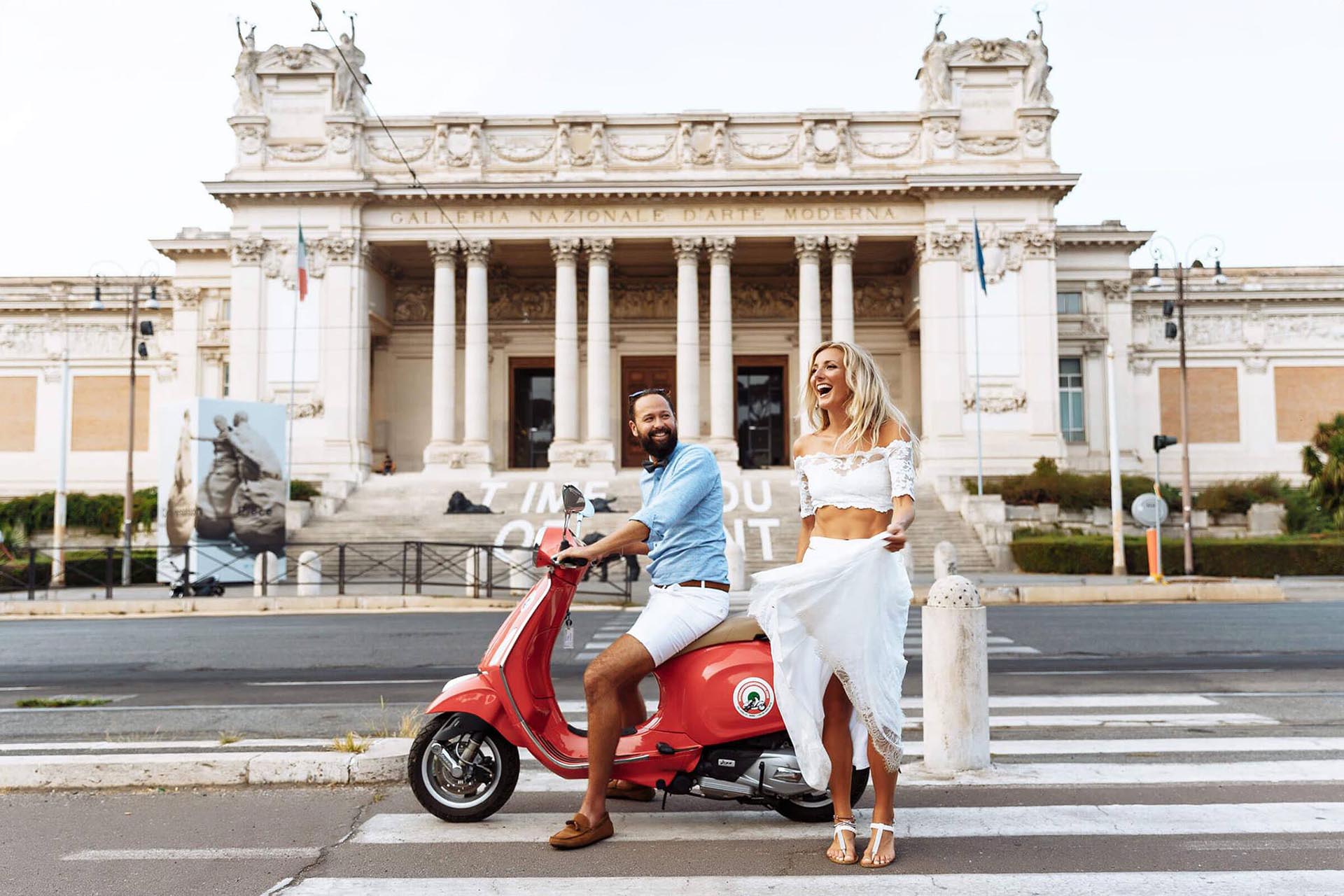
Pre-wedding shoots are more than a photography session before the wedding day—they are an important storytelling tool. They allow couples to capture the chapter before marriage, documenting anticipation, personality, and the unique journey that brought them together. Unlike the wedding day, which often follows a strict timeline, pre-wedding sessions provide creative freedom to showcase meaningful locations, shared interests, and authentic interactions. These images add depth to the overall wedding narrative, creating a visual story that connects the couple's past, present, and future.
← Back to Editorial
← Back to Editorial
The Role of Pre-Wedding Shoots in Storytelling
June 3, 2026
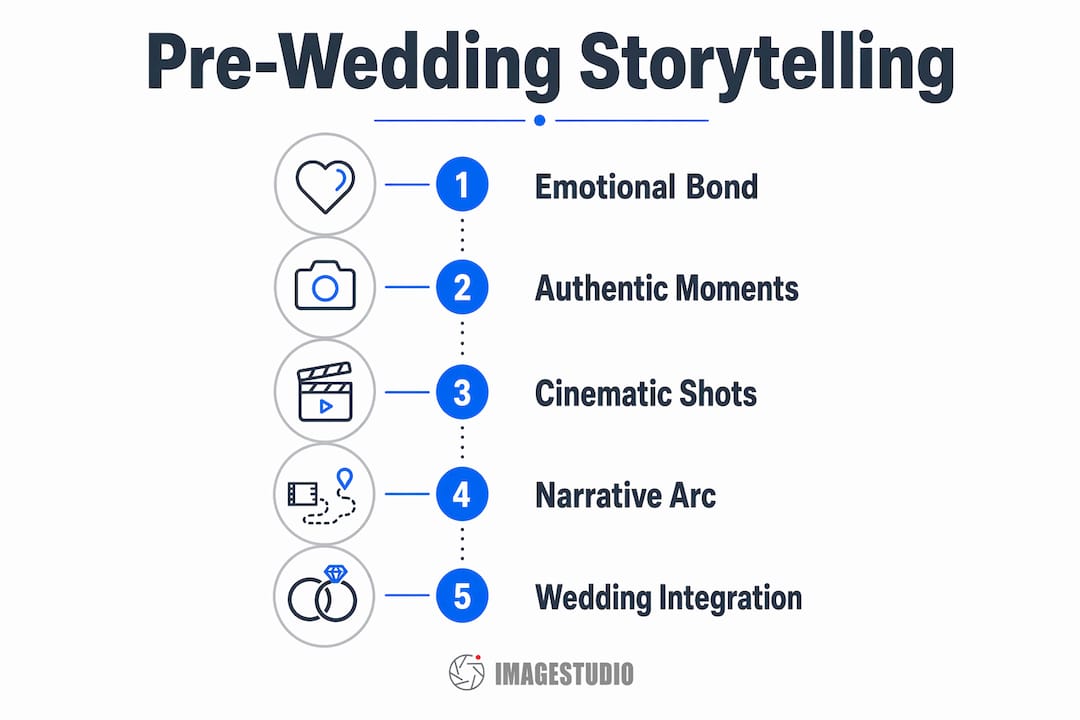
A pre-wedding shoot is defined as a dedicated photography or videography session where couples collaborate with their photographer before the wedding day to create a cinematic, emotionally authentic visual narrative of their love story. In the industry, this session is also called an engagement shoot or pre-shoot, and its role in storytelling goes far beyond capturing pretty portraits. The role of pre-wedding shoot in storytelling is to build the emotional foundation, visual language, and narrative arc that carries through your entire wedding media collection. Studios like The Grand Moments and Arcadina have demonstrated that cinematic framing and real interactions produce richer, more personal visual narratives than any posed portrait session ever could. When you treat your pre-wedding session as a storytelling tool rather than a photo opportunity, everything changes.
How do pre-wedding shoots build authentic storytelling?
Authentic storytelling starts with authentic people, and most couples are not naturally comfortable in front of a camera. Arcadina identifies rapport-building as the single most important factor in producing emotive, story-rich images. When you spend time with your photographer before the wedding, the shyness dissolves, the laughter becomes real, and the gestures stop being performed. That shift is visible in every frame.
The pre-wedding session gives your photographer something no amount of planning can replace: direct behavioral observation. They learn how you naturally hold hands, how you look at each other mid-sentence, and whether you are the couple who laughs loudly or leans in quietly. That knowledge allows them to minimize direction on the wedding day and capture genuine emotion fast, which is exactly what storytelling quality depends on when the schedule is tight and the stakes are high.
Location and atmosphere also shape the emotional register of the story. A session in a place that holds meaning for you, whether a neighborhood café, a coastal trail, or a vineyard at golden hour, adds a layer of personal context that generic studio portraits simply cannot provide. The Grand Moments builds its visual narratives around real interactions and cinematic lighting precisely because place and emotion together create images that feel lived-in rather than staged.
- Choose a location with personal meaning to add narrative context your guests will feel even without explanation.
- Schedule at least two hours so the session has room to breathe and natural moments can develop organically.
- Bring a change of outfit to create visual variety and signal a shift in mood or tone within the story.
- Arrive without a rigid shot list and let your photographer observe before directing.
Pro Tip: Tell your photographer one specific memory or inside joke before the session starts. Referencing it mid-shoot produces the kind of spontaneous, unguarded laughter that no pose can replicate.
What cinematic techniques shape narrative flow in pre-wedding photography?
Cinematic storytelling in wedding photography is defined as the practice of using pacing, framing, sequencing, and careful image curation to weave individual photos or video clips into a cohesive emotional narrative. Wilde Elegance describes pacing as necessary narrative infrastructure, not a stylistic bonus. Rush a shoot, and you lose the quiet moments between moments where the real story lives.
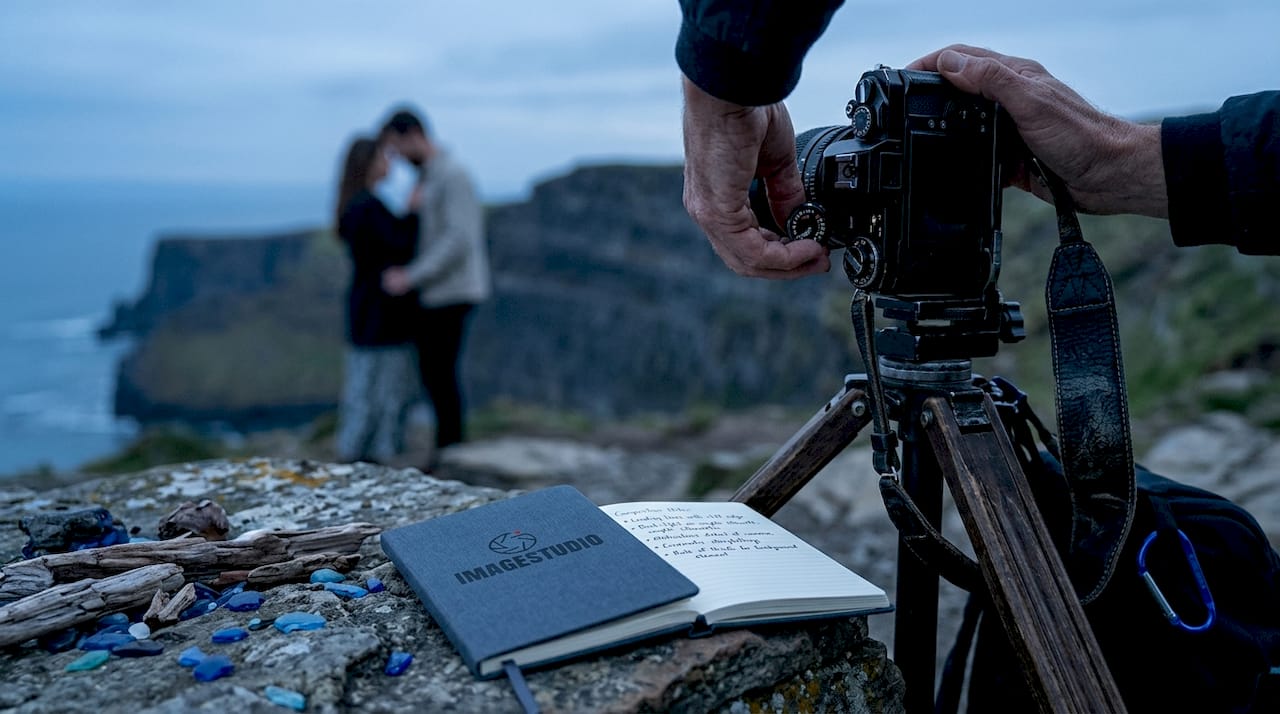
The most practical framework for building that narrative structure is the Wide, Medium, Tight technique. SLR Lounge’s visual storytelling method progresses from wide environmental shots that establish place and mood, to medium shots that show interaction and relationship, to tight close-ups of details like hands, rings, and expressions. This sequence mirrors how a film editor builds a scene, and it gives your final gallery a natural flow that feels cinematic rather than random.
Videography adds another dimension to this structure. Brad Rollason Films emphasizes that establishing shots and environmental details are what connect personal couple moments to a specific place and time, giving the narrative continuity and what filmmakers call place attachment. Without those wide, contextual frames, a wedding film can feel like a collection of close-up reactions with no sense of where or why.
Here is how these cinematic principles translate into a practical pre-wedding session sequence:
- Open with environmental wide shots to establish the location, light, and mood before the couple enters the frame.
- Move to medium interactive shots where you are walking, talking, or doing something natural together rather than posing.
- Capture tight detail shots of hands, jewelry, expressions, and textures that will serve as visual punctuation in the final edit.
- Allow unscripted moments between setups. Discreet observation of spontaneous moments consistently produces the most emotionally resonant frames in any session.
- Review pacing with your photographer mid-session to confirm the story is building rather than repeating.
Pro Tip: When reviewing your final gallery, ask your photographer to walk you through the narrative arc. A well-curated collection should feel like a short film, with a beginning, middle, and emotional peak.
How do pre-wedding shoots support your wedding day and beyond?
The pre-wedding session is not just a creative exercise. It delivers tangible, usable assets that extend your wedding narrative across multiple touchpoints. McConnell Photography notes that pre-wedding images are ideal for save-the-dates, wedding websites, guestbooks, and printed table displays. These uses mean your story starts reaching guests weeks before the ceremony, building anticipation and emotional investment.
One of the most underrated practical benefits is time. Couples who complete a pre-wedding session typically need significantly less portrait time on the wedding day itself. Because you already know how to work with your photographer and feel comfortable in front of the lens, the formal portrait session moves faster and feels more relaxed. That recovered time can be redirected to golden hour coverage, candid reception moments, or simply enjoying your day.
Julien Kibler’s timeline research shows that unexpected delays compress portrait time and directly affect narrative quality and mood. When your photographer is involved in timeline planning from the start, they can protect the emotional beats that matter most, including golden hour, the first look, and the quiet moments between events. The pre-wedding session is the natural starting point for that collaboration.
| Without a pre-wedding shoot | With a pre-wedding shoot |
|---|---|
| Couple unfamiliar with photographer’s style | Established rapport and shared visual language |
| Longer portrait session needed on wedding day | Shorter, more relaxed portrait session |
| No assets for save-the-dates or website | Ready-to-use images for all pre-wedding media |
| Photographer learning couple’s behavior on the day | Behavioral knowledge applied from the first shot |
| Narrative starts at the ceremony | Narrative begins weeks before the wedding |
Posed shoots vs. storytelling-focused sessions: what’s the difference?
Traditional pre-wedding shoots prioritize static poses, symmetrical compositions, and polished portraits. They produce beautiful images, but they rarely tell a story. Storytelling-focused sessions, by contrast, prioritize natural interaction, emotional authenticity, and cinematic sequencing. The difference is not about image quality. It is about what the images communicate.
A posed portrait says: we looked great on this day. A storytelling session says: this is who we are together. That distinction matters enormously when you look back at your wedding media ten years from now. The narrative arc in a curated gallery feels like a story you lived rather than a photo shoot you attended.
Storytelling sessions also produce more versatile media. Because the images capture genuine interaction and emotion, they work across a wider range of uses, from intimate printed albums to social media to large-format wall art. Posed portraits tend to feel formal in casual contexts and can look dated faster than candid, emotionally alive images.
Pro Tip: When interviewing photographers, ask to see a full gallery from a previous pre-wedding session, not just highlight images. A storytelling photographer’s gallery will have a clear beginning, middle, and end. A posed photographer’s gallery will feel like a lookbook.
Practical tips to maximize storytelling from your pre-wedding session
Getting the most from your pre-wedding session requires preparation, but not the kind that involves memorizing poses. The preparation that matters is emotional and communicative.
- Share your relationship story with your photographer before the session. Explain how you met, what you love doing together, and what moments feel most authentically you. This context shapes every creative decision they make.
- Choose styling that reflects your personalities, not just what photographs well. Clothing that feels like you will produce more natural body language and more genuine expressions.
- Be open to spontaneous direction. The best photographic storytelling happens when couples respond to their environment rather than executing a predetermined plan.
- Schedule the session at a time of day that matches your energy. If you are morning people, a sunrise session will feel more natural than a forced golden hour shoot at 7 p.m.
- Use the images intentionally after the shoot. Post them on your wedding website with a short caption, include them in your ceremony program, or create a guestbook that doubles as a visual diary of your relationship.
The pre-wedding session is also the right time to discuss your wedding day vision with your photographer in depth. What moments matter most to you? What do you want to remember? Those conversations, combined with outdoor videography techniques that connect personal moments to place, produce wedding media that feels genuinely yours rather than generically beautiful.
Pro Tip: After your pre-wedding session, send your photographer a short voice note or message describing how the shoot felt. That emotional feedback helps them calibrate their approach for the wedding day and deepens the storytelling partnership.
Key takeaways
Pre-wedding shoots build the emotional, visual, and logistical foundation that makes wedding storytelling genuinely cinematic and personally resonant.
| Point | Details |
|---|---|
| Storytelling starts before the wedding | Pre-wedding sessions establish the narrative arc that carries through all wedding media. |
| Rapport drives authenticity | Couples who build trust with their photographer produce more emotionally genuine images on the wedding day. |
| Cinematic technique creates narrative flow | The Wide, Medium, Tight sequence builds coherent visual stories rather than isolated portraits. |
| Practical assets extend the narrative | Pre-wedding images serve save-the-dates, websites, and guestbooks, starting your story early. |
| Pacing is non-negotiable | Rushed sessions lose the quiet, unscripted moments where the most powerful storytelling happens. |
Why pre-wedding shoots changed how I think about wedding narratives
I have been on set for wedding productions across Italy, France, and beyond, and the single most consistent predictor of a great wedding film is not the venue, the light, or even the equipment. It is whether the couple had a pre-wedding session with their photographer or videographer. Every time. Without exception.
What I have observed is that couples who skip the pre-shoot arrive on their wedding day carrying a subtle tension around the camera. They are performing rather than living. The images are technically fine, but they lack the quality that makes people stop scrolling. That quality is ease, and ease is built in advance.
I also think the industry undersells the narrative continuity benefit. When your pre-wedding images and your wedding day images share a visual language, a color palette, a pacing rhythm, the final collection feels like a single story rather than two separate shoots edited together. That coherence is what separates a wedding gallery from a wedding narrative. Couples hesitant about the extra session often tell me afterward that it was the best creative decision they made in the entire planning process. I believe them every time.
— Image Studio
Bring your love story to life with Imagestudio
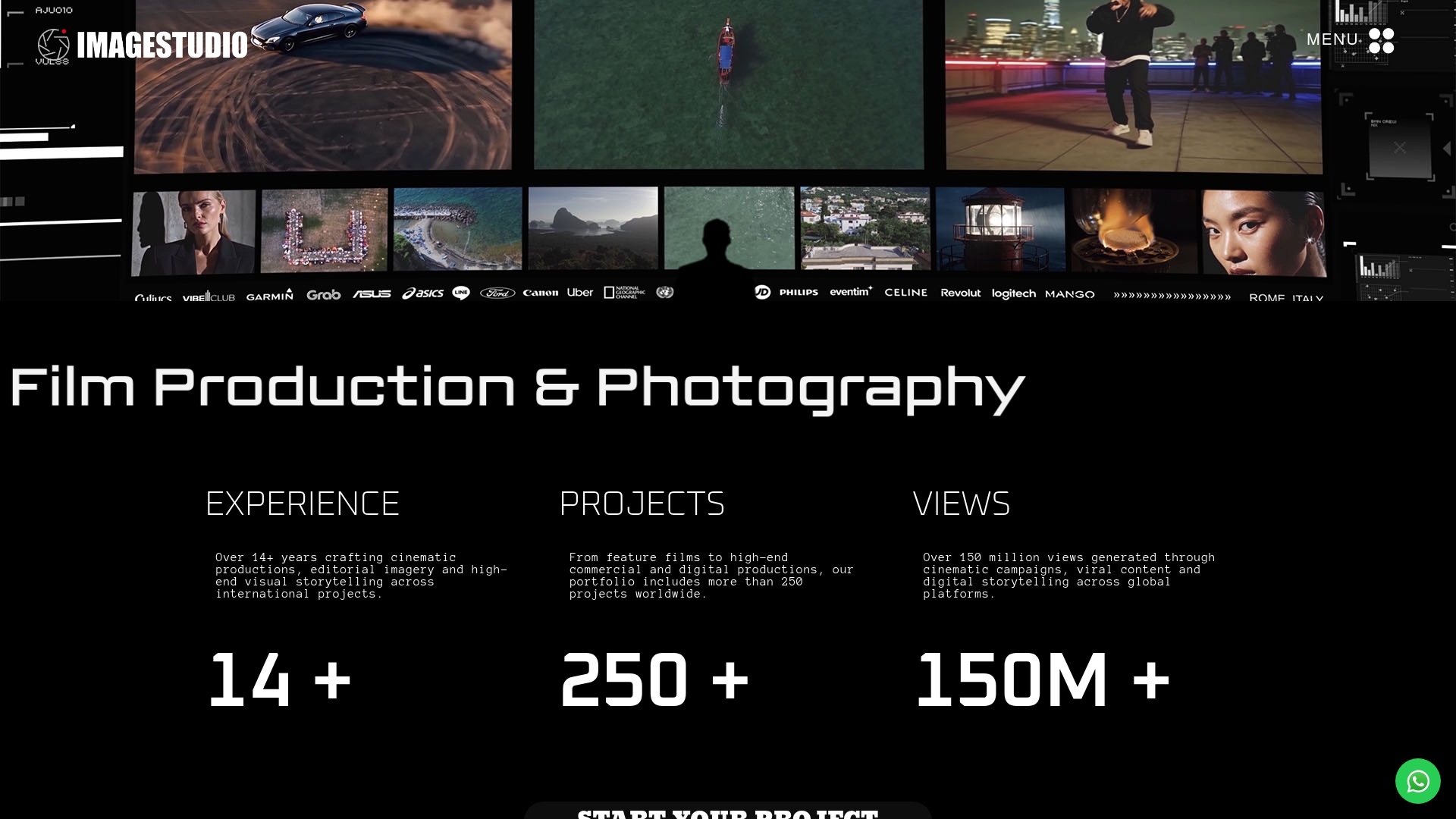
Imagestudio brings over 14 years of cinematic storytelling experience to every pre-wedding and wedding production, with 250+ projects that have collectively reached more than 150 million views. The team specializes in building narrative-driven wedding photography that captures the real chemistry, emotion, and personality of each couple through paced, intentional shooting sequences. Every pre-wedding session is treated as the opening chapter of a larger story, with cinematic techniques, location scouting, and timeline collaboration built in from the start. If you want your wedding media to feel like a film worth watching again and again, explore Imagestudio’s cinematic wedding film production services and start the conversation today.
FAQ
What is the role of a pre-wedding shoot in storytelling?
A pre-wedding shoot creates the emotional and visual foundation for your entire wedding narrative by capturing authentic chemistry, building photographer rapport, and establishing the cinematic language used throughout your wedding media.
How does a pre-wedding session improve wedding day photography?
Couples who complete a pre-wedding session arrive on the wedding day already comfortable with their photographer, which reduces portrait time, increases natural expression, and allows the photographer to capture genuine emotion faster.
What cinematic techniques are used in pre-wedding storytelling?
The Wide, Medium, Tight sequence is the core framework, progressing from environmental establishing shots to interactive medium frames to intimate detail close-ups, creating a narrative arc that feels cohesive and emotionally resonant.
Can pre-wedding photos be used for more than the wedding album?
Pre-wedding images serve save-the-dates, wedding websites, ceremony programs, guestbooks, and printed wall art, extending your love story to guests well before the wedding day itself.
How long should a pre-wedding shoot be for good storytelling?
A minimum of two hours allows the session to move through the Wide, Medium, Tight narrative sequence, include natural unscripted moments, and give pacing the room it needs to produce emotionally authentic images.
