Learn what record labels expect from music videos, from scalable creative concepts and professional deliverables to rights clearances, recoupment, and A&R-ready pitch materials. Discover how to prepare a label-approved music video package that supports YouTube, TikTok, Instagram, and long-term artist growth.
Record labels expect a music video to function as a multi-platform promotional asset, not a standalone film. The concept must be scalable across YouTube, TikTok, and Instagram; the execution must meet professional technical standards; and all rights, clearances, and deliverables must be packaged before delivery. If you’re pitching, lead with a skimmable one-page treatment and a clear plan for vertical cutdowns.
Here’s the short version of what labels want:
A concept with a strong hook in the first three seconds, built for repurposing
Professional production quality appropriate to your label tier
A full deliverables package: 16:9 master, vertical edits, teasers, stems, and caption files
An understanding that label funding is a recoupable advance, not a paycheck
The term “recoupment” is the financial reality most artists underestimate. Labels fund videos as an investment and recover those costs from your future earnings before royalties flow to you. Knowing that going in changes how you negotiate and how you present a budget.
Table of Contents
Why record labels still invest in music videos
What labels expect in the finished video and deliverables
How labels fund music videos and how recoupment works
How to pitch your music video to A&R and label marketing
Key Takeaways
The real gap between a good video and a label-approved one
Imagestudio produces music videos built for label approval
Useful sources and further reading
Why record labels still invest in music videos
Labels treat music videos as promotional infrastructure. A well-executed video doesn’t just live on YouTube; it feeds TikTok clips, Instagram Reels, Spotify Canvas loops, and press coverage simultaneously. That multi-platform reach is exactly why labels continue allocating budget to video even as the traditional music channel model has faded.
Platform consumption data backs this up. YouTube remains one of the largest music discovery platforms in the world, and labels actively track video performance as part of a song’s overall promotional health. View counts, watch time, and engagement rates feed directly into decisions about playlist pitching, radio promotion, and follow-up release timing.
That shift in thinking has real budget implications. Labels have moved away from one large production per single and toward two smaller shoots plus multiple days of short-form content. For newer artists especially, the expectation is a content ecosystem, not a single video. Understanding why music videos drive streams and fan engagement helps you frame your pitch around the metrics labels actually track.
What labels expect in the finished video and deliverables
This is where most artists get caught off guard. Label approval isn’t just about whether the video looks good. It’s about whether you’ve delivered everything their A&R, marketing, legal, and distribution teams need to do their jobs.
Creative expectations
A one-line logline that any stakeholder can repeat after reading your treatment once
A hook visible within the first three seconds, designed for short-form cutdowns
A concept that maps to the song’s emotional arc and contains at least two or three social-ready moments
Reference images or mood boards that communicate visual tone without requiring a follow-up call
Technical deliverables
Labels operating at major or mid-tier level follow strict quality control specs. The UMG Content Guide, for example, specifies exact frame sizes, frame rates, loudness standards, and file naming conventions. Failing to meet those specs means asset rejection during servicing, which delays your release.
Expect to deliver:
Final master in 16:9 (typically ProRes or DNxHR mezzanine file)
Vertical 9:16 edit for TikTok, Instagram Reels, and YouTube Shorts
4:5 edit for Instagram feed
Teasers: 15-second and 30-second versions
Stereo audio mix and, where required, spatial audio stems
Caption and subtitle files (.SRT or .VTT)
Color-graded and ungraded exports for label archive
Pro Tip:Label technical teams often reject files based on naming conventions alone. Use the exact naming format specified in your label’s delivery brief before you submit anything.
Legal and rights checklist
This is non-negotiable territory. Every person on screen, every location, every piece of music, and every brand logo visible in frame needs documentation.
Performer and talent releases for every person appearing on camera
Location releases for every shoot location
Sync license if you’re using any third-party music or samples
Master ownership declaration confirming who controls the recording
Sample clearances for any interpolated or sampled material
Third-party trademark clearances for any branded products visible in the video
Packaging for review
A treatment functions as a business document. Treatments that are skimmable and require no follow-up questions move through stakeholder approval significantly faster. Aim for one to three pages with a clear logline, scene-by-scene progression, and reference intent. Include a shot list and a turnaround plan so the label knows exactly when each deliverable arrives.
Set up separate review lanes for A&R, the artist, and any brand partners. Mixing those feedback streams creates contradictory notes and delays final approval. Using permissioned review tools with timestamped comments and a single director-led rollup keeps the process clean. A solid music video production workflow makes this structure second nature.
How labels fund music videos and how recoupment works
Labels rarely write a check and walk away. The standard model is a production advance: the label funds the video, and that cost gets added to your recoupable balance. Before you see royalty income, the label recoups its investment from your earnings.
Artists don’t receive a direct payment for appearing in their own videos. The return comes indirectly through increased streams, brand partnerships, and career growth that the video enables. Knowing this distinction matters when you’re reviewing a contract.
Budget ranges by label tier typically vary widely and reflect general industry patterns rather than fixed standards. Independent or DIY artists often manage smaller budgets, mid-size indie labels provide moderate funding as recoupable advances, and major labels allocate larger budgets depending on the artist’s development stage. Actual budgets depend on the concept, the artist’s commercial track record, and how scalable the label believes the idea to be. A concept that generates multiple short-form assets from one shoot day will often receive more funding than a single-format production at the same price.
Pro Tip:When presenting your budget to a label, break it into production cost and repurposing cost separately. Showing that a significant portion of the budget produces several short-form assets makes the investment look more efficient and increases approval odds.
Key recoupment points to negotiate before signing:
Who owns the video master (label or artist)
Whether there’s a recoupment cap or ceiling
The repayment schedule and which income streams count toward recoupment
Whether co-investment from a brand partner reduces your recoupable balance
How to pitch your music video to A&R and label marketing
A&R and marketing teams are busy. Your pitch needs to communicate everything they need to know in under three minutes of reading. Structure it so the most important information is visible without scrolling.
What to include in your pitch packet
One-line logline — the concept in a single sentence, no jargon
One-paragraph concept summary — emotional arc, visual tone, and platform fit
One-page treatment or two to three slides — scene progression, references, and social hooks
Budget ask with recoupment note — total cost, breakdown, and which costs are recoupable
Repurposing plan — list of deliverables: vertical edits, teasers, social clips, and timeline
Sample deliverable list — formats, aspect ratios, and delivery dates
File delivery and review guidance
Send streaming preview links for concept references, not large file attachments
Deliver mezzanine files through a shared drive with clearly labeled folders
Set up separate review access for label stakeholders vs. artist team from day one
Use a version-controlled naming system so no one reviews an outdated cut
Sample pitch email structure
Subject line formula:[Artist Name] — [Song Title] Music Video Treatment + Budget
Open with one sentence identifying the song and release date. Follow with the logline. Attach or link the treatment. State the budget ask in the third paragraph. Close with your availability for a call and a note on clearances already in progress.
Anticipate the questions labels always ask: Are clearances in place? What’s the turnaround from greenlight to delivery? Are there any brand ties or product placements that need approval? Answering those in the pitch packet removes friction and signals professionalism.
For a deeper look at choosing a music video production company that can handle label-level deliverables, that decision is worth making before you finalize your pitch.
Key Takeaways
Record labels fund music videos as recoupable promotional investments and expect a scalable concept, professional deliverables, cleared rights, and a skimmable treatment before approving production.
Point
Details
Videos are promotional investments
Labels recoup production costs from artist earnings; no direct payment for appearing in your own video.
Scalable concepts get funded
A concept that produces vertical edits, teasers, and social clips gets prioritized over a single-format production.
Deliverables are non-negotiable
Submit a 16:9 master, 9:16 vertical edit, teasers, stems, caption files, and all signed releases before delivery.
Pitch with a skimmable treatment
A one-to-three-page treatment with a logline, scene progression, and budget ask moves through approval faster.
Imagestudio handles label-ready production
Imagestudio produces treatments, full shoots, vertical repurposing, and deliverable packages built to label specs.
The real gap between a good video and a label-approved one
Most first drafts that come back from label review fail for the same three reasons: the treatment is too vague to greenlight, the deliverables list is incomplete, and feedback from A&R and the artist arrives in the same document with contradictory notes.
The treatment problem is fixable before you ever pitch. A treatment that reads like a mood board description rather than a production plan will always generate follow-up questions, and every follow-up question adds days to the approval cycle. The fix is to write the treatment as a business document: logline first, scene-by-scene progression second, reference images third, and a clear note on what each scene requires in terms of locations, talent, and clearances.
The deliverables gap is usually a knowledge problem. Artists who haven’t worked with a label before don’t always know that a vertical edit, a 15-second teaser, and a caption file are expected alongside the main video. Building those into your production plan from day one, rather than as afterthoughts, keeps costs down and timelines clean.
The review-lane issue is the one that causes the most damage. When A&R feedback and artist feedback arrive together, they often conflict. A&R wants a tighter opening; the artist wants more performance footage. Without separate lanes and a single person reconciling notes, those conflicts stall the project. Setting up permissioned review access for each stakeholder group, with timestamped comments and a director-led rollup, is the operational move that separates studios who get approvals from those who don’t.
Imagestudio produces music videos built for label approval
Getting a music video from concept to label-approved delivery is a multi-step process that most artists shouldn’t navigate alone. Imagestudio’s cinematic music video production service covers every stage: treatment development, full-scale production, vertical and short-form repurposing, and a complete deliverable package formatted to label specs.
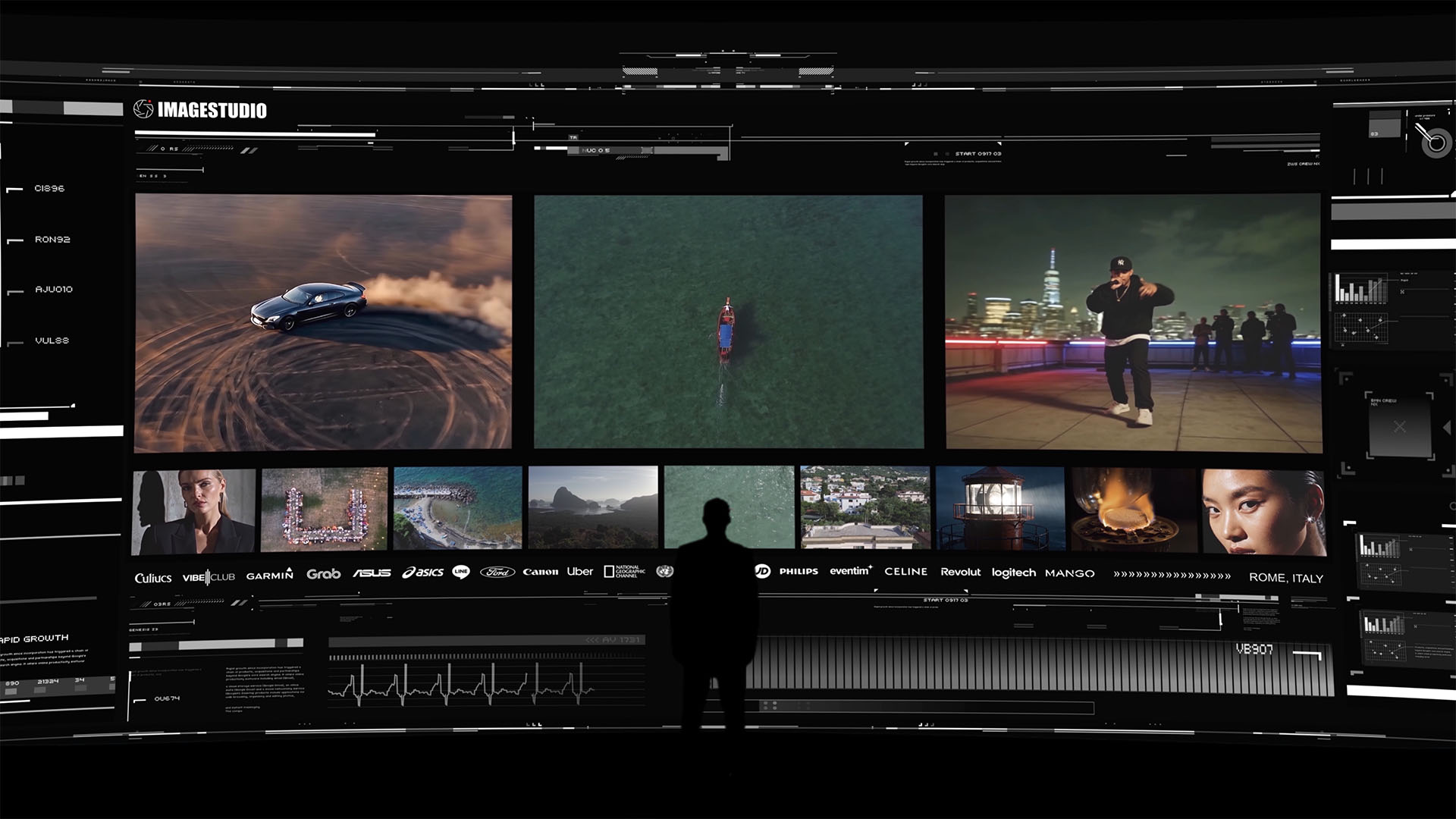
A high-end cinematic portfolio experience by Image Studio featuring automotive visuals, aerial cinematography, urban storytelling, and premium brand collaborations.
With over 14 years of experience and 250+ projects that have reached more than 150 million views, Imagestudio brings the production depth that label marketing and A&R teams expect. The studio’s workflow includes separate review-lane setup, version-controlled delivery, and technical QC before submission, which shortens approval cycles and reduces the back-and-forth that delays releases.
If you’re preparing to pitch or already in conversations with a label, the next step is a project consult. Visit Imagestudio’s film production page to outline your project and request a quote. Bring your concept, your release timeline, and any label brief you’ve received, and the team will build a production plan around it.
Useful sources and further reading
A few resources worth bookmarking as you prepare your video and pitch:
UMG Content Guide (technical specs) — the authoritative reference for frame size, frame rate, audio packaging, loudness standards, and file naming conventions required by major label distribution. Search “UMG Content Guide video asset specifications” to find the current version.
Music video production costs breakdown — Imagestudio’s editorial on music video production costs gives a detailed breakdown by production tier, useful for building a realistic budget before you approach a label.
TikTok platform guidelines — Imagestudio’s guide to TikTok content guidelines covers the platform rules that affect how your vertical edits can be monetized and distributed.
Music video production workflow — the filmmaker’s workflow guide from Imagestudio covers versioning, review-lane setup, and delivery documentation in practical detail.