

A complete guide to the music video production workflow, covering pre-production, shoot-day execution, post-production editing, budgets, timelines, and multi-platform distribution strategies for modern music videos.
← Back to Editorial
← Back to Editorial
Music Video Production Workflow: A Filmmaker’s Guide
June 17, 2026
A music video production workflow is a structured, phase-by-phase process that translates a song into compelling visuals through pre-production planning, shoot execution, post-production editing, and platform distribution. Mastering this process is what separates a chaotic shoot from a finished video that actually lands. Whether you’re directing your first independent release or managing a full crew, a clear workflow protects your creative vision and keeps the project on schedule. The industry term for this end-to-end process is production pipeline, and understanding each stage gives you real control over the outcome.
What are the key stages of a music video production workflow?
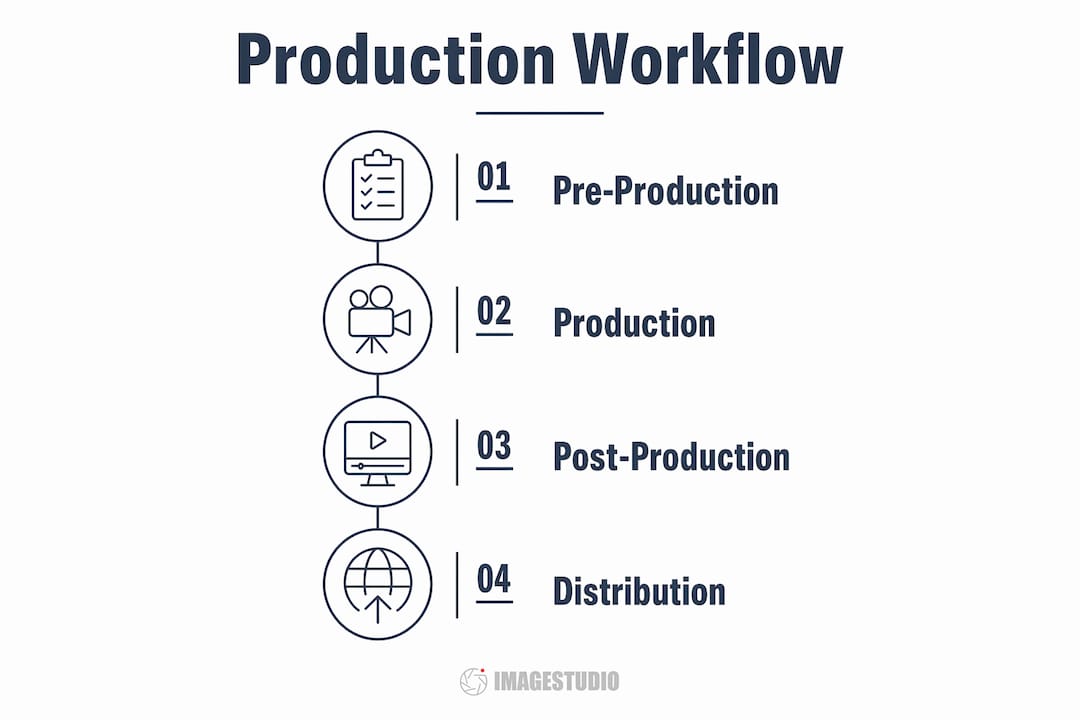
The music video making process breaks into four distinct phases, each with specific deliverables that feed directly into the next.
1. Pre-Production
Pre-production is where the entire project gets defined. The foundation is the treatment document, typically 2–4 pages outlining the concept, visual references, key scenes, and overall tone. That document becomes your creative contract with the artist. Alongside the treatment, you build mood boards, a shot list, a production schedule, and a call sheet listing every participant and their call times. Location scouting happens here too. Skipping any of these deliverables creates problems you’ll pay for on shoot day.
2. Production
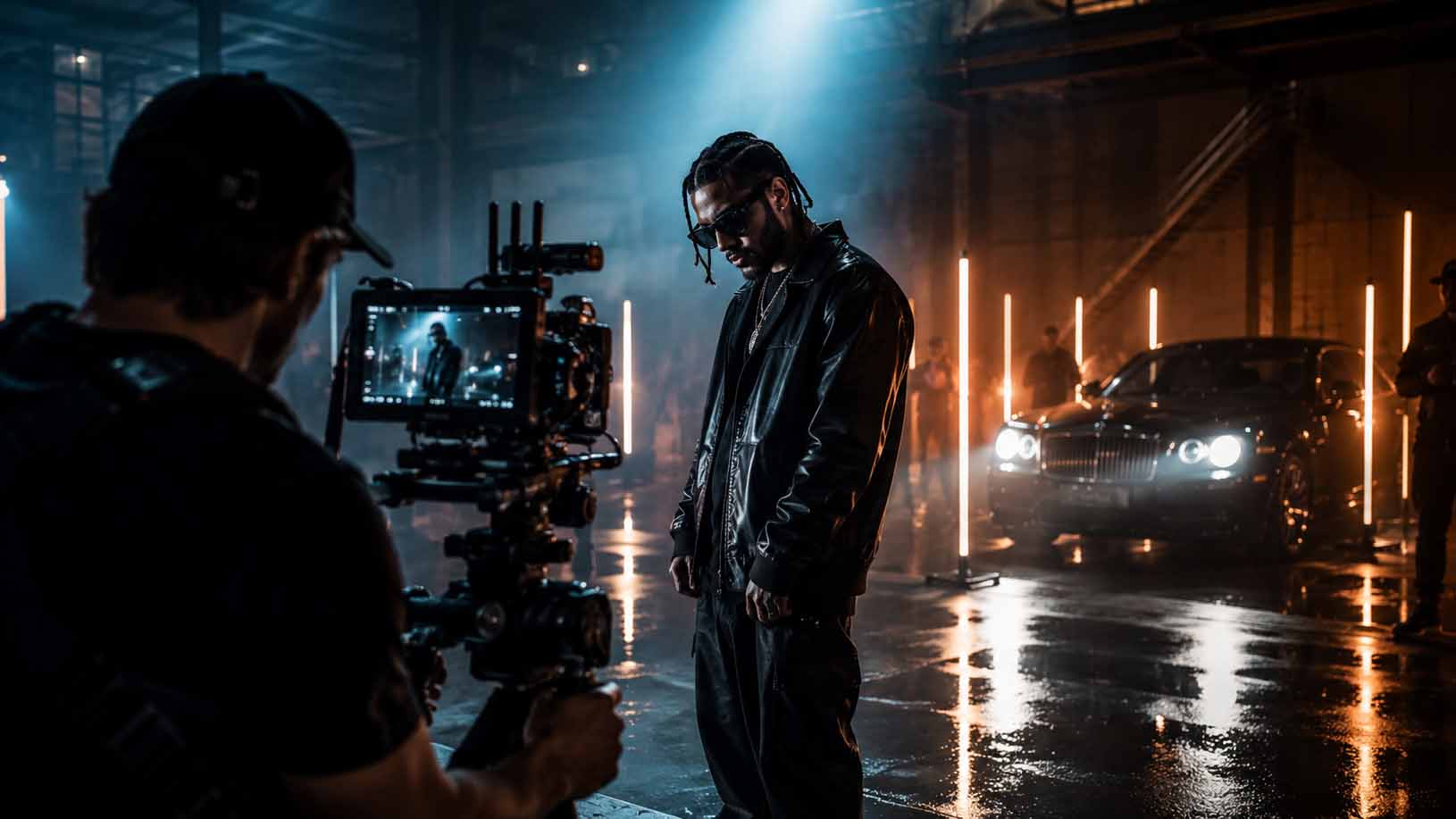
Shoot day is where planning either pays off or falls apart. The golden rule: lock performance takes first before capturing any B-roll or creative inserts. Performance footage is the editorial spine of the video. Once you have clean, synced performance takes in the can, every other shot becomes a bonus. Stick to your shot list, manage setup and breakdown time carefully, and treat the call sheet as a live document, not a formality.
3. Post-Production
Editing a music video follows a clear progression: footage review and selects, rough cut, fine cut, and picture lock. Multiple revision rounds, typically 2–4, are standard before final approval. The editor cuts to the rhythm of the song, weaving performance, narrative, and B-roll into a cohesive visual story. Color grading and audio finishing happen after picture lock.
4. Distribution
Distribution is a workflow stage most filmmakers underestimate. A practical release schedule might look like this: Tuesday hero video lock for a YouTube premiere, Wednesday delivery of Spotify Canvas and lyric video. Each platform requires specific format deliverables, and building that into your timeline from day one prevents last-minute scrambles.
Pro Tip: Build your distribution deliverables list during pre-production, not after picture lock. Knowing you need a vertical cut, a Spotify Canvas, and a lyric video changes how you shoot.
How do you plan for shoot day efficiency and creative clarity?
Shoot day efficiency lives or dies by the quality of your pre-production documents. Here is what actually moves the needle:
- Detailed shot lists prevent overruns. A two-page shot list keeps the crew moving without improvisation. Every shot you have to invent on set costs you 15–30 minutes you don’t have.
- Performance first, always. Capturing full, clean performance takes before anything else reduces sync mismatch and continuity issues in the edit. The emotional energy of a live performance take is nearly impossible to reconstruct from fragments.
- Plan for vertical formats from the start. Shooting vertical coverage or framing for a 9:16 aspect ratio during the shoot avoids costly reframing in post. TikTok and Instagram Reels are not optional distribution channels in 2026. They are primary ones.
- Use call sheets as operational control tools. Call sheets specify shoot times and build in buffer for setup and breakdown, especially on lighting-heavy sets. They prevent schedule collapse, not just confusion.
The concept behind the video also needs to be locked before you step on set. Effective workflows start with the song’s emotional core and a single, clear visual concept. When the concept is vague, every creative decision on set becomes a debate. When it’s clear, the crew moves with confidence.
Pro Tip: Run a pre-production meeting with your full crew 48 hours before the shoot. Walk through the shot list scene by scene. Problems that surface in that meeting cost you nothing. Problems that surface on set cost you everything.
What does post-production look like for music videos?
Post-production for music videos follows a defined editing arc. Understanding each phase helps you manage client expectations and deliver a polished final cut without endless revision cycles.
| Editing Phase | Purpose | Typical Duration |
|---|---|---|
| Footage Review and Selects | Identify best performance and B-roll takes | 1–2 days |
| Rough Cut | Establish structure, pacing, and song sync | 2–3 days |
| Fine Cut | Refine transitions, color temp, and narrative flow | 3–5 days |
| Picture Lock | Final approved edit before color and audio finish | 1 day |
| Color Grade and Finish | Apply grade, finalize audio, export deliverables | 2–4 days |
The rough cut is where you discover whether your shoot day coverage was sufficient. A strong rough cut uses performance footage as the backbone and layers in narrative or B-roll to support the song’s emotional arc. Cutting to the rhythm is not just about hitting beats. It means understanding when the song breathes and when it drives forward, then matching the visual pace to that energy.
Revision rounds are a normal part of the process. Two to four rounds is standard for independent productions. The key is defining revision scope upfront. Unlimited revisions without a defined scope is how projects stall for months. Set clear parameters: one round for structural notes, one round for fine-cut notes, and a final approval round before color.
For managing your finished video across platforms, format preparation matters as much as the edit itself. Export a 16:9 master, a 9:16 vertical cut, a square 1:1 version for Instagram feed, and a low-res preview for client approvals. Understanding social media video formats before you export saves hours of rework.
How long does a music video take and what does it cost?
Realistic timelines and budgets are the two things most filmmakers get wrong on their first few projects. Here is a grounded breakdown.
| Phase | Timeline | Budget Range |
|---|---|---|
| Pre-Production | 2–4 weeks | $500–$5,000 |
| Production (Shoot Days) | 1–2 days | $1,000–$20,000+ |
| Post-Production | 2–6 weeks | $1,500–$15,000 |
| Distribution Prep | 3–5 days | $200–$2,000 |
| Total End-to-End | 6–10 weeks | $0–$50,000+ |
The end-to-end timeline for an independent music video runs 6–10 weeks from commission to delivery. That range reflects the difference between a well-resourced project with a full crew and a lean DIY production. Both can produce excellent results.
Budgets range from $0 to $50,000+, but the determining factor for quality is not the number. It’s creative clarity. A $3,000 video with a sharp concept and disciplined execution beats a $20,000 video with a vague brief every time. Budget planning for music videos works best when you start with the concept and then figure out what it costs to execute it well, rather than starting with a number and trying to fit a concept inside it.
For filmmakers balancing creative ambition with real-world budgets, the same principles that apply to wedding videography budget planning apply here: prioritize the elements the audience will actually see and feel, and cut costs on the elements they won’t notice.
Key takeaways
A disciplined music video production workflow, built on creative clarity and structured phase management, is the single most reliable predictor of a successful final cut.
| Point | Details |
|---|---|
| Pre-production defines everything | A treatment, shot list, mood boards, and call sheet are non-negotiable deliverables before shoot day. |
| Performance takes come first | Locking clean performance footage before B-roll protects sync and editorial continuity. |
| Post-production needs defined revision rounds | Set 2–4 structured revision rounds upfront to prevent scope creep and project stalls. |
| Plan for multi-platform delivery early | Shoot vertical coverage during production to avoid costly reframing for TikTok and Reels. |
| Creative clarity beats budget size | A focused concept with disciplined execution outperforms a high-budget video with a vague brief. |
What i’ve learned directing music videos over 14 years
The most common mistake I see from filmmakers entering music video work is treating the shoot day as the creative moment. It isn’t. The creative moment is the treatment. By the time you’re on set, the decisions should already be made. Shoot day is execution, not exploration.
The second lesson took me longer to learn: the song tells you what the video needs. I’ve seen directors fight the emotional tone of a track to impose their own aesthetic, and the result always feels off. Start by listening to the song 20 times before you write a single concept note. Let the music set the emotional temperature, then build visuals that live inside that temperature.
On the logistics side, call sheets changed how I run sets. I used to treat them as administrative paperwork. Now I treat them as the operational heartbeat of the shoot. A well-built call sheet with realistic setup and breakdown buffers is what keeps a 12-hour shoot from becoming a 16-hour disaster.
The trend I’m watching most closely in 2026 is the shift toward multi-platform production from day one. Filmmakers who plan for vertical formats, short-form social cuts, and Spotify Canvas assets during pre-production are finishing projects faster and getting more distribution mileage from the same shoot. The ones who treat these as afterthoughts are spending extra weeks in post trying to salvage coverage that was never designed for those formats.
Conceptual clarity is the foundation. Everything else in the workflow is just the structure you build on top of it.
— Image Studio
How Imagestudio approaches music video production
Imagestudio has spent 14 years building cinematic music video production workflows that work for both emerging artists and established brands. With 250+ projects and over 150 million views, the team knows exactly where productions gain momentum and where they stall.
Every project at Imagestudio starts with a treatment and a clear creative brief, because that’s where the real work happens. From pre-production planning through color grading and multi-platform delivery, the studio’s film production process is built to protect your creative vision at every stage. If you’re ready to bring a music video concept to life with a team that treats workflow as a creative tool, not just a schedule, Imagestudio is the right partner.
FAQ
What is included in a music video treatment?
A treatment is a 2–4 page document covering the concept, visual references, key scenes, and overall tone. It serves as the creative blueprint for the entire production.
How many revision rounds are normal in post-production?
Two to four revision rounds are standard for independent music video productions before picture lock and final approval.
Why should you lock performance takes first on shoot day?
Locking performance takes first protects editorial sync and reduces continuity issues. Performance footage is the structural foundation of the edit, and everything else builds around it.
How long does a music video take to produce?
A typical end-to-end timeline runs 6–10 weeks, broken down as 2–4 weeks pre-production, 1–2 shoot days, and 2–6 weeks of post-production and delivery.
Do you need to shoot vertical footage for social media?
Shooting vertical coverage or framing for a 9:16 aspect ratio during production is the most efficient way to prepare for TikTok and Instagram Reels without reframing in post.
