Why Music Selection Matters for Cinematic Wedding Films
July 31, 2026
Discover how to choose the perfect music for a cinematic wedding film. Learn how music shapes emotion, pacing, and storytelling, understand licensing options, balance music with vows and ambient audio, and create a professional post-production workflow that delivers a timeless wedding film
Music selection is the single biggest creative decision in a cinematic wedding film. Lock your musical direction before you open the timeline, and you control the film’s emotion, pacing, and delivery schedule. Get it wrong, or leave it open-ended, and you’re looking at weeks of recutting and a film that never quite lands.
Three things to do right now:
Send clients a vibe brief during intake: mood keywords, preferred instruments, lyric policy, and a rough licensing budget.
Confirm your licensing path (curated library or bespoke commission) before primary assembly begins.
Set a hard music-approval deadline. Responsiveness to music direction is the single largest factor in a typical 12-week delivery timeline.
Quick operational checklist:
Capture a music direction brief at final contract or post-wedding intake.
Lock track selection by week 1–2 post-shoot.
Confirm licensing documentation before the edit begins.
Build your assembly around the chosen track, not a temp placeholder.
Table of Contents
Why does music selection matter so much in wedding films?
How music drives pacing, tempo, and your editorial arc
How do you balance music, ambient audio, and dialogue?
When should you involve clients in music decisions?
What do U.S. filmmakers need to know about music licensing?
Where should you source music for a luxury wedding film?
Post-production checklist for music-led edits
What’s the right call: custom score or licensed library?
Key Takeaways
The part most filmmakers skip
Imagestudio brings music-first production to luxury wedding films
Useful resources to check next
Why does music selection matter so much in wedding films?
Music preserves how the day felt, not just how it looked. Visuals document; music transports. Years after a wedding, the soundtrack is what pulls a couple back into the emotional state of that afternoon, not the color grade or the drone shot.
Ceremony prelude music functions as a neurological primer. Instrumentation and tempo establish an emotional baseline before vows are spoken, shaping guest expectations and the room’s collective readiness. A string quartet playing at a measured tempo signals formality and weight. An acoustic guitar creates intimacy. That same emotional signal carries directly into the edit, because the footage was captured inside that atmosphere.
The practical implication for luxury filmmakers: your music choice isn’t a finishing touch. It’s a foundational creative decision that shapes every cut, every breath, and every moment of silence you choose to protect.
How music drives pacing, tempo, and your editorial arc
Build the edit around the track, not the other way around. Tempo dictates cut speed; phrase length dictates where moments breathe; key changes signal emotional shifts that your cuts should honor, not fight.
Music-led editing checklist:
Export a tempo map from your DAW before assembly begins.
Mark key changes and phrase boundaries in your NLE timeline.
Align primary cuts to downbeats; let emotional moments (a look, a tear) land on phrase rests.
Match montage pacing to BPM: faster passages carry reception energy, slower passages carry ceremony weight.
Reserve phrase-length pauses for vows and speeches so dialogue breathes naturally over the track.
Pro Tip:Finalize music direction before primary assembly. Recutting to a different track after a locked assembly can add weeks to delivery and forces you to rebuild every emotional beat from scratch.
A practical three-tier workflow: start with a temp track to establish pacing intent, lock the final music direction before the fine cut, then build the music-locked fine cut as your deliverable branch. Never deliver from a temp-track assembly.
For editors who want to go deeper on syncing cuts to beats, the technical mechanics of beat alignment are worth mastering early.
How do you balance music, ambient audio, and dialogue?
The film’s emotional truth lives in the interplay of all three layers. Music that drowns vows isn’t cinematic; it’s just loud. The goal is a mix where viewers experience the soundtrack rather than notice it.
Scene type
Dialogue clarity
Ambient level
Music headroom
Vows / ring exchange
Primary (–)
Low (–)
Ducked (–)
Signing / processional
Secondary
Moderate (–)
Full (–12 dBFS)
Reception / toasts
Primary (–12 dBFS)
Low (–)
Ducked (–)
Montage / B-roll
None
Subtle (–)
Full (–10 dBFS)
On-set capture matters here. Record a clean ambient track at every venue location, separate from your primary audio feed. That isolated room tone gives you the flexibility to restore natural atmosphere under music without acoustic artifacts. Live musicians introduce timing flexibility that recorded playlists can’t match, but recorded music requires precise cueing and acoustic matching to avoid degrading ceremony audio.
For a deeper look at balancing audio layers in cinematic wedding work, Imagestudio’s guide covers the technical and creative side together.
When should you involve clients in music decisions?
Involve clients at intake, not mid-edit. The ideal moment is during the final delivery contract or the post-wedding intake call, when the emotional memory of the day is fresh and decisions come quickly.
Client music brief template:
Vibe keywords: three to five words describing the desired emotional tone (e.g., intimate, cinematic, joyful, understated).
Dos and don’ts: specific genres, artists, or instruments to include or avoid.
Lyric policy: instrumental only, lyrics acceptable, or specific lyric themes to avoid.
Budget range: subscription library track, per-track license, or open to bespoke commission.
Reference tracks: two to three songs that capture the feeling, even if they can’t be licensed.
Approval deadline recommendation: music locked by end of week 2 post-shoot for a standard 12-week turnaround. Miss that window and the timeline compresses at the fine-cut stage.
Timeline in plain terms: days 0–14 briefing and music selection, weeks 2–4 track confirmation and licensing, weeks 4–8 primary edit, week 10 client review, week 12 delivery.
Pro Tip:Build music approval into your contract as a milestone with a stated consequence: “Music direction not confirmed by [date] may extend delivery by up to two weeks.” Clients respond faster when the timeline impact is explicit.
Mastering client approval workflows is one of the most underrated skills in post-production management.
What do U.S. filmmakers need to know about music licensing?
Unlicensed commercial music risks platform removal and muted content. The cleared path is either a licensed library track or a commissioned original work, documented with a cue sheet.
Two licenses, one song: a sync license covers the right to use the musical composition; a master license covers the right to use a specific recording of that composition. For a commercial song, you typically need both. For a library track, the platform usually bundles both into a single agreement.
U.S. performance rights organizations to know: ASCAP, BMI, and SESAC each administer performance rights for different catalogs. For wedding films delivered online, sync and master rights are the primary concern, but PRO registration matters for broadcast or public screening contexts.
Licensing checklist:
Confirm whether you need a sync license, a master license, or both.
For commercial songs, contact the publisher for sync clearance.
Secure the master license from the label or rights holder separately.
Get written confirmation of all permissions before the edit is locked.
Prepare a cue sheet listing every track, its duration, and rights holder for platform delivery.
License type
What it covers
Who grants it
Sync license
Use of the musical composition
Music publisher
Master license
Use of the specific recording
Record label / rights holder
Library license
Both sync and master (bundled)
Licensed library platform
For most luxury wedding edits, a licensed library track is the predictable default. Clearing a popular commercial song can cost anywhere from a few hundred to several thousand dollars depending on the rights holders and intended use.
Where should you source music for a luxury wedding film?
Choose the source that matches your client’s priorities. Speed and budget favor curated libraries; exclusivity and bespoke emotional fit favor composers.
Sourcing options at a glance:
Musicbed is a go-to for cinematic, high-production-quality tracks with clear licensing for online delivery. The catalog skews toward the kind of orchestral and indie-cinematic sound that luxury wedding films typically need.
Artlist and Soundstripe operate on annual subscription models, offering unlimited downloads with broad licensing terms that cover online video delivery.
Music Vine and Epidemic Sound provide per-track and subscription options with strong search tools for mood and tempo, useful when you need to match a specific emotional beat quickly.
Bespoke composers deliver exclusivity and a score built around your specific edit, but require lead time and a higher budget that clients need to fund upfront.
Sourcing option
Licensing model
Cost shape
Customization
Clearance speed
Cinematic suitability
Musicbed
Per-track or subscription
Moderate
Off-the-shelf
Fast
High
Artlist / Soundstripe
Subscription
Low annual fee
Off-the-shelf
Immediate
Moderate–High
Music Vine / Epidemic Sound
Subscription / per-track
Low–Moderate
Off-the-shelf
Immediate
Moderate
Bespoke composer
Commission
High
Fully custom
Weeks–months
Highest
Recommendation: luxury clients who want a signature sound and have the budget should commission original work. Clients on tighter timelines or moderate budgets get excellent results from Musicbed or Music Vine.
Post-production checklist for music-led edits
A music-aware post workflow prevents recutting. The goal is a pipeline where replacing a track, if it ever becomes necessary, doesn’t collapse your entire edit.
Core checklist:
Export a tempo map from your DAW and import it into your NLE before assembly.
Lock music markers in the timeline before the fine cut begins.
Export reference stems (music, dialogue, ambient) as separate files at the end of each session.
Maintain a “music-locked” project branch distinct from your working branch.
Store all license documentation in the same folder as the project deliverables.
Deliverables table:
Deliverable
Format
Notes
Trailer / teaser
H.264, short
Social-optimized, music-licensed for platform
Highlight film
ProRes / H.264, medium
Music-locked, cue sheet attached
Full ceremony film
ProRes, long
Dialogue-primary mix, ambient preserved
Music stems
WAV
Separate music, dialogue, ambient
Cue sheet
PDF
All tracks, durations, rights holders
For client review rounds, limit music feedback to a single dedicated round before the fine cut. Open-ended change requests after music is locked are the fastest way to blow a delivery window. Faster audio post-production starts with structured review cycles, not just faster editing.
What’s the right call: custom score or licensed library?
Default to a high-quality licensed cinematic library for predictable delivery. Reserve bespoke scoring for clients who understand the lead time and are willing to fund it.
When bespoke wins:
The client brief describes an emotional tone that no existing library track captures.
The couple wants an exclusive soundtrack with no risk of the same music appearing in another film.
Budget allows for composer fees and the additional weeks of lead time.
When a library wins:
Timeline is fixed and music needs to be locked within two weeks of the shoot.
Budget is moderate and the emotional brief can be matched by existing cinematic tracks.
The director needs licensing clarity without navigating publisher negotiations.
The honest truth: for most luxury wedding films, a well-chosen Musicbed or Music Vine track, selected with care and cut with intention, delivers the emotional result clients are paying for.
Key Takeaways
Music selection is the primary creative and scheduling lever in cinematic wedding films: lock direction before editing, choose a cleared licensing path, and set client approval deadlines to protect a typical 12-week delivery timeline.
Point
Details
Lock music before editing
Finalizing track direction before assembly prevents recutting that can add weeks to delivery.
Use a cleared licensing path
Licensed library tracks (Musicbed, Artlist, Music Vine) bundle sync and master rights for predictable online delivery.
Set client approval deadlines
Music locked by week 2 post-shoot keeps a typical 12-week turnaround on track.
Protect the soundscape
Record isolated ambient tracks on set; duck music under vows and dialogue to preserve emotional clarity.
Imagestudio’s approach
Imagestudio uses music-first edit workflows with compositional briefs and licensing management built into every luxury wedding production.
The part most filmmakers skip
There’s a tendency in this industry to treat music as the last creative decision, something you sort out once the rough cut is assembled. That instinct makes sense on paper: see the footage first, then find a track that fits. In practice, it’s the single most expensive habit a wedding filmmaker can have.
The films that hold up, the ones couples watch on anniversaries and share with their children, are built around a musical identity from the first frame. The edit serves the music, not the other way around. When you hand a client a film where the track feels chosen rather than found, they feel it immediately, even if they can’t articulate why.
The other thing worth saying plainly: music approval delays are a client-management problem, not a creative one. The filmmakers who consistently deliver on time are the ones who treat music selection as a contractual milestone with a real deadline, not a collaborative conversation that stays open until the edit is done.
Imagestudio brings music-first production to luxury wedding films
Imagestudio’s luxury wedding film production is built around a music-first workflow from the very first client conversation. That means compositional briefs at intake, established composer relationships for clients who want a bespoke score, and licensing management handled as part of the production process, not an afterthought.
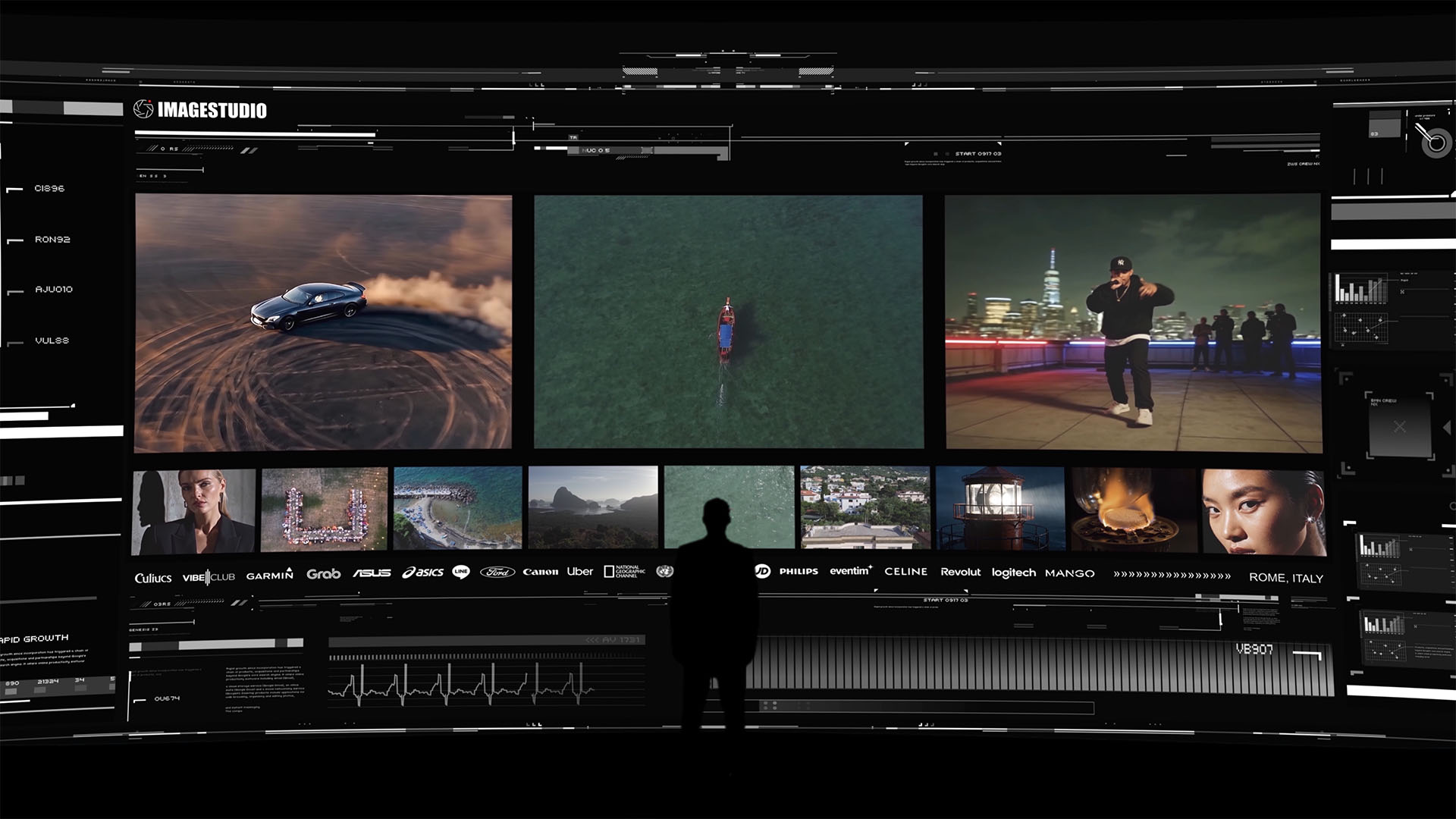
A high-end cinematic portfolio experience by Image Studio featuring automotive visuals, aerial cinematography, urban storytelling, and premium brand collaborations.
With 14+ years of experience, 250+ projects, and over 150 million views across productions, Imagestudio brings the same editorial discipline to wedding films that it applies to commercial and documentary work. Every luxury wedding package includes a music direction brief, a licensed track selection process, and a music-locked edit guarantee so delivery timelines stay predictable.
To get started, bring a mood board, two or three reference tracks that capture the feeling you’re after, and a rough sense of your licensing budget. Reach out to Imagestudio to discuss your project and get a custom production proposal.
Useful resources to check next
ASCAP (ascap.com): search the repertory database to verify composition rights holders before requesting a sync license.
BMI (bmi.com): check BMI’s catalog for performance rights registration and publisher contact details.
SESAC (sesac.com): smaller PRO with a selective catalog; worth checking for independent and boutique composers.
Musicbed (musicbed.com): review licensing tiers, exclusivity options, and cinematic catalog depth; strong default for luxury wedding work.
Artlist (artlist.io): evaluate annual subscription terms and platform coverage, particularly for social media deliverables.
Music Vine (musicvine.com): check mood-based search tools and per-track licensing for targeted emotional matching.
Epidemic Sound (epidemicsound.com): review subscription model and clearance scope for online video delivery.
Soundstripe (soundstripe.com): compare unlimited-download subscription terms and catalog size against your typical project volume.