
Master the behind-the-scenes photography production process with this complete guide covering pre-production planning, tethered workflows, on-set shooting techniques, post-production editing, and professional image delivery.
← Back to Editorial
← Back to Editorial
Behind-the-Scenes Photography Production Stages Guide
June 12, 2026
Behind-the-scenes photography production stages are the structured phases that take a shoot from initial concept through final delivery, shaping every authentic image captured along the way. Mastering these stages is what separates a scattered collection of candid snaps from a purposeful visual story that serves marketing, archival, and storytelling goals. Modern tools like Capture One for tethered shooting and cloud-based set-to-post pipelines have made the photography production process more collaborative and efficient than ever. Whether you are documenting a solo corporate shoot or a 50-person film set, understanding each phase gives you the creative and technical foundation to do it right.
1. What are the main behind-the-scenes photography production stages?
The photography production process breaks into five core phases: pre-production planning, on-set setup, active BTS capture, post-shoot editing and proofing, and final delivery with archival storage. Each phase builds on the last, and skipping any one of them creates gaps that show up in the final image set. Pre-production planning reduces cost and risk during principal photography by preparing BTS workflows before a single frame is shot. Think of it as your creative blueprint.
Here is a quick overview of each stage:
- Pre-production: Concept development, script reading, equipment selection, and crew coordination
- On-set setup: Camera configuration, tethering connections, monitor placement, and lighting checks
- Active capture: Shooting BTS moments with discretion, anticipating key scenes using blocking and script notes
- Post-shoot editing: Culling, retouching, proofing rounds, and client feedback integration
- Delivery and archival: Exporting final files, applying metadata, licensing documentation, and organized long-term storage
Pro Tip: Read the script before you arrive on set. Knowing which scenes carry emotional weight lets you pre-position yourself and your gear for the moments that matter most.
2. How tethering technology transforms the BTS workflow
Tethered shooting is the practice of connecting your camera directly to a computer so that RAW files are saved and displayed in real time during the shoot. Wireless tethering latency ranges from one to three seconds per image, while wired tethering is near-instant. That difference matters enormously when a director or client wants to approve a lighting setup before the talent moves on. Capture One is the industry standard for tethered workflows because it combines live view, color grading, and client proofing in a single interface.
The practical benefits of tethering go beyond speed:
- Instant exposure review: You catch focus or exposure errors before they become unusable selects
- Client collaboration: Art directors and brand managers can approve frames on a calibrated monitor without crowding your viewfinder
- Reduced reshoots: Real-time feedback cuts the number of costly do-overs
- Metadata consistency: Files are named and tagged automatically as they land on the drive
Cable management is the unglamorous skill that separates experienced tethered shooters from beginners. Use a cable clip or TetherTools JerkStopper to prevent accidental disconnects. On location, a secondary backup drive running simultaneously protects against data loss if the primary connection drops.
Pro Tip: On busy sets, position your tethered monitor at eye level for the client or director. When they can see results without asking, approvals happen faster and you spend less time defending your choices.
3. Best practices for capturing BTS images without disrupting production
Unit still photographers on major productions work 70-plus hours per week, capturing publicity photos and continuity plates while staying completely invisible to the cast and crew. Their core skill is discretion. A camera shutter firing at the wrong moment can ruin a take and damage your relationship with the director permanently.
Here are the practices that keep you productive and welcome on set:
- Muffle your camera: Sound blimps and electronic front curtain shutter modes reduce noise significantly in quiet scenes
- Use predictive positioning: Anticipating shot locations by reading the script and watching director blocking lets you pre-position without scrambling
- Balance wide and tight: Alternate between wide contextual frames that show the full set environment and tight detail shots of costumes, props, and lighting rigs for continuity documentation
- Respect the flow: Move during loud takes, not quiet ones. Learn the rhythm of the production before you start shooting aggressively
- Know when to hold back: Ethical BTS photographers sometimes choose not to shoot to preserve the integrity of a fragile emotional moment. That restraint is a professional skill, not a missed opportunity
Unit still photographers also serve as continuity intelligence, capturing detailed costume and set images that editors and wardrobe departments rely on for scene matching. This dual role makes the BTS photographer one of the most quietly indispensable people on a professional set.
4. What the post-production and delivery process looks like
Post-production for BTS photography follows a clear sequence: cull, retouch, proof, revise, approve, and deliver. Editing cleans images and proofs are shared for client feedback before final high-quality exports are packaged with licensing instructions. The goal of retouching in BTS work is authenticity, not fabrication. You are cleaning up distractions, not constructing a fantasy.
| Stage | What happens | Key tool |
|---|---|---|
| Culling | Select best frames from raw shoot | Capture One, Lightroom |
| Retouching | Color correct, remove distractions | Adobe Photoshop, Lightroom |
| Proofing | Share selects for client feedback | Online gallery platforms |
| Final delivery | Export TIFFs and JPEGs with metadata | Dropbox, WeTransfer, hard drive |
| Archival storage | Organize with consistent file naming | External RAID, cloud backup |
Modern BTS workflows are increasingly integrated with cloud-based set-to-post pipelines, which speed up the handoff between on-set capture and post-production editing. Metadata synchronization across the pipeline means your images arrive in the editing suite already tagged with scene numbers, camera data, and usage rights. That organization pays off months later when a marketing team needs to pull specific frames for a campaign.
Pro Tip: Deliver two rounds of proofs maximum. More than that signals unclear creative direction from the start. Set expectations in pre-production by agreeing on the number of revision rounds before the shoot day.
5. How production complexity changes your BTS approach
The stages of photo production stay consistent across shoot types, but the execution scales dramatically with complexity. A solo corporate headshot session might involve one photographer, a laptop, and a single tether cable. A Netflix underwater production, by contrast, reported 50-plus crew members and six RED underwater cinema units alongside multiple GoPros, all requiring synchronized frame and exposure management. The BTS photographer on that shoot faces logistical challenges that simply do not exist on a small set.
| Production type | BTS crew size | Key challenges |
|---|---|---|
| Solo corporate shoot | 1 photographer | Tethering setup, client communication |
| Mid-size commercial | 2 to 3 BTS crew | Coordinating with multiple departments |
| Large film production | 4-plus BTS crew | Multi-camera sync, access restrictions |
| Live performance | 1 to 2 photographers | Timing precision, limited windows |
Live performance BTS photography deserves its own mention. Marketing moments must be captured during limited performance windows, which means there is no second take and no asking the cast to hold a pose. Timing and precision are everything. Photographers working theater or concert BTS shoots often pre-mark positions in the venue during rehearsal and assign specific scenes to specific camera angles before the performance begins.
For complex shoots, equipment planning in pre-production is non-negotiable. Multi-camera BTS setups require synchronized timecodes, consistent white balance settings across bodies, and a clear chain of command for who approves selects. Staffing decisions, from whether you need a dedicated digital imaging technician to how many assistants manage cables and drives, all get made before the first day of principal photography.
Key takeaways
Mastering behind-the-scenes photography production stages requires disciplined pre-production planning, ethical on-set discretion, and a structured post-production workflow that prioritizes authenticity and organized delivery.
| Point | Details |
|---|---|
| Pre-production is the foundation | Script reading and gear prep before the shoot day prevents costly on-set scrambling. |
| Tethering accelerates approvals | Wired tethering with Capture One delivers near-instant client proofing and reduces reshoots. |
| Discretion defines professionalism | Unit still photographers use sound blimps and predictive positioning to stay invisible on set. |
| Post-production needs structure | A cull, retouch, proof, and deliver sequence keeps client feedback rounds manageable. |
| Complexity demands scalability | BTS workflows scale from solo tethered setups to multi-camera synced crews depending on production size. |
What I have learned from years inside the production frame
The thing most aspiring BTS photographers underestimate is how much of the job happens before you pick up a camera. Pre-visualizing your shots using the script and blocking notes is not optional preparation. It is the difference between being in the right place when a director calls action and scrambling to catch up after the moment has passed.
I have also watched talented photographers lose access on set because they prioritized their own creative instincts over the production’s needs. The ethical dimension of BTS work is real. Knowing when to put the camera down, as Hamnet photographer Agata Grzybowska describes it, is as important as knowing when to shoot. Productions remember photographers who protected their process.
Tethering technology has genuinely changed the creative conversation on set. When a client can see a frame on a calibrated monitor thirty seconds after it is captured, the feedback loop becomes collaborative rather than adversarial. That shift in dynamic makes the whole shoot more productive and more enjoyable for everyone involved.
My honest advice for anyone building their BTS practice: invest in workflow discipline first and gear second. A photographer with a clear file naming system, a reliable tether setup, and two backup drives will outlast one with expensive cameras and no organizational structure every single time.
— Image Studio
See your production vision come to life with Imagestudio
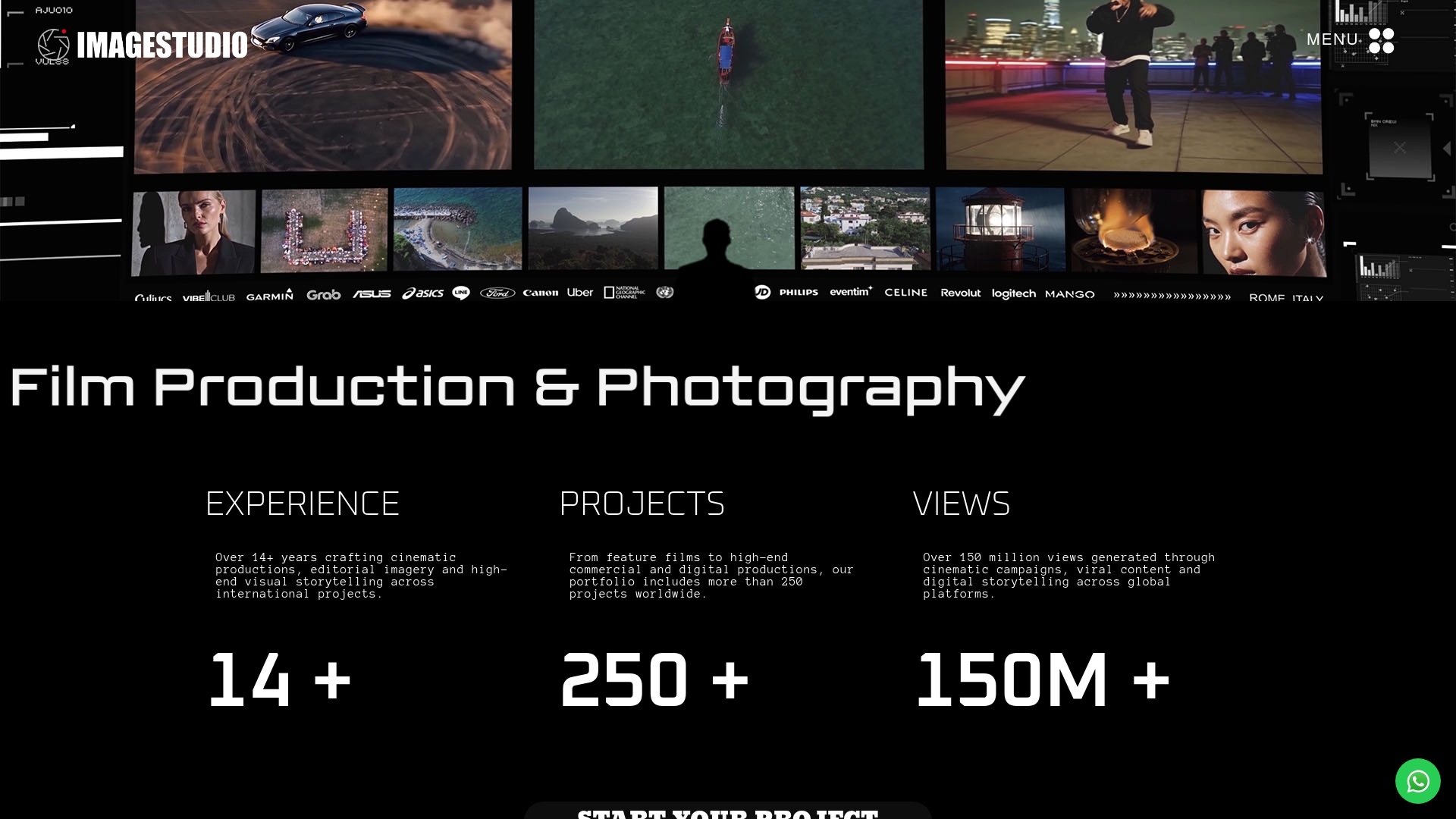
Imagestudio brings over 14 years of experience and 250-plus projects to every production, with a track record that includes collaborations with National Geographic and recognition from prestigious film festivals. The team understands every phase of the cinematic production process, from pre-production planning through final delivery, and applies that knowledge to BTS photography workflows that serve both creative and commercial goals. Whether you are building your skills on a first production or scaling up to a complex multi-camera shoot, Imagestudio’s commercial production expertise gives aspiring photographers and filmmakers a real-world environment to grow in. Explore what a professional BTS workflow looks like from the inside.
FAQ
What are the core stages of photo production?
The core stages of photo production are pre-production planning, on-set setup, active capture, post-shoot editing and proofing, and final delivery with archival storage. Each stage builds directly on the previous one to create a coherent, efficient workflow.
How does tethered shooting improve a BTS workflow?
Tethered shooting connects the camera to a computer so RAW files display in real time, enabling instant client approvals and reducing costly reshoots. Wired tethering through software like Capture One is near-instant, while wireless options introduce one to three seconds of latency.
What makes a BTS photographer effective on a film set?
Effective BTS photographers use predictive shot planning based on script reading and director blocking, muffle camera noise with sound blimps, and know when to hold back to protect fragile scenes. Discretion and crew coordination are as important as technical skill.
How do you handle BTS photography for complex productions?
Complex productions like underwater shoots or live performances require multi-camera synchronization, pre-assigned shooting positions, and a larger BTS crew with clear roles. Pre-production planning and equipment prep become significantly more detailed as crew size and technical demands grow.
What file formats should BTS photos be delivered in?
Final BTS deliveries typically include high-resolution TIFFs for archival and editorial use alongside JPEGs for digital and social media distribution, both accompanied by embedded metadata and licensing documentation.
