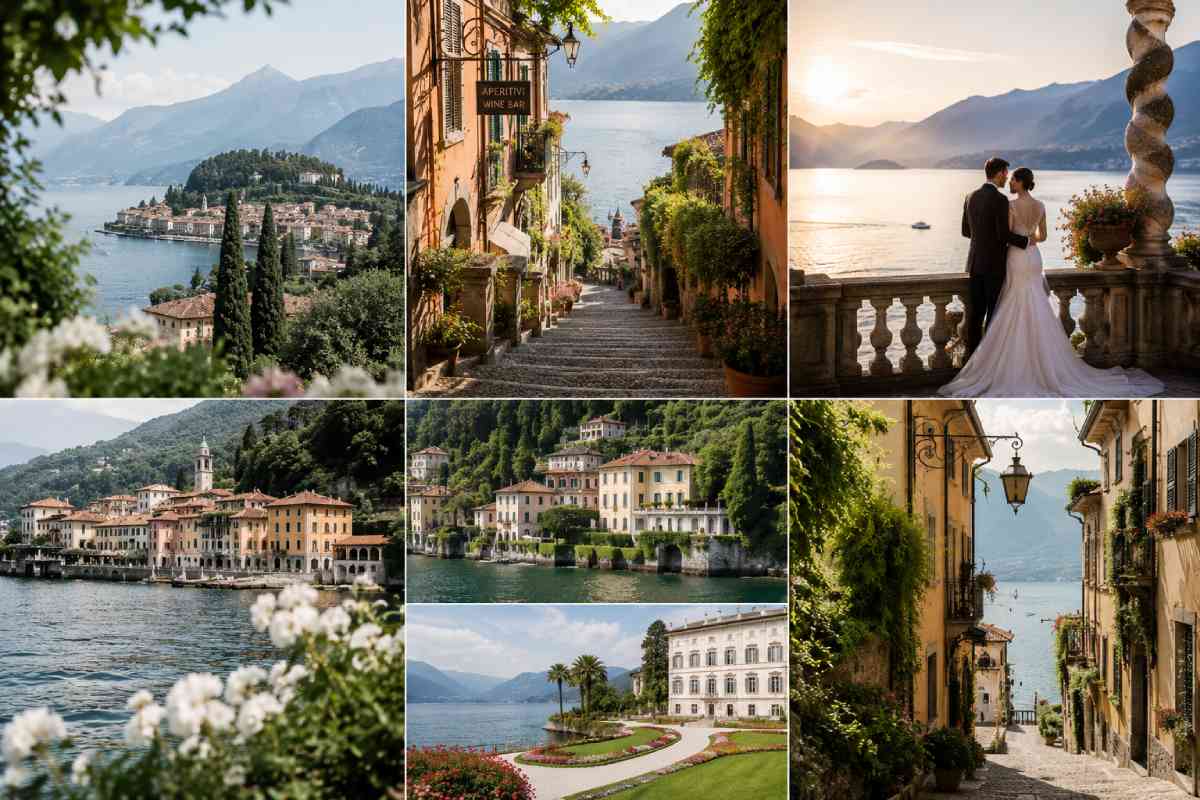
Bellagio Through Our Lens: Photographing Lake Como’s Most Elegant Village
August 25, 2026
A photographer’s visual guide to Bellagio, from its historic centre and lake views to Pescallo, San Giovanni, Loppia and Villa Melzi with practical insight into light, crowds, routes and storytelling.
IMAGE STUDIO · DESTINATION
A photographer’s visual guide to Bellagio — its light, streets, lake edges, quieter hamlets and the decisions that turn a famous destination into a coherent story.
DIRECT ANSWER Bellagio photographs best when it is treated as a sequence rather than a checklist. The historic centre gives architecture and movement; Punta Spartivento explains geography; Pescallo and San Giovanni slow the pace; Loppia and Villa Melzi introduce gardens and lakeside refinement. The strongest story usually comes from combining only a few of these environments with intention.
1.Bellagio Is Famous. That Is Not the Same as Knowing How to Photograph It.
Bellagio is one of the most recognisable places on Lake Como, but recognition creates a photographic problem. Famous stairways, lakefront views and postcard angles can make it easy to reproduce what already exists instead of discovering what belongs to the couple, the light and the day in front of you.
The village rewards photographers who understand its structure. Bellagio sits at the tip of the promontory dividing the Como and Lecco branches of the lake. The municipality describes it as one of the lake’s most distinguished resort destinations, shaped by aristocratic villas and parks and established by the nineteenth century as one of Europe’s renowned holiday destinations.
That geography is not background information. It explains why Bellagio offers so many changes of orientation within a relatively compact area: steep lanes, two lake-facing sides, elevated views, enclosed streets, gardens, fishing hamlets and boat approaches.
KEY INSIGHT The most recognisable photograph of Bellagio is not automatically the photograph that best explains Bellagio. A stronger visual story moves between scale, intimacy, architecture, people and water.
Promontory at the meeting point of the Como and Lecco branches of Lake Como.
Visual character
Stone stairways, lakefront façades, narrow streets, gardens, mountain scale and water.
Historic centre route
Official Bellagio material describes an approximately one-hour historical walk through the Borgo.
Hamlets route
Official tourism material connects Pescallo, San Giovanni, Loppia and Villa Melzi in an approximately two-hour walking circuit from Piazza Mazzini.
Best photographic strategy
Use fewer locations with distinct visual roles rather than trying to collect every famous viewpoint.
Main consideration
Crowds, walking gradients, ferry movement, opening hours and changing light can alter the usefulness of each location.
GOOD TO KNOW Bellagio’s official tourism itineraries already reveal something photographers should use: the village is not one location. The historic centre and the quieter hamlets form a connected visual system, and the route can be followed in more than one direction.
3.The Photographer’s Bellagio
A complete Bellagio story does not need every location. It needs contrast. The aim is to move between environments that contribute something different.
PLACE
VISUAL ROLE
PHOTOGRAPHIC CHARACTER
Historic centre
Energy + architecture
Stone stairs, façades, compressed streets, shopfront rhythm, movement.
Punta Spartivento
Geography + scale
Open water, mountain layers, meeting point of the lake branches.
Pescallo
Quietness + texture
Small-hamlet atmosphere, waterfront calm, less monumental scale.
San Giovanni
Local character
Lakeside village rhythm, harbour context, lived-in atmosphere.
Loppia
Transition + restraint
Lakeside edge, historic context, quieter movement toward Villa Melzi.
Villa Melzi
Refinement + landscape
Gardens, sculpture, lake views, botanical layers and architectural control.
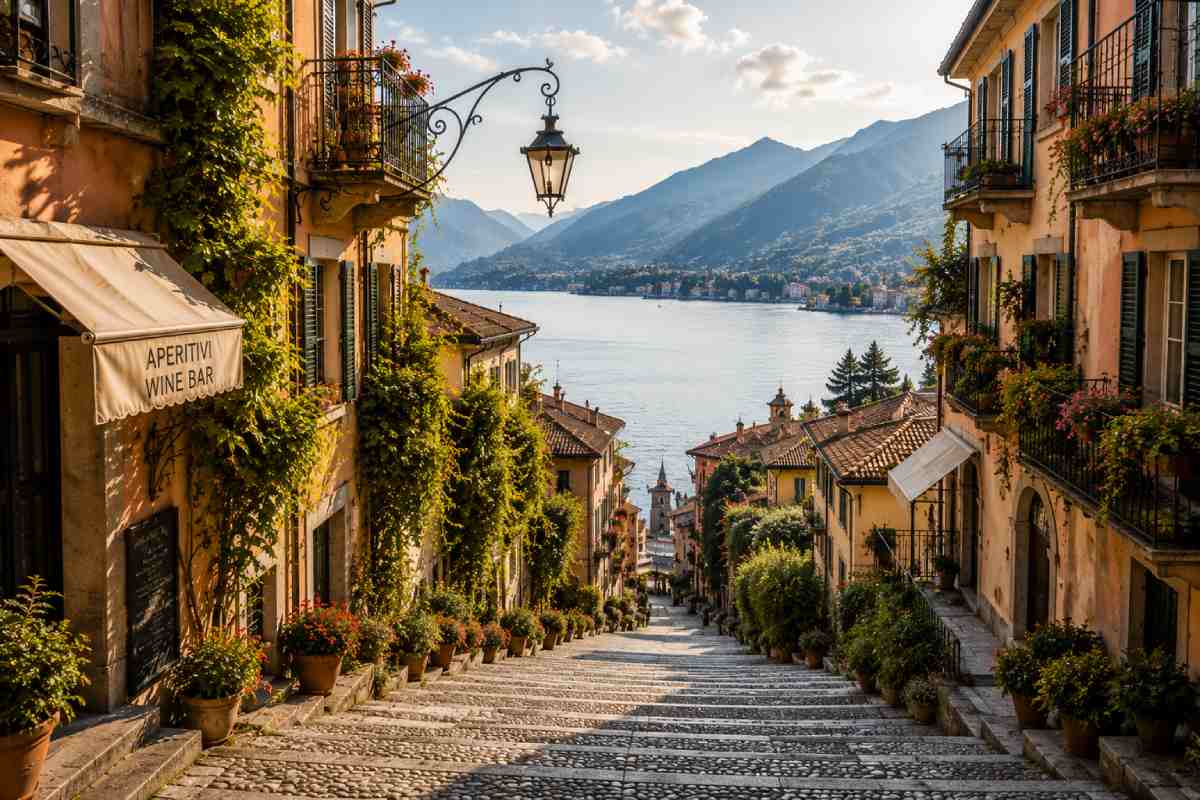
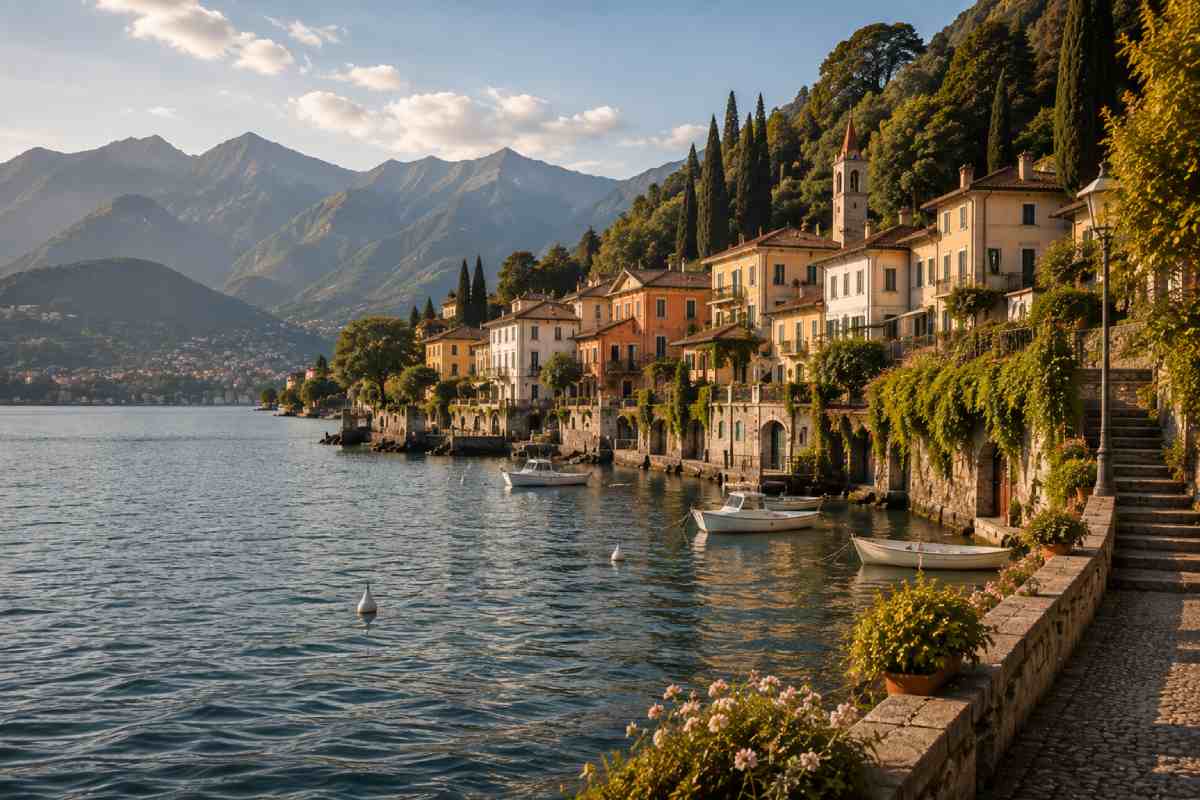
Bellagio’s historic centre, where stone stairways, warm Italian façades and glimpses of Lake Como create one of the village’s most distinctive photographic settings.
1. The Historic Centre: Photograph Movement, Not Just Stairways
Bellagio’s historic centre is visually dense. The famous salite create lines, repetition and elevation, but they also attract crowds and encourage photographers to make the same frontal compositions repeatedly. The stronger approach is often to use the streets as a moving environment rather than a fixed landmark.
A couple walking uphill, turning a corner, pausing at a doorway or crossing between light and shade can produce a more believable sequence than five variations of the same staircase portrait.
FIELD NOTE Narrow streets reward lens discipline. A wider lens can exaggerate architecture and proximity; a longer lens can compress layers of people, signs and stone. Neither is automatically better — the choice should match whether the frame is about place or intimacy.
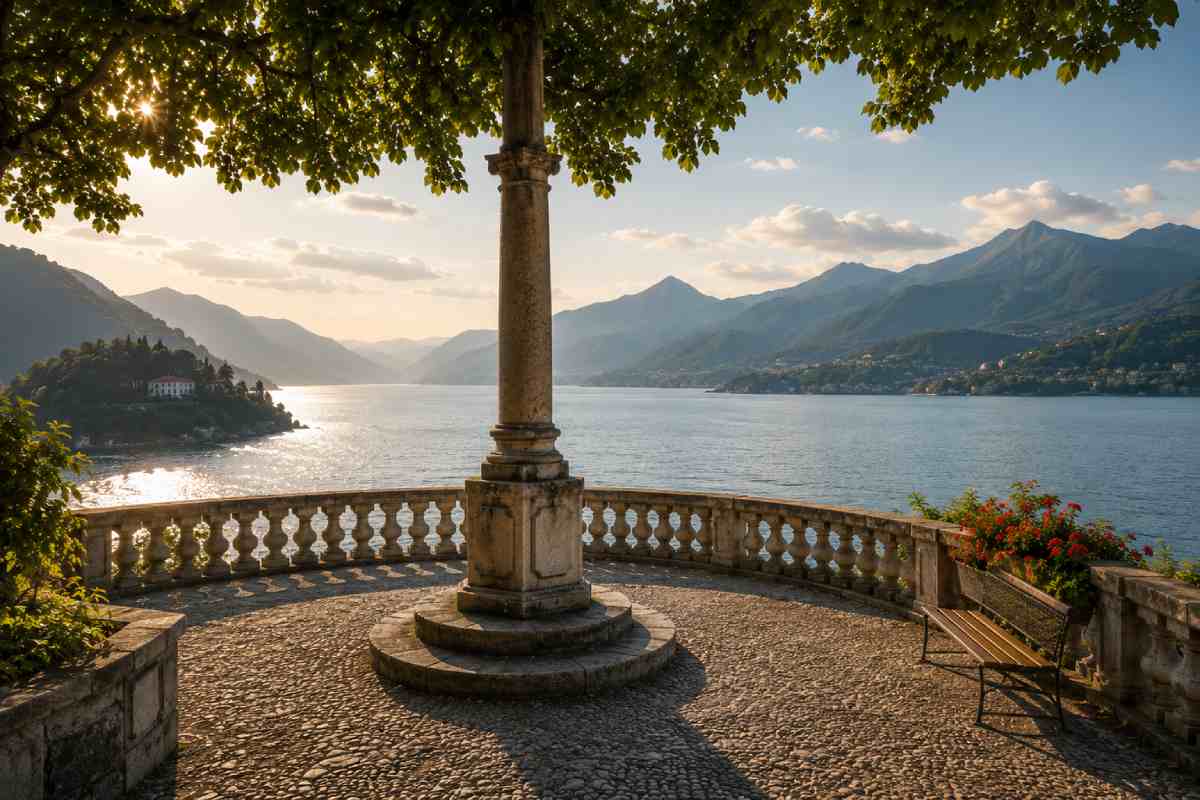
Punta Spartivento reveals Bellagio’s extraordinary position on Lake Como, opening toward the water and surrounding mountain landscape.
2. Punta Spartivento: Use the View to Explain Geography
Punta Spartivento sits at the extreme point of the promontory and visually explains why Bellagio feels different from other Lake Como villages. Open water and mountain branches create a much broader frame than the historic centre.
This is useful for establishing photographs, but it should not dominate the gallery. When every image tries to show the entire lake, the people become small and the visual rhythm becomes repetitive.
KEY INSIGHT Use panoramic scale sparingly. One or two frames can establish Bellagio; the rest of the story should return to people, gestures and proximity.
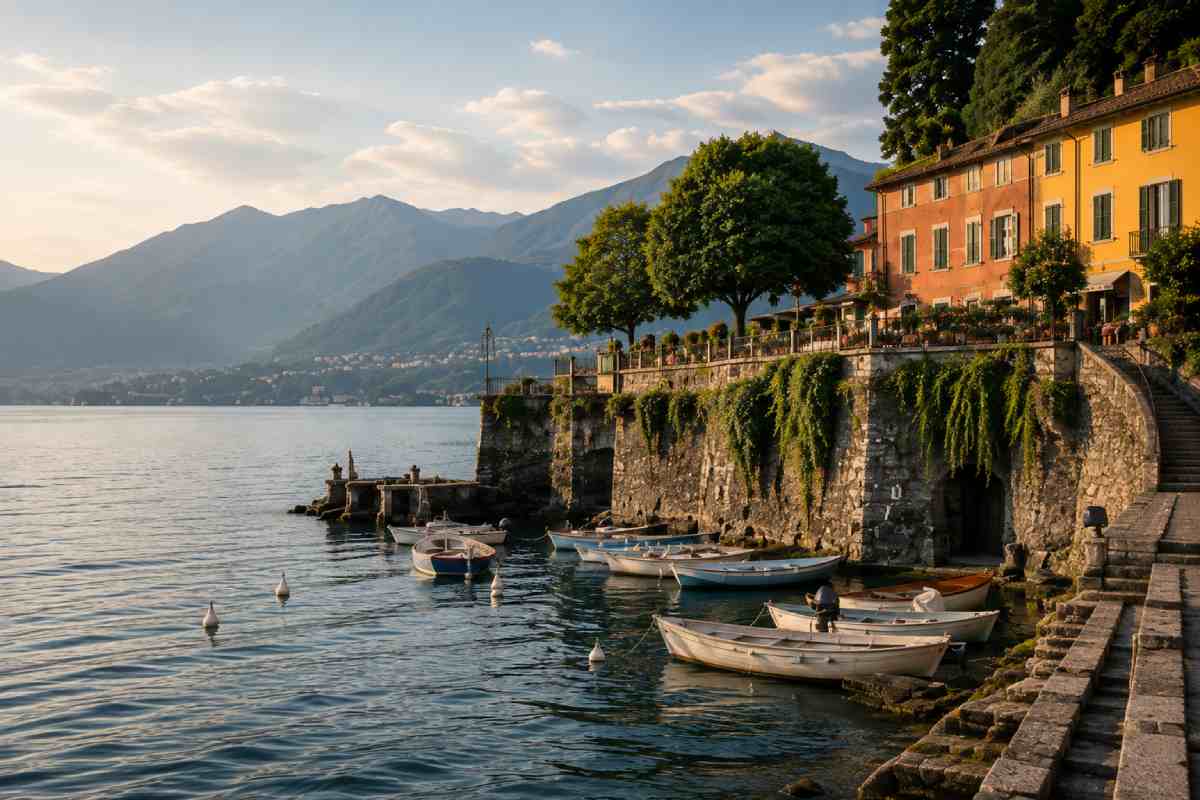
The quiet waterfront of Pescallo reveals a more intimate side of Bellagio, where traditional boats, stone architecture and the mountains of Lake Como create a naturally cinematic setting.
3. Pescallo: The Counterpoint to the Postcard
Official Bellagio tourism material still describes Pescallo as retaining the character of a fishing village. That makes it photographically valuable because it offers a different tempo from the Borgo. The visual language becomes quieter: water, small squares, harbour details and a less theatrical relationship with the lake.
Pescallo works especially well when the objective is not “another Bellagio landmark” but a chapter that feels more private and observational.
San Giovanni reveals Bellagio beyond its famous centre, with an intimate waterfront, traditional architecture and a quieter relationship with Lake Como.
4. San Giovanni: Bellagio Beyond the Famous Centre
San Giovanni expands the story further. The official tourism route connects it with the Museum of Navigation Instruments and the lakeside hamlet itself. For photography, the value is not the museum as a prop; it is the opportunity to move into a different local texture before returning toward Loppia and Villa Melzi.
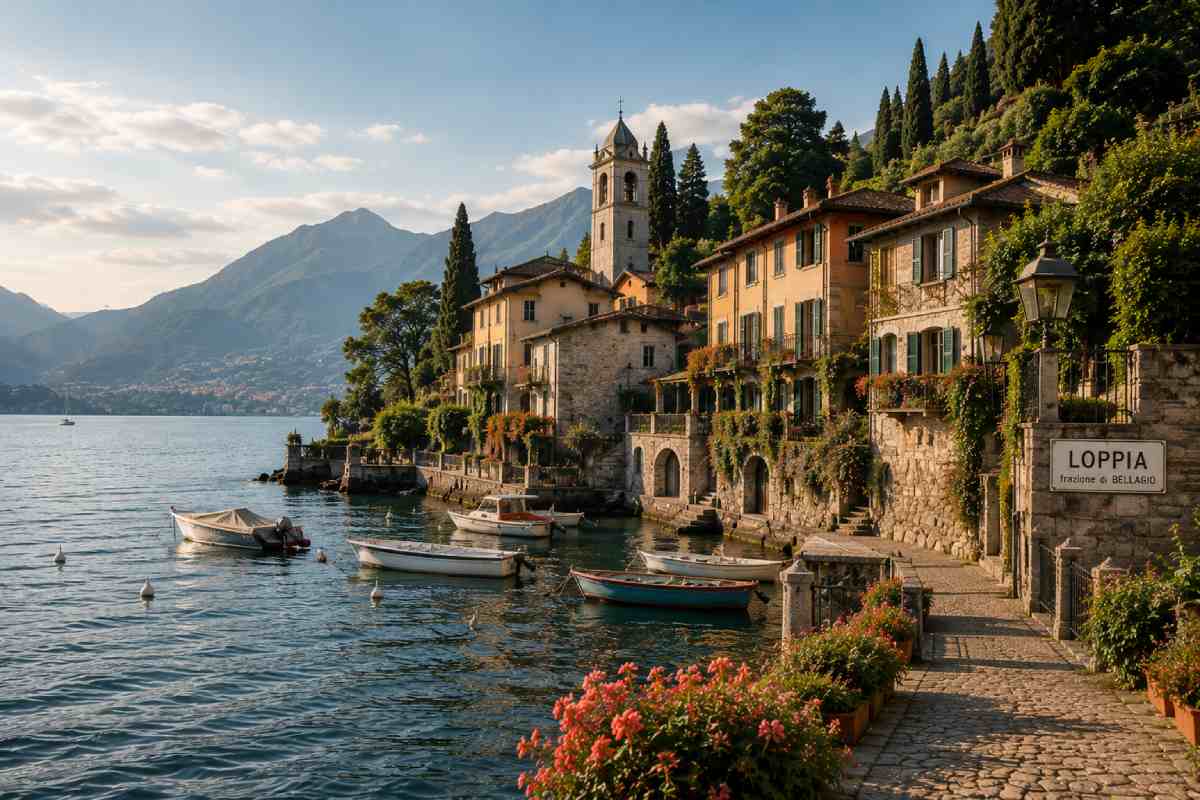
Loppia offers a quieter expression of Bellagio, where traditional boats, historic lakeside architecture and mountain views preserve the atmosphere of old Lake Como.
5. Loppia: A Visual Transition, Not an Obligatory Stop
Loppia is useful because it can bridge the more local lakeside character of the hamlets with the formal landscape of Villa Melzi. Photographically, it works best as a transition rather than a collection of hero photographs.
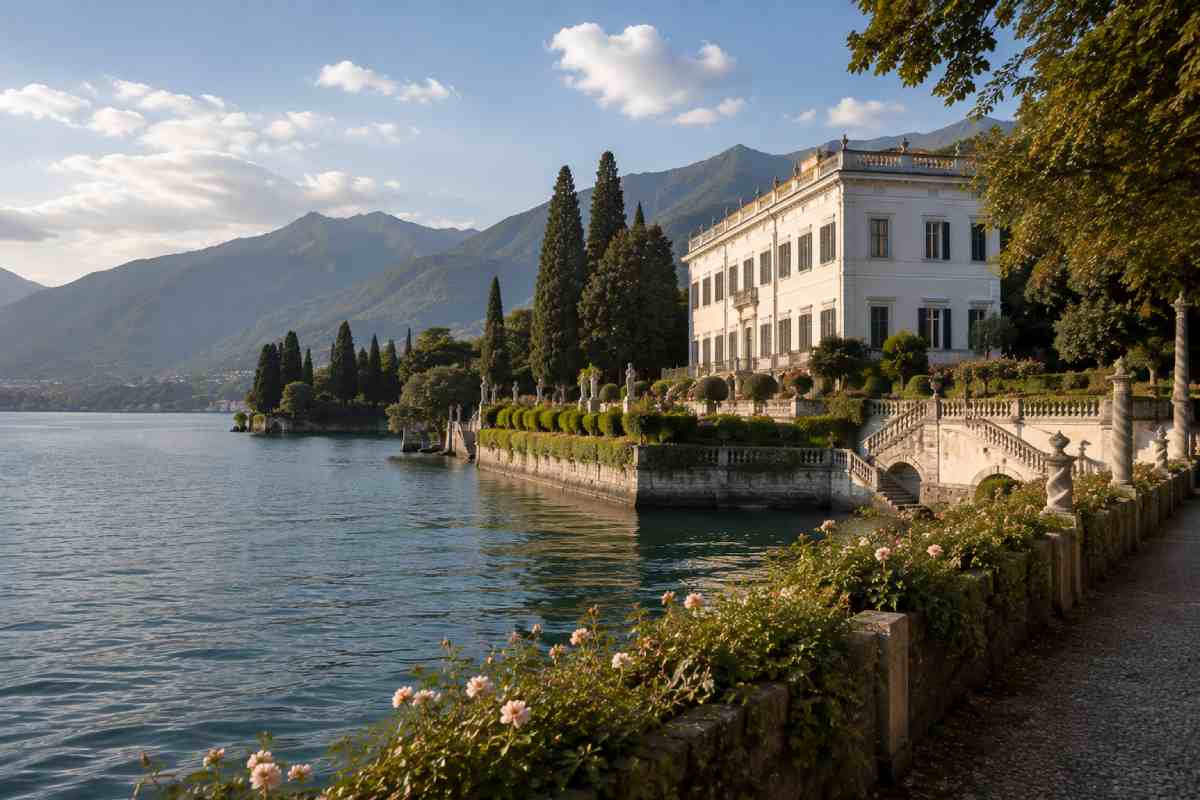
Villa Melzi brings together neoclassical elegance, landscaped gardens and Lake Como, creating one of Bellagio’s most refined visual environments.
6. Villa Melzi: Controlled Beauty
The Gardens of Villa Melzi were created in the early nineteenth century for Francesco Melzi d’Eril. The official gardens site dates construction of the complex to 1808–1810 and describes a landscape of seasonal flowers, native and exotic plants, sculpture and lake views.
This environment changes the photographic language again. The streets of Bellagio rely on compression and human movement; the gardens invite cleaner geometry, negative space, foreground layers and more deliberate portraiture.
GOOD TO KNOW Current Villa Melzi visitor information lists daily opening from 10:00 to 19:00 with last admission at 18:30 and a standard ticket of €10. These are time-sensitive visitor details and should be rechecked before any planned session.
4.Light: Bellagio Is Not One Exposure
Bellagio’s visual variety comes partly from how quickly light conditions change between environments. Open lakefront areas can be bright and reflective while nearby lanes remain several stops darker. Stone surfaces bounce warmth. Trees and arcades create pockets of shade. Water can increase apparent contrast.
CONDITION
WHAT CHANGES
PHOTOGRAPHIC RESPONSE
Early morning
Quieter streets, softer public-space rhythm
Use movement and architecture before crowds dominate narrow lanes.
Midday
High contrast between open lake and shaded streets
Look for controlled shade, reflected light and simpler backgrounds.
Late afternoon
Warmer façades and more directional modelling
Use architecture and side light; protect highlights on water.
Blue hour / dusk
Ambient balance shifts toward lamps and interiors
Reduce location changes and prioritise atmosphere over quantity.
Overcast
Lower contrast, muted water and stone
Excellent for portraits and layered street work; less dependence on directional light.
FIELD NOTE Do not schedule by “golden hour” alone. In a mountainous lake environment, the practical light at a specific street or shoreline can disappear before the published sunset time because terrain and buildings block the sun.
5.Crowds: The Real Composition Problem
Bellagio is popular precisely because it is beautiful. Photographers should therefore plan for people rather than pretending the village will be empty. Crowds are not always a problem; badly used crowds are.
A longer lens can turn background visitors into texture. A low angle can remove street clutter. Moving ten metres can change the density of a frame. Waiting thirty seconds can be more effective than asking a couple to repeat an action five times.
KEY INSIGHT The goal is not to erase Bellagio’s public life. It is to decide whether people in the background add atmosphere, scale or distraction.
6.A 2-Hour Bellagio Photography Route
Bellagio’s official tourism office publishes a roughly two-hour walking itinerary connecting the historic centre with Pescallo, San Giovanni, Loppia and Villa Melzi. A photography session should not necessarily copy the full tourist route, but the official circuit provides a useful reality check for how these places relate geographically.
PHASE
PURPOSE
SUGGESTED APPROACH
0–25 min — Historic centre
Architecture + movement
Use 2–3 streets, not every staircase.
25–45 min — Transition / lake edge
Breathing room
Shift from compressed architecture to wider frames.
45–75 min — Pescallo or San Giovanni
Quiet local chapter
Prioritise natural interaction and environmental portraits.
75–120 min — Loppia / Villa Melzi area
Refined ending
Use garden/lake geometry if access and opening hours fit the plan.
For a shorter couple session, choose one side of this route rather than compressing everything. Bellagio becomes visually stronger when the session has a clear beginning, middle and end.
7.One Hour, Two Hours or Half a Day?
TIME
REALISTIC GOAL
BEST USE
1 hour
One coherent visual chapter
Historic centre + nearby lake edge, or one quieter hamlet.
2 hours
Contrast without rushing
Historic centre + one quieter chapter + controlled ending.
Half day
Full destination story
Multiple hamlets, garden access, boat or substantial transitions.
GOOD TO KNOW More time should create more depth, not more locations. If added hours only produce another staircase, another lake view and another villa gate, the story has become longer rather than richer.
8.Editorial or Documentary in Bellagio?
Bellagio naturally benefits from both. Editorial direction can simplify complex architecture and produce refined portraits. Documentary observation can preserve public life, movement, boat arrivals, wind, gestures and the way a couple actually experiences the village.
Bellagio already contains a strong palette: warm stone, faded plaster, deep greens, dark water, pale sky and occasional saturated shopfronts. Clothing does not need to match the village, but it should avoid fighting every environment at once.
Cream, black, navy, camel and muted earth tones usually integrate easily with stone and water.
Strong saturated colour can work beautifully when it is intentional and not competing with busy streets.
Fluid fabrics add movement near the lake and in open spaces.
Highly reflective or heavily patterned clothing can become visually dominant in narrow architectural frames.
10.Boat or No Boat?
A boat changes the visual story because it changes the viewpoint. Bellagio stops being a collection of streets and becomes part of the wider lake geography. From the water, villas, shoreline, mountains and village density can be read together.
But a boat should solve a storytelling problem, not simply add another luxury signal. If the session is already short, boarding, docking and waiting can consume time that would otherwise produce more varied photographs on land.
FIELD NOTE Use a boat when the movement itself belongs to the story. If it is included only to obtain one recognisable frame, ask whether that frame is worth the logistical cost.
11.Bellagio vs Varenna vs Tremezzina: Different Visual Languages
DESTINATION
VISUAL CHARACTER
BEST FOR
Bellagio
Layered streets, central-lake geography, villas, movement
A varied story combining architecture, village life and lake scale.
Varenna
Compressed waterfront, steep lanes, romantic village texture
Intimate walking sequences and concentrated visual character.
Tremezzina
Grand villas, gardens, western-shore landscapes
Venue-led stories and more formal lakefront architecture.
This is not a ranking. The right destination depends on the couple, schedule, venue and visual intention. Bellagio’s advantage is range: it can move from formal to local, crowded to quiet, architectural to expansive within one connected area.
12.What We Would Prioritise in a Bellagio Story
One establishing frame that explains the lake.
One architectural sequence that uses Bellagio’s vertical streets.
One quieter chapter away from the most recognisable centre.
People and relationships, not only location portraits.
A transition — walking, boat, garden path or movement between environments.
An ending with a different emotional temperature from the opening.
IMAGE STUDIO PRINCIPLE A destination should become a character in the story, not the main character. Bellagio matters because of what it contributes to the experience around the people being photographed.
13.Bellagio Wedding Photographer: Quick Reference
QUESTION
CONCISE ANSWER
BEST FOR
Couples who want architecture, lake scenery and village atmosphere inside one compact destination.
MOST USEFUL SESSION LENGTH
Around two hours for a varied land-based story without excessive rushing.
BEST ROUTE LOGIC
Historic centre + one quieter hamlet or garden chapter.
MAIN CHALLENGE
Crowds, gradients and rapidly changing contrast between lakefront and streets.
PHOTOGRAPHIC CHARACTER
Elegant, layered, architectural and highly dependent on movement.
MAIN MISTAKE
Trying to collect every famous location instead of building one coherent sequence.
14.Frequently Asked Questions
Is Bellagio good for wedding photography?
Yes. Bellagio combines historic architecture, lake views, gardens, narrow streets and quieter hamlets in a relatively compact area. Its main challenge is popularity, so timing and route selection matter.
What are the best photography locations in Bellagio?
The answer depends on the desired story. The historic centre, Punta Spartivento, Pescallo, San Giovanni, Loppia and Villa Melzi each contribute a different visual role. A strong session usually uses only a selection.
How long should a Bellagio photoshoot be?
Around one hour can work for one focused chapter; around two hours allows meaningful contrast between the historic centre and a quieter environment. Longer coverage is useful when boats, gardens or multiple hamlets are intentionally part of the story.
Is Bellagio crowded for photos?
It can be, particularly in the historic centre and lakefront areas. Early starts, route choice, lens selection and patient timing are more reliable than expecting empty streets.
Can we take wedding photographs at Villa Melzi?
The gardens are a ticketed visitor attraction with current opening hours and access conditions. Photography plans involving professional or commercial activity should be confirmed directly with the property rather than assuming ordinary admission covers every use.
Is Pescallo worth including?
Yes when you want a quieter counterpoint to the historic centre. Its value is less about a single landmark and more about atmosphere, water and a smaller-scale village character.
Should we use a boat during a Bellagio session?
Only if it adds narrative or destination context worth the transfer time and cost. Boats can provide exceptional lake-scale imagery, but they are not necessary for a complete Bellagio story.
Do we need a photographer who has already worked in Bellagio?
Local familiarity is useful, but adaptability, scouting, light awareness and storytelling consistency matter more than a list of previous venues. Review complete work and ask how the photographer plans around public spaces and changing conditions.
15.Bellagio Through Our Lens
Bellagio is easy to photograph beautifully. The harder task is to photograph it personally.
The village already provides the architecture, water, mountains and visual recognition. The photographer’s responsibility is to decide what not to use, when to move, when to wait, and when the famous view is less important than the expression happening inside it.
That is the difference between collecting locations and telling a destination story.