

Discover how to assemble a high-performing music video production team, from essential crew roles and hiring strategies to workflow management, budgeting, and post-production collaboration.
← Back to Editorial
← Back to Editorial
How to Build a Music Video Production Team
June 17, 2026
A music video production team is the structured group of specialists who transform a song into a visual story. Knowing how to build a music video production team correctly determines whether your video looks like a cinematic release or a rushed weekend project. The industry term for this process is production crew design, and it covers everything from hiring a Director of Photography to locking in a Music Supervisor for rights clearance. Whether you are an independent artist shooting your first video or a filmmaker managing a major label project, the right crew structure is what separates a forgettable clip from one that racks up millions of views.
How do you build a music video production team?
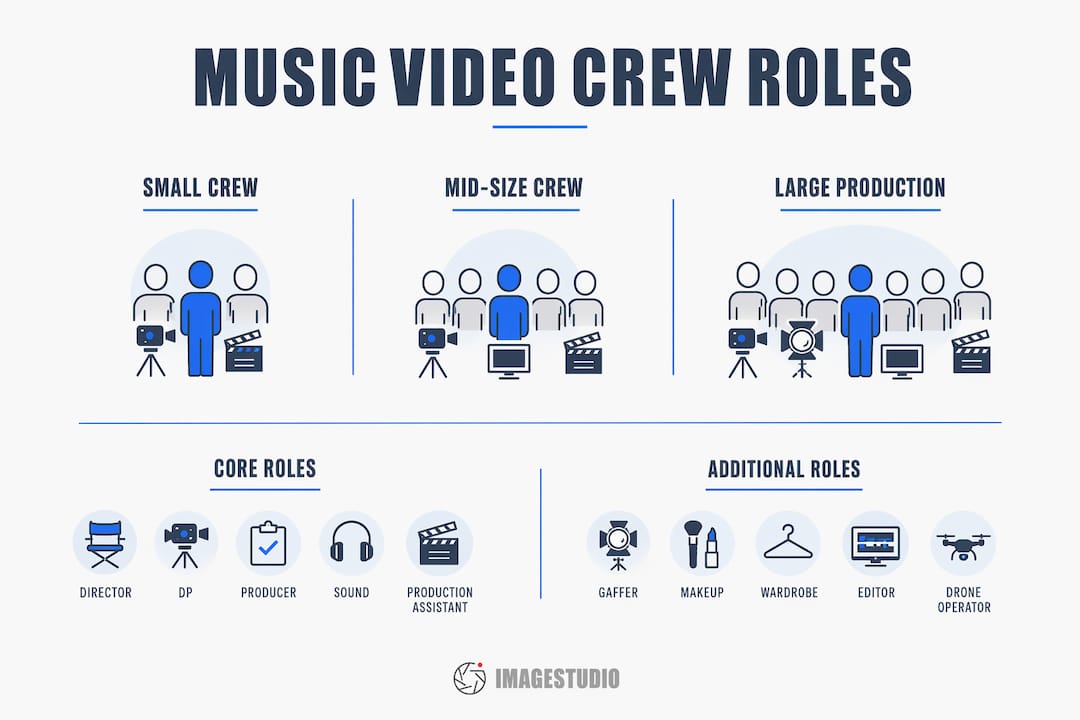
The foundation of any great music video is role clarity. Small productions need just three core roles: a Director/Producer, a Camera Operator, and a Sound Technician. Larger productions add specialists like a Director of Photography (DP), Gaffer, Key Grip, Art Director, Stylist, and Production Assistant. Each role adds a layer of technical precision that directly improves the final product.
Understanding how roles scale with budget is the first real decision you make. Production costs range from roughly $600 for a micro-budget shoot to $20,000 or more for a major label video, with director fees typically landing at 10–25% of the total budget. That spread tells you something important: team size should match budget, not ambition alone.
A full production crew covers three distinct phases. Pre-production involves the Producer, Director, Screenwriter, and DP. The shoot day requires the Director, Camera Operator, and Gaffer. Post-production calls for an Editor, Colorist, and Sound Designer. Each phase demands a different skill set, and gaps in any phase show up on screen.
| Role | Small Crew | Mid-Size Crew | Large Production |
|---|---|---|---|
| Director/Producer | Required | Required | Split into two roles |
| Camera Operator | Required | Required | Required |
| Sound Technician | Required | Required | Required |
| Director of Photography | Optional | Recommended | Required |
| Gaffer/Key Grip | Optional | Recommended | Required |
| Art Director/Stylist | Optional | Recommended | Required |
| Editor/Colorist | Required | Required | Required |
| Music Supervisor | Optional | Recommended | Required |
Pro Tip: When building a lean crew, prioritize hires who can cover two roles well. A DP who also operates camera, or a Producer who handles location scouting, gives you more coverage without doubling your payroll.
How do you find and hire the right video professionals?
Sourcing talent is where many first-time producers stumble. The three main channels are freelancer platforms (Mandy, ProductionHUB, Backstage), boutique production agencies, and referrals from your existing creative network. Each channel has a different risk profile. Freelancers offer flexibility and lower rates. Agencies bring vetted talent and accountability. Referrals give you real-world performance data before you sign anyone.
Evaluating a candidate’s portfolio is a starting point, not a finish line. Showreels can be misleading. A paid test project, even a short one, reveals how someone handles scope changes, communicates under pressure, and meets deadlines. That information is worth far more than a polished highlight reel. Budget a small fee for test assignments when hiring for key roles like DP or Editor.
When interviewing candidates, ask questions that reveal process, not just results. “Walk me through how you handled a shoot that went off-schedule” tells you more than “What is your favorite project?” Check references specifically for reliability and communication, not just creative output. A brilliant colorist who ghosts you during revisions is a liability.
Here are the hiring best practices that consistently produce reliable crews:
- Verify that sample reels include a 30-second vertical cut and timestamps, which prove delivery ability rather than just artistic range
- Use paid test assignments for any role that directly affects the final cut
- Confirm availability for the full production window before discussing rates
- Include communication expectations and revision limits in every contract
- Ask for two references who have worked with the candidate under deadline pressure
Pro Tip: A hybrid staffing model, combining a small in-house core with freelancers and agency specialists, gives you flexibility and expert access without locking you into high fixed costs.
What are the best practices for managing your production crew?
Managing a music video crew well comes down to three things: clear structure, reliable communication, and payment governance. Poor workforce architecture is the leading cause of high-pressure shoot failures. That means shoots fall apart not because of bad creative ideas but because roles were undefined, surge coverage was unplanned, and payment timelines were vague.
The most important hire in your crew structure is the Showrunner or Line Producer. This role manages surge thresholds and maintains a pre-vetted bench of talent, so when a crew member drops out at the last minute, you have a replacement ready without scrambling into emergency overtime. Proactive operational systems are what separate professional productions from chaotic ones.
Cloud-based collaboration tools have changed post-production significantly. Platforms like Ziflow and Frame io enable frame-accurate feedback and multi-platform asset adaptation, cutting revision cycles from days to hours. In 2026, AI-assisted tools handle footage logging and rough-cut generation, freeing your Editor and Colorist to focus on the creative decisions that actually require human judgment.
Modern productions also use the “capture once, ship everywhere” method. A Production Manager formats all assets modularly from the start, so the same footage becomes a YouTube video, an Instagram Reel, and a TikTok without a separate reshoot. This approach is now a standard workflow practice for teams distributing across multiple platforms.
Key workflow practices that keep productions on track:
- Define every role’s responsibilities and decision authority before the shoot date
- Set a communication channel hierarchy (e.g., Slack for daily updates, email for contracts)
- Build a 10–20% contingency reserve into your budget from day one
- Schedule a pre-production alignment meeting with all department heads
- Use cloud platforms for all post-production feedback to avoid version confusion
Pro Tip: Design your assets modularly from the start. Shooting with a vertical safe zone in frame means you can deliver a 9:16 cut for social media without reshooting or awkward cropping.
What are the common pitfalls when assembling a video crew?
The most common failure point in music video production is not a bad idea. It is a mismatched team. When a Director’s creative vision does not align with the DP’s technical approach, the disconnect shows up in every frame. Establishing a shared visual reference (a mood board, a shot list, reference films) before the shoot date is the simplest way to prevent this.
Budget overruns almost always trace back to ad hoc hiring. Bringing in unvetted crew members at the last minute costs more and delivers less. Structured crew design with defined capability coverage and pre-approved rates reduces overtime and mid-shoot surprises. Lock your key roles and rates in writing at least two weeks before the shoot.
Legal and clearance issues are another area where teams get caught off guard. A dedicated Music Supervisor should be part of your team from the start, not brought in after the edit is locked. Rights management is a professional prerequisite for distribution, and clearing music and visual rights late in production can delay or kill a release entirely.
“High-pressure video shoots often fail from poor workforce architecture rather than creative issues.” — Maslow Media
Common pitfalls and how to avoid them:
- Mismatched skillsets: Align on visual references and technical specs before hiring
- Vague roles: Write a one-paragraph role description for every crew member
- Late rights clearance: Bring in a Music Supervisor during pre-production, not post
- No bench talent: Have two backup contacts for every critical role
- Weak delivery proof: Require sample reels that include timestamped deliverables, not just artistic highlights
Key takeaways
A successful music video production team requires defined roles, vetted talent, and a Showrunner who manages workflow, surge coverage, and communication from pre-production through delivery.
| Point | Details |
|---|---|
| Scale roles to budget | Small crews need three core roles; larger productions add DP, Gaffer, Art Director, and Music Supervisor. |
| Test before you hire | Paid test projects reveal communication and reliability far better than showreels alone. |
| Hire a Showrunner early | A Line Producer managing surge thresholds prevents costly last-minute crew scrambles. |
| Use cloud collaboration tools | Platforms like Ziflow and Frame io cut revision cycles and keep post-production organized. |
| Plan rights clearance upfront | A Music Supervisor in pre-production prevents legal delays that can block distribution. |
What i have learned after 14 years behind the camera
The conversation around music video production has shifted a lot since I started. When I first began assembling crews, the biggest challenge was finding the right DP for a given visual style. Now, the challenge is knowing which parts of the workflow to hand to AI tools and which parts still need a human eye in the room.
Here is my honest take: AI in production handles the repetitive work well. Footage logging, rough-cut assembly, color grading presets. But the moment a Director needs to make a judgment call about pacing or emotional tone, no algorithm gets it right consistently. Human creativity is still the differentiator, and I do not see that changing.
What I tell smaller creators is this: do not try to build a full crew on a micro-budget. Pick the three roles that matter most for your specific concept and do those exceptionally well. A performance-driven video needs a great DP and a strong Editor more than it needs an Art Director. A narrative video flips that equation entirely.
For larger productions, the Showrunner role is non-negotiable. Every time I have seen a shoot go sideways, it traced back to one thing: no one owned the operational layer. The Director was focused on the creative. The Producer was managing the client. And nobody was watching the clock, the crew morale, or the contingency budget. That is the Showrunner’s job, and it is the best investment you can make.
The future of music video production teams is modular and flexible. Small in-house cores with specialist freelancers brought in per project. Cloud-based post-production that lets your Editor work from anywhere. And a growing role for digital culture trends in shaping what visual storytelling even looks like. The teams that adapt to that model will produce better work at lower cost. The ones that do not will keep overspending on fixed overhead.
— Image Studio
How Imagestudio helps you assemble the right production team
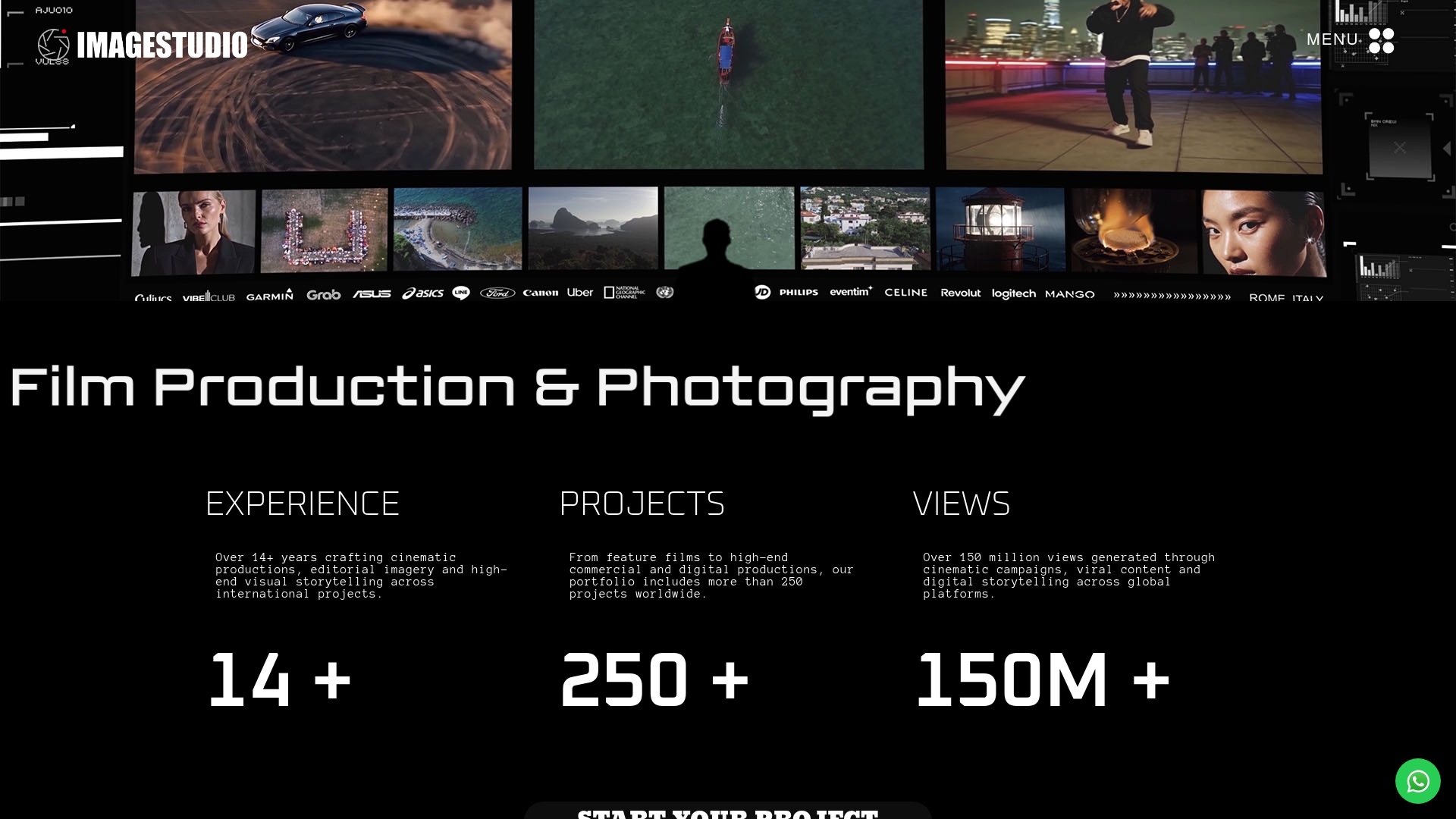
Imagestudio has spent 14 years building exactly the kind of crews described in this article, across 250+ projects that have collectively earned over 150 million views. From National Geographic collaborations to award-winning festival films, the team knows how to match crew structure to creative vision at every budget level.
Whether you need a full-service music video production team or a specialist crew for a specific phase, Imagestudio builds it around your project, not a template. Every engagement includes dedicated production management, technology-forward workflows, and a Showrunner-level producer who keeps the whole operation running clean. If you are ready to stop guessing at crew structure and start producing work that performs, explore Imagestudio’s production services and see what a purpose-built team looks like in practice.
FAQ
What roles are required for a small music video crew?
A small music video crew requires three core roles: Director/Producer, Camera Operator, and Sound Technician. Adding a DP and Editor rounds out a lean but capable team for most independent productions.
How much should you budget for a music video team?
Production costs range from roughly $600 for micro-budget shoots to $20,000 or more for major label videos, with director fees typically at 10–25% of the total. Always include a 10–20% contingency reserve in your budget from the start.
How do you evaluate a music video professional before hiring?
Request a sample reel that includes a 30-second vertical cut and timestamped deliverables, then assign a paid test project to assess communication and deadline performance. Showreels alone do not reveal how someone handles pressure or scope changes.
What does a showrunner do on a music video production?
A Showrunner or Line Producer manages surge thresholds, pre-vetted bench talent, and operational logistics so the Director can stay focused on the creative. This role is the single most important hire for preventing mid-shoot breakdowns.
When should you bring in a music supervisor?
A Music Supervisor should join the team during pre-production, before any footage is shot. Clearing music and visual rights late in the process can delay or block distribution entirely.
