How to Look Natural in Wedding Photos (Even If You Hate Posing)
October 9, 2026
You don't need to be a model to look beautiful in wedding photographs. Discover how to feel comfortable in front of the camera, the difference between candid and posed portraits, and simple techniques that make natural wedding photography feel effortless.
You love the photographs where people look completely at ease. Someone laughing with their eyes closed. A couple walking through a garden, unaware of the camera. A quiet embrace that doesn’t seem to have been arranged for anyone else.
Then you imagine being photographed yourself, and suddenly everything feels different.
Where should you look? What should you do with your hands? Are you supposed to smile the entire time? And how do other couples manage to look so effortlessly comfortable?
The truth is that many of the people you admire in wedding photographs aren’t particularly comfortable in front of a camera either.
They simply have someone behind it who understands how to work with them.
Looking natural in wedding photos isn’t about becoming good at posing. It’s about feeling comfortable enough to behave like yourself, with just enough guidance to make the photographs beautiful.
At Image Studio, we approach wedding photography through a combination of documentary observation and editorial composition. We believe beautiful images can be carefully considered without making the people inside them feel staged.
Here’s what actually makes a difference.
Why Do We Feel Awkward in Wedding Photos?
Think about the photographs of yourself that you genuinely love.
Perhaps someone took one while you were talking to a friend. Maybe you were walking somewhere, laughing at something unexpected or simply enjoying a moment without knowing you were being photographed.
Now think about what happens when somebody raises a camera and asks you to smile.
You become aware of your expression. You adjust your posture. You wonder if your face looks strange from that angle.
The moment stops being about what you’re experiencing and becomes about how you appear.
That self-consciousness can be particularly noticeable on a wedding day because the clothing, surroundings and attention are already different from everyday life.
You’re wearing something important. People are watching. There’s a schedule to follow, and perhaps you’ve never had professional portraits taken together.
The solution isn’t to memorize twenty poses from Pinterest. It’s to create an environment where you have something more interesting to think about than the camera.
A good photographer understands how to do that without making the process feel like an additional performance.
Candid vs Posed vs Guided Wedding Photos: What’s the Difference?
Before thinking about how to look natural, it’s worth understanding how different photographs are created.
Couples often say they want candid photography because they associate posing with stiff smiles and uncomfortable instructions.
But some of the most relaxed-looking wedding portraits involve a little direction.
The difference is how that direction is given.
Photography approach
What happens
How it feels
Best suited for
Candid photography
The photographer observes without interrupting
Spontaneous, personal, unpredictable
Preparations, ceremonies, laughter, guests and celebrations
Gently guided photography
The photographer suggests a movement, position or interaction
Relaxed but visually considered
Couple portraits, walking photographs and intimate moments
Editorial portraiture
The photographer deliberately shapes posture, light and composition
Refined, confident, fashion-inspired
Architectural portraits, bridal fashion and statement images
Traditional posed photography
People are arranged in specific positions
Formal, organized and structured
Family groups, classic portraits and important combinations of guests
No single approach produces every photograph a couple needs.
A candid image can capture a wonderful expression but leave you with a distracting background. An editorial portrait can have extraordinary composition but feel uncomfortable if the photographer insists on directing every gesture.
And traditional group photographs, though less spontaneous, can become some of the most important images in a family album.
Our preferred approach is to let the moment determine the amount of direction.
A ceremony needs observation. A formal family portrait needs organization. A romantic couple portrait might need a few thoughtful adjustments followed by enough space for genuine interaction.
The most interesting wedding galleries usually have room for all three.
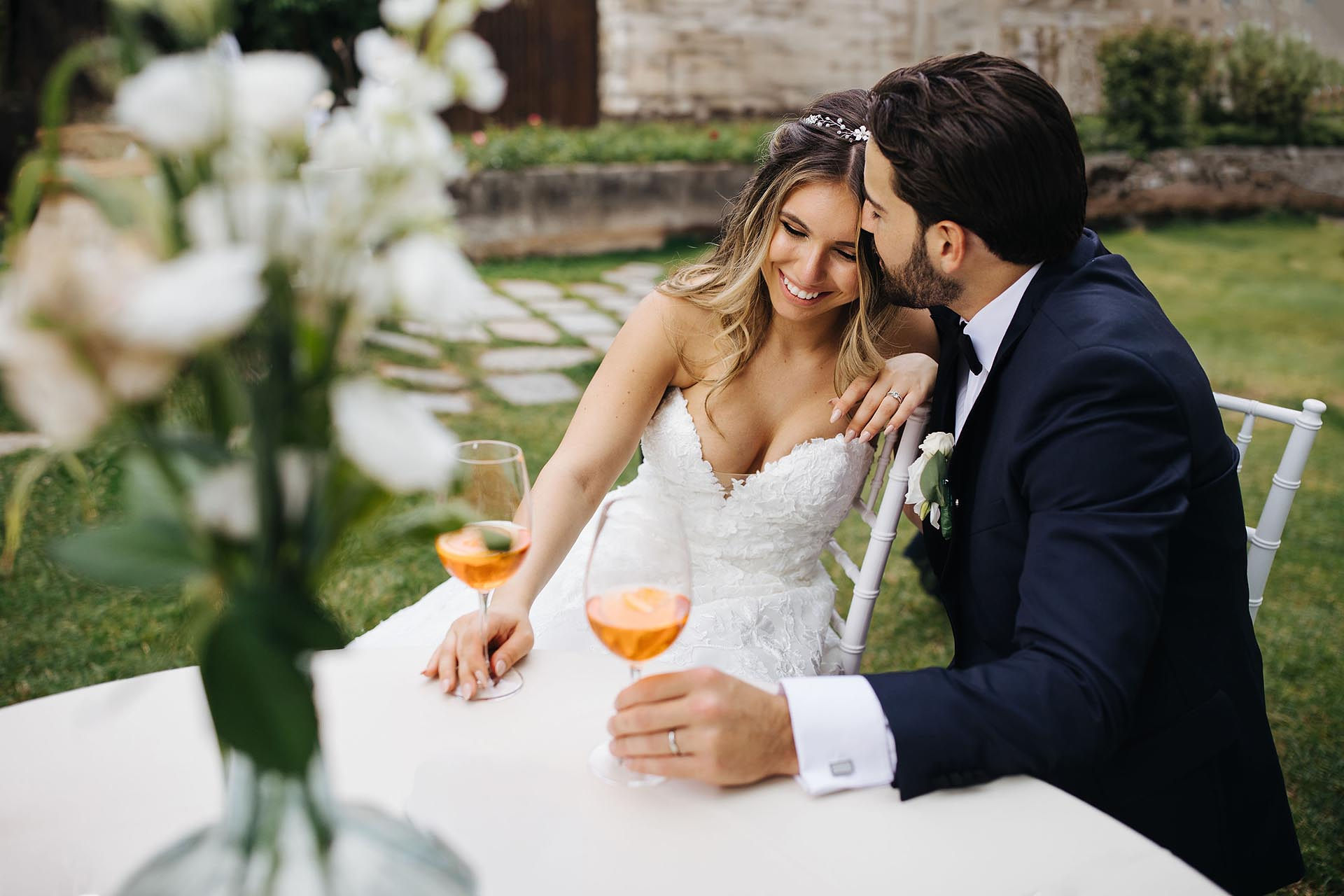
The quickest way to look uncomfortable in a photograph is to spend the entire time wondering whether you look comfortable.
You don’t need to make every expression interesting or fill every silence with laughter.
If your photographer asks you to stand together for a portrait, start with something simple. Turn toward your partner. Take a breath. Relax your shoulders.
You don’t need to smile immediately.
Look at the person beside you. Notice the surroundings. Say something you would normally say.
A quiet moment can be just as beautiful as a joyful one.
This is particularly true for couples who don’t naturally express affection through elaborate gestures.
If you’re not the kind of people who constantly kiss or embrace in public, your wedding portraits don’t need to pretend otherwise.
Small gestures often feel more convincing because they’re familiar.
A hand resting on someone’s arm. A shared glance. Walking together without any particular destination.
The photograph becomes more interesting when your personality is allowed to remain visible.
2. Move Instead of Holding a Perfect Pose
Movement is one of the simplest ways to introduce a natural quality into wedding portraits.
When you’re standing completely still, every part of your posture can become something to worry about.
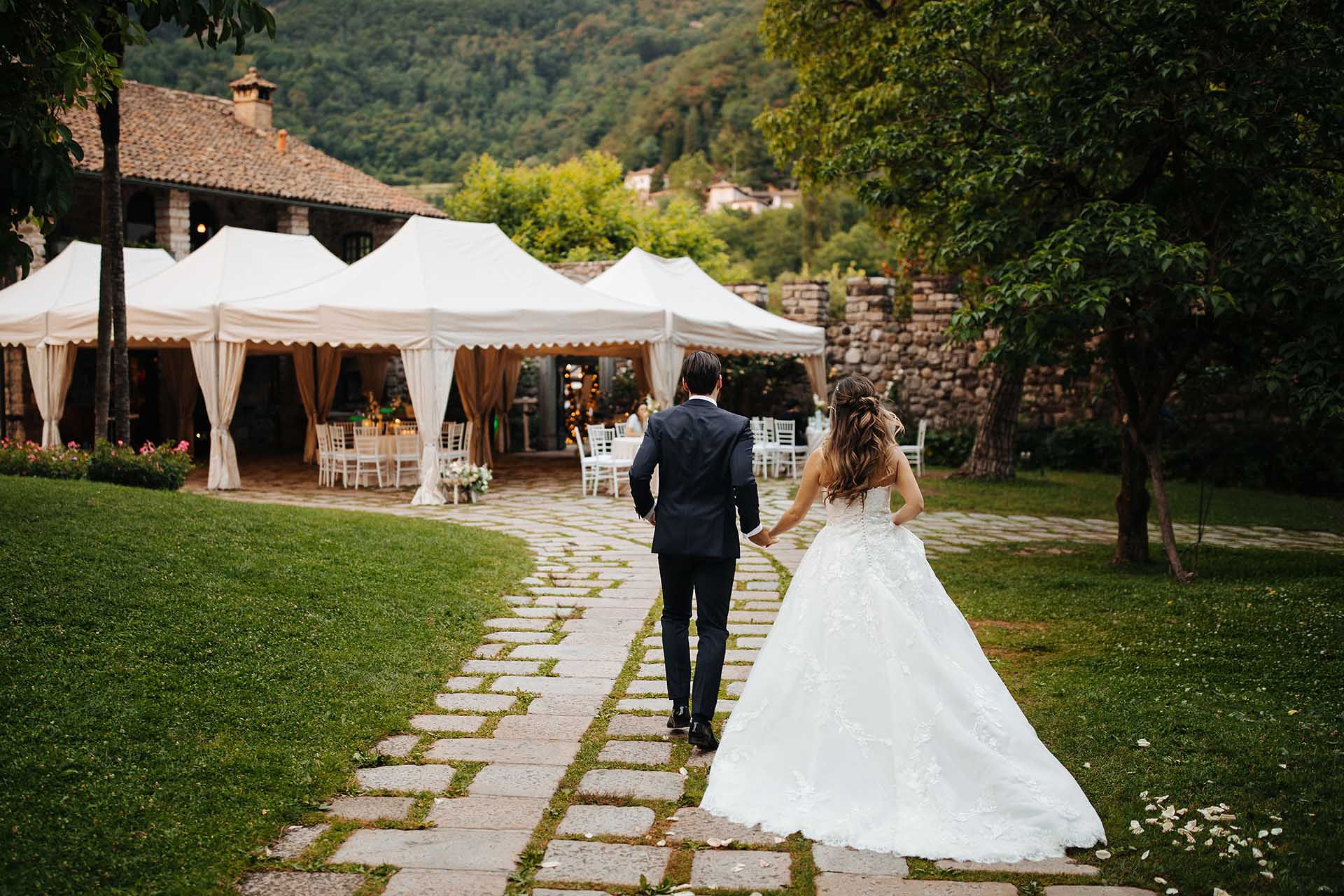
Walking creates a rhythm. Your arms move naturally, your expression changes and the photographer has opportunities to capture the small moments between steps.
Couple walking together
But there is a difference between natural movement and performing an exaggerated version of it.
You don’t need to spin continuously, run through a field or laugh dramatically on command.
Try something much simpler.
Walk together at a comfortable pace. Slow down when you want to. Look toward each other, then toward the surroundings.
If you stop to adjust your partner’s jacket or take their hand, allow that moment to happen.
The photographer can work around your movement rather than asking you to repeat every gesture until it looks technically perfect.
A useful direction might be, “Walk toward the terrace together and don’t worry about me.”
It’s specific enough to give you something to do without telling you exactly how you’re supposed to feel.
Natural movement works best when it gives you something to experience, not another pose to remember.
3. Give Your Hands Something Familiar to Do
“What should I do with my hands?”
It’s one of the most understandable questions during a portrait session.
The solution is rarely to invent an elaborate pose.
Instead, use gestures that belong naturally to the situation.
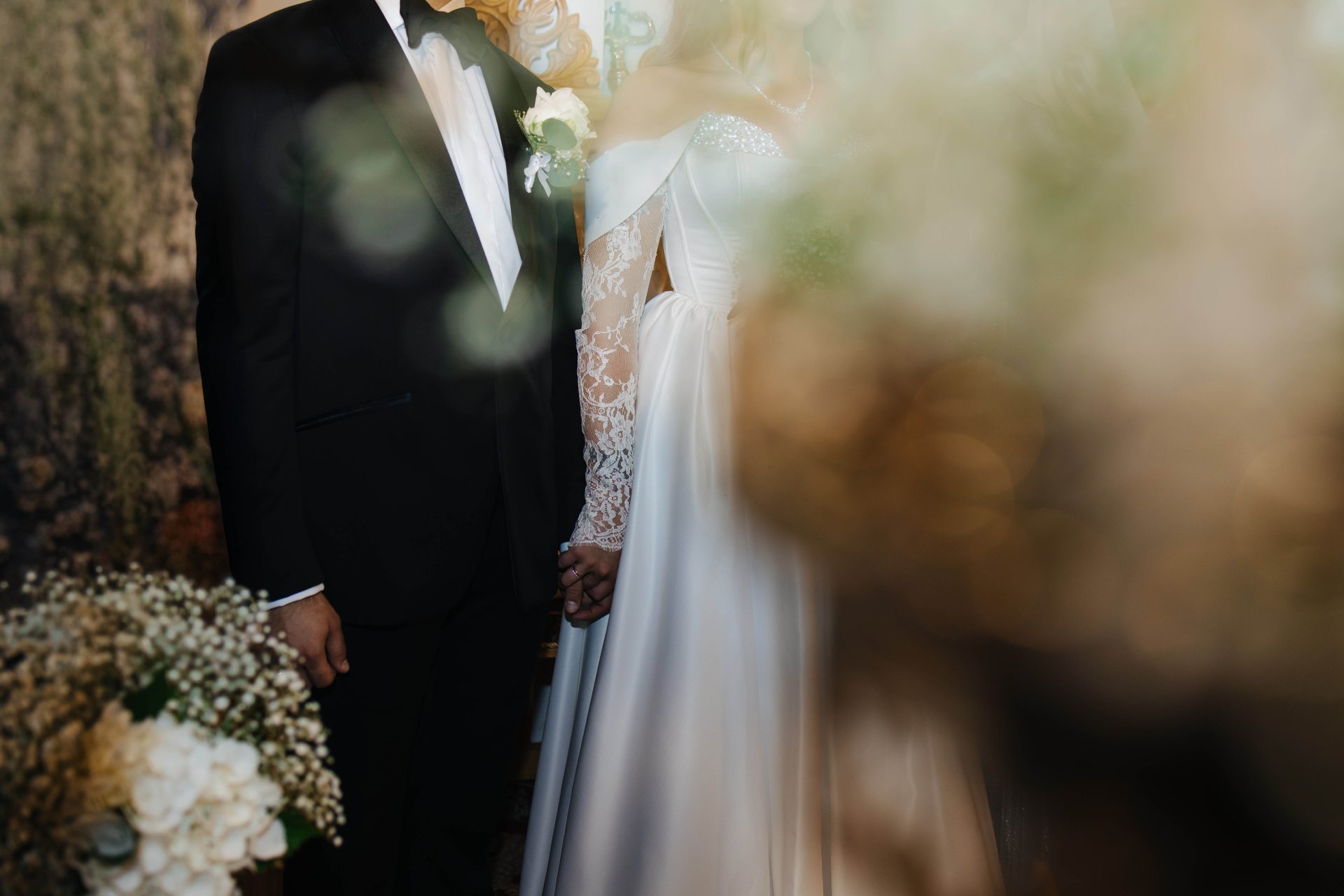
If you’re standing together, hold your partner’s hand or rest one hand lightly against their arm.
A quiet detail between portraits and ceremony moments.
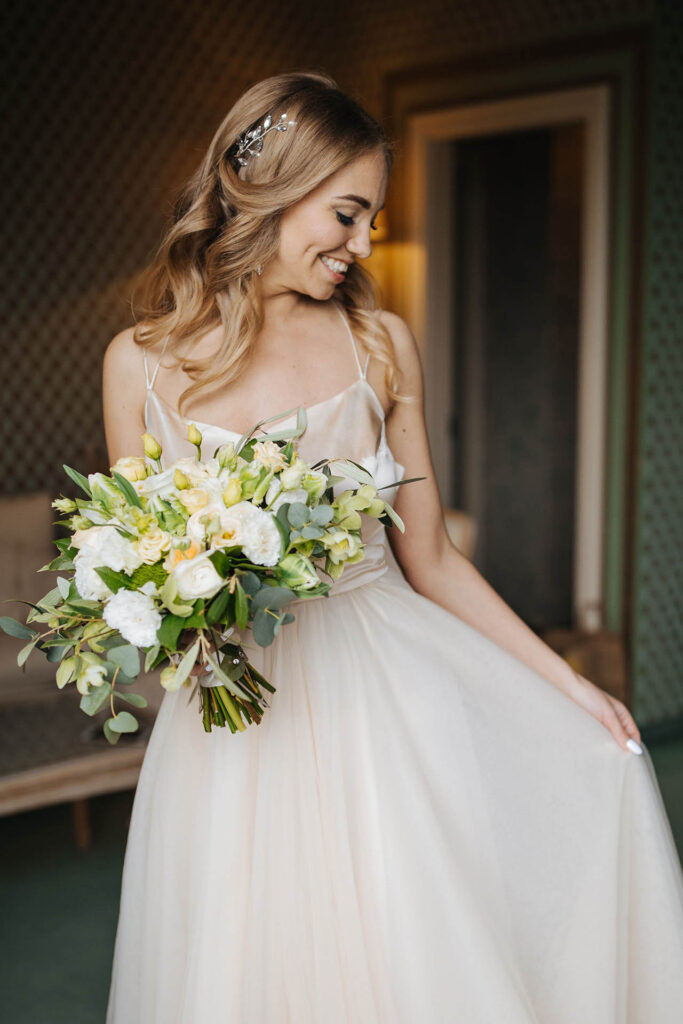
If you’re wearing a jacket, you might adjust the cuff or button. If you’re holding a bouquet, let it rest comfortably rather than keeping it rigidly at the same height.
A bride might gently arrange part of her dress while walking. A groom might slip one hand into a pocket.
But not every hand needs a job.
Sometimes the most elegant option is to let your arms relax.
What matters is avoiding unnecessary tension, not finding a perfect position for every finger.
A thoughtful photographer will notice these small details and offer a simple correction when necessary.
You shouldn’t need to spend the entire portrait session thinking about them.
4. You Don’t Have to Look at the Camera
Some of the strongest wedding portraits involve direct eye contact with the lens.
A confident, straightforward photograph can have an almost fashion-editorial presence.
But you don’t need to look directly at the camera for every image.
In fact, varying your attention creates a much more interesting collection.
Look toward your partner while they’re speaking. Notice the architecture around you. Watch your dress as you walk down a staircase.
If you’re standing close together, you might look in the same direction rather than toward each other.
These small changes influence the mood.
Looking at the lens can feel bold and deliberate. Looking at your partner introduces intimacy. Looking beyond the frame can make the image feel more observational.
There is no need to choose only one.
The strongest portraits don’t always ask you to acknowledge the camera. Sometimes they simply allow you to be present in the moment.
5. Let the Photographer Find the Light
Beautiful light can make an enormous difference to how comfortable a portrait feels.
Imagine standing on a terrace in Italy at midday.
The view might be extraordinary, but the sun may be shining directly into your eyes. You’re squinting, your face feels tense and you’re trying to keep your expression relaxed.
The problem isn’t your ability to pose.
It’s the lighting.
Moving into open shade, turning slightly away from the direct sun or positioning yourselves near a softly illuminated doorway can create a completely different result.
The same applies indoors.
A window can provide soft, directional light. A corridor can create depth and a sense of privacy. The pale walls of an Italian villa may reflect light gently onto your face.
You don’t need to understand any of these technical decisions.
That’s part of the photographer’s responsibility.
Your role is to enjoy the moment while someone else considers the composition, background and light.
A comfortable portrait session begins when couples are allowed to stop solving the photographer’s problems.
6. Choose Privacy Over an Audience
One of the most common reasons couples feel uncomfortable during portraits has nothing to do with the camera.
It’s the audience.
Imagine being asked to kiss or embrace while twenty guests stand nearby, watching, laughing and offering suggestions.
Even the most confident couple might begin to feel self-conscious.
Now imagine stepping away for a short walk in a quieter area of the venue.
Nobody is waiting for a performance. There are fewer distractions. You can speak to one another without feeling observed by the entire wedding party.
The atmosphere changes.
That doesn’t mean you need to disappear for an hour.
Depending on the venue and schedule, a focused portrait session of around fifteen to twenty-five minutes may provide enough opportunity for a varied collection of images.
Some weddings benefit from a brief additional session later, particularly when the light changes.
What matters isn’t the exact duration.
It’s having a little space where the photographs can happen without competing with the attention of everyone around you.
For destination weddings in Italy, this might mean a quiet garden at a Tuscan estate, a shaded courtyard in Rome or a terrace overlooking Lake Como.
The location doesn’t need to be elaborate. It simply needs to allow you to feel comfortable.
7. Don’t Force the Perfect Smile
Not every wedding photograph needs a smile.
There is a particular beauty in a thoughtful expression, a quiet conversation or the seconds before someone begins laughing.
Trying to maintain a perfect smile throughout a portrait session can make your face feel increasingly tense.
Instead, allow your expression to change.
You can laugh, look serious, talk, pause or simply enjoy being close to your partner.
If something funny happens, wonderful. If nothing particularly funny happens, there’s no reason to invent it.
Photographers sometimes use conversation or small prompts to help couples relax, but the aim should never be to manufacture an emotion.
One of the most useful moments to photograph is often the second after a directed portrait has finished.
The couple believes the camera is no longer demanding anything. Their shoulders relax. One person looks toward the other.
A different kind of photograph appears.
Genuine expressions are worth waiting for. You don’t need to manufacture them.
This is why patience matters as much as direction.
8. Make Your Portrait Session Part of the Wedding, Not a Separate Production
There is nothing wrong with wanting spectacular wedding portraits.
A beautiful staircase, an architectural facade or a dramatic landscape can create photographs that deserve a place in a magazine.
But the process should still respect the celebration.
If every location requires another ten minutes of walking, another adjustment to the dress and another sequence of directed poses, the experience can begin to feel disconnected from the wedding itself.
Couples become tired. The excitement gives way to the pressure of producing enough photographs.
We prefer a more considered approach.
Choose a small number of meaningful settings. Allow each location to offer something different.
Perhaps one is ideal for a confident architectural portrait. Another offers softer light and a more intimate atmosphere.
Rather than creating endless variations of the same image, use the surroundings to introduce genuine visual contrast.
Then return to the celebration.
After all, some of your most important photographs will happen when you’re enjoying the people who came to be with you.
Your wedding should never feel like a photoshoot with a ceremony arranged around it.
What Real Wedding Photography Can Teach Us: Julia & Mihail in Rome
A wedding we photographed at Villa Il Lago dei Cigni in Rome offers a good example of how natural and directed photography can belong to the same story.
Julia and Mihail’s day began at Agriturismo Il Casale degli Ulivi, surrounded by the quieter atmosphere of the Roman countryside.
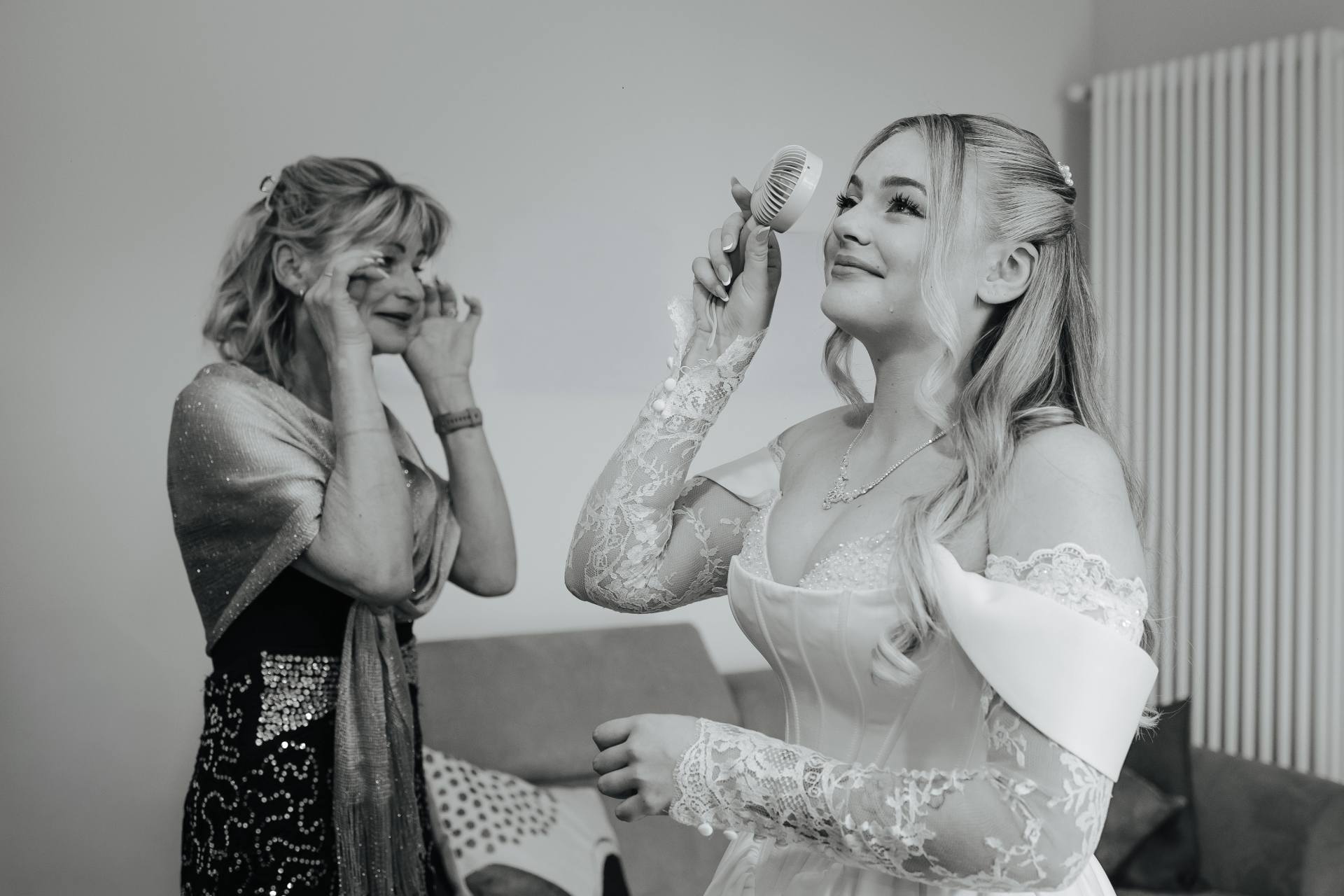
During the preparations, there were small moments that didn’t need elaborate direction.
Excitement, emotion and a little summer air before leaving for the ceremony.
Friends helping with clothing. Familiar gestures. Conversations and expressions that developed naturally while everyone was getting ready.
Later, at Villa Il Lago dei Cigni, the visual setting changed completely.
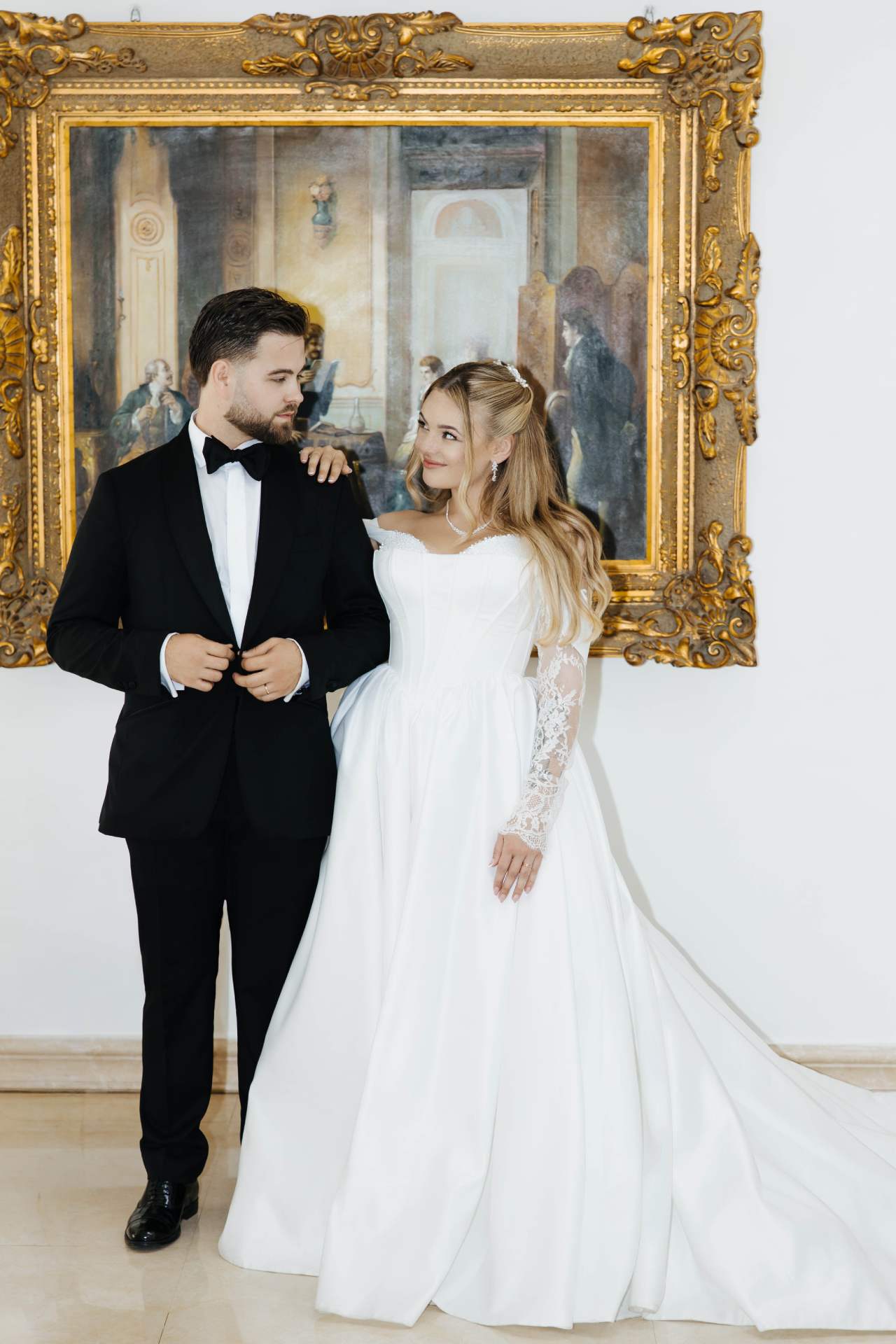
The property’s architecture, gardens, sculptures and monumental fountain offered opportunities for much more deliberate compositions.
We could position the couple within the larger landscape, use the geometry of the villa and create portraits with a stronger editorial character.
But the day didn’t need to remain in that visual style.
There was Julia holding a tiny kitten, heart-shaped sunglasses, champagne between photographs and spontaneous laughter.
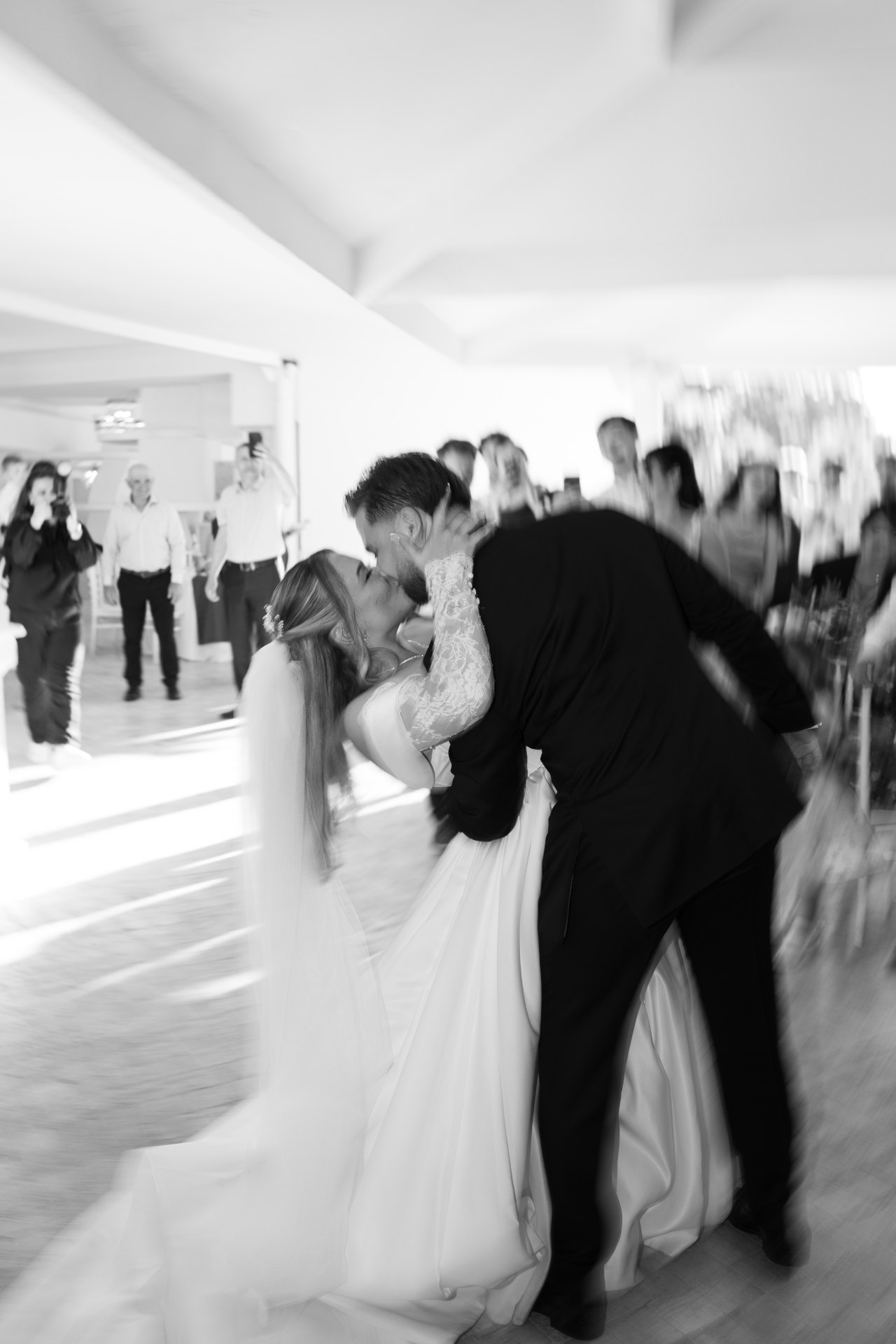
After dark, the reception became increasingly energetic. Friends lifted Mihail above the crowd, people danced and the images became more instinctive again.
Some photographs were planned. Others were impossible to anticipate. What made the story complete was the relationship between them.
The carefully composed portraits preserved the character of the location. The candid photographs preserved the personalities of the people inside it.
Neither needed to imitate the other.
The bright architecture and sculptural details worked beautifully for formal portraits, while the quieter moments revealed something much more personal.
Natural Wedding Photos vs Perfectly Posed Photos: Which Looks Better?
It’s tempting to assume natural photographs are always more meaningful than posed ones.
We don’t believe the distinction is that simple.
Consider two photographs from the same wedding.
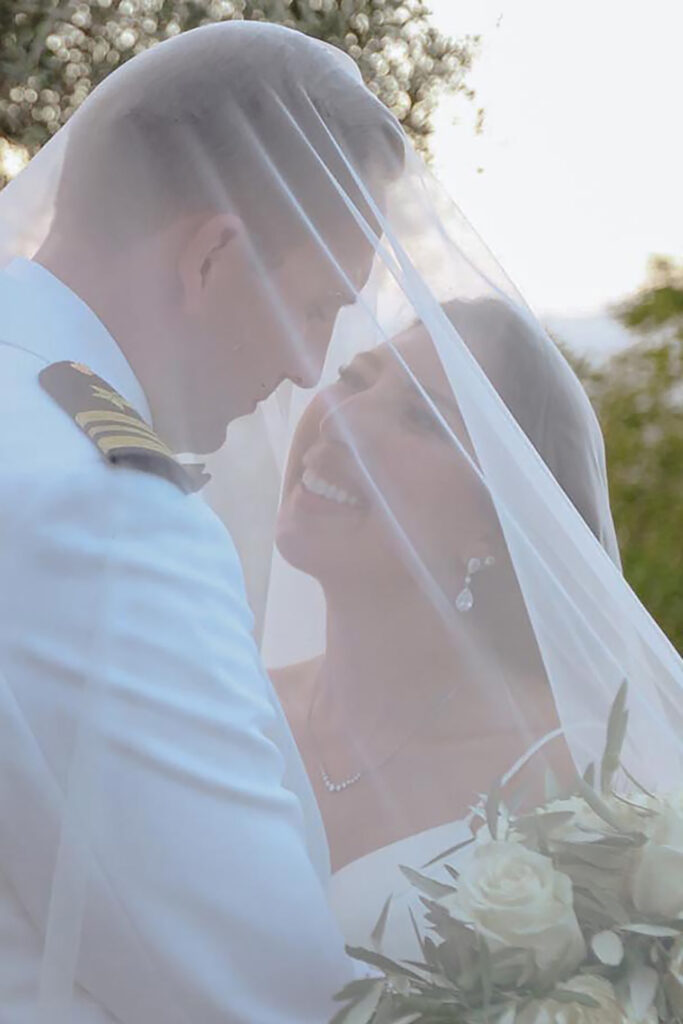
In the first, the couple stands beneath the arches of a historic Italian villa. Their posture is deliberate, the clothing is beautifully arranged and the composition emphasizes the architecture.
In the second, the same couple walks away from the camera, laughing at something that happened moments earlier.
The first photograph might become a beautiful large print. The second may bring back a memory that means something entirely different.
Both deserve to exist.
The formal portraits give way to movement, music and celebration.A composed portrait where fashion, art and wedding photography meet.
Here’s how the two approaches compare in practice.
Natural wedding photographs
Carefully posed wedding photographs
Preserve spontaneous expressions and interactions
Create deliberate, polished compositions
Require little or no interruption
Benefit from clear, thoughtful direction
Often capture movement and personality
Highlight clothing, posture and architecture
Can reveal unexpected moments
Offer more control over light and background
Feel personal and observational
Feel refined and intentional
Best for emotion, atmosphere and storytelling
Best for formal portraits and editorial images
The problem begins when a photographer treats one approach as the only correct one.
Exclusively posed wedding photography can become repetitive if every image requires the couple to perform.
Exclusively candid photography may preserve wonderful emotions but leave couples wishing they had a few carefully composed portraits together.
The strongest wedding galleries balance photographic intention with the freedom of real life.
For couples who feel particularly uncomfortable posing, guided portraits often provide the most practical middle ground.
They offer beautiful light, intentional framing and subtle direction without requiring you to behave like professional models.
How to Prepare If You’re Camera-Shy
If you already know you dislike being photographed, there are a few things worth arranging before your wedding.
Tell your photographer early
Don’t wait until the portrait session begins to explain that you feel uncomfortable.
Mention it during your initial conversation.
A good photographer can explain how they give direction, how much portrait time they recommend and how they work with couples who prefer a more relaxed experience.
It also helps to describe what you dislike.
Perhaps you don’t mind photographs but hate being asked to stare into the camera. Maybe you love candid moments but want a few more formal portraits for your family.
These details help the photographer plan around your preferences.
Consider a pre-wedding session
A short couple session before the wedding can help you become familiar with the photographer’s way of working.
It doesn’t need to involve multiple outfits or elaborate locations.
A relaxed walk through Rome, Florence or another meaningful place can be enough to understand how direction feels and what kind of photographs you enjoy.
For some couples, this makes the wedding portrait session feel less unfamiliar.
For others, an additional session is unnecessary.
You should never feel that you must book one simply because you’re camera-shy.
Leave enough room in the schedule
When portraits are squeezed between transport delays, family photographs and the beginning of dinner, the pressure becomes visible.
A little breathing room allows everyone to slow down.
Discuss the timing with your photographer and planner, especially if the wedding involves multiple locations.
On a destination wedding in Italy, travel between a church, hotel and reception venue can take longer than expected.
A realistic schedule is far more useful than an ambitious photography itinerary that leaves no room for the celebration itself.
Wear something you can actually move in
Your wedding clothing should express your style, but consider how you’ll walk, sit and move throughout the day.
A structured gown may look extraordinary in a composed portrait while requiring a little more attention on stairs or uneven garden paths.
A perfectly tailored jacket might still feel uncomfortable if it restricts movement.
There is no reason to compromise your style. Simply allow the photographer and your team to account for how your clothing behaves.
The more comfortably you can move, the less attention you’ll need to give to every gesture.
Five Mistakes That Make Wedding Photos Look Unnatural
There are a few habits worth avoiding.
1. Copying someone else’s exact pose.
A photograph you love might depend on a particular couple, outfit, light or location. Use it as inspiration rather than a strict instruction.
2. Looking at the camera constantly.
Direct eye contact is wonderful for some portraits, but using it in every photograph can make the gallery feel overly formal.
3. Trying to laugh on command.
Genuine laughter is beautiful. Forced laughter often draws more attention to the effort than to the expression.
4. Changing poses too quickly.
Give your photographer a moment to work with each composition. Small adjustments and natural pauses are often more useful than an endless sequence of new positions.
5. Believing every photograph must be perfect.
Your hair may move in the wind. Someone might interrupt a portrait. You may laugh at an unexpected moment.
These aren’t necessarily mistakes. Sometimes they’re the reason an image feels alive.
You don’t need to control every detail to create a beautiful wedding gallery.
A photographer’s experience should allow you to stop worrying about many of them.
Frequently Asked Questions
How can I look natural in wedding photos if I hate having my picture taken?
Start by telling your photographer what makes you uncomfortable. Ask for simple guidance rather than complicated poses, choose a quiet location for portraits and allow yourself to move naturally.
You don’t need to make continuous eye contact with the camera or smile in every frame.
Is candid wedding photography better than posed photography?
Not necessarily.
Candid photography preserves spontaneous moments, while posed photography can create refined portraits and organized family photographs.
A combination often produces a more complete wedding gallery.
The best choice depends on your personality, priorities and the photographer’s approach.
What should I do with my hands in wedding portraits?
Keep gestures simple and familiar.
Hold your partner’s hand, rest one hand gently on their arm, adjust a jacket or hold your bouquet comfortably.
It’s also perfectly acceptable to let your hands relax.
Avoid holding a position that feels unnatural simply because you believe it’s expected.
How much time should we allow for natural wedding portraits?
There’s no universal duration.
A focused session of roughly fifteen to twenty-five minutes may be enough for some couples, while weddings involving several locations or more elaborate editorial portraits may need longer.
Ask your photographer to recommend a realistic schedule based on your venue, light and priorities.
Can editorial wedding photos still look natural?
Absolutely.
Editorial photography can involve deliberate composition, thoughtful lighting and subtle direction without requiring exaggerated poses.
A photographer can create a refined, fashion-inspired portrait while allowing you to interact naturally.
The distinction is between directing the photograph and forcing the emotion.
Should we practice wedding poses before the wedding?
You don’t need to memorize poses, but becoming more familiar with the camera can help if you’re particularly self-conscious.
A relaxed pre-wedding session may help you understand your photographer’s direction and feel more comfortable.
It should build confidence, not become another performance to perfect.
The Best Wedding Photographs Should Still Feel Like You
You don’t need to become more photogenic before your wedding.
You don’t need to practice a perfect smile or learn how to stand like a fashion model.
What matters is choosing someone who understands how to photograph you, rather than expecting you to become a different person for the camera.
Some moments deserve direction. Others deserve patience.
A beautiful portrait can be carefully composed and still feel intimate. A spontaneous photograph can be imperfect and still become one of your favorites.
We create considered editorial portraits, but we also pay attention to the expressions, relationships and unexpected moments that give every celebration its own personality.
Because when you look at your wedding photographs years from now, we want you to recognize more than the way you looked.
We want you to recognize yourselves.
Planning Your Wedding in Italy?
Whether you’re celebrating in Rome, Tuscany, Lake Como, Venice or along the Amalfi Coast, we’d love to understand your story and the photographs you want to remember.