Moments Every Wedding Film Needs for a Timeless Story
June 13, 2026
The best wedding films combine planned milestones and candid moments, capturing everything from getting ready and vows to speeches and authentic guest reactions.
A wedding film is defined by the specific cinematic moments it captures, not by its runtime or equipment. The moments every wedding film needs fall into two categories: the planned ceremonial highlights that form the narrative spine, and the unscripted, candid exchanges that give the film its soul. Professional cinematographers and wedding filmmakers agree that both categories are non-negotiable. Miss one, and you have a record. Capture both, and you have a story worth watching for decades.
1. Why moments every wedding film needs start with getting ready
Getting ready scenes create the emotional opening chapter of any wedding film, showing nerves, laughter, and the quiet intimacy of preparation before the ceremony begins. These shots establish character and context before a single vow is spoken. A bride adjusting her veil in a mirror, a groom’s father straightening his tie, a bridesmaid wiping away a tear — these images do the narrative work that no ceremony shot can replicate.
The preparation sequence also gives your editor the raw material for pacing. Emotional pacing through anticipation and payoff is one of the most powerful tools in wedding film editing, and getting-ready footage provides the anticipation half of that equation. Without it, the film starts cold, dropping viewers directly into ceremony footage with no emotional runway.
Pro Tip:Tell your videographer the exact location and start time of your getting-ready session at least a week in advance. Natural light and room layout matter enormously for candid shots, and a good cinematographer will scout the space beforehand.
Capture dressing details: buttons, jewelry, shoes, and bouquets
Film quiet family moments: a parent’s embrace, a sibling’s reassurance
Include reaction shots when the couple first sees themselves fully dressed
Let the camera roll during natural conversations, not just posed moments
2. The first look and why it belongs in every wedding film
The pre-ceremony first look is one of the most emotionally concentrated moments in any wedding film, capturing private, unguarded reactions that the ceremony aisle simply cannot replicate. When two people see each other for the first time on their wedding day without an audience watching, the emotional authenticity is extraordinary. Tears, laughter, speechlessness — these reactions are genuine precisely because the moment feels personal.
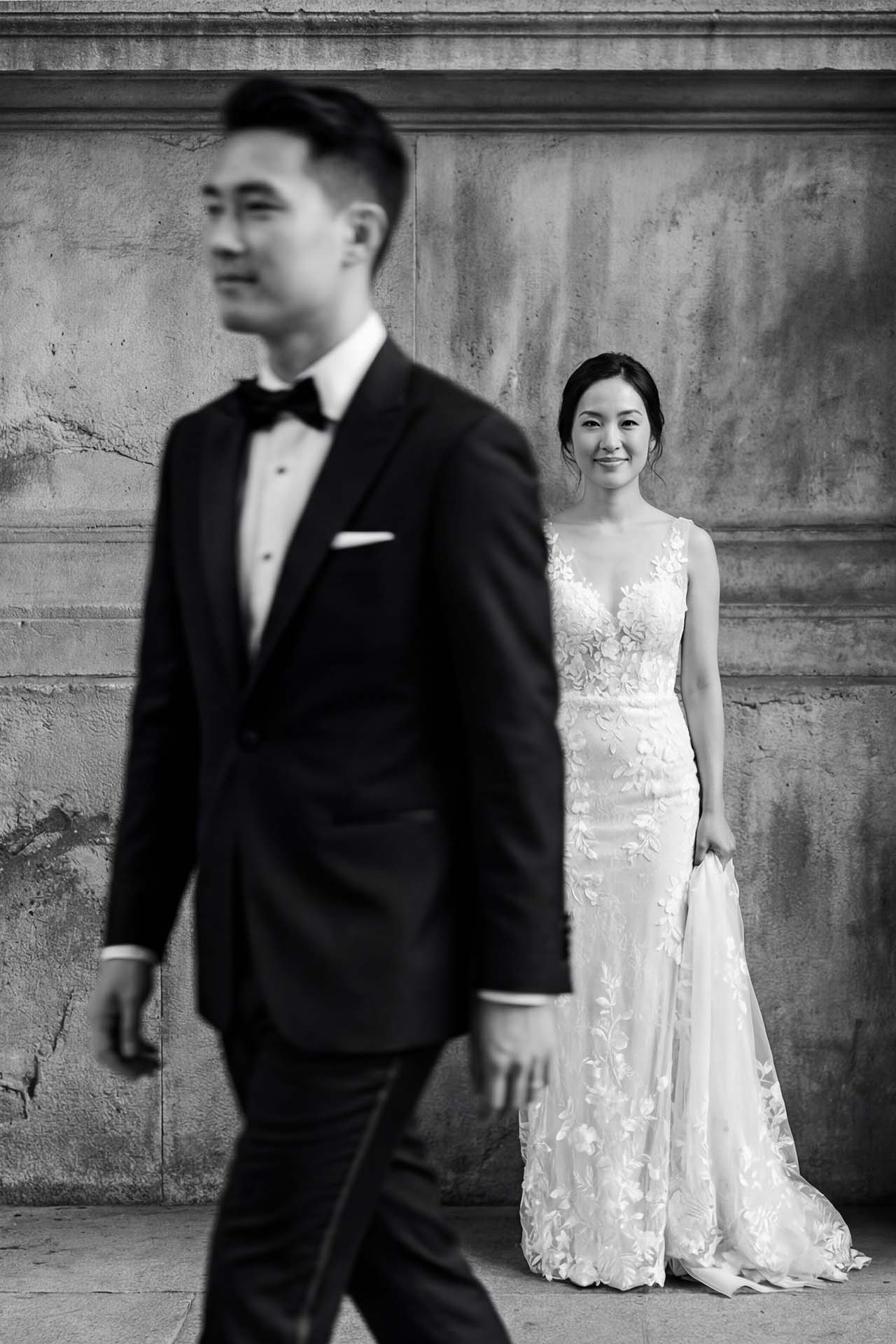
A timeless black and white editorial portrait capturing an intimate wedding moment in Italy
From a filmmaking perspective, the first look also solves a structural problem. It gives the film a private emotional peak before the public ceremony, creating a two-act emotional arc that keeps viewers engaged. Imagestudio’s cinematographers consistently cite the first look as one of the most technically rewarding moments to film because the reactions are unscripted and unrepeatable.
Positioning matters here. A skilled videographer will place cameras at two angles to capture both faces simultaneously without either person seeing the lens. The result is footage that feels like the viewer is invisibly present at an intimate moment, which is exactly the effect a great wedding film should create.
3. Ceremony highlights that form the emotional spine
Essential ceremony moments include the processional, vows, ring exchange, first kiss, and immediate guest reactions. These are the non-negotiable shots in wedding videography, the moments that define the film’s emotional center. Every other shot in the film exists to support and contextualize these five.
Audio quality is the most underestimated factor in ceremony coverage. Poor audio quality reduces emotional impact of vows and speeches by up to 57%, which means a technically beautiful shot of a couple exchanging vows becomes far less powerful if the words are inaudible. Capturing both warm intimate audio and ambient room energy during vows requires strategic use of clip microphones and venue sound feeds. This is not optional. It is the difference between a film that moves people and one that merely documents them.
Here are the ceremony shots that belong on every shot list:
The processional walk, filmed from multiple angles
The couple’s first eye contact at the altar
Full vow exchange with clean audio from a clip mic
Ring exchange in close-up
The first kiss with a wide reaction shot of guests
Guests’ faces during emotional moments
The recessional, capturing joy and relief together
Pro Tip:Ask your venue coordinator whether your videographer can place a clip microphone on the officiant or a lectern. This single step dramatically improves audio clarity for the entire ceremony.
4. Reception moments every wedding film needs for a full celebration record
Speeches and the first dance generate the highest emotional payoff at any reception and are consistently the most rewatched segments of wedding videos. Speeches, in particular, are considered the single most important reception footage a couple can have. They capture love, humor, and family relationships in a way that no staged shot can match.
First dance coverage requires specific timing discipline. Reception dance coverage should begin before the couple steps onto the floor and continue uninterrupted through at least the first 30 seconds to capture the full emotional transition from nerves to joy. Starting the camera late means missing the moment the couple first looks at each other on the dance floor, which is often the most tender shot of the entire reception.
Pro Tip:If your budget allows, use a second camera operator during speeches and the first dance. One camera stays wide for context while the other captures close-up reactions from family members. The combination creates far richer footage than a single angle.
Film the couple’s entrance into the reception with energy and movement
Capture all formal speeches in full, not just highlights
Include candid table conversations and guest interactions between speeches
Film the cake cutting, bouquet toss, and any cultural traditions specific to your wedding
Catch the late-night dance floor energy, which often produces the most joyful footage
5. How candid and unscripted moments make your film irreplaceable
Couples most appreciate candid in-between moments that display genuine interactions, and these unscripted scenes often become the most meaningful footage in the entire film. A grandmother watching the first dance from her seat, two old friends laughing at a shared memory, a flower girl falling asleep under a table — these moments are impossible to plan and impossible to recreate.
In-between candid moments are often the richest emotional content in a wedding film because they represent authentic relationships beyond staged events. The ceremony and reception provide structure, but the candid footage provides truth. When couples rewatch their films years later, these are the shots that make them say, “I forgot that happened.”
The practical implication is that your videographer needs permission and space to roam. Give them a short list of five to eight people whose reactions and interactions matter most to you. This might include an elderly grandparent, a childhood best friend, or a sibling who traveled far to attend. A focused candid list gives the cinematographer direction without restricting their instincts.
6. Comparison of must-have moments and how to prioritize your shot list
Shot lists organized by timeline — preparation, ceremony, reception — help ensure no important moment is missed. The most effective approach is to categorize each moment as non-negotiable, important, or nice-to-have, then communicate that hierarchy clearly to your videographer before the wedding day.
A short wedding highlight film benefits from a micro-story structure that includes a first look, emotional vows, key reactions, and a final celebration moment. This structure mirrors the emotional arc of the full film in miniature, which is why understanding moment priority matters even for couples who want only a short highlight reel.
Moment
Emotional value
Replay frequency
Capture complexity
Getting ready
High: sets tone and character
Moderate
Low: natural light, candid
First look
Very high: private and unguarded
High
Moderate: dual-angle setup needed
Ceremony vows
Highest: the emotional core
Very high
High: audio and multi-camera
Reception speeches
Very high: humor and love combined
Very high
Moderate: audio-critical
Candid moments
High: authenticity and surprise
Very high
Low: observational filming
For couples with tighter timelines or smaller budgets, the vows, first look, and speeches are the three moments that should never be compromised. Everything else can be adjusted based on your wedding style, venue, and day schedule. Working with a wedding film director early in the planning process helps you build a shot list that reflects your priorities rather than a generic template.
Understanding voice and scene pacing in filmmaking also helps couples appreciate why certain moments need more coverage time than others. Pacing is not just an editing decision. It starts with how much footage exists for each scene.
Key takeaways
A wedding film’s lasting emotional power comes from capturing both the planned ceremonial milestones and the unscripted human moments that surround them.
Point
Details
Start with preparation footage
Getting-ready scenes provide the emotional runway that makes ceremony footage land harder.
Prioritize audio at the ceremony
Poor audio reduces vow and speech impact by up to 57%, making mic placement non-negotiable.
Film the first look privately
Unguarded first reactions produce the most authentic and rewatchable footage in any wedding film.
Capture candid in-between moments
Unscripted interactions between guests often become the most treasured footage couples rewatch.
Build a prioritized shot list
Categorize moments as non-negotiable, important, or optional and share that list with your videographer.
What I’ve learned after years behind the lens
After working on hundreds of wedding films, the single most common regret I hear from couples is not about missed ceremony shots. It is about missed candid moments. The grandmother who passed away the following year. The college friends who haven’t been in the same room since. The quiet moment a father had with his daughter before she walked down the aisle. These are the moments that make a film irreplaceable, and they require a videographer who knows when to stop directing and start observing.
The technical side of wedding filmmaking — multi-camera setups, clip microphones, drone coverage — matters enormously. But technique serves emotion, not the other way around. I have seen technically flawless wedding films that feel hollow because the cinematographer was so focused on hitting the shot list that they missed the story happening between the shots. The best wedding films I have been part of share one quality: the couple trusted their filmmaker enough to let the day breathe.
My honest advice is to spend as much time talking to your videographer about your relationships and your people as you do about your timeline and your venues. Tell them who is likely to cry. Tell them which family members have complicated histories that might produce unexpected moments. Tell them what matters to you beyond the obvious. That conversation is worth more than any shot list.
If you are considering adding aerial perspectives to your coverage, drone footage in wedding films can add a genuinely cinematic dimension, but only when it serves the story rather than showing off the technology.
— Image Studio
Capture every moment with Imagestudio’s cinematic wedding films
Imagestudio specializes in cinematic wedding film production that covers every essential moment, from the quiet anticipation of getting ready to the last dance of the night. With over 14 years of experience and more than 250 projects viewed over 150 million times, Imagestudio brings the same storytelling discipline to wedding films that has earned recognition from National Geographic and prestigious film festivals worldwide.
Every Imagestudio wedding film is built around your story, your people, and the moments that matter most to you. If you want a film that you will still watch with the same emotion twenty years from now, explore our wedding services and get in touch to discuss your vision.
FAQ
What are the most important moments to film at a wedding?
The non-negotiable moments are the vows, first look, ring exchange, first kiss, and reception speeches. These form the emotional core of any wedding film and are the most frequently rewatched segments.
How does audio quality affect a wedding film?
Poor audio quality reduces the emotional impact of vows and speeches by up to 57%. Using clip microphones on the officiant or couple is the most effective way to preserve the words that make the ceremony meaningful.
Should I include a first look in my wedding film?
Yes. The first look captures private, unguarded emotional reactions that the public ceremony cannot replicate. It also gives your film a strong emotional moment before the ceremony begins, improving the overall narrative arc.
How many cameras does a wedding videographer need?
A minimum of two cameras is recommended for ceremony and reception coverage. One camera holds a wide shot for context while the second captures close-up reactions and details, producing far richer footage than a single angle.
How do I communicate my priorities to my wedding videographer?
Share a prioritized shot list organized by timeline, categorizing each moment as non-negotiable, important, or optional. Include a short list of five to eight key people whose candid reactions you want captured throughout the day.