How Historical Architecture Shapes Wedding Photography
July 22, 2026
Discover the role of historical architecture in wedding photography and how historic venues enhance natural light, composition, storytelling, and timeless elegance. Learn professional techniques for photographing weddings in heritage buildings while preserving their architectural beauty
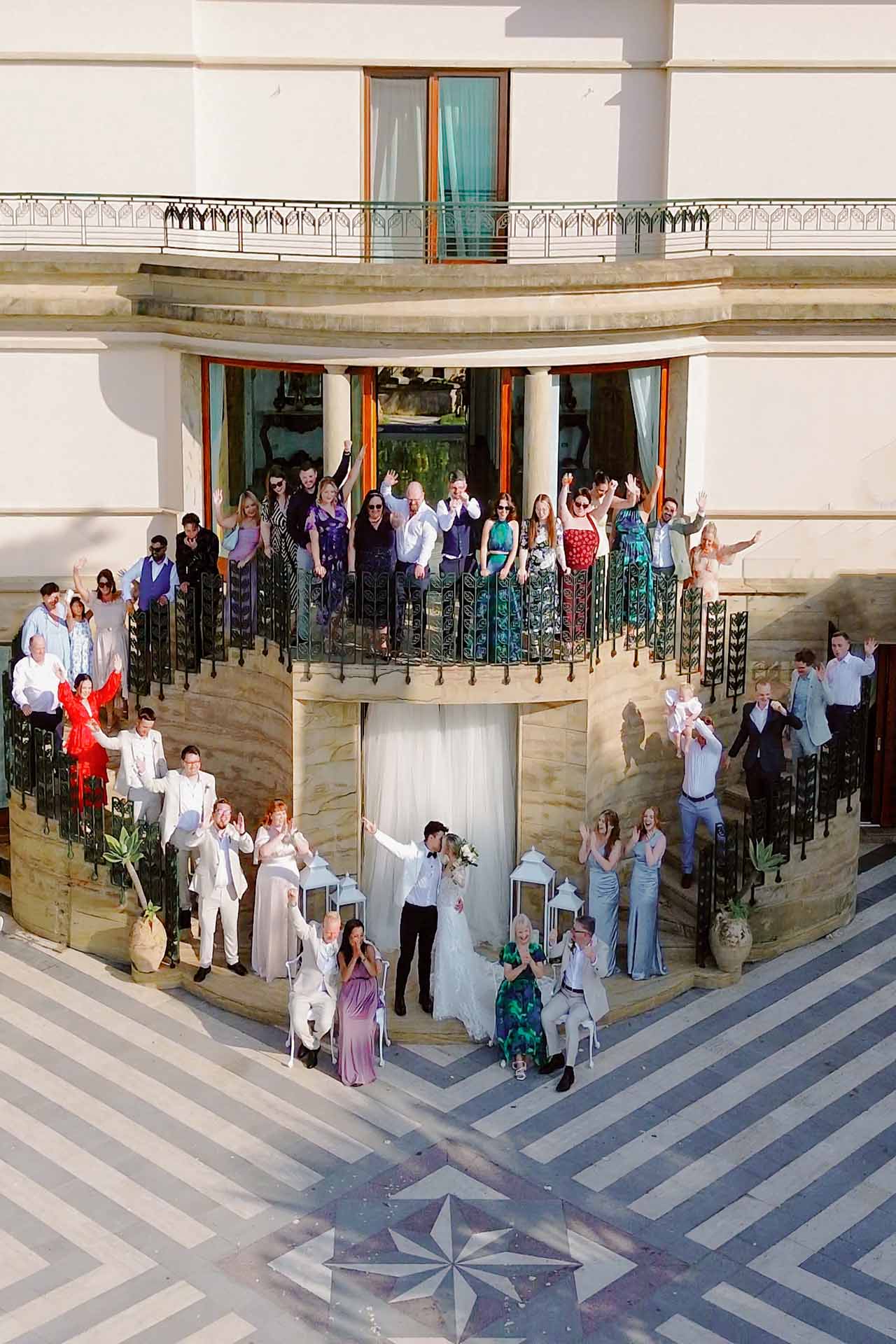
Historical architecture doesn’t just sit behind a couple on their wedding day. It actively shapes the light, the mood, the scale, and the story. The role of historical architecture in wedding photography is to give images a depth that no rented backdrop or modern venue can replicate. Stone walls carry centuries of texture. Arched doorways frame a couple the way a painter would. Grand staircases create movement and drama without a single direction from the photographer.
What makes this so compelling is that historic buildings were engineered before electric light existed. Their designers solved the problem of illumination through proportion, window placement, and orientation. That means a photographer who understands the building gets soft, directional light for free.
Architecture controls light, scale, and rhythm naturally
Structural elements like columns, arches, and doorways act as ready-made frames
Historic textures add narrative weight that modern venues simply don’t have
The building sets the emotional tone before the couple even steps in
Images shot at heritage venues tend to age beautifully, free from trend-driven styling
How to use architectural features to compose stronger wedding shots
The most effective technique is treating every architectural element as a framing device first. A pair of columns on either side of a couple creates a natural portrait frame. An arched doorway pulls the eye inward and gives the image a sense of depth that a flat wall never could. Photographers working at heritage wedding venues consistently find that the building does half the compositional work when you let it.
Staircases deserve their own strategy. A grand staircase offers three distinct shooting positions: from below looking up (which adds grandeur), from above looking down (which creates intimacy and pattern), and from the side (which captures movement and flow). Each angle tells a different part of the story.
Large historic windows are among the most valuable light sources in any venue. The glass diffuses sunlight into something soft and directional, similar to a studio softbox but warmer and more organic. Position the couple perpendicular to the window rather than facing it directly, and the light wraps around their faces in a way that feels genuinely cinematic.
Pro Tip:Scout the venue at the same time of day as the ceremony, not just during a midday walkthrough. Light at a historic building moves dramatically across the day, and the difference between 10 AM and 3 PM can be the difference between flat shadows and golden, raking light across stone.
Use columns and arches as natural portrait frames
Shoot staircases from multiple angles to vary the narrative
Position couples perpendicular to large windows for soft, directional light
Follow architectural lines (corridors, doorways, balustrades) to guide the viewer’s eye through the frame
Carry portable lighting for low-light interiors, since many historic venues lack electrical infrastructure
Balance ambient architectural light with fill to avoid losing detail in deep shadows
Why historic architecture gives wedding photos their narrative power
Architecture serves as an atmospheric anchor. When a couple stands inside a 19th-century ballroom or beneath a vaulted cathedral ceiling, the building communicates permanence, ceremony, and weight. That emotional context transfers directly into the photograph. The cultural significance in wedding photos shot at heritage venues goes beyond aesthetics; it connects the couple’s story to something larger than a single day.
The contrast between modern bridal attire and centuries-old stone or wrought iron creates a visual tension that reads as genuinely editorial. A silk gown against rough-hewn limestone, a tailored suit against ornate ironwork, these pairings tell a story about time and continuity that a clean modern venue simply cannot. Architectural juxtaposition between contemporary fashion and historic texture is one of the most valued qualities couples cite when they look back at their images years later.
Architecture anchors the mood and emotional register of every image
Historic materials like stone, wrought iron, and carved wood embody permanence
The interplay between couple and structure creates authentic, editorial-quality photos
Natural light design built into historic buildings produces soft, evocative imagery
Structural details carry cultural significance that enriches the overall narrative
What you need to know about permits at U.S. historic venues
Permit requirements vary widely across American historic sites, and skipping this step can end a shoot before it starts. Federal monuments in Washington, D.C. now offer permit-free access for groups of eight or fewer people under the 2025 EXPLORE Act, which significantly simplifies logistics for intimate wedding photography sessions at iconic locations. Private historic estates operate differently, typically requiring advance reservations and formal photography permits that can take months to secure.
Many heritage venues have strict commercial photography policies designed to protect the site and manage foot traffic. Booking a permit months ahead is standard practice, not an exception. Understanding the specific rules at each venue prevents restrictions from catching you off guard on the wedding day itself.
Federal monuments in Washington, D.C. allow permit-free photography for groups of 8 or fewer
Private historic estates usually require formal permits booked months in advance
Some venues restrict tripods, lighting equipment, or specific areas of the property
Commercial photography rules differ from personal use rules; confirm which applies
Respecting permit processes protects the venue relationship for future photographers
Expert perspectives from Imagestudio and leading photographers
Imagestudio brings over 14 years of cinematic storytelling experience to wedding photography, and that background shapes a clear philosophy: architecture should guide the narrative, not compete with it. With more than 250 projects and over 150 million views across their work, Imagestudio’s approach treats every historic venue as a collaborator rather than a set piece.
Photographers Radostina Boseva and Joseph Nance both advocate for an observational style that respects the history embedded in a venue. Their approach centers on letting couples exist naturally within architectural geometry rather than forcing poses that fight the space. This observational framing produces imagery that feels cinematic precisely because it doesn’t look directed. The building’s proportions, light, and texture do the heavy lifting, and the photographer’s job is to recognize the moment when all three align.
The core insight from practitioners at this level is that historic venues were designed to work with natural light. Fighting that design with heavy artificial lighting usually produces images that feel disconnected from the space. Working with the building’s original lighting logic, and supplementing only where necessary, consistently yields more authentic results.
Imagestudio’s cinematic approach treats architecture as a narrative collaborator
Radostina Boseva and Joseph Nance emphasize observational framing over directed posing
Letting couples exist naturally within architectural geometry produces more authentic imagery
Historic venues were built for natural light; work with that design rather than against it
Supplement natural light sparingly, only where the architecture creates unavoidable shadows
A quick recap of what makes historic architecture so powerful for wedding photography
The role of historical architecture in wedding photography comes down to four things: light, structure, narrative, and access. Get all four right and the images essentially tell themselves.
Architecture controls light naturally, giving photographers a built-in advantage
Structural elements provide ready-made framing and compositional depth
Historic texture and cultural weight add storytelling layers that modern venues lack
Permit and access planning is non-negotiable for smooth, restriction-free shoots
The best results come from working with the building’s design, not against it
How to respect and preserve historic sites during a wedding shoot
The first rule is simple: leave no trace. Historic surfaces, whether carved stone, original hardwood floors, or painted plasterwork, are irreplaceable. Photographers and couples should avoid placing equipment directly on fragile surfaces, and tape or adhesive should never touch original walls or woodwork.
Lighting rigs deserve particular attention. Heavy stands on unprotected stone floors can cause micro-damage that accumulates over years of commercial use. Use rubber feet on all stands, and always ask venue staff about restricted areas before setting up. Many sites have specific zones where photography is permitted and others where it is not, and those boundaries exist for preservation reasons.
Crowd management during a wedding shoot at a public historic site requires coordination with venue staff. Shooting during off-peak hours reduces both foot traffic interference and the risk of accidental contact with the site. Building a relationship with the venue coordinator before the day pays off in access, flexibility, and goodwill that benefits every photographer who comes after you.
Iconic architectural styles that work beautifully in wedding photography
Different historic styles bring distinct visual qualities to architecture-inspired wedding shoots, and knowing what each one offers helps photographers plan their approach.
Beaux-Arts buildings, common in American civic architecture from the late 19th and early 20th centuries, feature grand staircases, ornate columns, and high ceilings with elaborate plasterwork. The scale creates natural drama and the symmetry makes composition almost effortless.
Gothic Revival churches and university buildings offer pointed arches, ribbed vaulting, and stained glass that casts colored light across stone floors. The vertical emphasis draws the eye upward and gives portraits a sense of aspiration.
Antebellum plantation houses across the American South provide wide porticos, white columns, and sweeping lawns that create a painterly, almost cinematic backdrop. The light on those porticos in the late afternoon is particularly striking.
Industrial loft conversions in repurposed 19th-century factories bring exposed brick, cast-iron columns, and large factory windows. The raw texture contrasts beautifully with formal wedding attire and produces an editorial quality that appeals to couples who want something less traditional.
Spanish Colonial Revival architecture, prevalent across California, Texas, and Florida, offers terracotta tiles, arched loggias, and courtyard fountains that create warm, Mediterranean-feeling imagery with strong geometric patterns.
How to integrate couples and their attire with the architectural backdrop
The most effective approach is to match the visual weight of the attire to the scale of the architecture. A heavily embellished ballgown reads beautifully against the grandeur of a Beaux-Arts interior because the detail levels are comparable. A minimalist silk slip dress, by contrast, works best against clean stone or simple arched doorways where the architecture doesn’t overwhelm the garment’s simplicity.
Color matters too. Warm ivory and champagne tones photograph warmly against aged stone and warm-toned wood. Bright white can look stark against the same surfaces, so photographers should flag this during pre-shoot planning. For pre-wedding storytelling shoots, testing attire against the actual venue light before the wedding day removes guesswork entirely.
Positioning the couple within the architecture rather than in front of it transforms the image from a portrait with a backdrop into a genuine environmental story. Place them inside a doorway, on a landing halfway up a staircase, or seated within a window alcove, and the building becomes part of their world rather than a stage flat behind them.
Common challenges at historic venues and how to solve them
Low light is the most frequent obstacle. Many historic interiors were designed for candlelight or gas lamps, and even with large windows, the deeper rooms can be genuinely dark. Portable LED panels with adjustable color temperature solve this without the harshness of on-camera flash. Match the panel’s color temperature to the ambient light in the room to keep the image feeling cohesive.
Crowds at popular historic wedding photography locations present a different kind of problem. Public sites like the Lincoln Memorial or the Boston Public Library attract visitors throughout the day, and waiting for a clear frame can eat into shooting time. Arriving at opening time, coordinating with venue staff for brief crowd holds, and using longer focal lengths to compress the background are all practical solutions.
Restrictions on equipment, particularly tripods and lighting stands, catch photographers off guard at many sites. Confirm what’s permitted in writing before the day, and build a kit that works within those constraints. A monopod often passes where a tripod doesn’t, and a small handheld LED panel avoids the stand issue entirely.
Key Takeaways
Historical architecture shapes wedding photography through light, structure, and narrative, making permit planning and an observational shooting style equally non-negotiable.
Point
Details
Architecture as active collaborator
Historic buildings control light, scale, and framing naturally, doing compositional work for you.
Permit planning is critical
Federal monuments in Washington, D.C. allow permit-free access for groups of 8 or fewer; private estates require months of advance booking.
Observational style wins
Letting couples exist naturally within architectural geometry produces more authentic, cinematic results than directed posing.
Match attire to architectural scale
Visual weight of the outfit should align with the grandeur or simplicity of the surrounding structure.
Portable lighting fills the gaps
Many historic interiors lack electrical infrastructure; adjustable LED panels matched to ambient color temperature solve low-light challenges.
Imagestudio’s cinematic wedding photography work brings together 14 years of visual storytelling experience with a deep understanding of how architecture shapes every frame. If you’re planning a shoot at a historic venue and want imagery that genuinely reflects the weight and beauty of the space, Imagestudio’s team knows how to make the building work for you.
A high-end cinematic portfolio experience by Image Studio featuring automotive visuals, aerial cinematography, urban storytelling, and premium brand collaborations.