

Discover the most effective video production styles for brands, from commercial videos and social media content to cinematic brand films, documentaries, testimonials, and product explainers. Learn how to choose the right format based on your audience, marketing goals, and distribution channels.
← Back to Editorial
← Back to Editorial
Video Production Styles for Brands: A Complete Guide
July 24, 2026
Your choice of video production style shapes how audiences feel about your brand before they read a single word of copy. The right style builds trust, drives action, and makes your message stick. The wrong one, and even a generous budget can’t save a video that feels off-brand or out of place.
Here’s a quick look at the core video production styles brands rely on:
- Brand storytelling videos — emotional narratives that build connection and loyalty
- Commercial video production — polished, broadcast-ready content for mass reach
- Video ad campaigns — short, conversion-focused content built for paid channels
- Social media video production — platform-native content tailored to specific audiences
- Case study and testimonial videos — real customer stories that provide social proof
- Event video production — live branded experiences captured for extended reach
- Internal communication videos — content designed for employee engagement and alignment
- Product and explainer videos — clear, educational content that simplifies decisions
- Animation and motion graphics — visual storytelling for abstract or complex ideas
- Documentary-style videos — authentic, long-form narratives with journalistic depth
- Live streaming and real-time video — immediacy-driven content that builds community
- Cinematic and branded film — high-production storytelling with emotional prestige
- Interactive and immersive formats — participatory video that deepens engagement
Each style serves a distinct purpose in your video marketing strategy. Choosing well means matching the format to your goal, your audience, and where they spend their time.
What are the main video production styles for brands?
Brand storytelling videos sit at the emotional core of most long-term video marketing strategies. They use narrative structure, real characters, and carefully chosen music to create a feeling, not just deliver information. Brands like National Geographic have long understood that a well-told story outlasts any product feature list.
Commercial video production is the workhorse of brand visibility. These are the polished, professionally lit pieces built for broadcast, pre-roll, or out-of-home screens. Consistency is the priority here: every frame reinforces brand color, tone, and message. A strong commercial doesn’t just sell a product; it signals that the brand takes itself seriously.
Video ad campaigns operate on a different clock. You have seconds, not minutes, to earn attention and prompt a click. The best ad campaigns are built around a single, sharp idea and tested across multiple cuts. Short-form ads designed for YouTube pre-roll or Meta feeds need a hook in the first three seconds or they’re gone.
Social media video production is where format rules everything. Vertical video for Reels, TikTok, and YouTube Shorts performs differently than widescreen content. Cross-posting vertical formats across these platforms extends reach without multiplying production costs. The tone tends to be lighter, faster, and more conversational than traditional commercial work.
Case study and testimonial videos are among the most credible content a brand can produce. Real customers speaking candidly about real results carry weight that polished brand copy simply can’t replicate. The key is authenticity: over-scripted testimonials read as fake, and audiences notice immediately.
Event video production captures the energy of live branded experiences, from product launches to conferences, and packages them for audiences who weren’t in the room. A well-edited event recap can generate content for weeks across multiple channels.
Internal communication videos are often overlooked in brand video planning, but they matter. A CEO message delivered via a well-produced video lands differently than an email. These videos build culture, align teams, and communicate change with clarity and warmth.
Product and explainer videos do one job: make something easy to understand. Live action works well when the product itself is the star. Animation excels when the concept is abstract or the process is invisible to the naked eye. Mixed media, combining live footage with animated overlays, blends authenticity with clarity in a single piece.
Animation and motion graphics give brands a way to visualize data, processes, or ideas that cameras can’t capture. They’re also highly brandable: color palettes, type choices, and motion style can all be tuned to match brand identity precisely.
Documentary-style videos bring journalistic credibility to brand storytelling. They tend to be longer, more character-driven, and less scripted than traditional commercials. When a brand has a genuinely interesting origin story or a cause worth exploring, documentary format gives that story room to breathe.
Live streaming and real-time video create a sense of immediacy that pre-produced content can’t fake. Product launches, Q&A sessions, and behind-the-scenes streams build community by letting audiences participate rather than just watch.
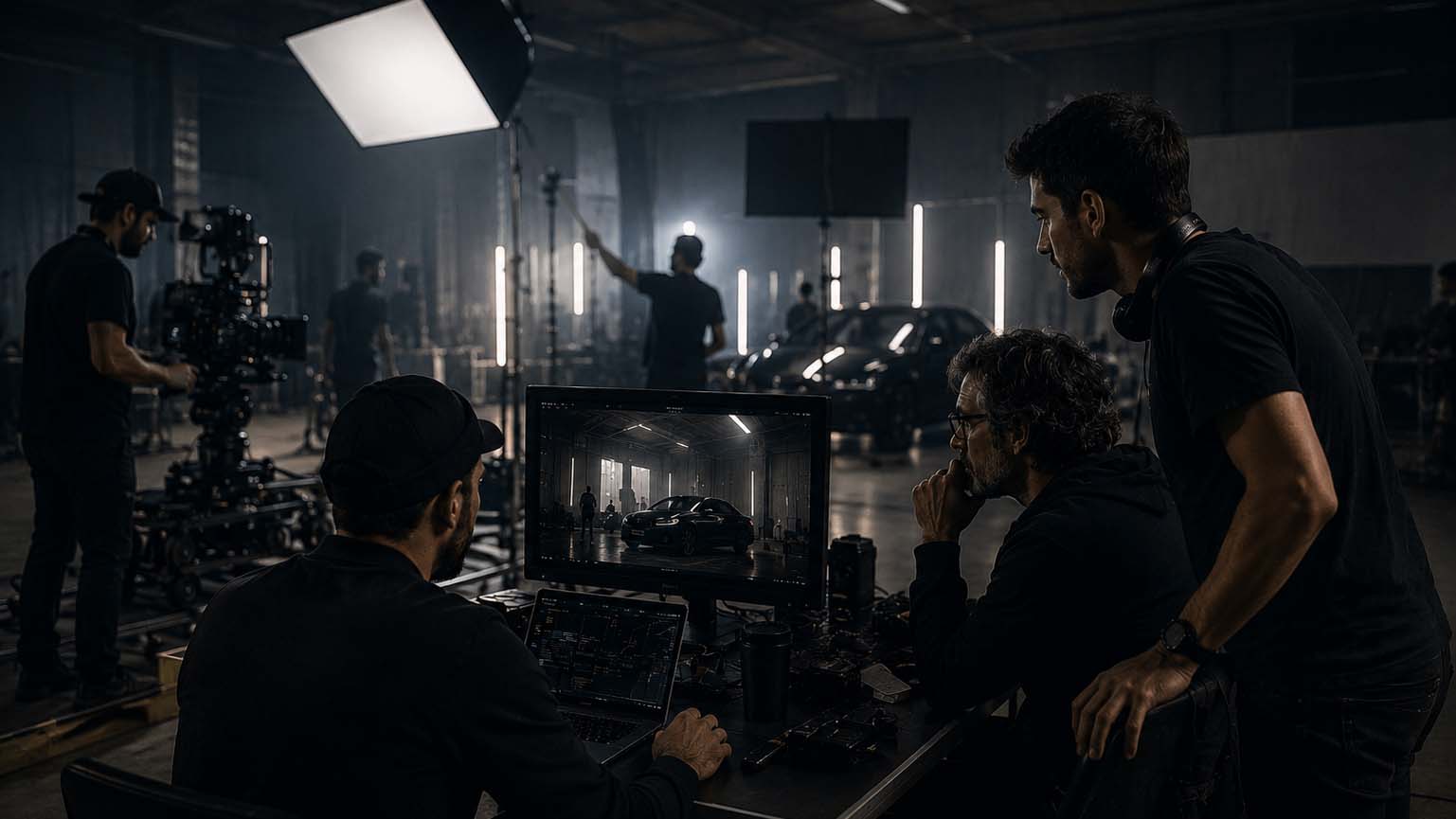
Cinematic and branded film production is the highest-expression format in the brand video toolkit. These pieces prioritize mood, craft, and emotional resonance over direct messaging. Global brands use cinematic video techniques to signal prestige and create content that audiences actively seek out rather than skip.
Interactive and immersive video formats, including shoppable video, 360-degree experiences, and branching narratives, put the viewer in control. They tend to generate longer watch times and stronger recall because participation creates investment.
| Style | Primary Goal | Best Channel |
|---|---|---|
| Brand storytelling | Emotional connection | YouTube, OTT, social |
| Commercial production | Brand awareness | TV, pre-roll, OOH |
| Video ad campaigns | Conversion | Paid social, YouTube |
| Social media video | Engagement | Reels, TikTok, Shorts |
| Testimonial / case study | Social proof | Website, email, social |
| Event video | Extended reach | Social, website |
| Internal communication | Employee alignment | Intranet, email |
| Product / explainer | Education | Website, YouTube |
| Animation / motion graphics | Concept clarity | Any |
| Documentary-style | Credibility | YouTube, OTT |
| Live streaming | Community building | YouTube Live, Instagram |
| Cinematic / branded film | Prestige, emotion | Cinema, social, OTT |
| Interactive / immersive | Deep engagement | Website, social |
How to choose the right video style for your brand
Start with your objective, not your aesthetic preference. A brand trying to generate leads at the bottom of the funnel needs a different format than one building awareness at the top. Mapping your video style to the customer journey, from awareness through loyalty, keeps production decisions grounded in strategy rather than trend-chasing.
Your audience’s platform behavior is the second filter. Short-form social media video content performs best when it’s built natively for the platform, not repurposed from a longer cut. A 60-second vertical video shot for Reels will outperform a cropped 16:9 commercial almost every time.
Budget and timeline shape what’s actually possible. Cinematic branded film and high-end animation require significant pre-production investment: storyboarding, scripting, casting, and post-production all add up. Simpler formats like testimonial videos or live streams can deliver strong results with leaner resources, especially when authenticity matters more than polish.
Here’s a practical checklist for making the call:
- Define the goal first. Awareness, education, conversion, or retention? Each maps to different styles.
- Know your audience’s platform. Where do they actually watch video, and in what format?
- Match emotional tone to brand voice. A playful DTC brand and a financial services firm need very different registers, even for the same format.
- Assess production complexity. Animation and cinematic film need longer lead times than social-native content.
- Consider distribution requirements. Vertical formats for social, widescreen for broadcast, square for email.
- Decide on in-house vs. agency production. In-house teams move faster; experienced agencies bring craft and perspective that’s hard to replicate internally.
Pro Tip: Before committing to a style, watch three to five examples of that format from brands in adjacent categories, not just your direct competitors. You’ll spot conventions worth borrowing and clichés worth avoiding.
Expert insights from Imagestudio on executing brand video well
Imagestudio has extensive experience producing high-end film and video content, completing numerous projects with significant viewership. That body of work, spanning collaborations with clients like National Geographic and recognition from prestigious film festivals, reflects a consistent approach: technology and creative craft working together, not competing.
One pattern that shows up across Imagestudio’s most effective projects is the commitment to authentic emotion on camera. Scripted or not, the moments that resonate are the ones that feel real. Lighting plays a direct role in this: a three-point lighting setup creates dimensionality that flat, overhead light destroys. Color grading in post-production then shapes the emotional register of the entire piece, whether that’s warm and intimate or cool and authoritative.
Sound design is equally consequential. Good audio keeps viewers watching; poor audio sends them away, regardless of how strong the visuals are. Music selection, in particular, can shift the emotional meaning of a scene entirely.
Storyboarding before production isn’t just a planning tool. It’s a creative filter that forces decisions about pacing, framing, and narrative arc before a camera rolls. Brands that skip this step often discover mid-shoot that the story they imagined doesn’t translate to the screen. Imagestudio’s commercial video production process treats pre-production as the most important phase, not an optional warm-up.
Staying current on video editing trends also matters more than most brand managers realize. Post-production choices, from transition styles to color palettes, signal whether a brand feels current or dated.
Key principles Imagestudio applies across every production:
- Authentic emotion over performance. Real reactions, even imperfect ones, connect more deeply than polished acting.
- Lighting as a storytelling tool. Three-point setups and motivated light sources create mood, not just visibility.
- Color grading for brand alignment. Post-production color work should reinforce brand identity, not just look pretty.
- Sound design as a priority. Music and audio quality are as important as the visuals for holding attention.
- Storyboarding before shooting. Pre-production planning prevents expensive on-set surprises.
- Format-first thinking. Every deliverable should be planned for its destination platform from day one.
Imagestudio brings cinematic craft to your brand’s video strategy
Choosing the right video production style is only half the equation. Executing it with the craft and intentionality that makes audiences stop scrolling is where most brands need a genuine partner.
Imagestudio specializes in cinematic brand film production that goes well beyond standard agency output. With 14-plus years of experience, award-winning work, and a track record of over 150 million views across 250-plus projects, the studio brings the kind of creative depth that turns a brand video into something audiences actually remember. Whether you need a high-production branded film, a social-native content series, or AI-powered video content built for scale, Imagestudio’s team matches the right approach to your specific goals. Get in touch to talk through your next production.
Key Takeaways
The most effective brand video strategy maps each production style to a specific audience, goal, and distribution channel rather than defaulting to a single format.
| Point | Details |
|---|---|
| Match style to objective | Awareness, conversion, and retention each call for a different video format and tone. |
| Platform shapes format | Vertical video built natively for Reels, TikTok, and Shorts consistently outperforms repurposed widescreen cuts. |
| Pre-production drives quality | Storyboarding and scripting before shooting prevents costly on-set decisions and sharpens narrative clarity. |
| Sound and color are non-negotiable | Audio quality and color grading shape emotional impact as much as the visuals themselves. |
| Imagestudio for cinematic depth | With 250-plus projects and 150 million-plus views, Imagestudio matches creative craft to brand-specific video goals. |
