Commercial Video Production Company: Your 2026 Guide
July 7, 2026
Learn how to choose the right commercial video production company by comparing creative styles, production workflows, budgeting, and cinematic storytelling to create high-impact brand films, commercials, and campaign content.
You’re probably looking at a brand that deserves better than the footage it’s been given. The property is beautiful. The product is refined. The service experience is carefully designed. Yet the video feels interchangeable. Nice light, clean edits, competent camera work, and still no emotional pull. Nothing in it tells a discerning viewer why this brand matters, or why it belongs in a premium category. That’s the point where hiring a commercial video production company stops being a procurement task and becomes a creative decision. The right partner doesn’t just capture what’s in front of the lens. They shape atmosphere, rhythm, tension, and meaning so the finished film feels native to the brand instead of pasted onto it.
Table of Contents
Why Your Brand Needs More Than Just a Videographer
The Anatomy of Production From Concept to Final Cut
Pre-production decides whether the film will feel intentional
Production tests discipline under pressure
Post-production gives the film its final authority
Decoding Creative Styles to Find Your Visual Voice
Cinematic storytelling
Editorial style
Documentary language
Common Projects and Core Production Services
Brand films for places and experiences
Product commercials and campaign assets
Social content systems not one-off clips
Budgeting and Timelines What to Realistically Expect
Why pricing feels opaque
What drives the budget
What a realistic schedule looks like
How to Hire the Right Production Partner
Read the portfolio like a creative director
Test the conversation not just the reel
Logistics matter more on destination work
Beyond the Deliverable Finding a True Creative Partner
Why Your Brand Needs More Than Just a Videographer
A videographer records. A commercial video production company interprets. That difference matters when the brand problem isn’t visibility alone, but cohesion. Many luxury, fashion, and hospitality brands don’t suffer from a lack of images. They suffer from imagery that doesn’t carry the same emotional signature from one touchpoint to the next. The website feels elegant, social feels generic, and paid campaigns feel borrowed from someone else’s mood board. The commercial side of the industry is expanding because brands are leaning harder on moving image to define identity in crowded markets. The Advertising Video Production Market was valued at approximately USD 66.5 billion in 2024 and is forecast to reach USD 215.9 billion by 2034, with a CAGR of roughly 12.5%, according to advertising video production market analysis. That growth isn’t just about volume. It reflects how central film has become to brand positioning. A serious production partner brings a structure that most standalone shooters can’t offer:
Brand translation: turning tone of voice, design language, and audience psychology into visual choices
Narrative control: deciding what the viewer should feel first, remember last, and associate with the brand
Craft alignment: matching cinematography, styling, casting, sound, and pacing so the piece feels unified
Channel intelligence: shaping one campaign so it can live across hero film, cutdowns, reels, and paid placements
A polished video can still fail if it doesn’t express the brand’s internal logic.
That’s why marketers tracking wider shifts in audience behavior keep returning to video-first strategy. Broader pattern spotting, including SleekPost’s 2026 marketing insights, is useful because it frames video as part of a larger brand system, not a standalone asset. The same is true when thinking about why video content dominates social media algorithms. Reach matters, but resonance matters more.
The Anatomy of Production From Concept to Final Cut
A luxury hotel film misses its mark long before the camera rolls. The suite is beautiful, the lighting package is expensive, the talent is well cast, but the piece still feels generic because nobody resolved the essential questions early. What should the audience desire first? Which details signal exclusivity rather than standard hospitality? How does the story move from place to feeling?
The production arc is familiar. Pre-production, production, and post-production. What separates a high-stakes commercial shoot from a routine content day is how rigorously each phase protects the brand idea. For fashion, luxury, and destination work, process is not administration. It is taste made operational.
Pre-production decides whether the film will feel intentional
Clients often judge a company by the reel. I look at how they prep. A polished portfolio can hide weak development. The warning signs show up in vague treatments, thin location research, no conversation about audience emotion, and schedules built around convenience rather than light, access, wardrobe changes, or guest flow. On a destination shoot, those omissions cost more than time. They flatten the final film into disconnected pretty shots. Good pre-production solves for both creative fit and logistical reality at the same time. The team should be able to define the story spine, explain why a location serves the narrative, map the emotional rhythm of the piece, and account for permits, weather windows, property restrictions, and talent movement without losing visual ambition. A proper prep package usually includes:
Creative treatment: a clear point of view on mood, narrative, references, and brand intent
Script or interview framework: a structure for what must be said, implied, and felt
Storyboard or shot list: a plan that protects the edit while leaving room for discovery
Schedule design: a shooting order built around light, performance, styling changes, and operational constraints
This is often where brand problems begin to get solved. If a company struggles with inconsistency across campaigns, pre-production is where visual rules get established. If the brand feels polished but emotionally flat, pre-production is where the team chooses moments, textures, and pacing that create attachment instead of mere coverage.
Production tests discipline under pressure
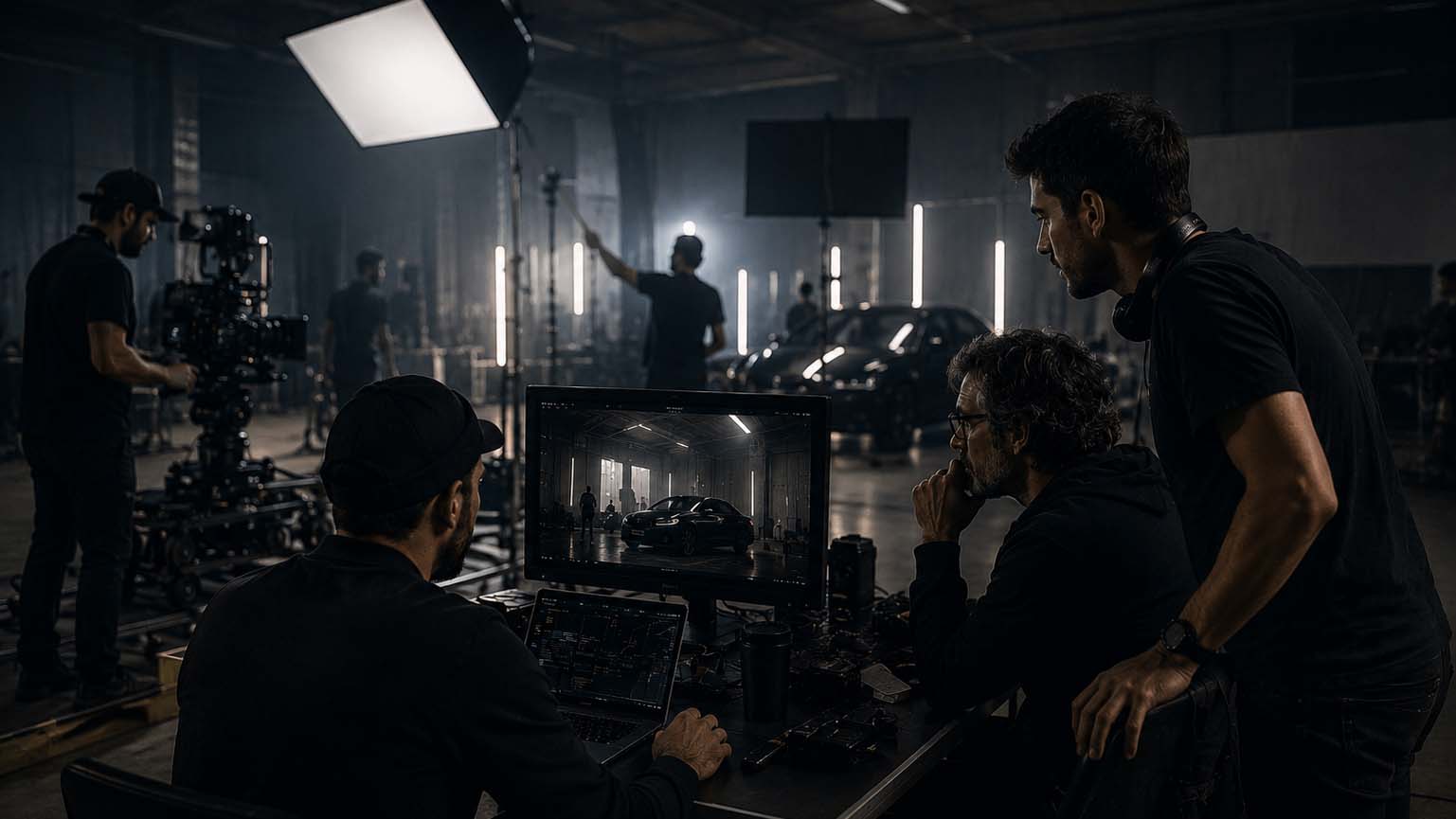
Set days reward preparation. They also expose weak producers and weak directors immediately. On set, the job is to protect the idea while adapting to real conditions. That means directing performance, shaping movement, watching continuity, controlling reflections, tracking time against the schedule, and protecting sound with the same care given to the image. Technical standards still matter. Video requirements and guidelines from the University of North Georgia outline baseline delivery expectations such as resolution, frame rate, file formats, and professional audio capture. If a crew misses those basics, post-production inherits repair work that should never have existed.
Practical rule: Ask how the team monitors sound, exposure, continuity, and client review on set. The answer tells you whether they run high-pressure productions calmly or hope problems can be fixed later.
For luxury and destination work, logistical expertise becomes part of the creative result. A crew that knows how to move through an active resort, protect guest privacy, keep wardrobe pristine in heat or salt air, and recover quickly after weather shifts will produce footage with more confidence and more usable variation. Cinematic quality is not only about lenses and lighting. It is also about whether the day stays controlled enough for craft to show up in the frame.
Post-production gives the film its final authority
Editing determines whether the piece feels composed or merely assembled. This phase shapes narrative logic, emotional timing, and brand coherence. A strong editor knows what to hold back, what to repeat, and where to let sound carry the transition. Color grading decides whether skin, fabric, interiors, and exteriors belong to the same world. Sound design adds scale, intimacy, and memory. Versioning decides whether the core idea survives across hero film, paid social, vertical cutdowns, and site assets. A polished post pipeline often includes:
Stage
What it shapes
Assembly edit
Narrative structure and selection of usable moments
Fine cut
Pace, emotional rhythm, and performance nuance
Color grading
Palette, tonal consistency, and premium finish
Sound design and mix
Depth, clarity, atmosphere, and impact
Versioning and delivery
Channel-specific exports without losing the core story
This is also where integrated teams tend to hold their advantage. When the editor, colorist, and director are working from the same original intent, fewer decisions drift off-brand. For a practical view of that connected workflow, Image Studio’s film production process shows how some studios structure concept, directing, production, and post under one roof.
Decoding Creative Styles to Find Your Visual Voice
A portfolio can be beautifully shot and still be wrong for your brand. That happens when clients evaluate only surface quality. They see clean frames, expensive lenses, elegant motion, and assume creative fit. But style isn’t decoration. Style is strategy made visible. If your film language doesn’t match your brand promise, the audience feels the mismatch even if they can’t name it.
Cinematic storytelling
This approach is built around atmosphere, visual progression, composed movement, and emotional arcs. It often uses intentional lighting, measured pacing, and sound design that carries as much weight as dialogue. It suits brands selling aspiration, immersion, and identity. Luxury hospitality, destination properties, premium automotive, fragrance, fashion, and high-end real estate often benefit from this language because the purchase decision is emotional before it is rational. Look for these signs in a portfolio:
Tension and release: the edit knows when to withhold and when to reveal
Purposeful framing: wide shots establish status or place, close-ups create intimacy
A point of view: the film doesn’t just show the space, it tells you how to feel inside it
Editorial style
Editorial work borrows from fashion publishing. The frame is curated. Styling carries narrative weight. Gesture, silhouette, texture, and attitude matter as much as plot. This is often the right choice when the brand needs to appear culturally literate and visually controlled. Fashion labels, design-led hospitality, beauty brands, jewelry, and contemporary lifestyle campaigns use editorial language well because it can communicate taste without over-explaining. What works:
Strong art direction
Cohesive wardrobe and production design
Sharp visual hierarchy
Confidence in negative space and restraint
What doesn’t work is confusing editorial with emptiness. Minimalism only succeeds when every element has intent.
Documentary language
Documentary style trades polish for proximity. It leans into lived-in rhythm, natural performances, real environments, and the feeling that something true is unfolding in front of the camera. For founder stories, artisan process films, behind-the-scenes pieces, and some hospitality or culinary storytelling, this can be more persuasive than overt luxury codes. It builds trust by reducing distance.
The most convincing documentary-style commercial work still has design. It just hides the scaffolding better.
When you review a production company’s documentary work, ask whether the emotion comes from access or from manipulation. Good documentary language feels observed. Weak versions feel underplanned.
Common Projects and Core Production Services
Most clients don’t need “video.” They need a specific film system that solves a specific brand problem. A luxury hotel may need atmosphere and consistency across web, social, and booking touchpoints. A fashion label may need a hero campaign plus cutdowns. A product launch may need one centerpiece commercial and a library of short-form assets that sales and media teams can deploy for months.
Brand films for places and experiences
A destination hotel or luxury venue often needs more than a property walkthrough. The stronger approach is a brand film that treats the location as a lived experience. That usually involves concept development, location planning, casting, direction, cinematography, sound design, and delivery in multiple cuts. If stills matter too, a coordinated film-and-photo team preserves a single visual language across campaign assets rather than splitting the brand between separate crews. For brands looking at providers in this category, commercial production work from Image Studio reflects the kind of integrated campaign structure many clients need when film, photography, and platform-specific delivery have to stay visually aligned.
Product commercials and campaign assets
A product commercial has a narrower task. It has to make an object feel desirable, legible, and memorable in very little time. That can mean tabletop precision, studio lighting, macro detail, motion control, talent direction, or a more editorial campaign setting depending on the brand. The mistake here is making everything look expensive but saying nothing specific. Good product advertising identifies the one visual truth that should anchor the piece. Texture. Ritual. Performance. Status. Ease. Core services often include:
Concept and scripting: defining the central hook and visual approach
Studio or location production: selecting the environment that flatters the product’s role
Asset versioning: adapting the master into shorter placements and alternate crops
Some brands also use tools like ShortGenius AI ad generator to prototype angles or produce support content at speed. That can be useful for iteration. It shouldn’t replace the hero film when the brand needs tactile realism, controlled performance, or luxury-grade visual credibility. To see how campaign storytelling can expand into motion, watch this example of cinematic commercial direction:
Social content systems not one-off clips
The most effective commercial teams don’t stop at the master edit. They design a content system around it. One production day can yield a launch film, vertical reels, paid media cutdowns, behind-the-scenes selects, still photography, silent versions, and alternate hooks for different placements. That’s where a commercial video production company becomes operationally valuable. The campaign is conceived as a family of assets, not a single upload.
A well-run shoot captures for the edit you need today and the campaign you’ll still be using months from now.
Budgeting and Timelines What to Realistically Expect
A brand team approves a concept that feels right on the call. Then the estimate arrives, the timeline tightens, and the question surfaces. Are you buying a polished shoot day, or a production partner that can protect the idea under pressure across travel, talent, approvals, and post? That gap explains why pricing often feels opaque.
Why pricing feels opaque
Clutch’s overview of commercial video production firms in Los Angeles points to a common market problem. Many studios do not publish pricing ranges, so early conversations start without a shared frame of reference. For clients, that creates hesitation. For production teams, it creates defensive scoping and vague assumptions. The deeper issue is that two bids can describe the same deliverable and mean completely different things. A 60-second brand film may involve a small director-led crew working in one controlled location. It may also involve a creative director, producer, DP, stylist, casting, location management, travel coordination, and a post schedule built for multiple campaign versions. On paper, both are still “one video.” For luxury, fashion, and destination work, the budget is often paying for risk control as much as image quality. You are funding taste, yes, but also judgment, contingency planning, and the ability to keep the film coherent when weather shifts, talent timing slips, or a location window narrows.
What drives the budget
Budgets rise or fall on production complexity and the level of precision the brand requires. A straightforward interview piece lives in one range. A cinematic campaign with location moves, performance direction, wardrobe, art direction, and extensive finishing lives in another. The spread can be wide because the cost drivers are concrete:
Creative development: concept refinement, scripting, treatment work, references, and client alignment before production begins
Crew structure: a compact senior crew costs differently from a larger team with dedicated departments and more coverage
Locations and logistics: permits, travel days, load-ins, weather backup plans, local coordination, and company moves
Talent and styling: casting, fittings, wardrobe pulls, hair and makeup, and art direction
Equipment package: camera body is only part of it. Lenses, lighting, grip, motion control, monitors, playback, and specialty support often shape the actual number
Post-production scope: editorial rounds, color, sound mix, music licensing, cleanup, graphics, subtitles, and versioning for different placements
The strongest proposals make those assumptions visible. That matters more than a low starting figure. I look for one thing in an estimate. Can the team explain where the money is protecting the result? If they can, the conversation usually stays productive.
What a realistic schedule looks like
For high-end commercial work, four to six weeks from kickoff to final delivery is a healthy baseline. The shoot itself may take one or two days. The schedule expands because good work needs time in the places clients often underestimate: concept approval, casting, location confirmation, wardrobe prep, review cycles, music, finishing, and asset exports. Compressed schedules are possible. They come with trade-offs you should identify before signing. A faster timeline may mean fewer locations, less rehearsal, a smaller crew, shorter edit rounds, or reduced versioning. Sometimes that is the right call. Sometimes it strips away the very layer of craft that gives the film emotional weight and brand cohesion. That is the part many budget guides miss. The question is not only whether a company can make the film for the number. It is whether they can maintain cinematic quality, narrative clarity, and operational control inside the number and the calendar you have. For ambitious brands, that distinction is where expensive mistakes begin or are avoided.
How to Hire the Right Production Partner
Most hiring mistakes happen because brands evaluate the obvious things and miss the decisive ones. They look for glossy shots, recognizable clients, and a smooth intro call. Those matter. But for luxury, fashion, and destination work, the deeper questions are whether the team can produce emotional precision, hold a visual point of view under pressure, and run logistics without draining the client’s time.
Read the portfolio like a creative director
Don’t ask whether the reel looks expensive. Ask whether it thinks. A strong portfolio shows more than technical competence. It reveals narrative judgment. Does the company know how to build anticipation? Do the films have a rhythm that changes with the subject, or does every piece feel cut from the same template? Are luxury cues used with restraint, or do they rely on drone shots, slow motion, and shallow depth of field as decoration? Use this lens when reviewing work:
What to assess
What to look for
Narrative depth
A beginning, progression, and emotional destination, even in short formats
Brand sensitivity
The style changes to fit the client rather than flattening every brand into one house look
Sensory intelligence
Attention to texture, movement, space, sound, and human detail
Consistency
Strong frames across multiple projects, not one standout film surrounded by weaker work
If you’re hiring for a premium property, look at how they film architecture and human presence together. If you’re hiring for fashion, look at how they handle fabric, gesture, and attitude. If you’re hiring for destination hospitality, see whether the place feels inhabited or merely photographed.
Test the conversation not just the reel
The first conversation should tell you how they think under real conditions. Ask questions that force specificity:
What would you keep restrained in our film so the luxury doesn’t feel overstated?
Where do you see the emotional turn in the story?
What would you cut from our brief to protect quality if timing tightened?
How do you decide what belongs in the hero film versus social cutdowns?
Who owns feedback flow and approvals during post?
Hire the team that can simplify complexity without making your brand simpler than it is.
A thoughtful production partner won’t rush to promise everything. They’ll identify tensions early. That’s a good sign.
Logistics matter more on destination work
Creative excellence collapses quickly when logistics are weak. That’s especially true for location-heavy productions in Italy, where access, travel timing, local permits, crew coordination, and regional knowledge can make or break the schedule. Top-tier commercial agencies in Italy maintain networks across over a dozen production hubs including Milan, Rome, Venice, and the Amalfi Coast, enabling smoother coordination for international clients, according to Orbis Production’s overview of film production studios in Italy. For destination projects, that kind of on-the-ground structure matters as much as the showreel. When evaluating logistical capability, ask about:
Regional production experience: not just “we shoot in Italy,” but where and how often
Local coordination: permits, transport, call sheets, backup plans, local fixers
Location suitability: whether they know how spaces behave on camera, not just how they look in person
Crew scalability: the ability to stay lean for discreet luxury shoots or expand when the brief demands it
A commercial video production company earns trust when it can protect both the image and the operation behind the image.
Beyond the Deliverable Finding a True Creative Partner
A launch film can look expensive and still miss the brand. That usually happens when the production company treats the job as execution instead of interpretation. Beautiful lighting, polished camera movement, and a refined grade can carry a piece for thirty seconds. They cannot solve a vague point of view, inconsistent brand language, or a story that never earns emotion. A true creative partner catches those problems before the shoot, then protects the idea through every compromise a real production requires. True value sits in judgment. Which detail signals taste rather than excess. Which performance feels poised instead of staged. Which scene belongs in the cut, even if it was difficult to capture. On luxury, fashion, and destination projects, those decisions shape how a brand is felt, not just how it is seen. Portfolio review should go beyond asking whether the work looks cinematic. Examine whether the company can hold a coherent tone across very different conditions, talent, and locations. Look for control of pacing, restraint in music choices, confidence in framing, and a clear relationship between image and message. A strong reel shows craft. A strong partner shows authorship. Pay attention to how they speak about past work, too. Experienced teams can explain why a film was structured a certain way, what was changed to protect the brand, and where budget or timing forced a trade-off. That kind of clarity matters. High-stakes campaigns rarely go exactly to plan, and the right partner knows how to preserve meaning when the plan shifts. A vendor hands over assets. A creative partner helps a brand become more legible, more cohesive, and harder to forget. If you’re evaluating a commercial video production company for luxury, fashion, hospitality, or destination campaigns, Image Studio is one option to consider for film production, photography, and post-production across Italy and international projects.