Wedding content creation is evolving beyond social media into an immediate, intimate memory layer. Discover what it adds beside photography and cinematic film, what it should capture, and when a dedicated creator genuinely makes sense.
← Back to Editorial
← Back to Editorial
Beyond Instagram: Why Modern Weddings Deserve Dedicated Content Creation
August 29, 2026
IMAGE STUDIO / CONTENT CREATION
Why the most modern wedding content is becoming a private memory layer – not simply material for social media.
|
CENTRAL IDEA |
A Wedding Can Be Remembered Before It Is Finished
Wedding content creation is often described as a service for Instagram and TikTok. That description is no longer big enough.
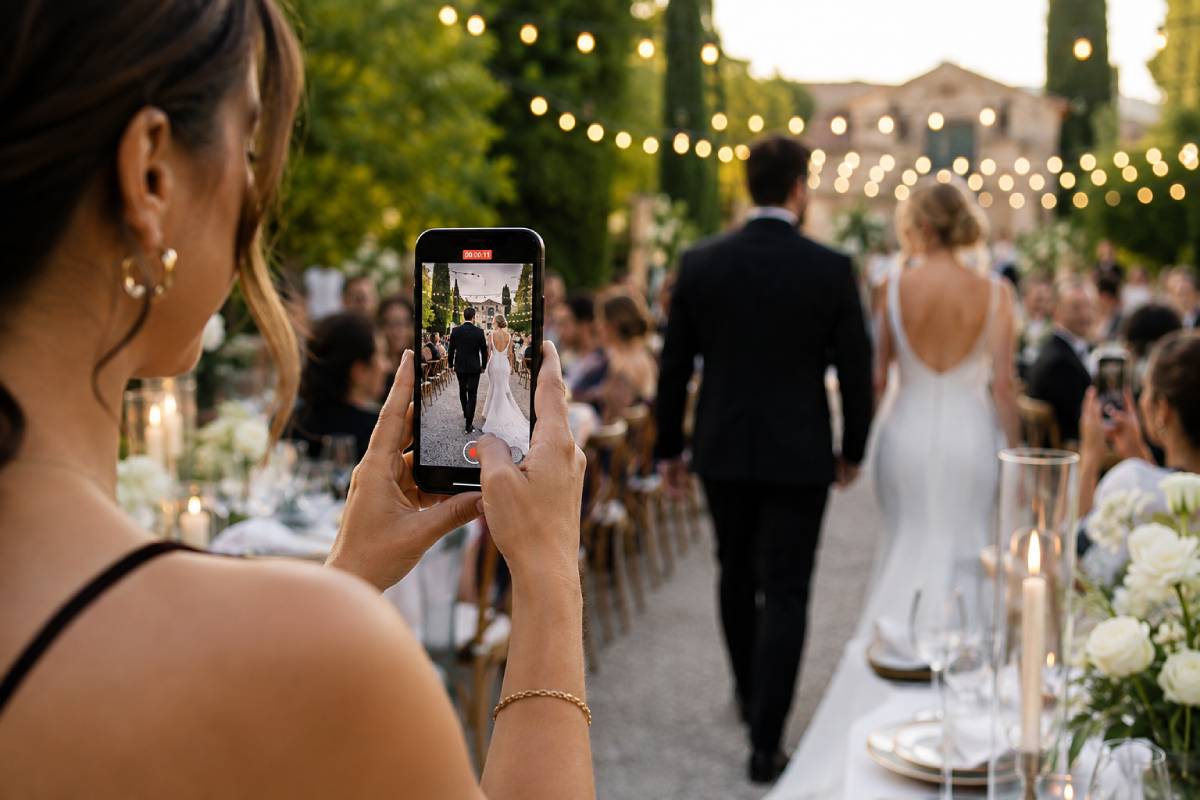
A dedicated wedding content creator can certainly produce vertical reels and social-ready clips. But the more interesting role is broader: preserving the wedding in the immediate, informal language of the phone – the fragments, reactions, transitions and behind-the-scenes moments that professional photography and cinematic film are not designed to capture in exactly the same way.
The result can be public content. It can also remain entirely private. A camera roll watched the next morning, a folder sent to family, a sequence of clips from the welcome dinner, or a small moment between friends may never be posted and still become one of the most frequently revisited parts of the wedding archive.
Wedding Content Creation: The Short Answer
Wedding content creation is dedicated, fast-turnaround coverage of a wedding through candid photos, vertical video, behind-the-scenes clips and short edits designed primarily for immediate digital viewing. Its purpose is not to replace professional photography or filmmaking. Its value is speed, intimacy, volume and a point of view that feels closer to being inside the celebration.
The strongest content creators understand that the role is not “film everything on a phone.” It is to identify the moments that belong to this medium and leave the photographer and filmmaker space to create the work only they can create.
|
DIRECT ANSWER |
For the service-level explanation, deliverables and destination-wedding context, read our Wedding Content Creator Italy guide.
Why This Role Is Growing Beyond Social Media
The medium began with social sharing, but current wedding behavior suggests a broader shift. The Knot described wedding content creators in 2026 as one of the fastest-growing vendor categories and noted that couples increasingly want movie trailers, iPhone footage and short-form clips that can become a digital scrapbook – either to post online or simply to keep in a camera roll.
That final distinction changes the entire conversation. If content does not need to be public, then its value is not measured only by reach, likes or trends. It can be measured by immediacy, intimacy and the amount of the wedding experience it preserves.
|
KEY INSIGHT |
By the Numbers: Weddings Are Becoming More Personal and More Digital
The Knot Real Weddings Study 2026 reported that 90% of couples aim for an authentic, highly personalized wedding. The same research found that 41% of couples identified as Gen Z, while social media and wedding-planning sites ranked among the most-used planning and inspiration resources after advice from friends and family.
Among Gen Z couples, Instagram usage for wedding planning rose from 42% in 2021 to 49% in 2025, while TikTok rose from 15% to 37%. Those numbers help explain why vertical, phone-native visual language now feels natural to a generation planning highly personalized celebrations.
|
90% |
41% |
49% |
37% |
|
Couples aiming for an authentic, highly personalized wedding |
Couples in the study identifying as Gen Z |
Gen Z Instagram use for wedding planning in 2025 |
Gen Z TikTok use for wedding planning in 2025 |
|
GOOD TO KNOW |
The Private Archive: Some of the Best Content May Never Be Posted
The assumption that wedding content exists for an audience can distort the service. Some of its most valuable output may be intensely personal: a friend making the bride laugh before the ceremony, the couple seeing a room before guests enter, the quiet walk from preparation to transport, a parent fixing a cuff, a voice note, the final minutes after the party, or the morning after.
These clips may be too small for a cinematic film and too transitional for the final photography gallery. That does not make them unimportant. It makes them a different kind of memory.
A dedicated creator gives those fragments a home without asking guests to spend the wedding documenting them.
|
THE DETAIL |
A Wedding Content Creator Is Not a Smaller Videographer
The difference is not simply camera size. Photography, filmmaking and content creation have different responsibilities, workflows and final products. Treating one as a cheaper version of another weakens all three.
|
Role |
Primary material |
Primary strength |
Typical output |
Long-term function |
|
Photography |
Decisive still images |
Refined visual archive |
Professionally edited gallery |
Long-term still memory |
|
Cinematic film |
Movement, voice, sound, sequence |
Narrative and emotional continuity |
Polished film edit |
Immersive time-based memory |
|
Content creation |
Candid, vertical, behind-the-scenes fragments |
Immediacy and informal perspective |
Raw-first files and fast short edits |
Digital diary / private or social archive |
For the deeper distinction between still photography and time-based storytelling, see Why Cinematic Wedding Films Preserve What Photography Cannot.
What Dedicated Content Creation Can Capture Exceptionally Well
The strongest content is often found between the formal milestones. It is less about duplicating the first kiss and more about noticing everything that surrounds it.
- The few minutes before the ceremony begins.
- Friends helping with clothing, jewelry, veil or final details.
- Guest arrivals and reactions before the couple sees them.
- Vertical room reveals and atmosphere before spaces fill.
- Transport: boats, cars, hotel corridors, elevators and walks between venues.
- Unscripted reactions immediately after the ceremony.
- Aperitivo energy, live music, food and guest interactions.
- Fashion changes, touch-ups and behind-the-scenes preparation.
- Late-night fragments that feel more like memory than formal coverage.
- The morning after: breakfast, departures and the emotional comedown of a wedding weekend.
|
FIELD NOTE |
The In-Between Moments Are the Point
A wedding timeline is written around events: preparation, ceremony, portraits, dinner, speeches and dancing. Memory does not work that way. People often remember the walk between rooms, the conversation before the doors opened, the reaction after the ceremony, the drive to dinner or the moment everyone finally relaxed.
Dedicated content creation has unusual access to those transitions because it can remain light, mobile and close to the social rhythm of the day.
|
KEY INSIGHT |
Speed Changes the Emotional Experience
Professional photography and cinematic film deserve post-production time. Selection, editing, color, sound, narrative structure and finishing are part of what make those deliverables valuable.
Content creation solves a different desire: reliving the wedding while the emotional memory is still immediate. The Knot notes that many current wedding content packages deliver assets within roughly 24 to 48 hours, although turnaround varies by provider and package.
That speed is not automatically better. It is simply different. A next-day clip and a finished wedding film can both be valuable because they arrive at different emotional moments.
|
GOOD TO KNOW |
Vertical Is a Format, Not a Strategy
Vertical video became central because phones became the dominant viewing device for social content. But vertical framing should not become a checklist of trends. The strongest creators use it intentionally: to preserve proximity, gestures, faces, movement and moments that feel natural when watched in the hand.
A wedding should not be interrupted to reproduce every trending audio format. The creator should understand current platforms while remaining disciplined enough to protect the wedding from becoming content production.
|
FIELD NOTE |
The Best Coverage Does Not Make the Wedding Feel More Filmed
Adding another visual professional only works when coordination improves coverage without increasing pressure on the couple and guests.
Before the wedding, the photographer, filmmaker and content creator should understand the key timeline, portrait windows, ceremony rules, audio priorities, restricted areas and who leads during directed moments. During the event, each team should protect the others sightlines rather than compete for the same central position.
This same principle applies to still photography. Our Editorial or Documentary wedding photography guide explains why the best visual approach changes according to the moment rather than forcing one behavior across the entire day.
|
KEY INSIGHT |
Photography, Film and Content Creation: Three Different Memory Systems
The most complete modern wedding archive can contain three perspectives without forcing them to imitate one another. Photography can distill. Film can unfold. Content creation can make the day immediately accessible in a more informal, mobile language.
|
Medium |
What it does best |
What it should not imitate |
|
Photography |
Distills decisive visual moments into still images |
A continuous video record |
|
Film |
Preserves voice, motion, sequence, sound and narrative |
A collection of disconnected short clips |
|
Content creation |
Captures immediate candid fragments and phone-native perspective |
A cheaper version of professional photo or film |
Where Content Creation Adds the Most Value Across a Wedding Day
The role becomes clearer when it is assigned to specific types of moments rather than told to capture everything.
|
Wedding chapter |
High-value content opportunities |
|
Getting ready |
Small interactions, styling details, friends, room atmosphere, quick reactions |
|
Before ceremony |
Nervous energy, corridor moments, transport, guests arriving, backstage preparation |
|
Immediately after vows |
Friends reactions, embraces, movement out of ceremony, informal celebration |
|
Portrait transition |
Behind-the-scenes movement without duplicating the photographer |
|
Cocktail hour |
Guest energy, food, drinks, musicians, spontaneous conversations |
|
Room reveal |
Fast walkthroughs, details, reactions before guests enter |
|
Dinner and speeches |
Atmosphere and reactions without blocking dedicated film audio coverage |
|
Party |
Phone-native energy, dancing, fashion changes, quick candid sequences |
|
Next morning |
Private recap moments, brunch, departures, destination atmosphere |
Why Multi-Day Destination Weddings Make the Role More Useful
A destination wedding can include airport arrivals, a welcome aperitivo, rehearsal dinner, wedding day, after-party, pool morning, boat outing and farewell brunch. Photography and filmmaking may not cover every hour of every event at full intensity.
A content creator can create continuity across the weekend with a lighter footprint. The value is not simply more footage; it is the ability to preserve the changing atmosphere of the destination and the people inside it.
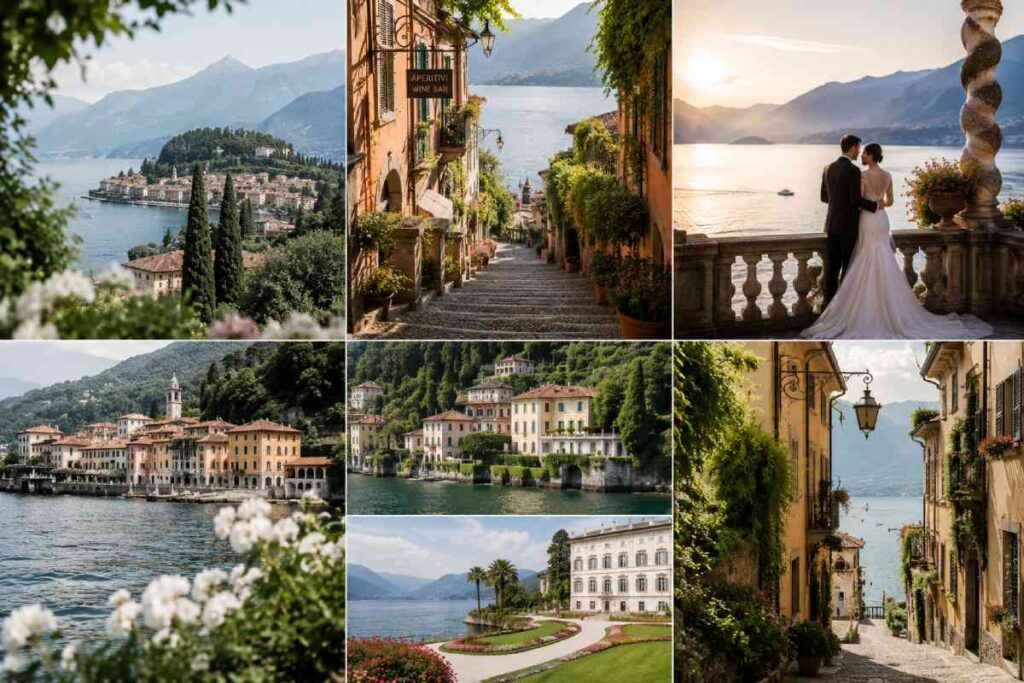
For weddings in Italy, that can mean the boat ride before dinner, a quiet espresso the morning after, friends walking through Bellagio, a dress change, the room before guests enter, or the energy of an after-party that does not belong in the same visual language as the ceremony.
|
FIELD NOTE |
Privacy Should Be Designed, Not Assumed
The presence of a content creator should never mean automatic public posting. Couples should decide in advance what can be shared, when it can be shared, whether guests can appear, whether vendor teams may post before the couple, and which moments are private.
A sophisticated content plan can be entirely private. Raw files can be delivered without live posting. Edited reels can be created for personal use. Social sharing can happen later – or never.
This is especially important for private families, public figures, brand-sensitive guests and celebrations where discretion is part of the luxury experience.
|
TRUST NOTE |
What a Strong Wedding Content Brief Should Include
A good brief gives direction without turning the wedding into a shot list. It should establish priorities, privacy and handoff points between the visual teams.
- Which moments matter most to you beyond the formal timeline?
- Do you want raw clips, edited reels, stills, or all three?
- What delivery speed is actually promised?
- Do you want content designed for posting, private keeping, or both?
- Which platforms and aspect ratios matter, if any?
- Are there no-posting rules before the couple publishes?
- Which guests or family members should not be filmed or posted?
- How will the creator coordinate with photography and film?
- Who leads during portraits and directed moments?
- Will the creator cover welcome events, brunch or other wedding-weekend chapters?
- How are files delivered and organized?
- How long are raw files stored after delivery?
What Content Creation Should Not Become
The category is growing quickly, which makes boundaries more important. A dedicated creator should add perspective, not create another layer of interruption.
- The service is described only as “making TikToks” without explaining storytelling or coverage.
- The creator promises trends but cannot explain how they work around photographers and filmmakers.
- Live posting is assumed rather than discussed.
- There is no clear privacy policy or approval process.
- Every couple receives the same trend list regardless of personality or wedding design.
- The creator repeatedly stages moments that should be allowed to happen naturally.
- The portfolio shows only edited reels and no evidence of useful raw or behind-the-scenes coverage.
- Turnaround promises are vague.
- There is no plan for battery, storage, backups or file delivery.
- The creator treats professional filmmaking as interchangeable with phone content.
|
RED FLAG |
Who Actually Benefits From a Dedicated Wedding Content Creator?
The service is not necessary for every couple. It becomes most valuable when immediacy, informal moments, multi-day coverage or private phone-native memory genuinely matter.
|
Fit |
Why |
|
Strong fit |
Couples who want to relive the wedding immediately while photography and film are being finished. |
|
Strong fit |
Multi-day destination weddings with many informal transitions and secondary events. |
|
Strong fit |
Couples who value candid behind-the-scenes moments and an organized private camera-roll archive. |
|
Strong fit |
Couples who want social-ready material without asking guests to document the day. |
|
Less essential |
Couples who prefer very few cameras and already have comprehensive photo and film coverage. |
|
Less essential |
Couples with strict privacy needs who do not value fast or phone-native material. |
A Practical Decision Test
If the answers below are mostly yes, dedicated content creation may add a meaningful third layer to the wedding archive.
|
Statement |
Signal |
|
We want to see part of the wedding again the next morning. |
Yes |
|
We care about candid in-between moments as much as formal milestones. |
Yes |
|
We are planning more than one wedding event. |
Yes |
|
We want guests to stay present rather than film everything themselves. |
Yes |
|
We want a private digital scrapbook even if we never post it. |
Yes |
|
We want vertical content that feels intentional, not random phone footage. |
Yes |
|
We already understand that this does not replace professional photography or film. |
Essential |
Wedding Content Creation: Quick Reference
The simplest way to understand the role is to ask what it should uniquely contribute.
|
QUESTION |
CONCISE ANSWER |
|
PRIMARY PURPOSE |
Immediate, candid and phone-native memory. |
|
NOT A REPLACEMENT FOR |
Professional photography or cinematic wedding film. |
|
COMMON DELIVERY |
Raw clips and short edits are often delivered much faster than traditional post-production; exact timing should be contractual. |
|
BEST FOR |
Couples who value immediacy, behind-the-scenes moments, vertical storytelling or multi-day coverage. |
|
CAN IT STAY PRIVATE? |
Yes. Dedicated content creation does not require public posting. |
|
MAIN RISK |
Duplicating the photographer and filmmaker instead of adding a distinct perspective. |
|
MOST IMPORTANT QUESTION |
What will this creator preserve that our existing visual team will not? |
Frequently Asked Questions
What is wedding content creation?
Wedding content creation is dedicated coverage focused on fast, candid, phone-native photos and videos, often including vertical clips, behind-the-scenes footage, raw files and short edits. It is designed to complement rather than replace professional photography and filmmaking.
Is a wedding content creator only for Instagram and TikTok?
No. Social media helped create the category, but content can be kept entirely private. The same raw clips and short edits can function as a personal digital scrapbook or immediate camera-roll archive.
How quickly is wedding content usually delivered?
Turnaround varies by provider. The Knot notes that many current wedding content packages deliver assets within roughly 24 to 48 hours. Couples should confirm exactly which files arrive when and make the timing contractual.
What is the difference between a wedding content creator and a videographer?
A filmmaker is responsible for motion, sound, sequence and a polished narrative film. A content creator generally prioritizes candid phone-native coverage, vertical formats, raw files and faster delivery. The strongest teams treat the roles as complementary.
Do we need a content creator if we already have a photographer?
Only if the additional perspective matters to you. Photography creates a refined still archive. Content creation can add speed, casual movement and behind-the-scenes fragments, but it should not duplicate the photographer.
Can a content creator work with our photographer and filmmaker?
Yes, and coordination should be expected. The teams should agree on portrait leadership, ceremony sightlines, restricted areas, audio priorities and how to avoid surrounding the couple with multiple cameras.
Should a wedding content creator post during the wedding?
Only if the couple explicitly wants live or same-day posting. A private-first approach is often more appropriate for luxury, destination or highly personal celebrations.
Is wedding content creation useful for destination weddings in Italy?
It can be especially useful for multi-day celebrations because the creator can preserve welcome events, transport, destination atmosphere, informal gatherings and farewell moments with a lighter footprint.
What should we receive from a wedding content creator?
Deliverables vary, but couples should clarify raw clips, edited vertical reels, still images, file organization, delivery timing, storage period, music usage and whether any posting or account management is included.
How do we know if we actually need one?
Ask whether you want immediate, informal material that neither your photographer nor filmmaker is specifically responsible for. If the answer is no, the service may be unnecessary. If that third perspective matters, a dedicated creator can be valuable.
Beyond Instagram, Toward a More Complete Memory
The most important shift in wedding content creation is not technical. It is conceptual.
The role began because couples wanted fast social content. It is becoming more interesting because couples increasingly understand that not every valuable memory needs to become a post.
A short vertical clip can be public or private. It can be trendy or timeless. It can be watched once on Instagram or hundreds of times in a camera roll. What determines its value is not the platform. It is whether the person behind the camera understood what was worth preserving.
Photography, film and content creation should therefore not compete for the wedding. They should preserve different dimensions of it. When that separation is clear, dedicated content creation becomes more than social media coverage. It becomes the immediate diary of the celebration – the layer that brings back the hours, fragments and in-between moments while they still feel close enough to touch.
If this third perspective fits the way you want to remember your celebration, explore the Image Studio Wedding Content Creator experience, see how it works alongside Image Studio Weddings, or start a conversation with Image Studio.