The family photographs you treasure most often begin with a little planning. Discover who to include, how to organize group portraits, when to schedule them and how to keep the process relaxed without missing anyone important.
The ceremony has just finished. You’re surrounded by congratulations, someone is bringing you a glass of champagne, and the people you’ve waited months to celebrate with are finally together in one place.
Then comes a familiar question: “Can we take a family photograph?”
Of course you can. The difficulty begins when nobody knows exactly who should be in it.
One relative has already walked toward the reception. Another is still speaking to the officiant. Your grandparents would prefer to sit down, and someone has just remembered that the cousins who travelled from overseas should be included.
Suddenly, something that should take a few minutes becomes a surprisingly complicated part of the wedding day.
A thoughtful wedding family photo list solves most of these problems before they happen. It helps you preserve the people who matter without turning your celebration into a long sequence of instructions, missing guests and repeated photographs.
At Image Studio, we believe family portraits deserve the same consideration as any other part of wedding photography. A beautiful editorial portrait may become the image you frame in your home, but a photograph with your parents, grandparents or closest friends can become equally important over time.
Here’s how to plan those photographs, who to include and how to make the experience feel relaxed rather than obligatory.
Why Family Wedding Photos Still Matter
When couples imagine their wedding gallery, they usually think first about the beautiful moments: the ceremony, portraits in extraordinary surroundings, the evening light and the atmosphere of the celebration.
Formal family photographs can seem less exciting in comparison. They’re organized, often taken in the same location and rarely involve the spontaneity associated with documentary wedding photography.
Yet their importance can become clearer with time.
A photograph of you standing beside your grandmother may not feel particularly remarkable on the day. Years later, it might be one of the images you return to most often. The same can be true of photographs with parents, siblings, childhood friends or relatives who rarely have the opportunity to gather together.
These images don’t need elaborate poses or an impressive architectural background. Their value comes from the people inside them.
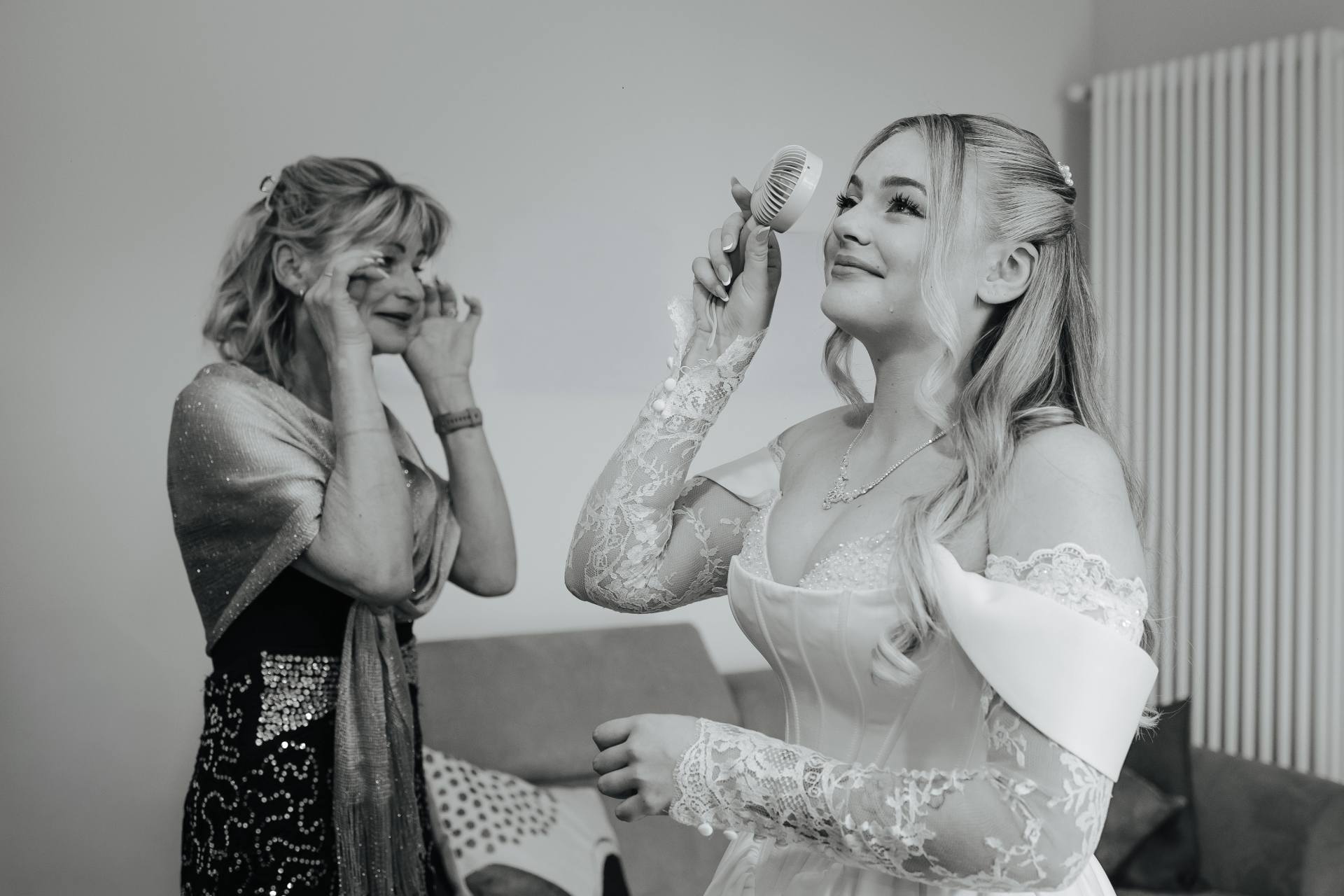
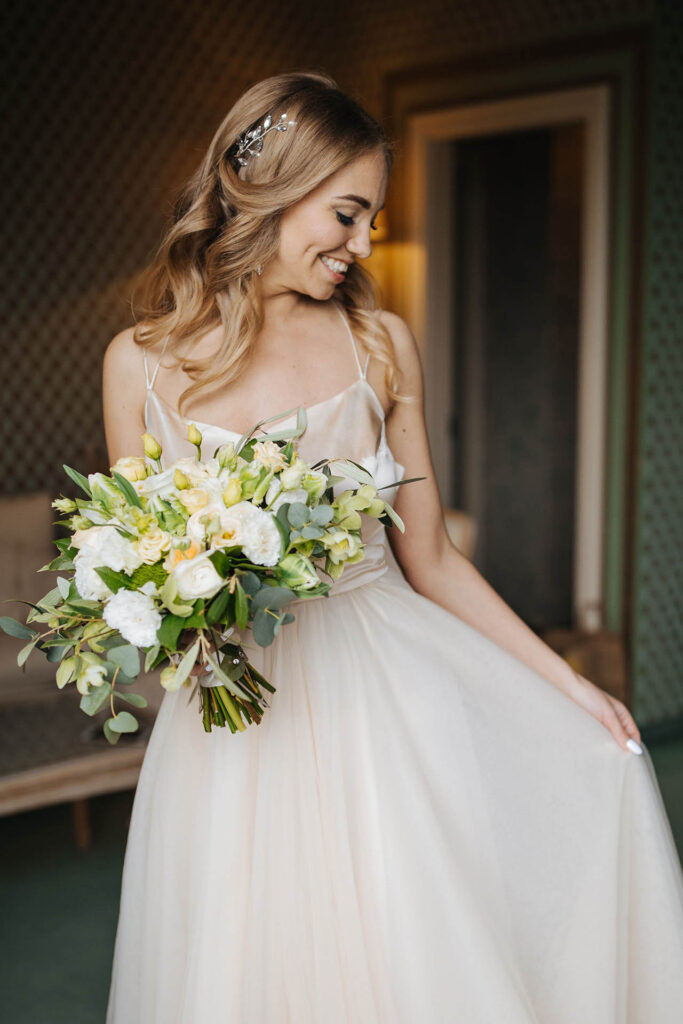
Bride Julia sharing an emotional moment during wedding preparations near Rome
There is also a practical distinction worth understanding. A documentary photographer may capture your family laughing during dinner or embracing after the ceremony, but those spontaneous moments don’t guarantee that every important person will appear in the final gallery.
Candid photographs preserve relationships as they unfold. Planned family portraits make sure the people you want to remember are photographed together.
The best wedding galleries have room for both.
Who Should Be Included in Your Wedding Family Photo List?
There isn’t a universal family photo checklist that suits every wedding.
Some couples have large extended families who travel from several countries. Others celebrate with a small circle of relatives and friends who have become family over the years. Relationships can also be complicated, and traditional lists rarely account for every situation.
The best starting point is not to ask which photographs you’re expected to take. Ask which photographs you would genuinely regret not having.
For most couples, immediate family is the natural priority. That may include parents, grandparents, siblings and the people who played an important role in raising them. From there, you can consider extended relatives, godparents, close friends or other meaningful relationships.
One helpful approach is to think about photographs you might want to print or give to someone afterward. Would your parents love a portrait with you? Is there a grandparent who would treasure a photograph with all the grandchildren? Are two sides of the family meeting for the first time?
Those are often more useful questions than working through a generic list of fifty combinations.
A good family photo list should reflect your actual relationships, not an idealized version of what a family is supposed to look like.
You can also decide that certain photographs aren’t necessary. Not every cousin needs an individual portrait with the couple, and not every possible combination of siblings, partners and children needs to be photographed formally.
The photographs you leave out can be just as important to the schedule as the ones you include.
The Wedding Family Photo Checklist: A Practical Starting Point
If you’re unsure where to begin, the following checklist provides a useful foundation.
It’s designed to help you identify the most common family groupings, but it should be adapted to your circumstances rather than followed automatically.
Replace Partner A and Partner B with your names, remove relationships that don’t apply, and add anyone personally important.
Example family photo list
The couple with Partner A’s parents or caregivers.
The couple with Partner A’s immediate family, including siblings.
Partner A with each parent or caregiver individually, if desired.
The couple with Partner A’s grandparents or other important elders.
Partner A with siblings, including a sibling-only portrait if meaningful.
The couple with Partner B’s parents or caregivers.
The couple with Partner B’s immediate family, including siblings.
Partner B with each parent or caregiver individually, if desired.
The couple with Partner B’s grandparents or other important elders.
Partner B with siblings, including a sibling-only portrait if meaningful.
The couple with both immediate families together.
One personally significant additional group, such as godparents, extended family or relatives who have travelled especially far.
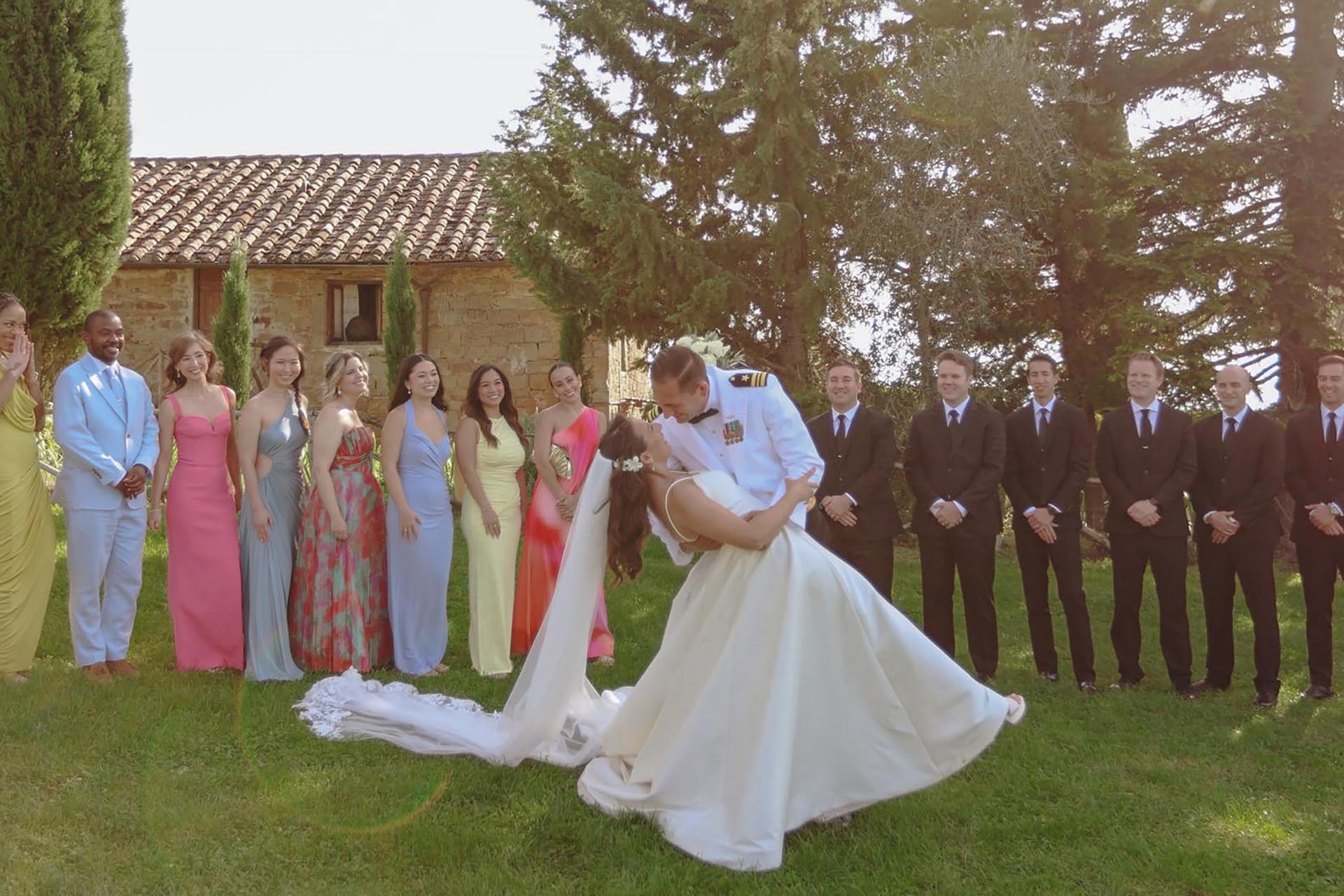
Lauren and Travis posing with their wedding party at Castello di Ristonchi in Tuscany
This is a selection of possible groupings, not a requirement to take all twelve. Some couples will need fewer; others may want additional combinations.
The final order should also be adjusted by your photographer. If grandparents or guests with limited mobility need to be photographed first, their comfort should take priority over the sequence above.
For larger families, consider separating the essential photographs from optional combinations. You might reserve the formal portrait session for immediate family, then arrange a wider extended-family photograph or capture additional groups during the reception.
The important thing is to avoid asking your photographer to improvise all of these decisions when everyone is already waiting.
How to Organize Family Photos Without Losing Your Cocktail Hour
The most time-consuming part of family wedding photography is often not taking the photographs. It’s gathering everyone into the same place.
Imagine trying to photograph a group of twelve people when three have walked toward the bar, two are speaking to friends and another hasn’t been told the session is happening.
A photographer can arrange the composition and find suitable light, but they cannot reasonably be expected to recognize every distant relative or search an entire venue for missing guests.
This is why we recommend agreeing on three details before the wedding: the final list of names, the location where portraits will take place and the person responsible for gathering each group.
Write names, not just relationships
Instead of writing “the couple with siblings,” prepare a version that identifies everyone involved.
For example, “Julia and Mihail with Anna, Elena and Victor” is much easier for a coordinator to organize than an instruction that simply says “siblings.”
Names become even more useful during international destination weddings, where relatives may speak different languages or use unfamiliar family titles.
It also prevents the uncomfortable moment when somebody asks whether a new partner, step-parent or distant relative should be included while the entire group is already standing in front of the camera.
Choose someone who knows the family
A family member, trusted friend or wedding coordinator can help bring the correct people together.
Ideally, this person knows the guests and feels comfortable approaching them. Their role isn’t to direct the photographs. It’s to ensure the next group is ready while the photographer finishes the previous one.
For a wedding involving two large families, one helper from each side can be particularly useful.
This small amount of organization makes an enormous difference. It allows the photographer to concentrate on light, composition and expression, while the couple can enjoy the process instead of repeatedly calling people over.
Keep the location consistent
Moving everyone between several photographic settings can consume more time than the portraits themselves.
Unless the venue requires a different arrangement, we generally prefer choosing one suitable location and working efficiently through the groupings.
That doesn’t mean the setting needs to be ordinary. A shaded garden, elegant courtyard or architectural entrance can create beautiful photographs while remaining close to the ceremony or reception.
The advantage is consistency. Guests know where to go, the lighting remains manageable and the photographer doesn’t need to reorganize the entire group every few minutes.
Before or After the Ceremony: When Should You Take Family Wedding Photos?
This decision can have a significant effect on your schedule.
Some couples prefer to photograph family members before the ceremony, while everyone is freshly dressed and the atmosphere is relatively calm. Others choose the traditional approach of gathering everyone immediately afterward.
Both can work, but they have different practical advantages.
Consideration
Before the ceremony
After the ceremony
Atmosphere
Quieter, with fewer guests moving around
Celebratory, but potentially busier
Who can be photographed
Usually separate partner-side groups unless the couple has already met
Both families and the couple together
Schedule
Requires everyone to be ready earlier
Uses time between ceremony and reception
Privacy
Easier to organize discreetly
Guests may gather around or interrupt
Lighting
Depends on preparation and ceremony times
Depends on ceremony end time and location
Main advantage
Reduces some post-ceremony photographs
Everyone is already gathered for the celebration
If you’re planning a first look before the ceremony, you may be able to complete some combined family portraits earlier as well. This can leave more time for the aperitivo afterward.
If you’re waiting until the aisle to see each other, separate family groupings may still be photographed during preparations, with combined portraits following the ceremony.
For couples who want to understand the difference, our article on First Look vs. Walking Down the Aisle explores how the choice affects photography and the overall wedding timeline.
Neither approach should be selected without considering the people involved. Asking grandparents to travel to the venue several hours early may be inconvenient, even if it creates a more efficient photography schedule.
The best timeline balances the needs of the couple, the guests and the photographer.
How Long Should Wedding Family Photos Take?
There is no universal duration because every family is different.
As a practical planning estimate, a prepared list of approximately eight to twelve straightforward groupings may take around twenty to thirty-five minutes when everyone is nearby and ready. More complex groups, accessibility needs, travel and larger combinations can require additional time.
The number of photographs is only part of the calculation.
A portrait with four adults can often be arranged quickly. A group involving twenty relatives, several small children and people who need seating or assistance takes more preparation.
The photographer also needs enough time to check that everyone is visible, looking comfortable and not accidentally hidden behind another person.
It’s worth remembering that family portraits don’t have to feel rushed simply because they’re organized.
A few seconds spent allowing people to settle, straighten clothing or share a natural expression can transform the image.
The goal is to be efficient without creating the feeling of an assembly line.
We would rather help couples plan a realistic thirty-minute session than promise ten minutes and leave everyone feeling hurried.
If the list becomes particularly long, consider dividing it into essential group portraits and smaller informal photographs that can happen naturally throughout the celebration.
Choosing the Right Location and Light for Family Photographs
One of the simplest mistakes is assuming that the most spectacular part of a wedding venue will automatically be the best place for group portraits.
A terrace overlooking Lake Como may look wonderful, but if the sun is shining directly into everyone’s eyes, people may be squinting and uncomfortable.
A monumental staircase might create an elegant setting for a couple, yet become difficult for grandparents, young children or guests wearing formal shoes.
Beautiful family photography requires a different kind of thinking from individual editorial portraits.
The photographer needs to consider the number of people, how the group will be arranged, whether everyone can see the camera and whether the location is comfortable and accessible.
Soft, even lighting is particularly useful because it helps maintain consistent exposure across the entire group. A shaded courtyard or an area with open, indirect light may produce a much better result than a visually dramatic location with difficult shadows.
At historic Italian estates, architecture can provide an elegant background without requiring complicated staging. Stone walls, pale facades, gardens and covered terraces can all work beautifully when chosen according to the light and available space.
We also recommend avoiding locations that interrupt the normal movement of guests. A photograph should not require blocking the main entrance to dinner or preventing the catering team from preparing the reception.
The best setting is one where the people remain the focus, rather than competing with the surroundings.
Family Wedding Photography in Italy: What Makes It Different?
Destination weddings often bring together people who don’t see each other regularly. Family members may travel from different countries, stay at different hotels and arrive with different schedules.
This makes the opportunity for family portraits especially meaningful, but it also makes coordination more important.
Rome: Churches, city venues and separate receptions
A wedding in Rome may involve preparations at one property, a religious ceremony elsewhere and a reception at a countryside villa.
If family portraits are planned immediately after the ceremony, the location needs to be confirmed in advance. Some churches may have restrictions, while nearby public areas can be crowded or unsuitable for large groups.
There may also be transport waiting to take guests to the reception.
In these situations, we would discuss whether it’s easier to photograph a small number of essential groups near the ceremony or complete the session at the reception venue.
The decision depends on access, lighting and how much time is available before guests need to leave.
Lake Como: Beautiful settings with limited access
Lake Como weddings sometimes involve boats, multiple properties and guest transfers between hotels and villas.
These logistics can make it difficult to gather large groups spontaneously.
If the couple wants portraits with relatives who are staying at several different hotels, everyone should know exactly where and when to meet.
The location should also account for terraces, stairs and changes in light throughout the day.
A lakeside backdrop may be beautiful, but the practical needs of the family should come first.
Tuscany: Large estates and multi-day celebrations
Tuscan destination weddings often take place at historic estates where preparations, ceremonies and receptions unfold across several buildings or gardens.
The advantage is having multiple beautiful photographic settings within one property.
The challenge is that guests can easily become dispersed.
For multi-day celebrations, you might also consider whether some informal family portraits could take place during a welcome dinner or the following morning.
Not every photograph needs to happen immediately after the ceremony.
A relaxed family portrait taken during a quieter part of the weekend can sometimes become just as meaningful as a formal photograph on the wedding day itself.
What About Divorced Parents, Blended Families and Complicated Relationships?
This is a subject that deserves more attention than it usually receives in wedding photography guides.
Not every family fits neatly into a traditional group portrait arrangement, and couples shouldn’t feel pressured to create photographs that make people uncomfortable.
If parents are divorced, relationships are strained or there are particular combinations you would prefer to avoid, discuss those details privately with your photographer before the wedding.
You don’t need to explain every personal circumstance. It’s enough to identify which groupings should be photographed separately, which people can comfortably stand together and whether any combinations should be avoided entirely.
A well-prepared list protects everyone’s dignity.
It also avoids potentially awkward questions being asked in front of guests.
If your family includes step-parents, adoptive parents, guardians or friends who have played an important parental role, include them in the way that feels appropriate to you.
There is no requirement to follow traditional labels or arrangements.
Some couples also need to consider relatives who are elderly, have limited mobility or may become tired quickly. These photographs can be prioritized so those guests don’t have to wait through the entire session.
Family portraits should celebrate relationships, not create unnecessary pressure around them.
The photographer’s responsibility is to approach each family with sensitivity, discretion and respect.
Formal Family Portraits vs. Candid Family Moments
It’s easy to assume that natural wedding photography and formal family portraits are opposites.
In reality, they serve different purposes.
Formal portraits provide a clear record of the people who were present. Everyone is visible, the composition is intentional and the photographer can create an image suitable for framing or sharing with family.
Candid photographs preserve something less predictable.
A parent adjusting a veil. A grandparent embracing the couple after the ceremony. Siblings laughing together during dinner. A quiet conversation between two people who haven’t seen each other in years.
These photographs may be less formally composed, but they often carry a strong emotional connection to the day.
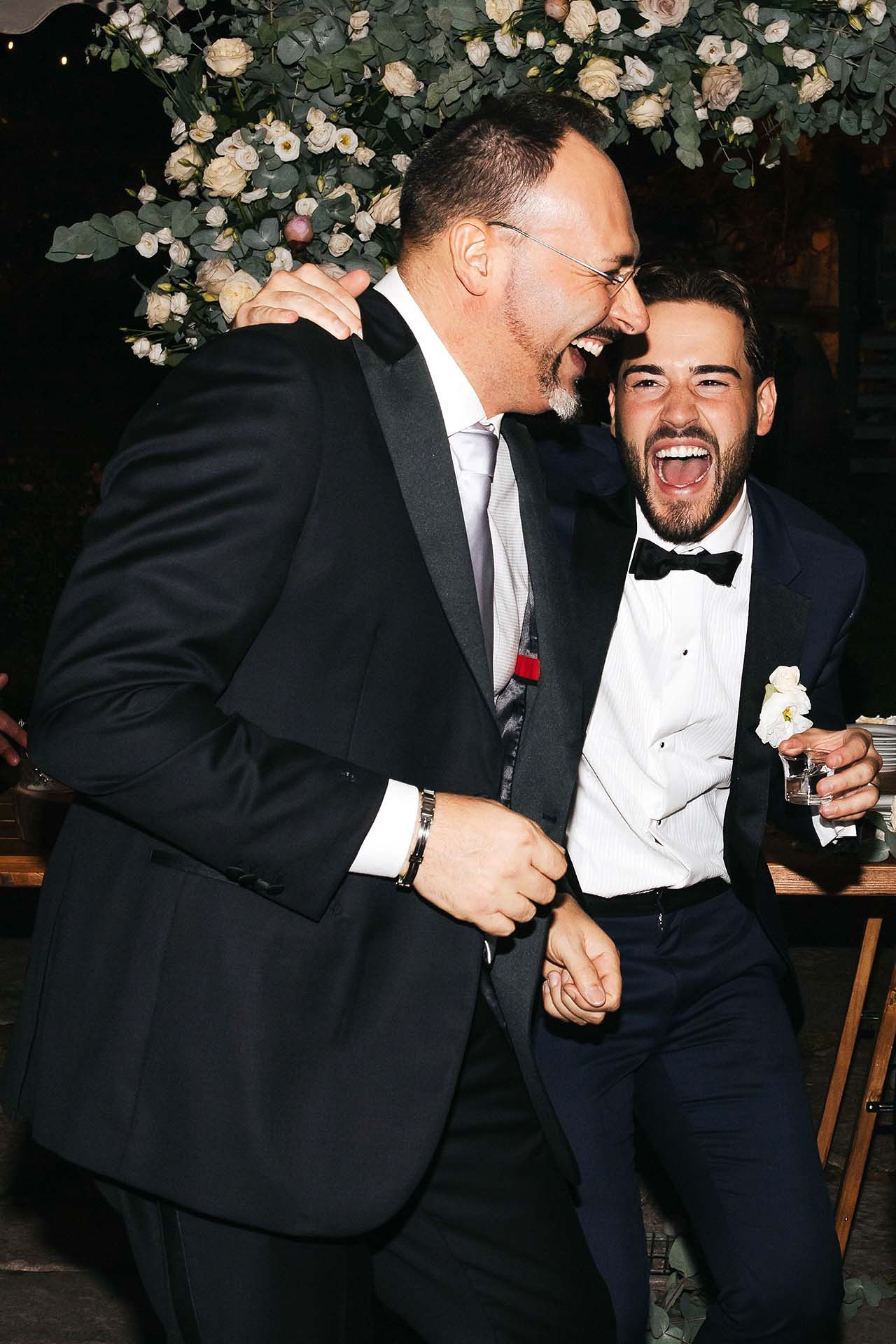
Groom laughing with his father during a wedding celebration at Castello di Rossino
At Image Studio, we value the balance between the two approaches. Our photography combines editorial composition with documentary observation, allowing some moments to be carefully arranged while others unfold without interruption.
During Julia and Mihail’s wedding in Rome, for example, the visual story moved from quiet preparations in the Roman countryside to architectural portraits at Villa Il Lago dei Cigni and the energy of the celebration after dark.
The changing atmosphere is what makes the complete gallery interesting. Not every photograph needs to share the same visual style.
The same principle applies to family photography. A traditional portrait with grandparents can sit beautifully beside a spontaneous photograph of everyone laughing together.
Neither image replaces the other.
Five Mistakes That Make Family Wedding Photos Unnecessarily Stressful
Even a short family photo session can become complicated when a few important details have been overlooked.
1. Preparing too many combinations
The temptation is understandable. Once you begin making a list, it’s easy to imagine every possible grouping of parents, siblings, cousins, partners and extended relatives.
But each additional combination takes time, and many photographs may end up looking almost identical.
We recommend prioritizing the portraits that are most meaningful rather than trying to create a separate image for every possible relationship.
2. Leaving the list until the wedding day
It’s difficult to make decisions about family groupings while guests are waiting and everyone is trying to move toward the reception.
Preparing the list in advance gives you time to discuss it with your partner and photographer, account for family circumstances and estimate a realistic schedule.
3. Forgetting to tell relatives when photographs will happen
A beautifully organized list is useless if the people named on it have already left the ceremony area.
Tell essential family members where they need to be and ask them to remain nearby until their group has been photographed.
This is especially important during destination weddings with transport arrangements.
4. Choosing a beautiful but impractical location
A dramatic staircase, exposed terrace or distant garden may be perfect for editorial couple portraits but unsuitable for a group containing children or guests who need assistance.
Comfort, accessibility and reliable lighting should be part of the location decision.
5. Expecting the photographer to recognize everyone
Your photographer may know the couple and wedding party well, but identifying dozens of relatives by sight is not a reasonable expectation.
Provide names and appoint a helper who knows the guests.
This allows the photographer to concentrate on creating beautiful images instead of organizing an unfamiliar family tree.
What to Send Your Photographer Before the Wedding
The most useful family photo list is a short, practical document rather than a collection of inspiration images.
Include the names of the people in each grouping, the relationship between them and any important instructions about timing, accessibility or sensitive family circumstances.
Also provide the name and phone number of the person who will help gather relatives, together with your planner’s contact details if someone is coordinating the day.
Once the list is ready, your photographer can help remove unnecessary repetitions, reorganize the sequence and estimate how much time the session will realistically require.
We recommend discussing it during the final timeline review, ideally with enough notice for meaningful changes rather than sending it on the wedding morning.
If you’re also considering how to feel more comfortable during portraits, our guide to looking natural in wedding photographs explains how thoughtful direction can make photographs feel relaxed without appearing overly posed.
The Family Photographs You’ll Be Glad You Took
A wedding is one of the rare occasions when so many important people are gathered together for the same reason.
The day will be filled with beautiful experiences, but not every memory will involve a spectacular backdrop or a perfectly planned moment.
Sometimes it will be a familiar face beside yours. A parent trying not to smile too widely. Siblings standing together for the first time in years, or a grandparent enjoying the attention of the family around them.
These photographs may not be the most dramatic images in your wedding gallery.
They may become some of the most meaningful.
At Image Studio, we approach wedding photography in Italy with the belief that an exceptional gallery should preserve both the beauty of the celebration and the relationships that give it meaning.
That means creating refined editorial portraits, but also understanding when a simple family photograph deserves just as much care.
The purpose of a family photo list isn’t to organize every second of your wedding. It’s to make sure the people you love have a place in the story, while leaving you free to enjoy the day.
Planning Your Wedding in Italy?
Whether you’re bringing together a small family in Tuscany, celebrating with international guests on Lake Como or planning a large reception in Rome, thoughtful photography begins with understanding the people and the occasion.
How many family photos should we take at a wedding?
There is no ideal number for every wedding. A focused list of approximately 8–12 essential groupings is a practical starting point for many couples, but larger families may need more. Prioritize the people and combinations that matter most rather than creating every possible grouping.
How long do family wedding photos usually take?
A well-organized session with around 8–12 straightforward groupings may take approximately 20–35 minutes, depending on family size, mobility, location and how quickly guests can be gathered. More elaborate lists should be allocated additional time.
Should we take family photos before or after the ceremony?
Both options can work. Before the ceremony, separate family groups can often be photographed in a quieter setting. Afterward, the couple and both families are together, making combined portraits easier. The best timing depends on your ceremony, venue and photography schedule.
Who should be included in formal wedding family photos?
Most couples begin with parents or caregivers, siblings, grandparents and other particularly important relatives. You can also include godparents, close friends or chosen family. There is no requirement to follow traditional family arrangements.
How do we handle family photos with divorced or separated parents?
Discuss preferred groupings privately with your photographer before the wedding. Separate portraits can be arranged where appropriate, and any combinations that might make guests uncomfortable should be avoided. A clear plan allows the session to remain respectful and relaxed.
Do we need a wedding family photo shot list?
A short list is highly recommended because your photographer cannot know every important relationship or desired grouping. Include the names of the people involved, any special considerations and someone who can help gather relatives. This reduces confusion and makes the session easier to organize.