
Learn how commercial photography pricing works, including creative fees, licensing, production costs, usage rights, and pricing models for luxury, fashion, hospitality, and brand campaigns to budget with confidence.
← Back to Editorial
← Back to Editorial
Commercial Photography Pricing: A Guide for Brands
July 4, 2026
You’re probably looking at two photography proposals that seem to promise the same thing. A day on set. A certain number of images. Some retouching. Yet one quote feels almost reasonable, and the other looks like it belongs to a different industry entirely. That reaction is normal. It also leads many brands to ask the wrong question first. The useful question isn’t “Why is this so expensive?” It’s “What, exactly, am I buying?” In commercial work, especially for luxury, fashion, and hospitality brands, the answer goes far beyond a camera and a call sheet. You’re buying visual authorship, production judgment, brand interpretation, and usage rights that may shape how your company is seen long after the shoot wraps.
Table of Contents
- Beyond the Price Tag The Value of Commercial Photography
- The Three Pillars of Photography Pricing Models
- Creative fees are not the whole budget
- Licensing is the value lever
- Project pricing works best when scope is clear
- Key Factors That Drive Your Final Cost
- The talent you hire changes the risk profile
- Production complexity changes everything
- Post-production is where polish becomes brand language
- Sample Pricing Scenarios and Packages
- Luxury product launch
- Fashion editorial commission
- Hospitality campaign for a destination property
- Decoding Licensing and Image Usage Rights
- Usage defines value
- What brands should clarify before signing
- A Client Checklist for Budgeting and Negotiation
- What to prepare before requesting a quote
- How to negotiate without damaging the work
- How Photographers Can Set and Communicate Their Rates
- Build rates from business reality
- Present pricing as strategy, not defense
Beyond the Price Tag The Value of Commercial Photography
Commercial photography pricing makes more sense when you stop treating photography as a commodity. If all you need is proof that a product exists, almost any competent operator can produce an image. If you need images that carry status, atmosphere, and consistency across web, print, social, and campaign placements, the conversation changes. Luxury and hospitality brands feel this tension most sharply. They’re rarely buying a single photograph. They’re commissioning a visual system. That system has to align with architecture, materials, styling, casting, color, and the emotional tone of the brand. Cheap execution usually reveals itself fast. Not just in lighting mistakes, but in weak art direction, generic framing, and imagery that looks disconnected from the customer experience. The broader market reflects how important this has become. The global commercial photography services market generated approximately $15.2 billion in revenue in 2023 and is projected to reach $28.7 billion by 2033, according to industry statistics summarized here. Brands keep investing because imagery still does one job exceptionally well. It makes positioning visible. If you’re assessing a proposal, look for the difference between a vendor and a visual partner. A stronger team usually thinks in terms of campaign coherence, not isolated deliverables. That’s why proposals can vary so widely even when the shot count sounds similar.
Practical rule: If two estimates are far apart, the gap usually sits in authorship, production depth, and usage rights, not just time on set.
A serious commercial brief also has to serve downstream teams. Marketing needs adaptability. Paid media needs clean crops. PR may need vertical and horizontal variations. E-commerce wants consistency. Brand wants elegance. That’s why the right creative partner often resembles a production department more than a freelancer with a camera. For brands comparing options, it helps to review how dedicated studios frame commercial photography services. The language of the proposal often tells you whether the team understands brand narrative or only execution.
The Three Pillars of Photography Pricing Models
Most commercial photography pricing rests on three building blocks. Once you can identify them in a proposal, the numbers stop feeling arbitrary. The simplest way to think about it is real estate. The photographer’s fee is the architect and builder. The final images are the finished property. Licensing is the legal agreement that defines how and where you’re allowed to use it. Here’s the framework at a glance.
Creative fees are not the whole budget
A day rate or creative fee covers the photographer’s time, eye, preparation, and on-set decision-making. It’s the most familiar line item, and it’s also the one clients tend to overfocus on. According to VSCO’s photography pricing guide, commercial photography pricing is structured around day rates ranging from $800 to over $5,000 for experienced professionals, while limited local use might add a few hundred dollars and perpetual national rights can escalate licensing fees to $10,000 or more. That distinction matters. The day rate gets the work made. It doesn’t automatically grant broad commercial exploitation. Some teams also work on a half-day basis for lighter assignments. Others won’t, because high-end shoots require nearly the same pre-production and staffing discipline whether the camera is active for three hours or ten.
Licensing is the value lever
Licensing is where many misunderstandings begin. Clients often think they are paying for image creation alone. In commercial practice, they’re usually paying for creation plus permission. The same image has radically different business value depending on where it appears. A frame used in a regional email campaign and the same frame used across international billboards don’t carry the same commercial weight. That’s why experienced photographers and studios separate creation from usage.
A strong proposal makes licensing visible. A weak proposal buries it or ignores it.
This is also where brand-side discipline matters. If you know the intended channels, territories, and duration before bidding starts, quotes become more comparable and negotiations become more intelligent. A short explainer helps here:
Project pricing works best when scope is clear
The third model is project-based pricing. Instead of separating every component into a pure day-rate structure, the photographer or studio offers a fixed price for a defined assignment. This can work well when the brief is stable, the deliverables are clear, and both sides agree on usage upfront. Project pricing is often easier for brands to budget. It can also hide complexity if the scope is still moving. If the client keeps adding locations, talent, retouching expectations, or media usage, a fixed-fee quote will either climb through revisions or reduce what the team can deliver. A good proposal usually shows all three pillars in some form, even if the final number is presented as a clean package.
- Creative input covers concept interpretation, shot execution, and on-set direction.
- Production support covers the practical machinery around the shoot.
- Usage rights define how the work creates business value after delivery.
Key Factors That Drive Your Final Cost
Two shoots can both last one day and have nothing in common financially. One may involve a lean crew in a controlled interior. The other may require location permits, a digital tech, assistants, a stylist, a producer, transport, retouching, and multiple usage scenarios. The calendar says “one shoot day.” The budget tells the truth.
The talent you hire changes the risk profile
Experience doesn’t just affect aesthetics. It affects reliability, pace, client handling, and problem-solving under pressure. According to The Image Crafters pricing guide, photographer day rates range from $1,000 to $1,250 for new photographers and $3,500 to $5,000+ for agency-represented talent. Those figures tell you more than prestige. They reflect how the market values judgment, specialization, and the ability to deliver under scrutiny. For luxury brands, that premium often buys fewer surprises. A seasoned shooter tends to understand fabric behavior, reflective surfaces, skin, glass, food, interiors, and branded color palettes with less trial and error.
Production complexity changes everything
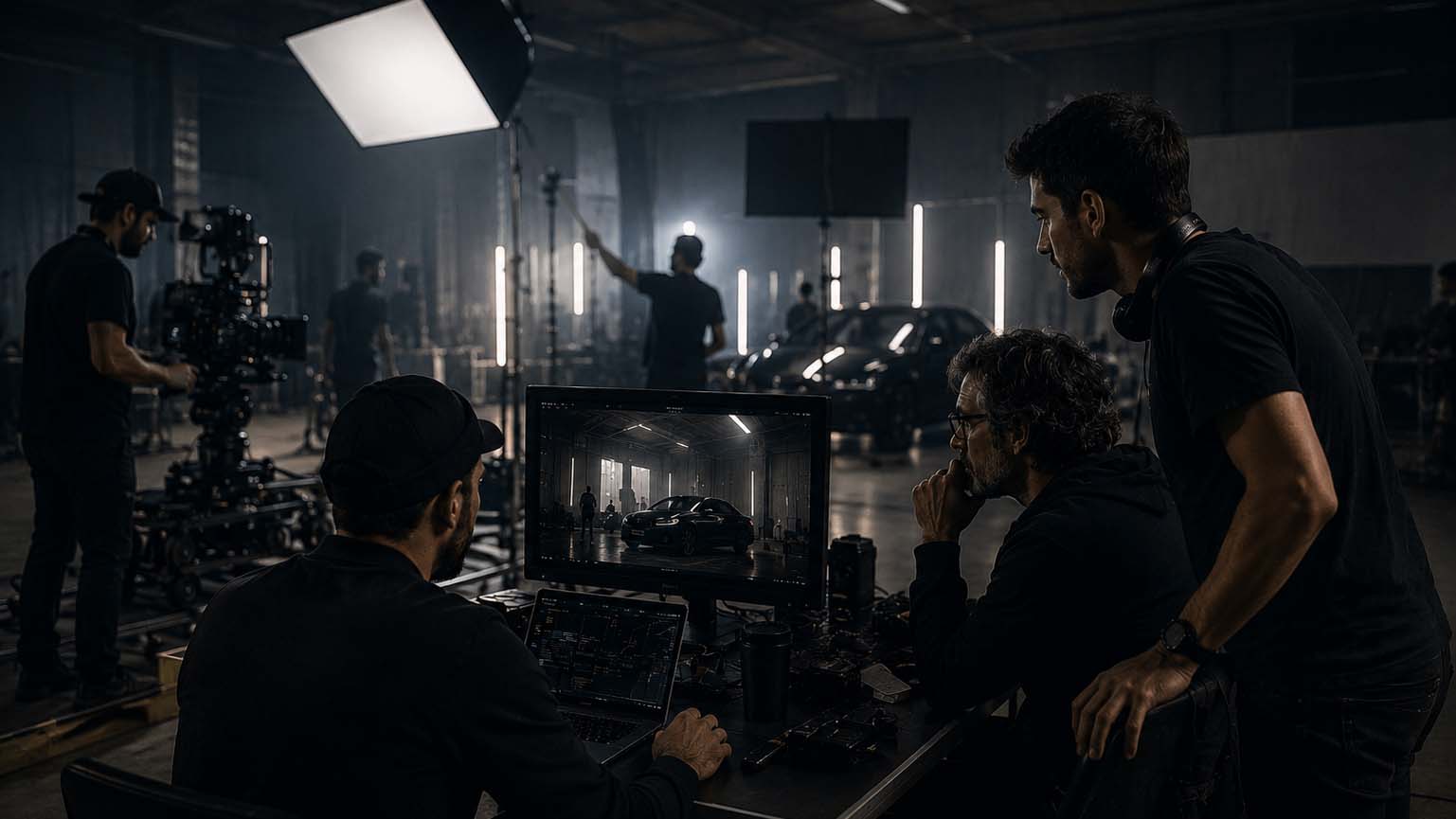
Many clients underestimate cost. They compare photographer fees while overlooking the production ecosystem required to create the standard they want. A clean campaign may require:
- Crew depth such as assistants, stylists, producers, digital techs, and set support.
- Location demands including scouting, access control, permits, travel, and weather backup.
- Specialized equipment such as grip, continuous lighting, medium-format capture, or motion support for hybrid campaigns.
The same source notes that a full national campaign day with a large crew can range from $15,000 to over $50,000 all in, which shows how quickly scale changes the budget. If your team wants a useful primer on how productions expand behind the camera, this breakdown of behind-the-scenes photography production stages is worth reviewing before approvals start. Operationally, this is no different from other outsourced services. If you’ve ever looked at understanding virtual receptionist fees, the same principle applies. The visible service is only one part of the price. Coverage, skill level, process, and business continuity shape the final number.
Expensive shoots aren’t expensive because someone inflated the invoice. They become expensive when the brand asks the production to remove risk, increase polish, and serve multiple business functions at once.
Post-production is where polish becomes brand language
Retouching is not an afterthought on high-end work. It’s where material texture, skin integrity, color consistency, and visual restraint either hold together or fall apart. In fashion and hospitality, over-retouching can cheapen a premium brand just as quickly as poor lighting can. The best post-production work is often the least noticeable. It protects believability while refining the image into something publication-ready. Turnaround time also affects cost. Rush edits compress team schedules, reduce flexibility, and usually force a more expensive workflow. When a brand wants speed, selection support, platform-specific crops, and polished retouching delivered in parallel, the proposal will reflect that pressure.
Sample Pricing Scenarios and Packages
Numbers become more useful when they’re attached to real campaign situations. The figures below are templates, not menu pricing. Serious commercial work is bespoke, especially once creative direction, licensing, and production design enter the picture. For context, this commercial pricing overview notes that large national brand campaigns often start at $6,000 and can easily exceed $10,000, while a full-production day involving a crew of 15 to 30 people can range from $15,000 to over $50,000, all-inclusive. That’s why package thinking works better than flat assumptions.
| Package Type | Best For | Estimated Range | Key Components |
|---|---|---|---|
| Luxury Product Campaign | Beauty, jewelry, accessories, design objects | Varies by scope, often within commercial campaign pricing bands | Creative fee, styling, tabletop or set build, retouching, selective licensing |
| Fashion Editorial Commission | Designer collections, lookbooks, magazine-led brand storytelling | Varies by casting, location, and usage | Photographer, creative direction, glam team, assistants, location, retouching, editorial or commercial licensing |
| Hospitality Brand Shoot | Hotels, resorts, villas, restaurants | Varies widely with property size and deliverables | Photographer, producer, assistants, styling, scheduling across spaces, post-production, multi-channel licensing |
Luxury product launch
A premium skincare or jewelry brand rarely needs “just packshots.” It usually needs a mix of controlled e-commerce images, high-end campaign stills, social-first crops, and a retouched visual language that feels expensive without looking synthetic. A typical package might include a creative fee, pre-production alignment, product styling, set surfaces or custom props, capture days, post-production, and defined licensing for digital and print use. The expensive part is often not the click. It’s the refinement. Reflective packaging, glass, metal, and liquid textures are unforgiving. Brands often underbudget by assuming the still-life setup is simple because the image looks clean.
Fashion editorial commission
Fashion pricing tends to become volatile because there are more creative dependencies. Casting, hair, makeup, wardrobe handling, location rhythm, weather, and editorial standards all influence both cost and risk. A multi-look editorial-style production might appear artistically loose from the outside, but the stronger the work, the tighter the machine behind it. If a brand intends to repurpose those images for paid campaigns, website hero banners, wholesale decks, and press outreach, the licensing conversation becomes as important as the shoot itself. For marketers comparing approaches, this explanation of cinematic campaign production benefits is helpful because it shows why some campaigns feel more like image-making and others feel like world-building.
Hospitality campaign for a destination property
Hospitality is one of the clearest examples of value-based pricing. A hotel or villa campaign has to sell not only rooms, but mood, service, architecture, pace, light, and aspiration. One weak image can flatten an exceptional property. A polished hospitality package often includes pre-shoot planning around sunlight, room turnover, food styling, guest-facing areas, exterior timing, and staff coordination. The production may also need dawn, daylight, dusk, and evening coverage because the property behaves differently at each hour.
Hospitality brands get the best value when they budget for sequence, not just singles. Guests don’t experience a property as one frame. They experience it as a narrative.
That’s why hospitality shoots often benefit from a more cinematic production mindset. The images need to feel connected, not merely attractive.
Decoding Licensing and Image Usage Rights
Licensing is the part of commercial photography pricing that clients misunderstand most often and regret overlooking most quickly. You are usually not purchasing unrestricted ownership of an image. You are purchasing defined rights to use it in agreed ways. A better analogy is music. Buying a track isn’t the same as clearing it for a film trailer, a brand anthem, or an international ad campaign. Photography works the same way.
Usage defines value
Licensing usually turns on three questions.
- Where will the image appear. Website, social, print, out-of-home, trade materials, internal use, or paid advertising.
- How long will it run. A short campaign window carries different value from open-ended use.
- In which territory will it appear. Local, national, and international rights do not price the same way.
When a client says, “We only need a few photos,” that may have little to do with the commercial value of the assignment. A single hero image used broadly can matter far more than a library of lower-stakes content used narrowly. Licensing also protects both sides. The client gains clarity. The photographer retains a framework for fair compensation when a campaign expands beyond the original brief.
Broad usage with vague language is where many contracts go wrong. If the rights feel unlimited, the fee should reflect unlimited business value.
What brands should clarify before signing
Before approving a proposal, ask for plain-language answers to these points:
- Media scope. Are the images cleared for organic social only, paid media, print, PR, or outdoor use?
- Duration. Is the license time-limited or ongoing?
- Geography. Are rights restricted to one market or available across multiple regions?
- Exclusivity. Can the photographer license similar work elsewhere, or is the category blocked?
- Alterations and third-party use. Can agencies, distributors, franchisees, or press partners reuse the imagery?
The cleanest licensing agreements are specific enough to avoid conflict and flexible enough to support normal marketing operations. Precision doesn’t complicate the relationship. It protects it.
A Client Checklist for Budgeting and Negotiation
Negotiation goes badly when the client treats the quote like a retail sticker. It goes well when both sides are adjusting scope, production design, and rights with the same objective in mind, which is getting the strongest work for the available budget. The fastest way to improve a quote is to improve the brief.
What to prepare before requesting a quote
Bring structure before you bring bargaining.
- Define the objective. Are you launching, repositioning, filling a content gap, or refreshing a stale image library?
- List the deliverables. Hero images, e-commerce, social crops, campaign selects, portraits, interiors, details, or motion stills.
- State the usage clearly. Teams save time and money when licensing is discussed early rather than repaired later.
- Share reference material. Moodboards, previous campaigns, brand guidelines, and examples of what you dislike are all useful.
- Set a budget range. A realistic range helps the photographer design the right level of production instead of guessing.
How to negotiate without damaging the work
Strong negotiation is selective. It doesn’t slash randomly. If the quote exceeds budget, ask where the scope can shift without weakening the outcome. Fewer setups may help. A narrower license may help. Condensing locations might help. Cutting post-production or crew support often backfires, because those are the areas that protect quality.
Ask, “How can we preserve the creative standard within this budget?” That question produces better solutions than “Can you do it cheaper?”
A useful client checklist usually includes these final checkpoints:
- Compare like with like when reviewing proposals.
- Confirm who is producing the shoot, not just shooting it.
- Request itemized clarity on retouching, assistants, styling, and usage.
- Get the contract in writing with approval stages and delivery terms.
Good commercial photography pricing isn’t a test of who negotiates harder. It’s a test of how clearly both sides define value.
How Photographers Can Set and Communicate Their Rates
Photographers who struggle with pricing often have two problems at once. Their numbers are unclear to them, and their value is unclear to the client.
Build rates from business reality
Start with cost of doing business. That includes equipment, software, insurance, workspace, travel, prep time, post-production, subcontractors, and the unpaid hours required to run the studio. Then place that against your actual market position, not the version of your career you hope exists. Don’t build proposals from anxiety. Build them from scope. For photographers who are still formalizing that business foundation, this guide to a photography startup is a useful practical read because it frames pricing as part of the business model rather than a guess made under pressure.
Present pricing as strategy, not defense
Clients respond better when proposals explain choices. Show the creative fee. Show production. Show retouching. Show licensing. Spell out what changes if the usage expands or the schedule tightens. That transparency does two things. It reduces friction, and it positions you as someone who understands commercial decision-making, not just image-making. Tiered options can help when they reflect real scope differences. They fail when they are disguised discounts with no strategic logic. A lean option should still produce strong work. A premium option should offer meaningfully broader production value or usage coverage. The clearest pricing conversations happen when both parties understand the same truth. In commercial work, price follows value, and value comes from what the images have to do in the world, not only what happens on set.
If your brand needs photography that feels cinematic, editorial, and commercially precise, Image Studio creates visual campaigns for luxury, fashion, and hospitality clients across Italy and internationally. The work is built for more than beauty. It’s built for positioning.
