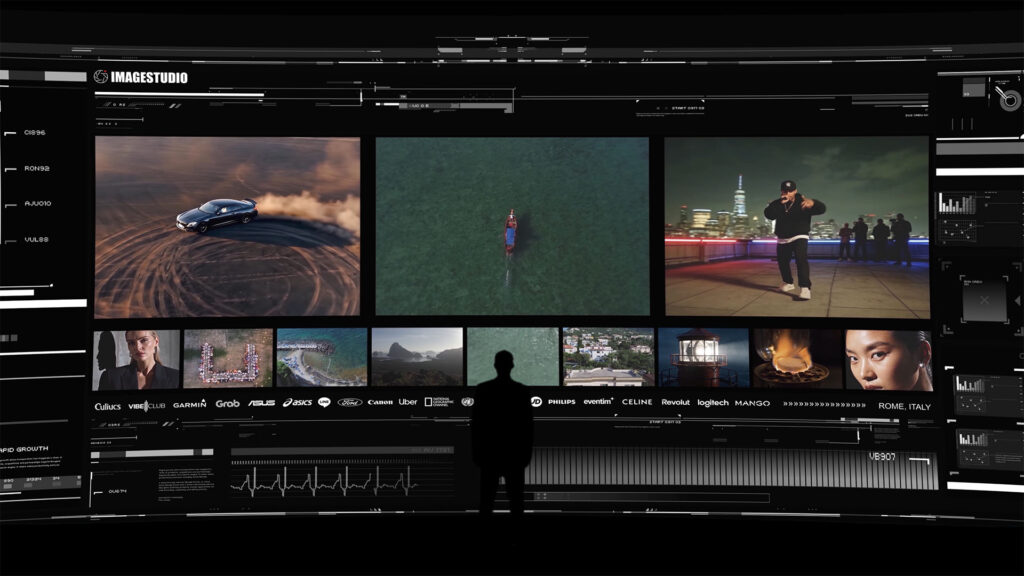

The strongest images are rarely created by the moment of capture alone. They are made possible by the work that happens before it: listening, research, creative direction, planning, location understanding, technical preparation and the judgement to know what the story needs.
← Back to Editorial

← Back to Editorial
The Image Studio Method: Why the Best Stories Begin Before the Camera Rolls
August 4, 2026
A camera can record what is placed in front of it. It cannot decide what deserves to be there.
That decision begins earlier: in the first conversation, in the questions nobody sees, in the study of a location, in the construction of a timeline, in the choice to simplify rather than add, and in the willingness to understand a person, a brand or an idea before trying to photograph it.
This is the foundation of The Image Studio Method. The strongest stories do not begin when the shutter opens or the record light turns red. They begin when a project becomes clear enough that every later decision has a reason. A storyboard helps filmmakers visualize scenes, plan shots, and create a stronger production roadmap before filming begins.
The principle applies across weddings, commercial campaigns, social media productions, wedding content creation and music videos. The scale changes. The format changes. The responsibility does not: understand the story before designing its appearance.
2.The camera is the visible part of an invisible process
Most audiences encounter creative work at the end. They see the finished photograph, the wedding film, the commercial campaign, the music video or the short vertical version. They do not see the conversations, references, location checks, schedule revisions, lighting decisions, sound planning, permissions, contingency plans and editorial choices that made the result possible.
Because the camera is visible, it is easy to treat it as the centre of production. In practice, it is one instrument inside a larger system. A technically exceptional camera cannot repair an unclear idea, a rushed timeline, an unsuitable location, contradictory styling or a production designed without understanding its audience.
The work before the camera does not remove spontaneity. It protects it. When the team has already resolved movement, access, timing and visual direction, the people inside the production have more freedom to be present. Preparation creates the conditions in which unplanned moments can be recognised rather than missed.
3.Luxury is not excess. It is coherence.
Luxury is often described through scale: more equipment, more locations, more crew, more flowers, more outfits, more footage. Yet excess without coherence can make a production feel less considered rather than more valuable.
Luxury begins when nothing important feels accidental and nothing unnecessary competes for attention.
A carefully designed production may still contain complexity, but the viewer should not feel the machinery. They should feel clarity. The location should belong to the subject. The styling should support the identity. The camera movement should reinforce the emotional distance. The sound should deepen the atmosphere. The edit should know when to move and when to remain still.
That coherence is created before production and refined afterwards. It cannot be purchased as a preset. It emerges from judgement.
4.The first stage is not a shot list. It is understanding.
A shot list can be useful, but it is not a substitute for insight. Before deciding what must be captured, the team needs to understand what the project is trying to preserve, communicate or change.
For a couple, the deeper question may not be “Which portraits do you want?” but “What do you hope will still feel true when you watch this film twenty years from now?” For a brand, it may not be “Which products should appear?” but “What should the audience believe about the company after seeing this?” For an artist, it may not be “Which references do you like?” but “What emotional world already exists inside the music?”
These questions change the production because they reveal priorities. Once the priorities are visible, the team can distinguish essential images from attractive distractions.

5.The Image Studio Method in six stages
The method is not a rigid formula. Weddings, commercial campaigns, social media productions, wedding content creation and music videos require different workflows. The following stages describe a shared way of thinking that can be adapted to the needs of each production.
1. Listen before defining
The first conversation should uncover more than deliverables. It should reveal motivation, audience, atmosphere, constraints and the emotional or strategic result the project needs to create. The purpose of listening is not to collect instructions mechanically. It is to identify what the client may not yet know how to articulate.
2. Research the world of the project
Research may include the location, architecture, brand history, visual references, audience behaviour, music, cultural context, platform requirements or the practical rhythm of an event. Research prevents creative direction from becoming a collection of fashionable references detached from the subject.
3. Build the visual logic
The team defines how composition, light, movement, colour, sound, styling and pacing will work together. A mood board is useful only when it explains relationships rather than gathering beautiful images. Each reference should clarify a decision.
4. Protect the experience through planning
A production plan should not merely tell the crew where to stand. It should protect the people, timing and emotional flow of the project. This includes access, transitions, weather alternatives, sound, permissions, equipment movement, delivery priorities and the moments that cannot be repeated.
5. Direct with sensitivity
Direction is not constant control. It is the judgement to know when to shape a frame, when to offer guidance and when to disappear. Strong direction creates confidence without replacing the subject with the director’s personality.
6. Edit for meaning, not volume
Post-production is where the material becomes a story. Selection, sequence, sound, colour and duration determine what the audience understands. The best edit is rarely the one that includes the most footage. It is the one that knows what the story no longer needs.
6.A production-first approach versus a story-first approach
The difference becomes clearer when the same project is viewed through two different starting points.
| Decision | Production-first | Story-first | Practical effect |
| Starting point | What must be filmed? | What must the audience feel or understand? | The concept guides the deliverables instead of being limited by them. |
| References | Collect attractive images. | Choose references that explain light, movement, tone or structure. | The mood board becomes a decision tool. |
| Location | Use the most impressive space. | Choose the environment that supports the subject. | The setting adds meaning rather than decoration. |
| Timeline | Fit creative work into the remaining schedule. | Design time around the moments that matter most. | Important scenes receive space without overwhelming the experience. |
| Direction | Create as many controlled images as possible. | Direct selectively and observe deliberately. | The result can feel refined without becoming artificial. |
| Post-production | Deliver the greatest volume of material. | Select and sequence according to narrative value. | The final work feels coherent and memorable. |
7.How the method changes across different forms
The method remains consistent because it begins with meaning. Its application changes because each form asks different questions.
Weddings: protect presence before creating imagery
A wedding is both a designed event and an unfolding human experience. Photography film and modern content creation must work around ceremony, family, movement, hospitality and emotion without turning the day into a permanent set.
Planning matters because small decisions can influence the final story. The direction of ceremony light, the distance between locations, the time allowed for portraits, the position of speakers and the order of events all affect what can be captured without placing pressure on the couple.
The aim is not to control everything. It is to remove avoidable friction so that editorial portraiture, documentary observation and cinematic filmmaking can coexist. Readers exploring this balance can continue with Image Studio’s guide to editorial wedding photography in Italy and the role of a wedding content creator in Italy.
Wedding content creation: design immediacy without disrupting the day
A wedding content creator works at a different speed from the photography and filmmaking teams. The role is built around vertical, social-first material, behind-the-scenes observations and rapid delivery, but it still needs to belong to the same visual and emotional language as the wider celebration.
The preparation happens before the wedding: defining boundaries, access, priorities, delivery expectations and how the creator will work beside photographers, filmmakers and planners. Without that coordination, immediate content can become intrusive or visually disconnected. With it, couples receive a more spontaneous perspective without sacrificing the experience itself.
The strongest wedding content does not attempt to replace the finished photographs or film. It creates another layer of memory: informal, immediate and designed for the way couples communicate now.
Commercial production: begin with the business meaning
A commercial production must do more than look expensive. It should clarify what the brand represents and why the audience should care. That requires understanding the company, product, customer and distribution environment before designing the visual language.
Two hotels may share elegant interiors, exceptional service and strong locations. One film may simply document architecture. Another may communicate arrival, privacy, texture, pace and hospitality so clearly that the viewer can imagine inhabiting the experience. The difference is not necessarily budget. It is the decision to begin with the guest’s perception rather than a list of rooms to capture.
Image Studio’s commercial production approach connects cinematic direction with the identity and practical use of the final assets.
Music: build a world before recording the performance
Music video production depends on internal rules. The audience may never hear those rules explained, but they feel when colour, camera movement, performance, production design and editing belong to the same world.
A music video does not become expressive because every cut follows the beat. Sometimes the image should move with the rhythm. Sometimes it should resist it. The decision depends on what the music is doing emotionally, not merely on its tempo.
In a music video, a lens changes the audience’s distance from an artist. Camera stability influences emotional certainty. Sound can reveal a space before the image does. These choices need a shared concept before the performance begins. Explore the studio’s music video work and music production for the disciplines connected to this approach.
Social media: strategy before speed
Social media introduces real constraints: short attention windows, vertical composition, mobile viewing, captions, platform formats and rapid delivery. These requirements should shape production, but they should not become the creative idea.
When a team begins only with “we need more content,” it often produces isolated assets that disappear into the feed. When it begins with “what should people recognise about us after seeing ten pieces of content?”, each post can contribute to a larger identity.
The Image Studio social media approach treats short-form work as part of a wider visual system. A reel may need to work immediately, but it should still feel connected to the brand, campaign or artist behind it. Planning the message, visual language, capture priorities and delivery formats before production makes speed more useful rather than more disposable.
The same principle continues after the creative work is published. Strong photographs, films and campaigns should belong to a wider discovery system rather than disappear after their initial release. SEO content automation with RepGet can extend that planning into distribution by identifying search opportunities, publishing optimized supporting content, building relevant backlinks, and tracking visibility across Google and AI search. Distribution then becomes another deliberate part of the process rather than an afterthought.
8.Location is not a backdrop
One of the most common planning mistakes is choosing a location only because it appears impressive in photographs. A location also determines light, access, sound, movement, weather exposure, privacy, transitions and the emotional relationship between the subject and the environment.
A large room can create scale but weaken intimacy. A narrow street can provide texture but restrict equipment and movement. A lakefront terrace may offer a remarkable view while placing the subject in difficult midday contrast. A minimal studio may appear visually simple while giving complete control over light and sound.
The right location is not always the most spectacular one. It is the one that helps the story become more specific.
9.Light is part of planning, not a problem for the shoot day
Light changes the emotional meaning of a space. Morning light may reveal calm and clarity. Hard afternoon sun can create energy, contrast or discomfort. Evening light can soften architecture and allow a scene to become more intimate. Artificial light can introduce control, drama or visual continuity when natural conditions change.
The question is not simply whether a location has “good light.” The question is what kind of light reaches each important space, at what time, from which direction and how that light supports the intended story.
This is why a timeline is a creative document. Moving a portrait session by twenty minutes, changing the orientation of a conversation or preparing a controlled interior alternative can alter the final visual result without adding equipment or increasing the scale of the production.
10.Planning should protect people, not turn them into production assets
A production can be visually ambitious without making the people inside it feel managed every second. The role of planning is to create enough structure that direction can remain light.
For private clients, this means identifying which moments need time and which should be allowed to unfold. For artists, it means creating a safe framework for performance. For brand teams, it means resolving approvals, shot priorities and usage requirements before the set becomes expensive. For every project, it means respecting attention and energy as limited resources.
The best production plan is not the one with the greatest number of instructions. It is the one that makes the day easier to inhabit.
11.Post-production is where intention becomes structure
Filming creates possibilities. Editing creates meaning.
A sequence is not strong because it contains every successful shot. It is strong because each image changes what the audience understands or feels. Repetition can build rhythm, but accidental repetition weakens attention. A pause can create space, but an unnecessary pause can dissolve tension. Music can deepen emotion, but it can also instruct the audience too aggressively.
Colour, sound design, pacing and selection should return to the original purpose of the project. Post-production is not where a missing concept is invented. It is where a clear concept is protected from excess.
12.What clients should resolve before production begins
The following questions are useful whether the project is a wedding, a commercial campaign, a wedding content series, a music video or a social media production.
What should remain valuable after the immediate release or event has passed?
Who is the story for, and what do they already believe?
Which emotion or perception should guide the visual direction?
What is specific to the people, brand, place or idea?
Which moments or messages cannot be repeated?
Where will the final work be experienced?
Which assets need to work across several formats?
What should the production deliberately avoid?
Which information, permission or decision is still unresolved?
How will success be judged beyond the quantity of material delivered?
13.What the Image Studio Method is designed to prevent
Beautiful work without a clear subject: A production can be polished and still leave the audience unsure what it was trying to communicate.
A location chosen for prestige rather than fit: The most recognisable environment is not always the one that supports the story, movement or experience.
A schedule that treats creative work as an afterthought: When key scenes receive only the time left over, the team is forced to choose between pressure and compromise.
A large volume of disconnected assets: More deliverables do not automatically create a stronger identity. The assets need a shared visual and strategic centre.
Technology used as a concept: A new camera, drone, transition or visual effect can expand the language, but novelty alone cannot replace authorship.
14.Frequently asked questions
Why does pre-production matter if the project should feel spontaneous?
Spontaneity is easier to recognise when avoidable problems have already been resolved. Pre-production clarifies access, timing, visual priorities, sound, responsibilities and contingency plans. This reduces interruptions during the shoot and gives the team more freedom to respond to genuine moments.
Does every Image Studio project follow the same process?
No. The method is a shared way of thinking rather than a fixed production package. A destination wedding, commercial campaign, music video and short-form social series require different levels of research, crew, direction and post-production. The process is scaled according to the story, risks and intended use.
When should creative direction begin?
Creative direction should begin as soon as the purpose, audience and practical scope are understood. Starting early allows the concept to influence location, styling, schedule, lighting and deliverables instead of being applied superficially after those decisions have already been made.
Can wedding photography, filmmaking and content creation be planned together?
Yes, and coordinated planning can improve visual continuity and reduce unnecessary duplication. Each discipline still needs a distinct role: photography concentrates meaning in individual frames, film uses movement, sound and time, while social content prioritises immediacy and platform-native formats.
Does better preparation make a production feel less natural?
Not when preparation is used to create space rather than control every action. The aim is to define the structure, priorities and visual logic so that people can remain present. Over-direction can make work feel artificial; thoughtful preparation helps the team know when direction is useful and when observation is stronger.
15.The story begins before the camera rolls
Anyone can arrive with a camera. The greater responsibility begins earlier.
It begins with understanding people before directing them. Understanding a brand before representing it. Understanding a location before using it. Understanding light before scheduling around it. Understanding the audience before choosing a format. Understanding the story before deciding which images should carry it.
The Image Studio Method is not built around producing more. It is built around making every decision contribute more.
That is why the best stories begin before the camera rolls. By the time the first frame is recorded, the production should already know what it is trying to protect, reveal and leave behind.
Explore more about the philosophy behind the studio on About Image Studio or continue through the Image Studio Editorial for guides on visual storytelling, weddings, commercial production, film and modern digital media.