Why Italy Remains the World’s Luxury Wedding Destination
August 3, 2026
Italy remains the world's defining luxury wedding destination because it offers more than beautiful venues. This guide explores how landscape, architecture, hospitality, food and regional identity create celebrations that feel rooted in place, while helping international couples compare destinations, understand the trade-offs and choose the right Italian setting.
Luxury can be commissioned. Atmosphere cannot.
Before a ceremony on Lake Como, the water can become almost motionless. In Tuscany, the evening light moves slowly across stone walls and long tables. On the Amalfi Coast, guests may hear the sea before they see the terrace where dinner will begin. These moments are not decorative additions to an Italian wedding. They shape how the celebration is experienced and remembered.
Italy remains the world’s defining luxury wedding destination because it offers more than beautiful venues. It brings architecture, landscape, hospitality, food, fashion, craftsmanship and cultural memory into one coherent experience. Other destinations may equal Italy in individual qualities. Few combine them with the same depth, variety and emotional fluency.
For international couples, the real question is no longer simply whether Italy is beautiful. It is whether the country can translate their priorities into the right kind of celebration: formal or relaxed, intimate or theatrical, coastal or rural, historically layered or sharply contemporary. This guide explains why Italy continues to lead, where its advantages are strongest, what trade-offs couples should understand, and how its major regions create distinctly different forms of luxury.
THE ESSENTIAL ANSWER
Italy remains the leading luxury wedding destination because the setting is not separate from the celebration. Historic villas, living landscapes, regional cuisine, design traditions and hospitality already belong to the culture of gathering. The result is a wedding that feels located in a real place rather than assembled inside a luxury template.
1.Luxury in Italy has accumulated rather than been manufactured
Many destinations can build exclusivity. Italy offers something harder to reproduce: beauty that has accumulated over centuries and is still part of daily life.
A Renaissance villa was not designed as a wedding backdrop. A Venetian palazzo was not built for a social-media campaign. A masseria in Puglia was created around agriculture, work and domestic life. A Tuscan estate carries the marks of changing seasons, harvests and generations. When these places host a wedding, they bring history into the celebration without requiring the event to imitate history.
This distinction matters. Luxury that feels newly assembled often depends on flawless surfaces, service and controlled access. Italian luxury can include all of those things, but its most powerful quality is continuity. Weathered stone can sit beside contemporary floristry. A formal dinner can unfold in a courtyard that has existed for hundreds of years. Couture can appear against architecture whose scale and proportion already understand ceremony.
Italy’s cultural density is not merely a romantic impression. UNESCO currently lists 61 World Heritage properties in the country, including historic centres, villas, cultural landscapes, coastlines and mountain environments. The number is not a reason to choose Italy by itself, but it helps explain why so many wedding regions feel visually and culturally complete rather than dependent on one attraction.
Source: UNESCO World Heritage Convention – Italy
In Italy, luxury is rarely a layer placed on top of the location. It is already present in the relationship between place, craft and time.
2.Italy already speaks the language of weddings
The strongest destination weddings do not feel imported. They feel as though the celebration has entered into a conversation with the place.
Italy is unusually suited to this because many of the values associated with weddings are already embedded in its social culture: family, food, conversation, ritual, craft, hospitality and the pleasure of spending time together. A welcome dinner does not need to be justified as an event format. It belongs naturally to a culture in which the table is both social space and narrative centre.
This is one reason the modern destination wedding in Italy has expanded beyond a single day. A lake cruise, a vineyard dinner, a poolside gathering, a ceremony, a late-night celebration and a farewell brunch can feel like chapters of one journey rather than unrelated scheduled activities. The country supports the wedding-weekend format because each region offers experiences that remain specific to the location.
Official Italian tourism guidance presents the country’s wedding possibilities in similarly broad terms, from lakes and countryside to historic cities and Mediterranean coastlines. The value lies not only in the range of settings but in the fact that each setting changes the emotional register of the celebration.
Source: Italia – Wedding venues and moods in Italy
3.The emotional geography of an Italian wedding
Italy should not be treated as one destination. It is a collection of regions with different rhythms, climates, architecture, logistics and visual identities. Choosing between them is not a question of which is universally best. It is a question of which atmosphere best matches the people gathering there.
Pure celebration.
Lake Como: composed, architectural and quietly theatrical
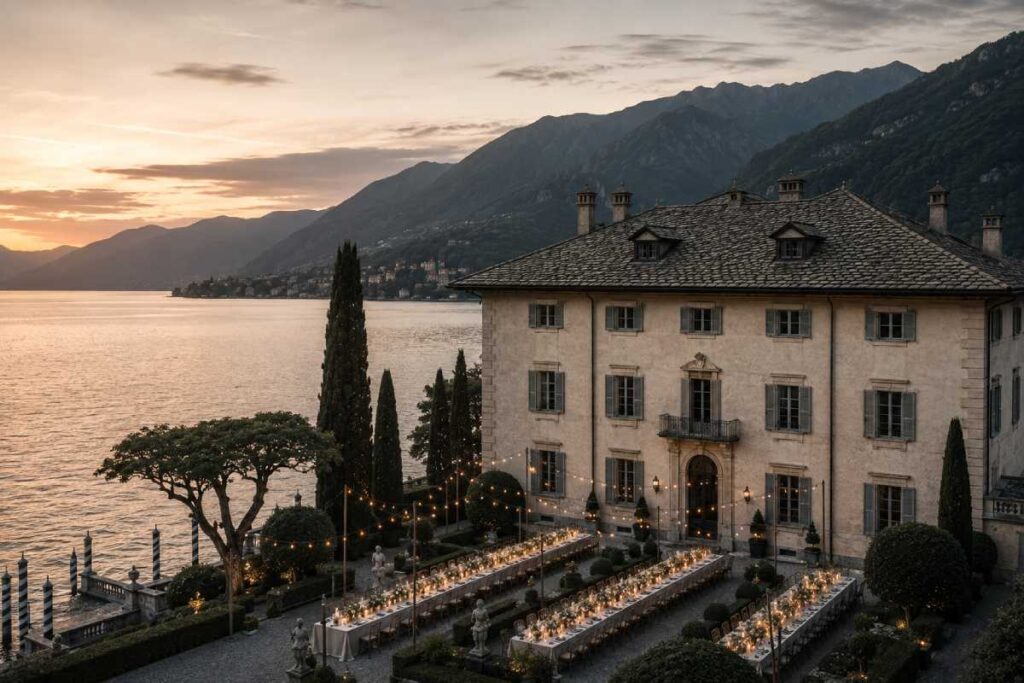
Lake Como creates luxury through proportion and restraint. The water slows the visual field, mountains contain the horizon, and villas introduce symmetry, terraces and formal gardens. It is particularly suited to couples who want a refined international celebration with strong architecture, lake movement and a sense of occasion. The trade-off is logistical complexity: boat transfers, narrow roads, weather contingency and limited access can influence the timeline more than the photographs suggest. Among the most iconic luxury venues on Lake Como, Villa Balbiano has become internationally recognised for destination weddings thanks to its historic architecture, lakefront gardens and cinematic atmosphere.
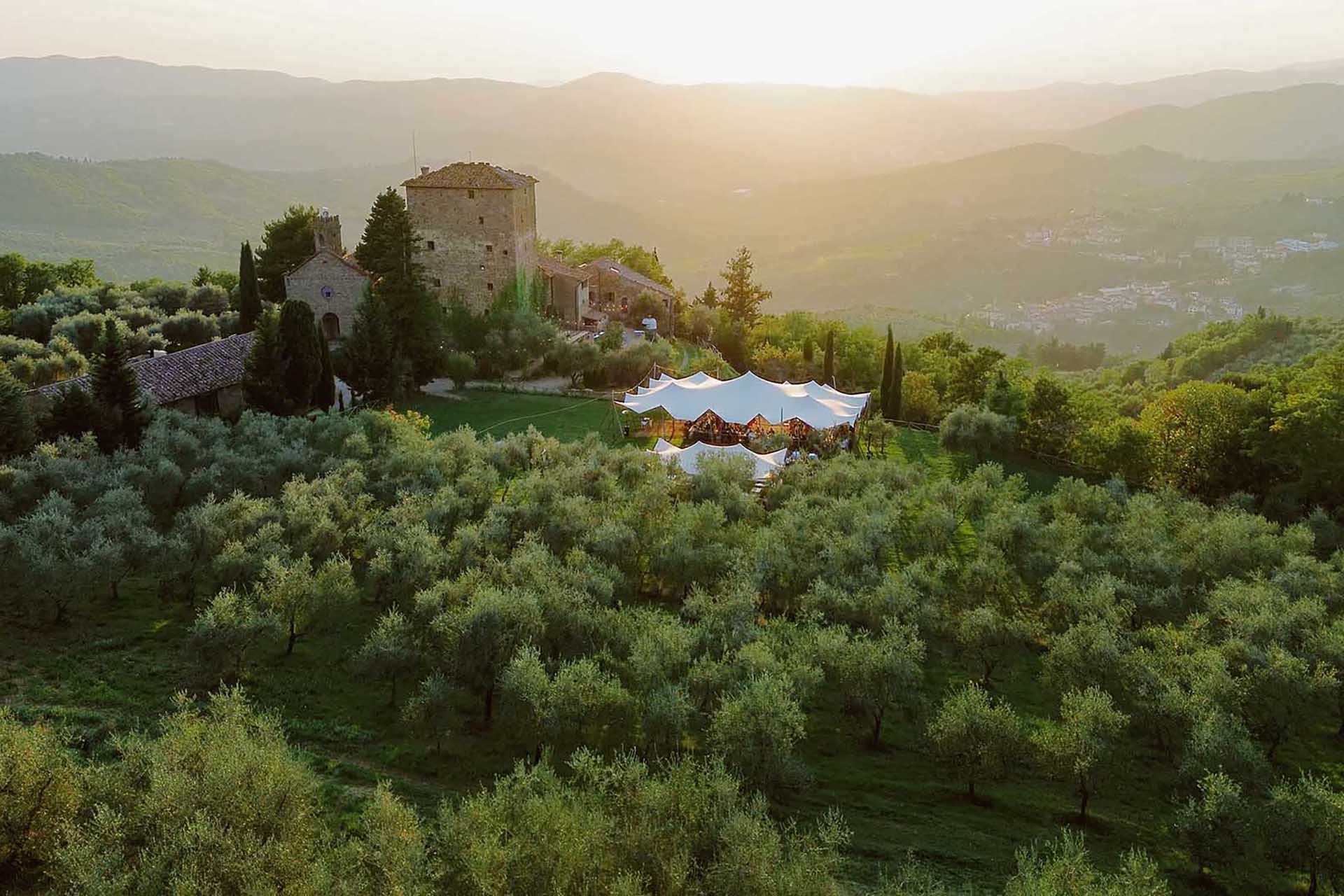
Golden hour over the Tuscan hills – a luxury destination wedding at Castello di Ristonchi in Pelago
Tuscany: warm, generous and deeply social
Tuscany weddings offers a different kind of grandeur. Its power comes from landscape, texture and pace rather than spectacle alone. Villas, vineyards, cypress roads and stone villages create a natural progression from welcome dinner to ceremony and long-table reception. It suits couples who want luxury to feel relaxed, cultivated and connected to food and place. Distances between estates, accommodation and airports require careful planning, especially for guests unfamiliar with rural Italy.
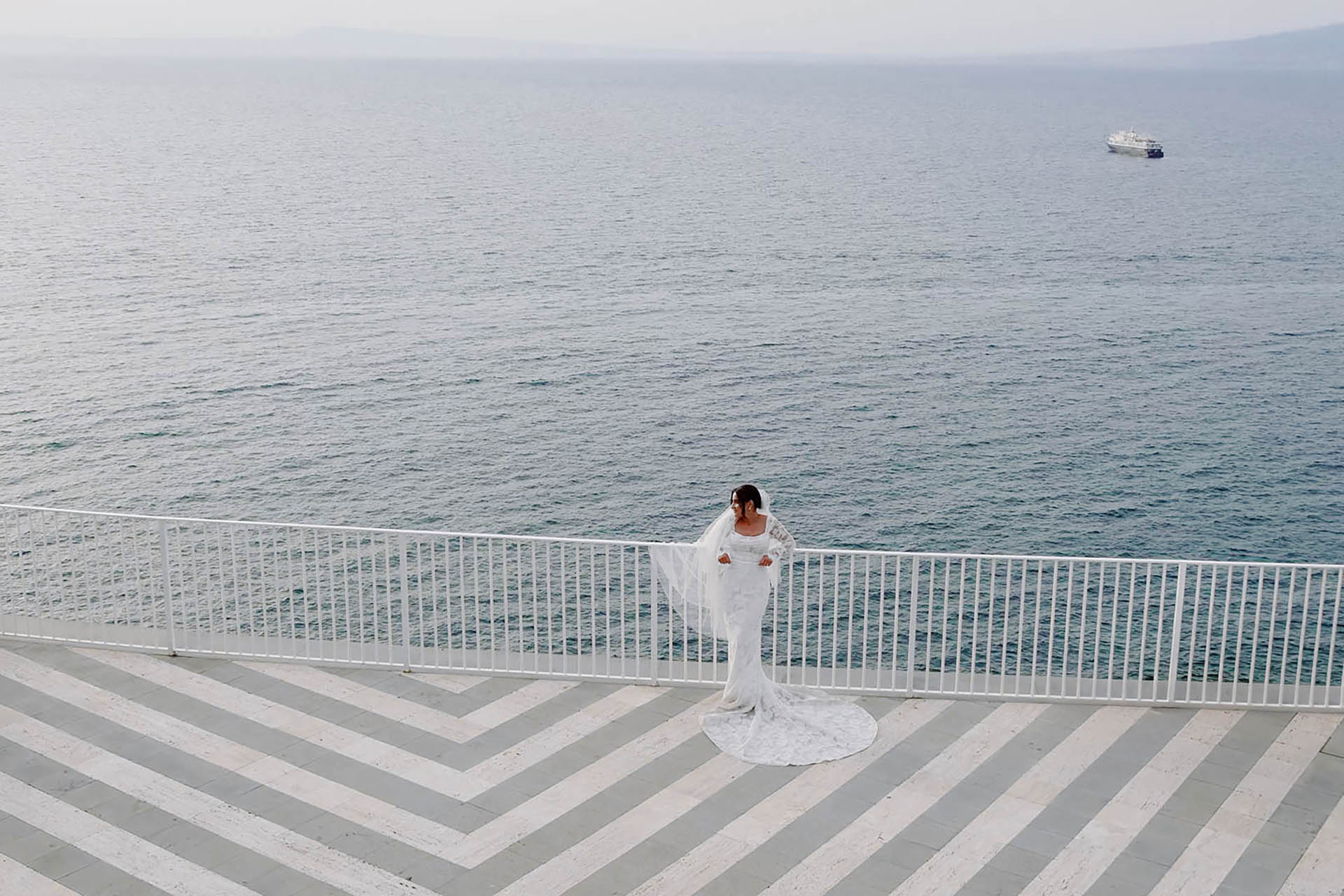
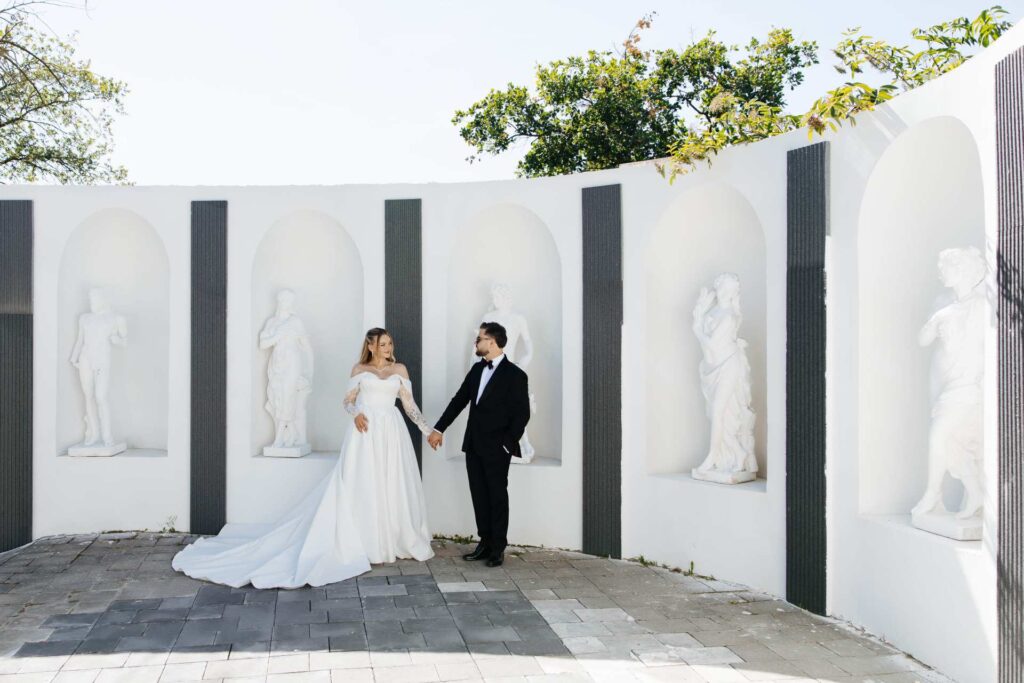
Minimalist elegance overlooking the Mediterranean – bridal portrait at Villa Antiche Mura, Sorrento
The Amalfi Coast: celebratory, cinematic and logistically demanding
The Amalfi Coast weddings is built around verticality: cliffs, terraces, stairways, sea views and villages layered above the water. This gives weddings immediate drama and movement. It is ideal for couples who value energy, colour, Mediterranean atmosphere and a guest experience that feels inseparable from travel. It also demands discipline. Traffic, boat schedules, luggage handling, heat and pedestrian access can affect every part of the event.
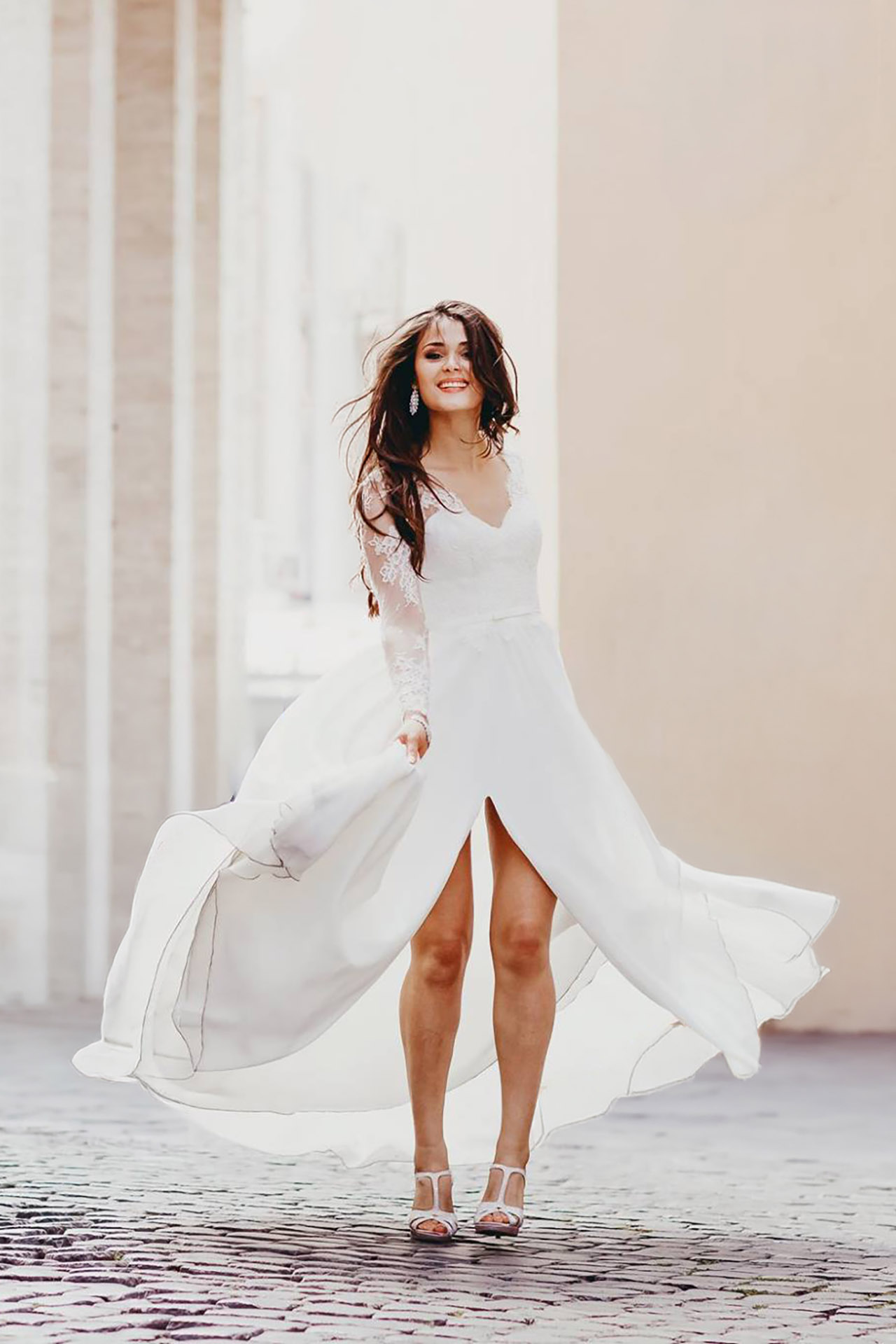
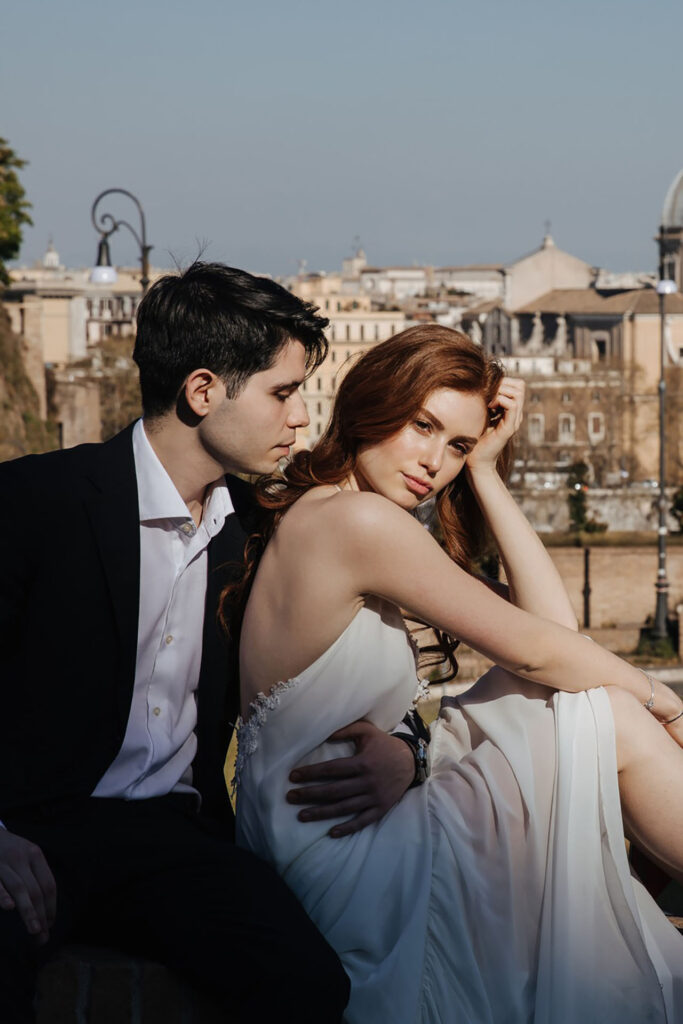
Modern bridal elegance captured in the heart of Rome
Rome: monumental, expressive and culturally dense
Rome can move from ancient stone to baroque interiors, private villas and contemporary hospitality within a short visual distance. It suits couples who want a wedding connected to art, architecture and city energy rather than a self-contained resort. The strongest Roman celebrations use the city selectively. They do not attempt to include every landmark; they create a precise route through a very large cultural landscape.
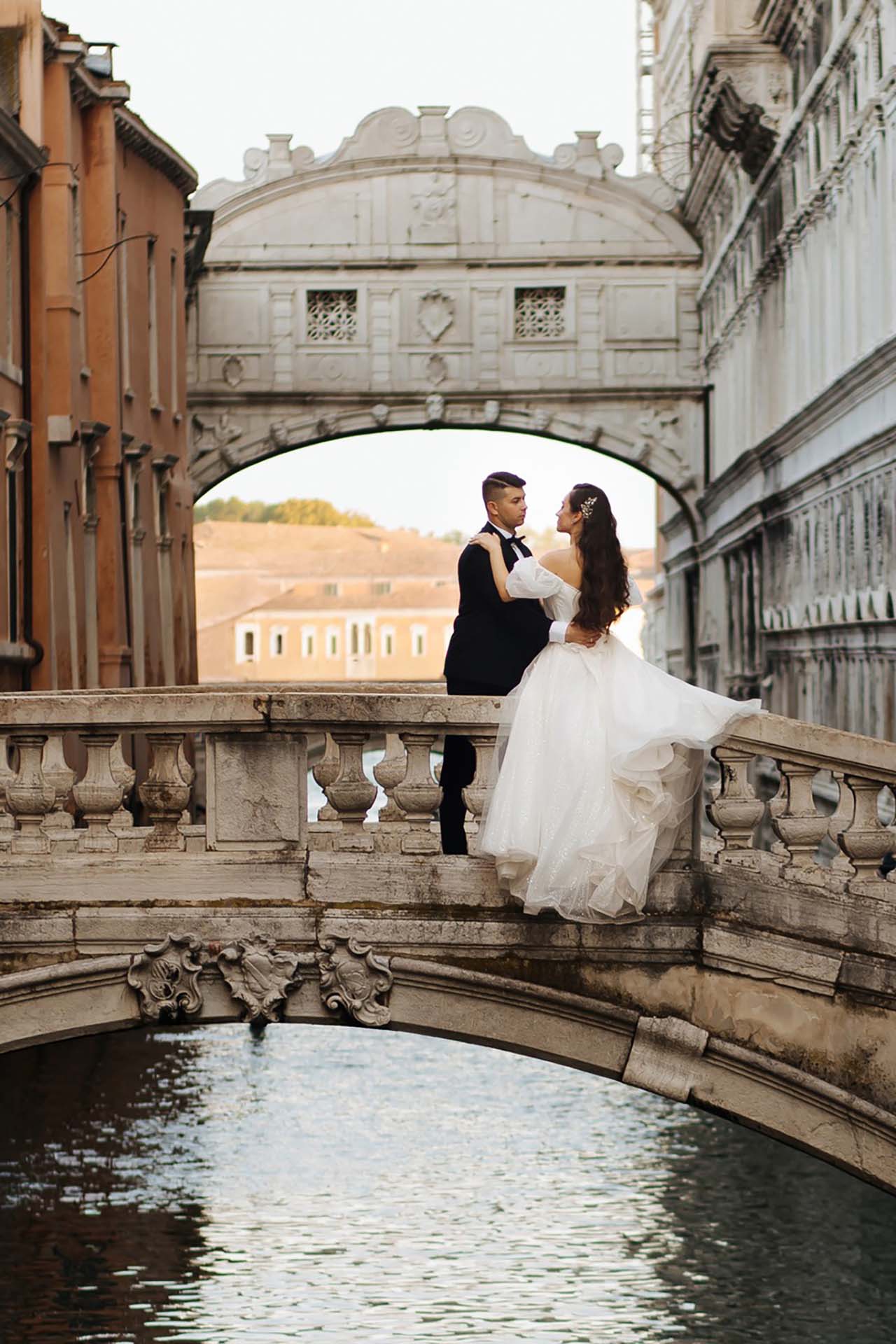
A love story suspended above Venetian waters
Venice: poetic, intimate and unlike anywhere else
Venice changes the mechanics of a wedding. Guests arrive by water, streets become passages, and logistics must adapt to a city without conventional road access. The reward is complete immersion. Venice is suited to intimate or carefully orchestrated celebrations where atmosphere matters more than operational simplicity. Privacy, tides, tourist flows and transport should be planned with precision.
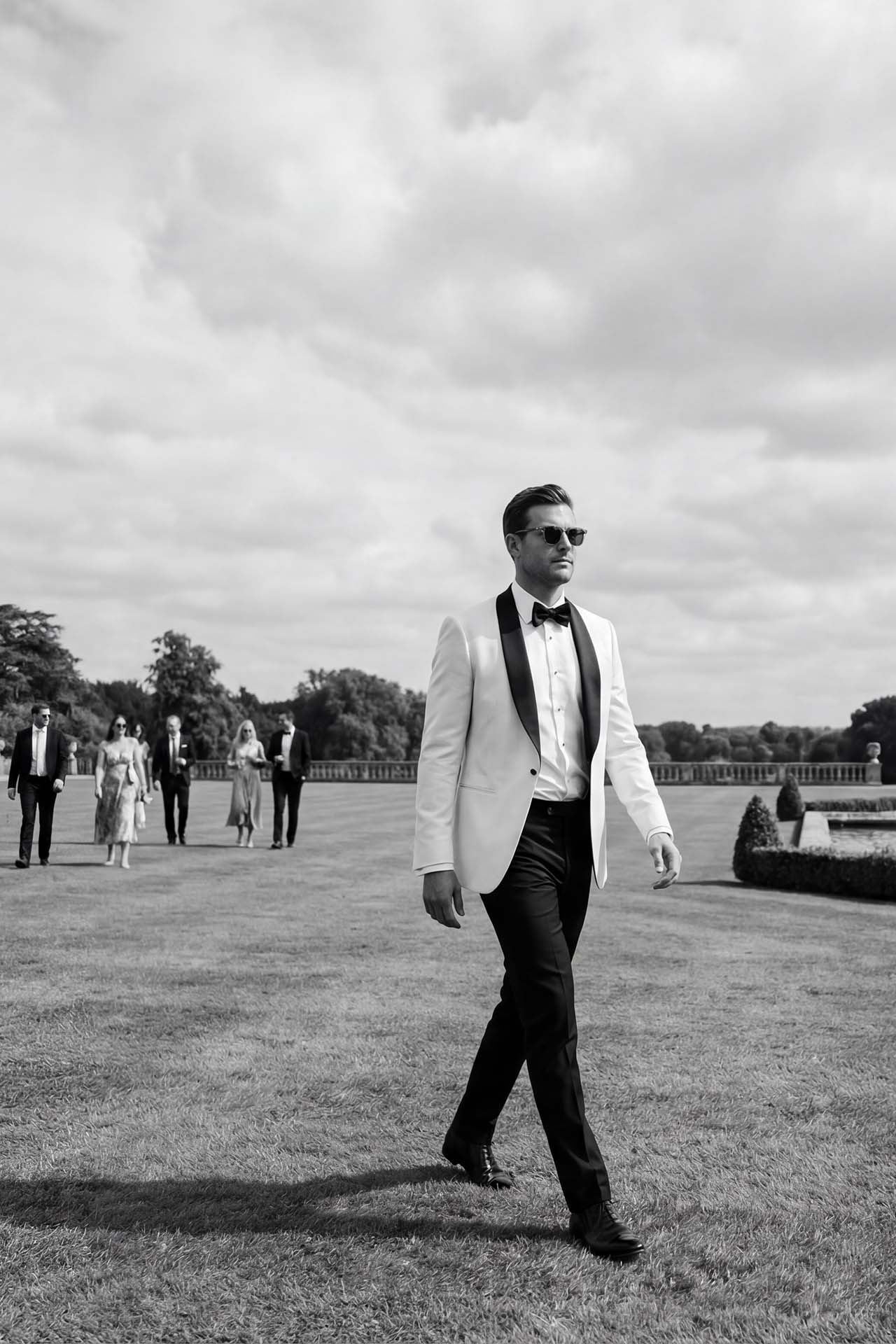
An editorial black and white portrait of a groom walking confidently through an Italian estate garden
Puglia: tactile, relaxed and design-conscious
Puglia combines masserie, olive landscapes, pale stone, courtyards and a slower southern rhythm. It works especially well for couples who want understated luxury, contemporary design and multi-day gatherings in properties that can often hold several experiences within one estate. Summer heat and travel connections need consideration, but the region offers strong continuity between hospitality, architecture and food.
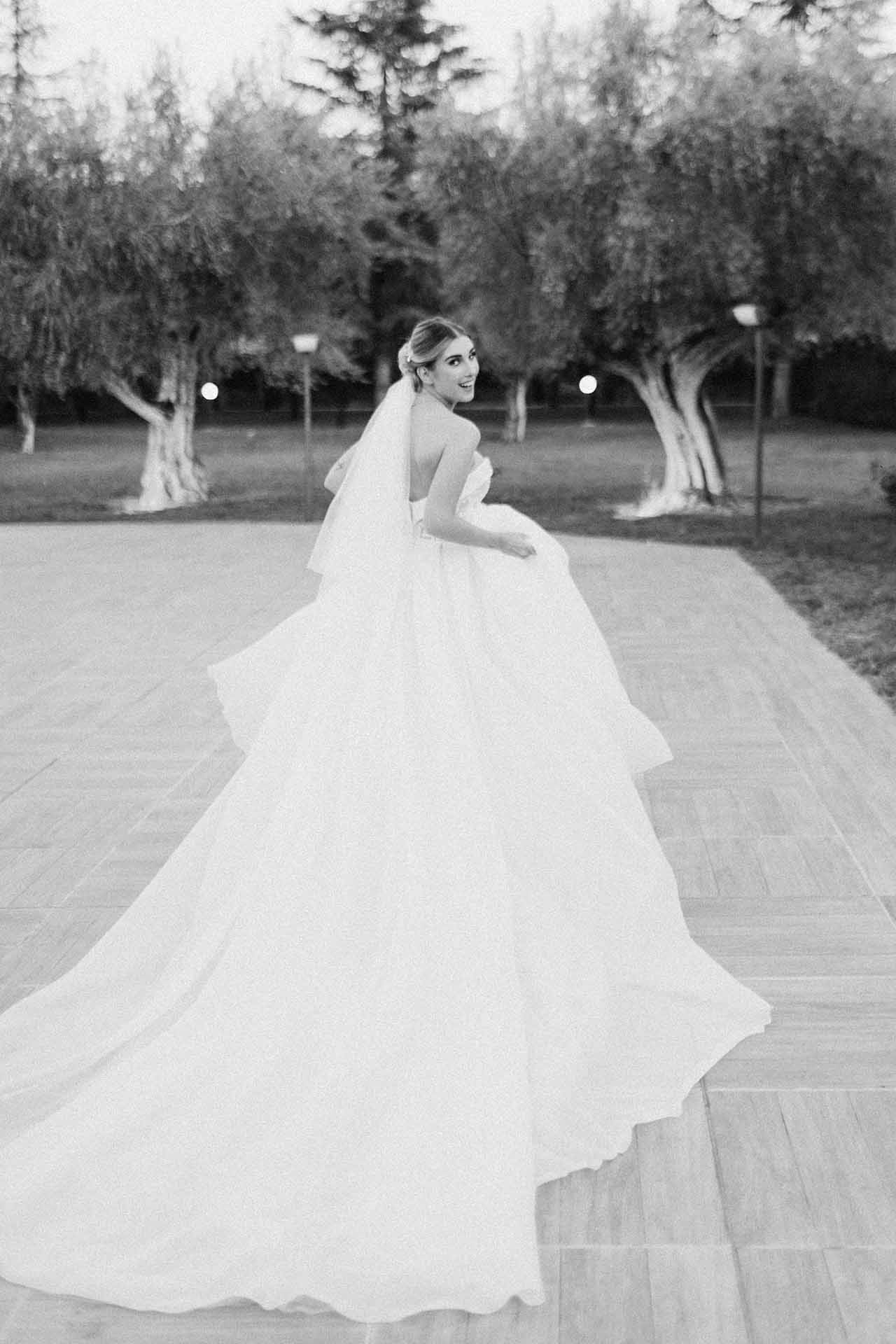
A timeless black and white bridal portrait captured in an elegant editorial wedding style
Sicily: layered, dramatic and culturally rich
Sicily brings together baroque cities, volcanic landscapes, coastal estates, gardens and food traditions shaped by multiple cultures. It is ideal for couples who want a celebration with intensity and regional identity. Sicily rewards commitment: travel is longer, distances can be significant, and the island should be treated as a destination in its own right rather than as an extension of mainland Italy.
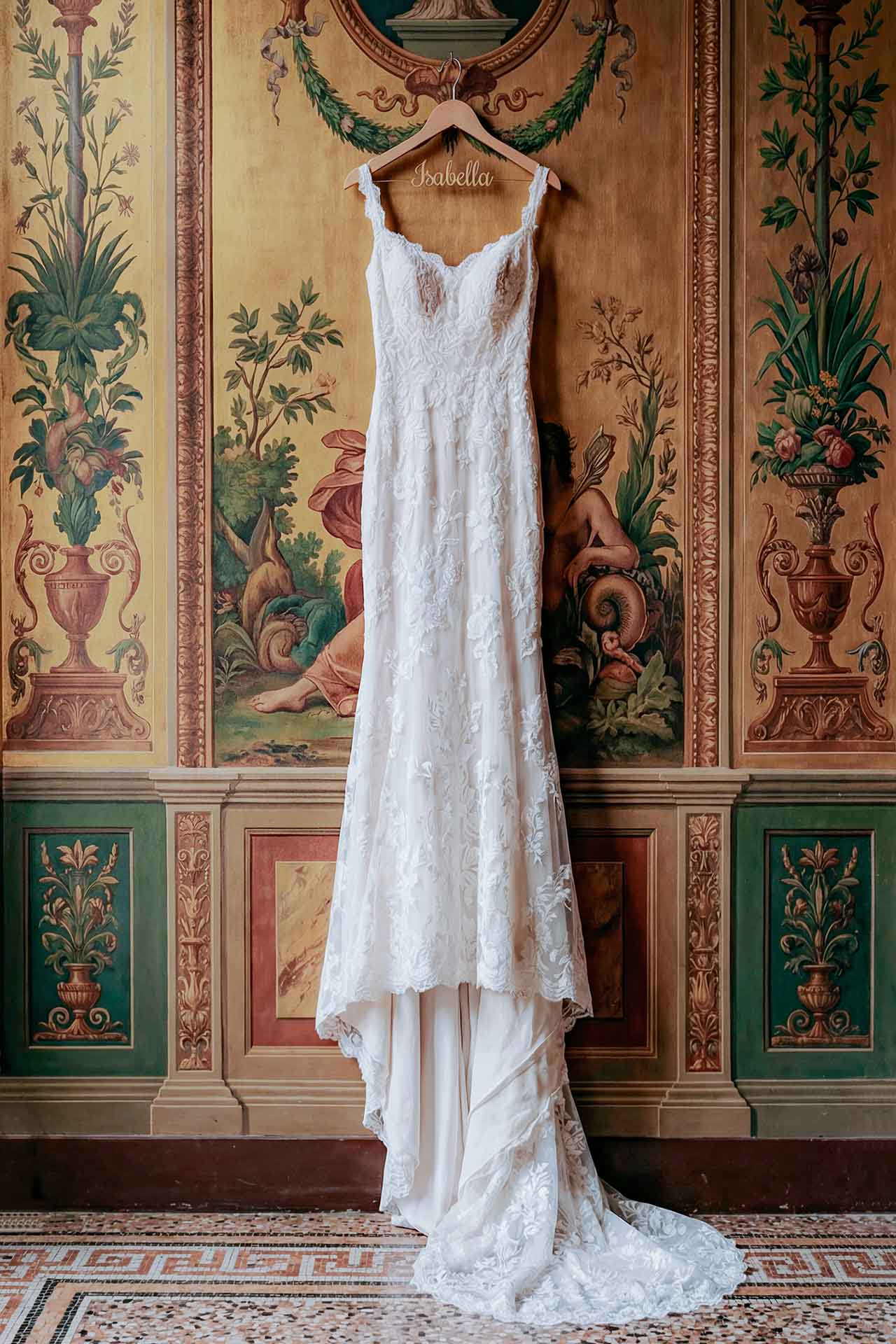
A refined bridal gown captured in an artistic, editorial setting – where texture, heritage and timeless elegance meet
The Dolomites: quiet, elemental and highly seasonal
The Dolomites weddings offer altitude, silence and extraordinary scale. Mountain lodges, alpine meadows and sculptural peaks create a form of luxury based on space and natural drama. The region suits smaller celebrations and couples drawn to landscape, design and outdoor experience. Seasonality, weather and transport must guide the concept from the beginning.
4.What makes Italy visually exceptional for photography and film
Italy is often described as photogenic, but that word is too passive. The country does not simply look attractive. Its spaces actively shape visual storytelling.
Architecture creates frames within frames: doors, loggias, arcades, staircases and terraces. Landscapes provide depth rather than flat scenery. Materials respond differently to light: marble reflects, stone absorbs, water carries colour, frescoes soften it, and olive leaves produce a muted silver-green that behaves unlike manicured garden foliage.
The strongest wedding imagery uses these conditions rather than merely placing the couple in front of them. A photographer needs to understand when architecture should dominate and when it should recede. A filmmaker must account for movement between spaces, sound transitions, guest flow and the changing emotional scale of the day.
Natural light is part of the appeal, but it should not be romanticised. Midday sun in Tuscany can be severe. Lake reflections can increase contrast. Coastal terraces may become exposed to wind. Historic interiors can be dark and may restrict artificial lighting or equipment movement. Italy rewards teams that understand location, timing and contingency rather than relying on the country to make every frame automatically beautiful.
5.Italy already exists inside the global imagination
Couples do not encounter Italy for the first time when they begin venue research. They have already seen it through cinema, fashion, art, travel, design and advertising.
This cultural familiarity is one of Italy’s most powerful advantages. A lake arrival, a Roman courtyard, a Tuscan road or a Venetian water taxi can feel both personally new and strangely recognisable. The destination carries associations before the first invitation is sent.
That can also become a creative risk. When a wedding relies only on familiar symbols, it may reproduce an idea of Italy rather than reveal the couple within Italy. The best celebrations use the visual language of the place selectively. They allow fashion, floristry, music and production design to respond to the region without turning the event into a costume of Italian life.
This is where creative direction matters. Italy provides an unusually rich visual vocabulary, but vocabulary is not the same as a story. The couple, their guests and their reasons for gathering must remain at the centre.
6.Why Italian hospitality matters as much as the venue
A destination wedding is judged across many hours, not only during the ceremony. Guests remember how they were received, whether movement felt effortless, how meals unfolded, whether the setting changed naturally through the day and whether the celebration gave them time to inhabit the place.
Italian hospitality is particularly powerful when it is expressed through rhythm rather than excess. An aperitivo can create transition. Dinner can become theatre without becoming rushed. Regional food and wine can communicate place more effectively than decorative motifs. A late-night table can feel as memorable as a formal floral installation because it extends the social life of the wedding.
True luxury is not always the addition of more elements. Often it is the removal of friction: thoughtful transport, clear communication, shade when guests need it, discreet service, comfortable pacing and spaces that support conversation as well as spectacle.
7.Italy compared with other luxury wedding destinations
Italy does not need to be declared the winner in every comparison. France, Greece, Spain, Portugal and island destinations each offer advantages that may suit a particular couple better. A useful comparison should clarify fit rather than repeat prestige.
Destination
Defining strength
Best suited to
Main consideration
What distinguishes Italy
Italy
Cultural density and regional variety
Couples seeking a complete relationship between place, hospitality, design and history
Complex logistics vary significantly by region
Historic settings remain part of living culture rather than isolated backdrops
France
Formal refinement, chateaux and culinary prestige
Couples drawn to classical elegance and strong hospitality infrastructure
Some regions can feel more venue-led than destination-led
Italy offers greater emotional contrast between lakes, cities, countryside, mountains and coast
Greece
Sea, light and island atmosphere
Couples prioritising open-air celebration and relaxed coastal energy
Wind, heat and island transport can dominate planning
Italy adds deeper architectural and cultural variety within one country
Spain
Energy, design, food and city-coast combinations
Couples seeking expressive celebrations with contemporary hospitality
Regional style varies widely and should be chosen carefully
Italy carries a stronger global association with wedding villas, fashion and cinematic romance
Portugal
Understated value, coastline and design-led properties
Couples wanting elegant hospitality with a quieter market profile
Luxury venue depth is smaller in some regions
Italy offers a broader ecosystem of historic estates and destination specialists
Island resorts
Privacy, simplicity and controlled guest experience
Couples who want seclusion and a resort-centred celebration
The experience can feel detached from local culture
Italy allows exclusivity without requiring isolation from place
Italy is not automatically the right choice for every couple. It becomes the strongest choice when regional character, cultural depth and the guest experience matter as much as the venue itself.
8.The trade-offs behind the Italian dream
A credible luxury guide must also explain where Italy can be difficult. The country rewards planning, but it rarely rewards assumptions.
Logistics can be more complex than the map suggests
Short distances may involve narrow roads, ferries, limited parking, stairs or seasonal traffic. Guest transport should be designed before the visual schedule is finalised.
Historic character can limit production freedom
Protected interiors, restricted access, noise rules and limited power may affect lighting, sound, staging and equipment. Confirm what is permitted rather than assuming a prestigious venue can accommodate every production idea.
Weather plans must be equal to the primary plan
A rain option should not be treated as a lesser version of the wedding. It should preserve guest comfort, visual coherence and the intended atmosphere.
Season affects more than temperature
Availability, traffic, daylight, vegetation, water transport and local activity all change through the year. A beautiful month on paper may not be the best month for the couple’s priorities.
Regional expertise matters
A team experienced in one part of Italy may not automatically understand another. Lake logistics, coastal movement, rural estates, mountain weather and city permissions require different knowledge.
9.What luxury couples are really choosing when they choose Italy
Couples often begin with a venue image. They stay with Italy because the destination can hold more than one kind of memory.
The ceremony may belong to architecture. Dinner may belong to food and conversation. The welcome event may belong to landscape. The film may preserve movement, voices and the sound of the place. The photographs may hold details that become more significant years later.
Italy’s advantage is not that every part of the country looks luxurious. It is that luxury can take many forms without losing cultural coherence. It can be formal on Lake Como, earthy in Tuscany, exuberant in Sicily, minimal in Puglia, monumental in Rome or elemental in the Dolomites.
This variety allows the wedding to begin with the couple’s identity rather than with a fixed idea of prestige.
10.The Image Studio perspective: the destination must support the story
From a photography and film perspective, the most important Italian wedding decision is not which destination appears most impressive online. It is which destination supports the rhythm, relationships and visual character of the celebration.
A lake villa may create extraordinary formal portraits but require more controlled movement between locations. A Tuscan estate may allow the day to unfold within one property but place guests far from urban transport. An Amalfi celebration may offer immediate cinematic scale while requiring stricter timing. A Roman wedding may create immense architectural variety while demanding careful route selection.
The venue, timeline and visual approach should therefore be developed together. Portraits cannot be planned independently from guest movement. Film cannot be separated from sound conditions. Golden-hour photography cannot be protected if dinner, transfers and speeches are scheduled without reference to light.
Image Studio approaches weddings through editorial photography, documentary observation and cinematic filmmaking. The objective is not to turn Italy into a backdrop, but to understand how the place can support the people inside the story.
11.A decision framework for choosing the right Italian region
Before choosing a venue, couples should define the kind of luxury they want to experience. The following questions are more useful than asking which region is the most famous.
What should guests feel first? Awe, intimacy, freedom, calm, energy, cultural immersion or seclusion?
How important is logistical simplicity? Do you want most events and accommodation in one place, or are you comfortable with boats, transfers and movement between locations?
Should the landscape or architecture lead? Lake and mountain weddings often place landscape first. Cities and villas may give architecture a stronger role.
How formal should the celebration feel? Formal black-tie elegance, relaxed estate hospitality and Mediterranean celebration require different regions and properties.
How much weather flexibility is necessary? Consider season, indoor capacity, covered transitions and whether the rain plan remains visually and socially satisfying.
What should the wedding weekend include? Food, culture, boats, vineyards, beaches, spa time, hiking, museums and nightlife create different destination priorities.
What should the photographs and film remember? Scale, intimacy, family, fashion, architecture, landscape, movement, ritual or atmosphere?
12.When is the best time for a luxury wedding in Italy?
There is no single best month for every region. The strongest period depends on geography, guest comfort, daylight, venue operations and the atmosphere the couple wants.
Late spring and early autumn often provide the best balance for many destinations, but this is a planning principle rather than a guarantee. Lake regions, mountains, inland estates and southern coasts behave differently. High summer can be appropriate for evening-led coastal celebrations, while mountain weddings may rely on narrower seasonal windows.
Couples should review climate patterns, local event calendars, transport pressure and the venue’s real indoor alternatives. Exact weather cannot be promised, and current operating conditions should always be confirmed directly with the venue and planner.
13.Frequently asked questions
Why is Italy considered a luxury wedding destination?
Italy combines historic venues, varied landscapes, regional food, fashion, craftsmanship and a mature hospitality culture. Its strongest advantage is that these elements already belong together, allowing a wedding to feel rooted in place rather than assembled from separate luxury components.
Which part of Italy is best for a luxury wedding?
The best region depends on the desired atmosphere. Lake Como suits formal lakeside elegance, Tuscany offers relaxed estate hospitality, the Amalfi Coast brings Mediterranean drama, Rome provides monumental city culture, Puglia offers design-led simplicity, Sicily delivers strong regional identity, Venice creates immersion, and the Dolomites provide mountain scale and privacy.
Is Italy better than France or Greece for a destination wedding?
Not universally. France may suit couples seeking chateau formality, while Greece can be ideal for sea-led island celebrations. Italy is especially strong for couples who want architectural history, regional variety, food, hospitality and cinematic visual culture within one destination.
How Couples Experience Their Wedding Today?
Luxury weddings are no longer remembered only through traditional photography and feature-length films. Many couples also want to relive the atmosphere of the day almost immediately, sharing authentic behind-the-scenes moments with friends and family while the celebration is still unfolding. This has led to the growing role of the wedding content creator, who complements photographers and filmmakers by creating vertical, smartphone-first content designed for modern platforms. If you’re planning a destination wedding, our guide to Wedding Content Creator in Italy explains how this role fits alongside professional photography and cinematic filmmaking.
How far in advance should couples plan a luxury wedding in Italy?
High-demand venues and dates often require substantial lead time, particularly for larger multi-day celebrations. The correct timeline depends on venue exclusivity, guest count, region and supplier requirements. Couples should begin by confirming venue availability and guest logistics before finalising the wider creative team.
Are Italian destination weddings usually multi-day events?
Many are, because international guests have already travelled and the destination offers experiences beyond the ceremony. Welcome dinners, local excursions, the wedding day and farewell gatherings can create a more relaxed and coherent guest experience when the schedule is not overcrowded.
What should international couples confirm before booking an Italian venue?
Confirm event spaces, indoor capacity, exclusivity, sound restrictions, curfews, accessibility, transport, accommodation, catering rules, vendor access, power, lighting limitations, rain plans and current legal or administrative requirements. Published information may not reflect the specific needs of a private event.
Why does regional knowledge matter for wedding photography and film?
Each region creates different constraints around light, movement, weather, access and sound. A team familiar with the destination can plan portraits, camera movement, audio and logistics around the real conditions instead of relying only on the venue’s visual appeal.
14.Italy remains because it was never built around a trend
Wedding aesthetics change quickly. Colour palettes shift. Formats become shorter. New destinations gain attention. The definition of luxury continues to move between privacy, spectacle, design, sustainability and experience.
Italy remains because its appeal does not depend on one of those definitions.
It can offer grandeur without requiring performance. It can offer intimacy without sacrificing beauty. It can feel historic without becoming static, and contemporary without losing its cultural identity.
The most memorable Italian weddings do not simply take place in a beautiful country. They allow landscape, architecture, hospitality and human connection to shape the celebration together.
That is why Italy remains the world’s luxury wedding destination. Not because it follows the image of luxury more successfully than anywhere else, but because it continues to give luxury a sense of place, history and life.