Learn how professional post-production shapes wedding films through editing, color grading, audio enhancement, storytelling, and cinematic finishing.
Post-production in wedding video is defined as the stage after filming where raw footage is transformed into a polished, emotionally resonant cinematic film through editing, audio mixing, color grading, and narrative shaping. This process is where your wedding day stops being a collection of clips and starts becoming a story worth watching for decades. Tools like Adobe Premiere Pro and DaVinci Resolve are the industry standard for this work, and the full post-production timeline averages 8 to 12 weeks from footage delivery to final film. Understanding what happens during those weeks helps you appreciate the craft behind every frame.
What is the role of post-production in wedding video?
Post-production is not a finishing touch. It is the core creative process that determines whether your wedding film feels like a movie or a home video. The editing workflow shapes story timeline, pacing, and emotional flow long before any color or audio polish is applied. Every decision made in the edit room directly affects how you and your guests will feel watching the final film years from now.
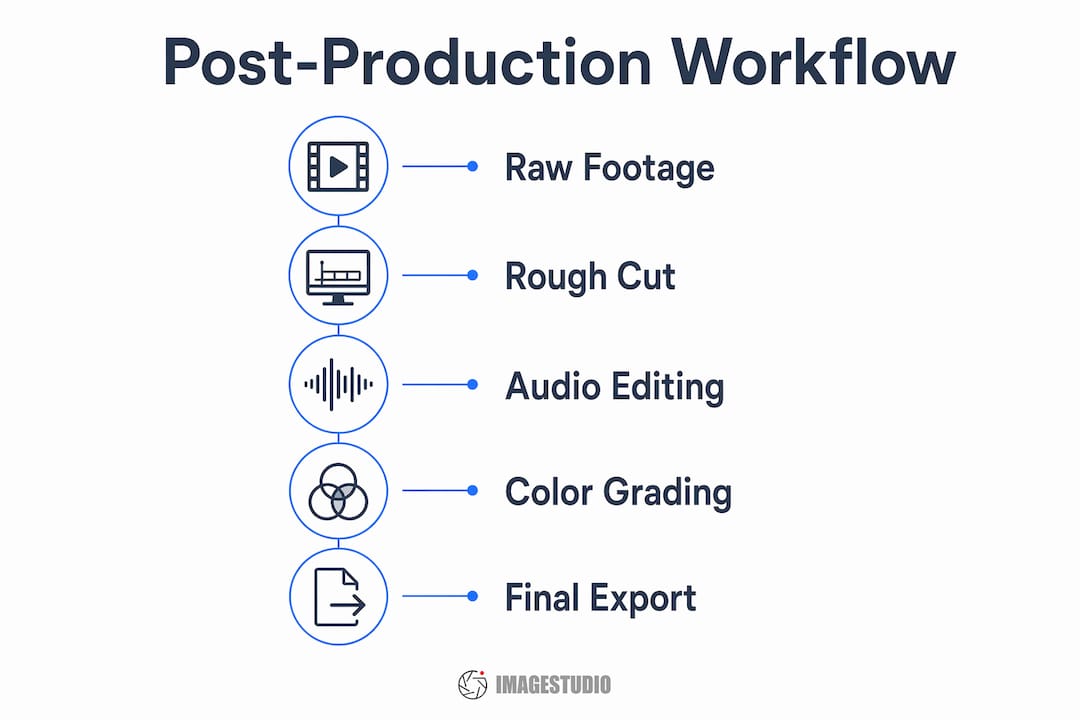
The wedding video production process moves through five distinct post-production stages, each building on the last.
Ingest and organization (1 to 2 days). All footage from multiple cameras, drones, and audio recorders is synced, labeled, and organized into a logical folder structure. This step removes chaos from the edit and sets up every subsequent stage for efficiency. Skipping proper organization is one of the most common causes of delayed delivery.
Rough cut (2 to 3 weeks). This is where the story is built. The editor selects the strongest moments, arranges them into a narrative arc, and establishes pacing. According to the rough cut phase, editors prioritize preserving emotional rhythm by selecting key beats and layering ambient sounds beneath music. The rough cut is the heart of the entire process.
Audio cleanup and mixing (2 to 3 days). Vow recordings, speeches, and ambient sound are cleaned, balanced, and mixed against the music track. This stage fixes microphone inconsistencies and room acoustics issues that are invisible during filming but obvious on playback.
Color grading (3 to 5 days). Every shot is color corrected for consistency and then graded to create a specific mood or visual style. This is what gives cinematic wedding films their distinctive look, whether warm and golden or cool and moody.
Final export and delivery (1 to 2 days). The finished film is exported in multiple formats optimized for streaming, download, and archival storage. Quality control checks happen here to catch any last technical issues before the film reaches you.
Pro Tip:Ask your videographer to share a rough cut timeline before you sign a contract. Knowing when to expect each milestone prevents anxiety and sets realistic expectations for both sides.
Why audio and color grading define the cinematic feel
Audio quality is the single most reliable predictor of long-term client satisfaction in wedding films. That finding surprises most couples, who tend to focus on visual quality when evaluating videographers. The reason is simple: poor audio pulls you out of the moment, while great audio makes you forget you are watching a video at all.
The challenges editors face with audio are real and consistent across every wedding.
Lapel microphones pick up fabric rustling, wind, and ambient crowd noise that must be cleaned frame by frame.
Church acoustics create reverb that makes vows sound distant and echoey without correction.
DJ or band music bleeds into ceremony recordings and must be carefully separated from dialogue.
Multiple audio sources recorded at different levels need to be normalized so the film does not jump in volume.
Music selection and sync timing must feel emotionally matched to the visual story, not just technically aligned.
Color grading carries equal weight on the visual side. A skilled colorist using DaVinci Resolve can take footage shot in flat, log color profiles and transform it into a film with consistent warmth, depth, and visual identity. The grade also corrects for mixed lighting conditions, which are common at receptions where candlelight, uplighting, and DJ strobes all compete in the same frame.
“The best wedding films feel like they were always meant to look and sound exactly that way. That is not an accident. It is the result of hours of deliberate audio and color work that most couples never see.”
Couples should evaluate videographers by audio and color consistency across their portfolio, not just the highlight reel moments. A beautifully graded film with muddy audio will feel disappointing on every rewatch.
How do wedding video packages compare by post-production complexity?
The package you choose directly determines how much post-production work goes into your film. Post-production effort scales with the number and length of deliverables, and most couples receive two to three finished films as part of their package. Understanding this relationship helps you budget time and money more accurately.
Package type
Deliverable length
Estimated post-production time
Highlight film only
5 to 8 minutes
3 to 4 weeks
Highlight + ceremony edit
5 to 8 min + 20 to 45 min
5 to 7 weeks
Highlight + ceremony + full day
5 to 8 min + 20 to 45 min + 45 to 90 min
8 to 12 weeks
Multi-camera full production
90+ minutes across formats
12 to 16 weeks
The highlight film is always the signature piece. It requires the most creative judgment because the editor must compress an entire day into eight minutes without losing emotional continuity. Ceremony edits are longer but more linear, following a natural sequence with less creative restructuring. Full-day edits are the most time-intensive because they require consistent pacing across 90 or more minutes of finished content.
Rush deliveries often require scope compromises or skipping finishing passes, meaning you may receive a film that lacks the color depth or audio polish of a standard timeline delivery. Multi-camera sync, story structuring, audio and color finishing, and review cycles all require sufficient time to produce quality work. Turnaround is constrained by editing depth, not just scheduling.
Pro Tip:If you need your film for a specific event, like a first anniversary or a family gathering, tell your videographer at the time of booking. Building that deadline into the contract is far more effective than requesting a rush edit after the wedding.
How do professional post-production workflows ensure quality?
A structured post-production workflow removes guesswork and prevents the kind of delays that frustrate couples and overwhelm editors. The best videographers and studios treat the wedding video editing process as a repeatable system, not a creative free-for-all. That consistency is what allows them to deliver high-quality films across dozens of weddings per year without burning out or cutting corners.
Professional workflows share several defining characteristics.
A single dedicated editor manages the full film from rough cut to delivery, producing a more cohesive story arc and consistent style than a team handoff approach.
Style guides and reference films are used at the start of every project to align the editor’s creative direction with the couple’s expectations before a single cut is made.
Providing reference films and exact color grading presets helps speed alignment and reduces revision cycles significantly. Couples who supply one to two reference films and preset files help editors deliver the desired look more efficiently.
Review checkpoints are built into the timeline so couples can give feedback at the rough cut stage rather than after full color and audio work is complete.
Outsourcing post-production to a dedicated editing partner ensures faster delivery and expert storytelling without burnout, preserving creative freedom and consistent style across the studio’s entire portfolio.
Seasonality also matters. Wedding videographers working peak season from May through October often have multiple films in post-production simultaneously. Studios that rely on a single in-house editor during this period are more likely to experience delays than those with a dedicated post-production workflow or trusted editing partner. When you are evaluating videographers, asking how they manage post-production during peak season is a completely reasonable question, and the answer tells you a lot about their professionalism.
The cinematic storytelling that defines the best wedding films is not created on the wedding day. It is built in the edit, frame by frame, through decisions about what to keep, what to cut, and how to sequence moments so they land with maximum emotional impact.
Key takeaways
Post-production is the stage that separates a raw recording from a cinematic wedding film, and its quality depends entirely on the depth of the workflow behind it.
Point
Details
Post-production defines the film
Editing, audio, and color grading transform raw footage into a cohesive emotional story.
Audio quality predicts satisfaction
Couples should evaluate vendors by audio and color consistency, not just visual highlights.
Package choice affects timelines
Longer deliverables require significantly more post-production time, up to 12 to 16 weeks.
Structured workflows prevent delays
Style guides, reference films, and dedicated editors reduce revisions and speed delivery.
Rush edits compromise quality
Skipping finishing passes to meet tight deadlines results in films that lack polish and depth.
Why post-production is the part of your wedding film that matters most
I have spent years watching couples focus almost entirely on the filming day when they evaluate wedding videographers. They ask about cameras, drones, and how many hours of coverage they get. Those things matter, but they are not what makes a wedding film worth watching ten years later.
What I have found, working across hundreds of productions, is that the editing room is where the real storytelling happens. A technically perfect shooting day can produce a forgettable film if the editor does not understand how to build emotional momentum. Conversely, footage shot in challenging conditions can become something genuinely moving when the right editor shapes it with care and intention.
The misconception I hear most often from couples is that post-production is just “cleaning up” the footage. It is not. It is the process of deciding what your story is and how it should feel. That requires both technical skill and genuine creative vision, and it takes time. When a videographer quotes you an eight-week turnaround, they are not being slow. They are being thorough.
My honest advice: when you are choosing a videographer, ask to see the same wedding in rough cut and final form if possible. That comparison will show you more about their post-production skill than any highlight reel ever will. Also ask how they handle wedding video budgeting relative to post-production time, because the best editors are not cheap, and their time is where your money actually goes.
The couples who end up most satisfied with their wedding films are the ones who understood from the start that the day of filming is only the beginning.
— Image Studio
How Imagestudio brings your wedding film to life
Imagestudio has spent over 14 years crafting cinematic wedding films that couples and their families return to again and again. With more than 250 productions and over 150 million views across their portfolio, the team brings the same post-production depth to every wedding film that has earned recognition from National Geographic and prestigious film festivals worldwide.
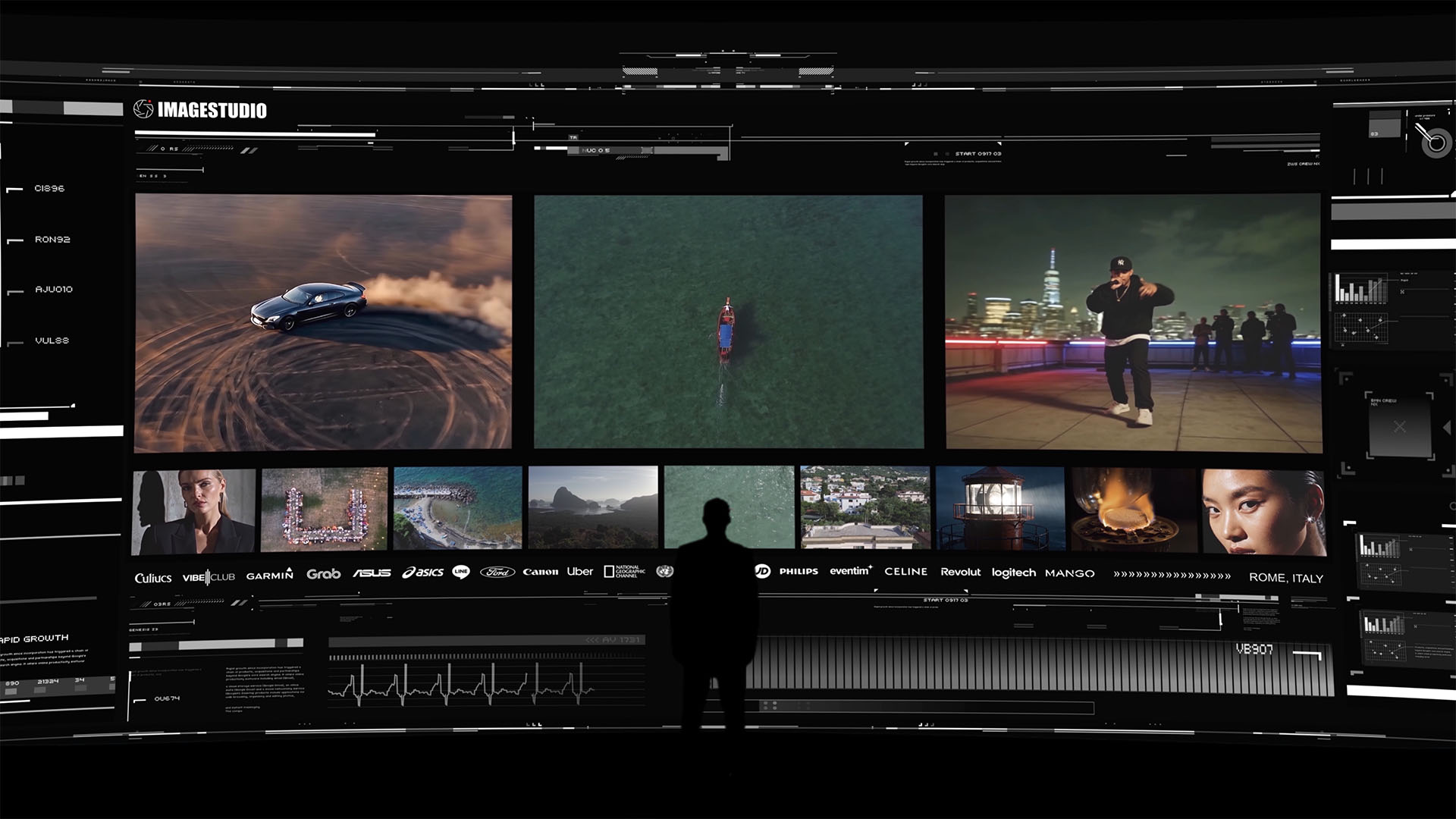
A high-end cinematic portfolio experience by Image Studio featuring automotive visuals, aerial cinematography, urban storytelling, and premium brand collaborations.
Every Imagestudio wedding film moves through a structured post-production workflow covering rough cut storytelling, professional audio mixing, and DaVinci Resolve color grading, all managed by a dedicated editor who knows your style from day one. Packages are tailored to your vision, whether you need a five-minute highlight film or a full-day cinematic edit. Turnaround timelines are built into every contract so you always know where your film stands. Explore Imagestudio’s cinematic film production services and see what thoughtful post-production looks like in practice.
FAQ
What does post-production include in a wedding video?
Post-production includes footage organization, rough cut editing, audio cleanup and mixing, color grading, and final export. The full process typically takes 8 to 12 weeks depending on the package and number of deliverables.
Why does wedding video editing take so long?
Editing depth drives turnaround time, not scheduling alone. Multi-camera sync, story structuring, audio and color finishing, and review cycles all require sufficient time, and rush deliveries often result in skipped finishing passes that reduce the final quality.
How important is audio in a wedding video?
Audio quality is the most reliable predictor of long-term client satisfaction in wedding films. Couples should evaluate vendors by audio and color consistency across their portfolio, not just the visual quality of highlight reels.
What is color grading and why does it matter?
Color grading is the process of adjusting and stylizing the color of every shot to create a consistent mood and visual identity. Tools like DaVinci Resolve allow editors to correct mixed lighting conditions and give the film a cinematic look that raw footage cannot achieve on its own.
How can couples speed up their wedding video delivery?
Providing your videographer with one to two reference films and presets at the start of the project helps align creative direction and reduces revision cycles, which is the most effective way to shorten the overall post-production timeline without sacrificing quality.