Wedding Films vs Photography: What’s the Difference for Couples?
May 31, 2026
Learn the key differences between wedding films and photography, including storytelling, emotional impact, delivery timelines and why many couples choose both.
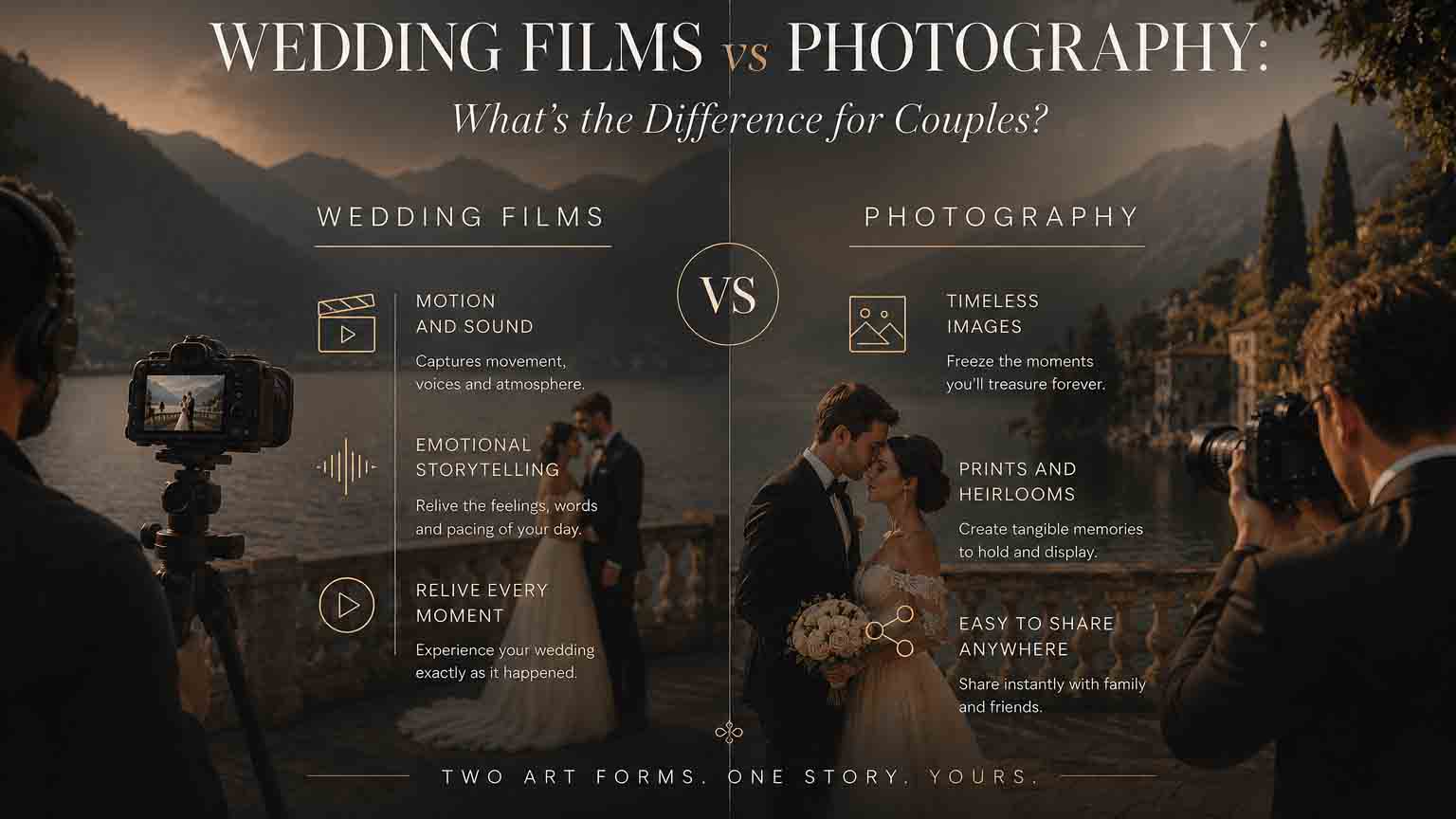
Wedding films vs photography are fundamentally different memory formats: films preserve motion, sound, and emotional pacing over time, while photography freezes single moments rich in detail and expression. Understanding why wedding films differ from photography helps you decide how to invest your media budget and what kind of memories you want to relive. Both formats serve distinct emotional needs, and videography and photography are not competing choices but complementary ones. The format you prioritize shapes everything from vendor selection to delivery timelines to how your family experiences your wedding story for decades to come.
Why wedding films differ from photography in production
The gap between wedding films and wedding photography starts long before the editing suite. These two crafts use entirely different equipment, workflows, and creative logic on the day itself.
Wedding videography, known in the industry as cinematic wedding filmmaking, relies on multi-camera setups, dedicated audio rigs, and real-time narrative awareness. A videographer is tracking pacing, capturing ambient sound, and thinking in sequences. A photographer is hunting for the decisive moment: the glance, the tear, the laugh frozen in a single frame. Both require extraordinary skill, but the creative muscle they use is completely different.
Here is what separates the two production processes:
Equipment: Videographers use cinema cameras, gimbals, sliders, and external audio recorders. Photographers rely on high-resolution DSLRs or mirrorless bodies with fast prime lenses optimized for low light and speed.
Audio capture: Multiple audio sources must be synced and polished in post-production for wedding films. Photography has no audio component at all.
Post-production scope: A 5-minute highlight film can require 15 to 30 hours of editing due to multi-angle footage, audio syncing, color grading, and music licensing. Photography editing focuses on color correction and culling large image sets.
Narrative building: Video editing builds an audio-visual narrative with pacing and music sync. Photo editing selects and retouches stills for emotional coherence.
Pro Tip:Ask your videographer how many cameras they deploy and whether they use a dedicated audio technician. A two-camera minimum with a separate sound recordist is the standard for cinematic wedding films worth rewatching.
Photographers, meanwhile, shoot between 2,000 and 6,000 images across a wedding day, then curate a final gallery of 500 to 1,200 images. That curation process is where the real artistry lives. A great photographer does not just deliver volume. They deliver a gallery that tells a coherent visual story from getting ready to the last dance.
How do wedding films and photography create different emotional experiences?
The emotional payoff of each format is genuinely distinct, and this is where most couples find their answer about which to prioritize.
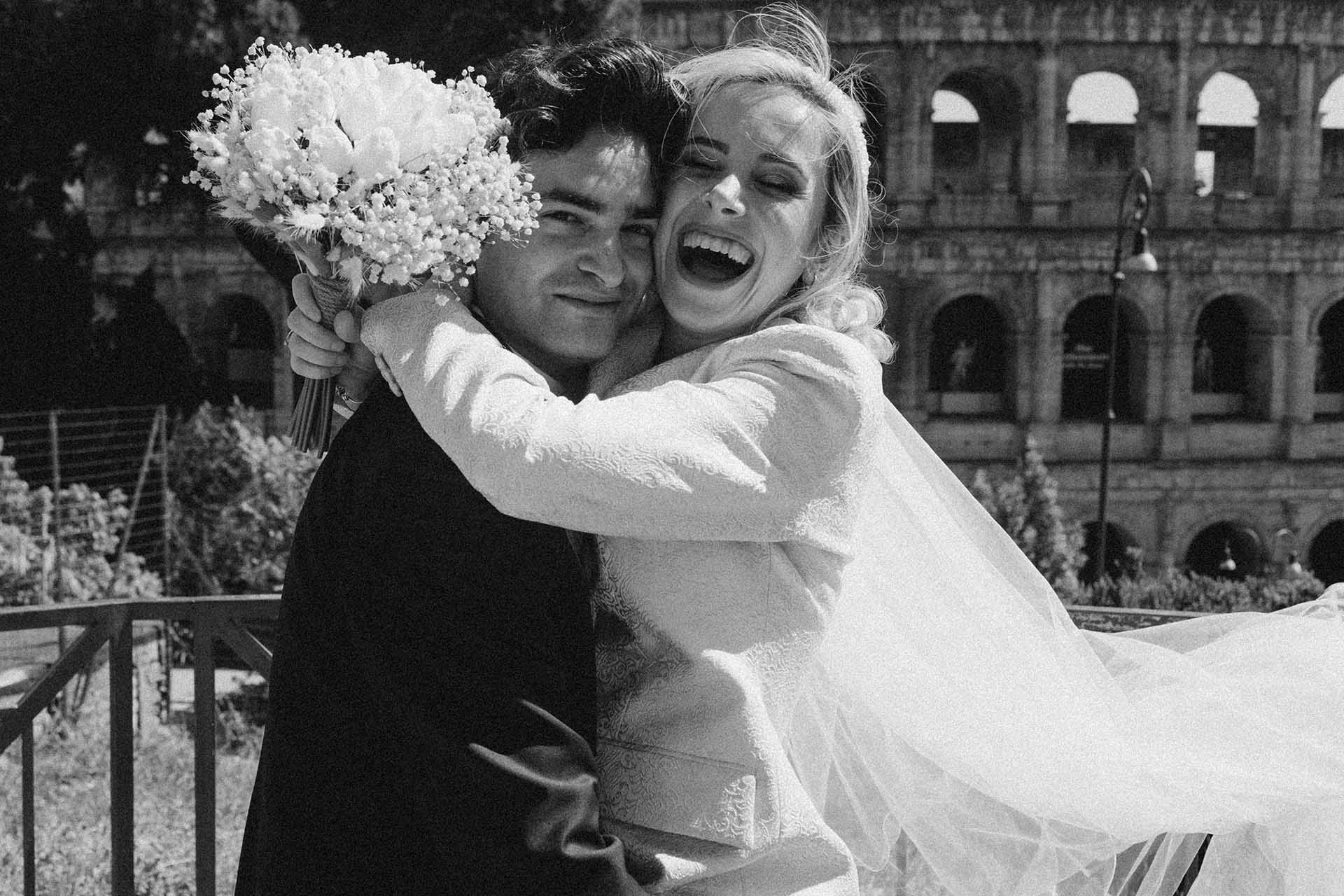
Unfiltered joy in the heart of Rome
Video lets couples re-experience the day with sound and pacing in a way that photography simply cannot replicate. When you press play on your wedding film, you hear your partner’s voice cracking during vows. You hear your best friend’s speech land the joke that made the whole room erupt. You feel the rhythm of the day unfold exactly as it did. That immersive quality is the defining benefit of wedding videos.
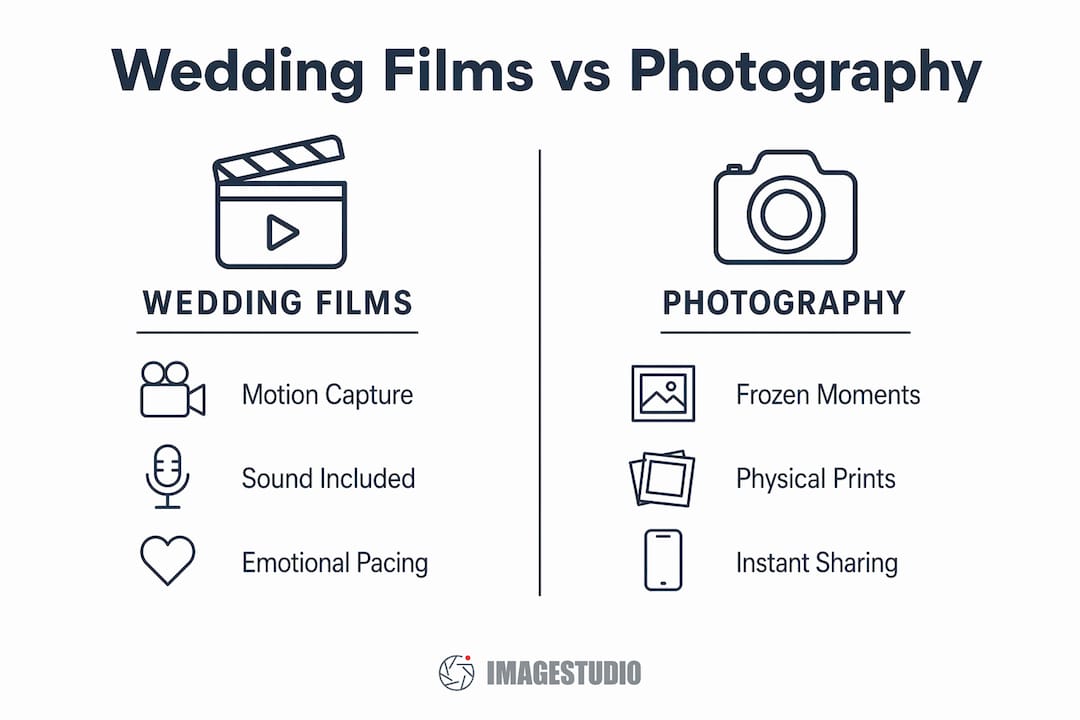
A visual comparison of wedding films and photography, highlighting the unique strengths of cinematic storytelling and timeless imagery.
Photography delivers something equally powerful but through a different channel. A single photograph of your grandmother watching you walk down the aisle can carry decades of meaning in one frame. Photos are browseable, shareable, printable, and displayable. They live on walls, in albums, and in texts sent to relatives who could not attend.
Here is how the emotional experience breaks down across four key dimensions:
Immersion: Films create a full sensory re-entry into the day. Photos create a curated visual archive you can move through at your own pace.
Shareability: Photos are instantly shareable via galleries, social media, and prints. Films require a screen and a few minutes of intentional viewing time.
Longevity of impact: Many couples report that their wedding film becomes more emotionally significant over time, especially after losing a loved one whose voice is captured in it.
Family accessibility: Grandparents and older relatives often connect more deeply with printed photos. Younger family members gravitate toward the film.
Photography freezes moments while videography unfolds them over time, allowing you to relive speeches, reactions, and emotional pacing. Neither format is superior. They simply speak to different parts of how humans store and revisit memory.
What types of wedding films and photos are commonly offered?
Knowing the deliverable formats helps you set realistic expectations and choose vendors whose style matches your vision.
Format
Wedding Films
Wedding Photography
Short highlight
Cinematic highlight film, 4 to 15 minutes, story-driven
Social media teaser gallery, 20 to 50 curated images
Full coverage
Traditional long-form video, 1 to 3 hours, full ceremony and reception
Full wedding gallery, 500 to 1,200 edited images
Specialty add-ons
Drone aerial footage, same-day edit, social reels
Fine art prints, luxury albums, engagement session
Delivery format
Streaming link, private video platform, USB drive
Online gallery, digital download, printed album
Cinematic highlight films run 4 to 15 minutes and function as curated story reels. Traditional long-form videos run 1 to 3 hours and act more like a time capsule of the full event. This distinction matters because it affects how often you actually rewatch your film. Most couples watch a 6-minute highlight film dozens of times. A 2-hour traditional video gets watched once or twice.
Photography deliverables follow a parallel logic. A luxury printed album from a studio like Imagestudio is a physical heirloom designed to last generations. A digital gallery is practical and shareable but lacks the tactile permanence of a printed book. The editing style of your photographer, whether editorial, documentary, or fine art, shapes how the gallery reads as a complete story. You can explore how cinematic storytelling applies to both photography and film to understand how the two crafts can share a visual language even while serving different purposes.
What should couples know about delivery timelines?
Delivery timelines for wedding films and photography differ significantly, and knowing what to expect prevents frustration after your wedding day.
Deliverable
Typical Turnaround
Factors That Affect Timeline
Wedding film highlight
8 to 12 weeks
Editing complexity, audio syncing, music licensing
Traditional long-form video
12 to 20 weeks
Volume of footage, solo vs. studio editor
Wedding photo gallery
4 to 8 weeks
Number of images, editing style, photographer workload
Sneak peek photos
24 to 72 hours
Photographer’s workflow and contract terms
Wedding films typically deliver in 8 to 12 weeks, but solo videographers during peak season can take 4 to 7 months. That range is not a red flag on its own. It reflects the genuine complexity of building a narrative film from hours of raw footage. A studio with a dedicated editing team will almost always deliver faster and more consistently than a solo operator juggling 30 weddings a season.
Photography galleries typically arrive in 4 to 8 weeks, though many photographers offer sneak peeks within 48 to 72 hours. The extensive curation process of selecting images for emotional storytelling, not just volume, is what drives that timeline. A photographer who delivers 1,200 images in a week has likely not curated them with the same care as one who takes three weeks to deliver 700 perfectly edited frames.
Pro Tip:Before signing any contract, ask your videographer and photographer for their average delivery time during peak season, not their best-case scenario. Also ask whether a sneak peek is included and what format it arrives in.
Turnaround time is influenced by seasonal demand and editing workflow capacity. If your wedding falls between May and October, you are competing with dozens of other couples for your vendor’s editing time. Booking a studio with multiple editors on staff, rather than a solo freelancer, is the most reliable way to protect your timeline.
Key takeaways
Wedding films and photography serve different memory needs: films capture motion and sound while photography preserves detail and expression in still frames, and combining both creates the fullest possible wedding archive.
Point
Details
Films capture what photos cannot
Motion, spoken vows, ambient sound, and emotional pacing are exclusive to video.
Photos deliver timeless shareability
Still images are printable, displayable, and instantly shareable across generations.
Post-production complexity differs
A 5-minute film can require 15 to 30 hours of editing; photo galleries take 4 to 8 weeks.
Delivery timelines vary widely
Wedding films average 8 to 12 weeks; solo videographers may take up to 7 months in peak season.
Both formats are complementary
Combining films and photography produces a fuller, richer wedding memory archive.
My honest take on choosing between films and photos
After working with couples across hundreds of projects, I have noticed a consistent pattern: the couples who skip the wedding film almost always wish they had one. The couples who skip photography almost never do. That asymmetry tells you something important about how humans actually use these two formats after the wedding.
Photos get framed. They get texted to family members. They become the profile picture someone uses for years. Films get watched on anniversaries, shared with children, and played at memorial services when a grandparent who gave a speech is no longer around. The emotional weight of hearing a voice again is something no photograph can replicate.
My advice is to think about your own relationship with memory. Do you tend to rewatch videos of meaningful moments, or do you gravitate toward photos? If you are someone who has never voluntarily rewatched a home video in your life, a cinematic highlight film might not resonate the way a stunning photo album will. But if you are the person who still watches family videos from childhood, a wedding film will become one of your most treasured possessions.
The most practical approach is to budget for both, even if it means choosing a slightly less elaborate package for each. A mid-tier cinematic film paired with a strong editorial photographer will serve you far better than a premium package in only one format. And always discuss videography budget planning early in your vendor search so the numbers do not catch you off guard.
— Image Studio
Luxury Wedding Photography and Films for Destination Weddings in Italy
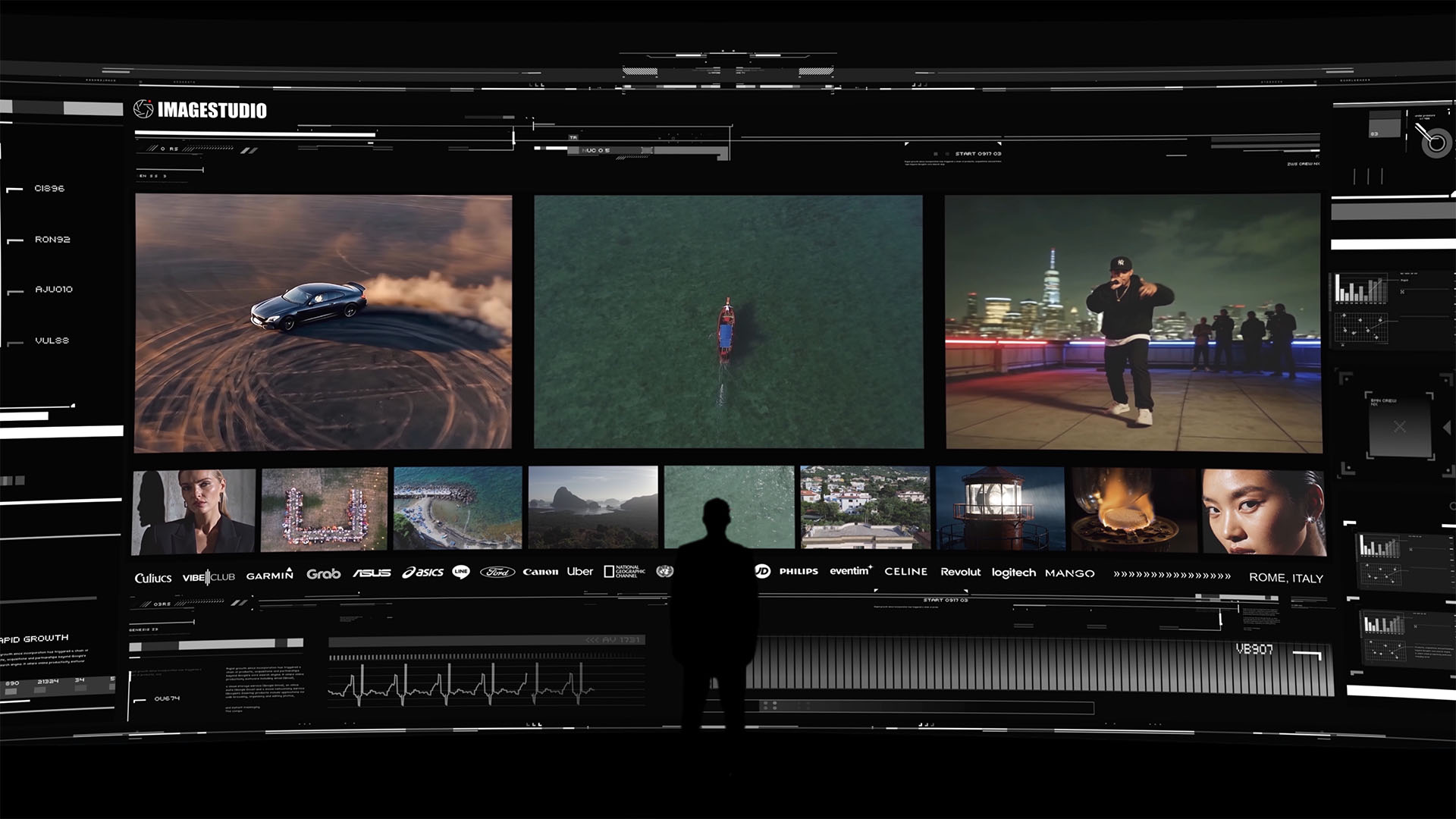
A high-end cinematic portfolio experience by Image Studio featuring automotive visuals, aerial cinematography, urban storytelling, and premium brand collaborations.
Imagestudio brings over 14 years of cinematic production experience to wedding films and photography, with a dedicated editing team that consistently delivers within the 8 to 12 week window even during peak season. Their wedding film production process covers everything from multi-camera setups and professional audio capture to color grading and music-licensed final cuts. On the photography side, Imagestudio’s editorial approach treats every gallery as a visual story, not just a collection of images. Whether you want a 6-minute cinematic highlight film, a full-length ceremony record, or a luxury photo album worthy of a coffee table, Imagestudio builds a media plan around your specific vision. Reach out for a personalized consultation and see how their wedding services can cover every memory format your day deserves.
FAQ
What is the main difference between wedding films and photography?
Wedding films preserve motion, spoken words, ambient sound, and emotional pacing, while photography captures single moments as still images rich in detail and expression. The two formats serve different memory needs and work best when used together.
How long does a wedding film take to deliver?
Wedding films typically deliver in 8 to 12 weeks, though solo videographers during peak season may take 4 to 7 months. Always confirm the expected turnaround and sneak peek availability before signing a contract.
Do I need both a videographer and a photographer?
Videography and photography are complementary, not interchangeable. They capture the same day through different memory layers: still images versus motion and sound. Combining both produces the most complete wedding archive.
What is a cinematic highlight film?
A cinematic highlight film is a short, story-driven wedding film running 4 to 15 minutes, edited with music, pacing, and narrative structure. It differs from a traditional long-form video, which runs 1 to 3 hours and documents the full ceremony and reception.
Why does wedding video editing take so long?
Video editing requires building an audio-visual narrative with pacing, music sync, color grading, and multi-angle footage assembly. A single 5-minute highlight film can take 15 to 30 hours to complete, which is why turnaround times are measured in weeks rather than days.