Destination Wedding Photography: A Cinematic Guide
July 27, 2026
Discover everything you need to know about destination wedding photography, from planning and pricing to cinematic storytelling, editorial style, travel logistics, and choosing the right photographer. Learn how luxury destination wedding photography transforms a multi-day celebration into a timeless visual narrative
Destination wedding photography is professional wedding documentation created by a photographer who travels to capture a wedding outside their home city or country. It is not simply a location change — it is a fundamentally different scope of work: multi-day storytelling, travel-based logistics, and a cinematic and editorial creative approach that transforms a wedding weekend into a lasting visual narrative. Imagestudio, led by Dimitri, brings extensive production-grade experience and numerous projects to this discipline, with collaborations including National Geographic that signal the level of craft these productions demand.
Table of Contents
How destination wedding photography differs from local work
What creative styles define luxury destination work?
Planning and executing a destination shoot: the production checklist
What does the production timeline and deliverables look like?
How pricing is typically structured for destination work
Technical challenges and how to handle them
What to look for in destination portfolios and rights agreements
How do you choose the right destination wedding photographer?
Key Takeaways
Why the “just hire someone local” logic misses the point
Imagestudio’s approach to cinematic destination coverage
How destination wedding photography differs from local work
Where a local photographer arrives for a ceremony and reception, a destination photographer steps into a multi-day production. That means covering welcome dinners, rehearsal events, the ceremony, and farewell brunches — building a weekend-long story rather than a single-day highlight. The operational demands shift dramatically too.
Travel logistics: flights, visas, customs declarations for gear, and time-zone adjustments all require planning weeks in advance.
Venue scouting: without local knowledge, the photographer must research lighting conditions, access points, and permit requirements remotely or via a pre-trip scout.
Cultural sensitivity: international destinations bring different traditions, dress codes, and ceremony structures that shape every creative decision.
Extended crew needs: multi-day coverage often requires a second shooter or production assistant, which affects both budget and creative coordination.
Guest travel dynamics: most guests are also traveling, which creates a more relaxed, resort-style atmosphere that opens up candid storytelling opportunities.
Hiring a photographer who travels with the couple preserves a consistent creative vision across every event. A local-only hire often meets the couple for the first time on the wedding morning, which can reduce the narrative intimacy that makes destination coverage feel cohesive.
Pro Tip:Bring your own assistants and core equipment rather than sourcing locally. Local rental gear varies in quality and compatibility, and a crew member who already knows your workflow will protect the creative outcome when conditions change fast.
What creative styles define luxury destination work?
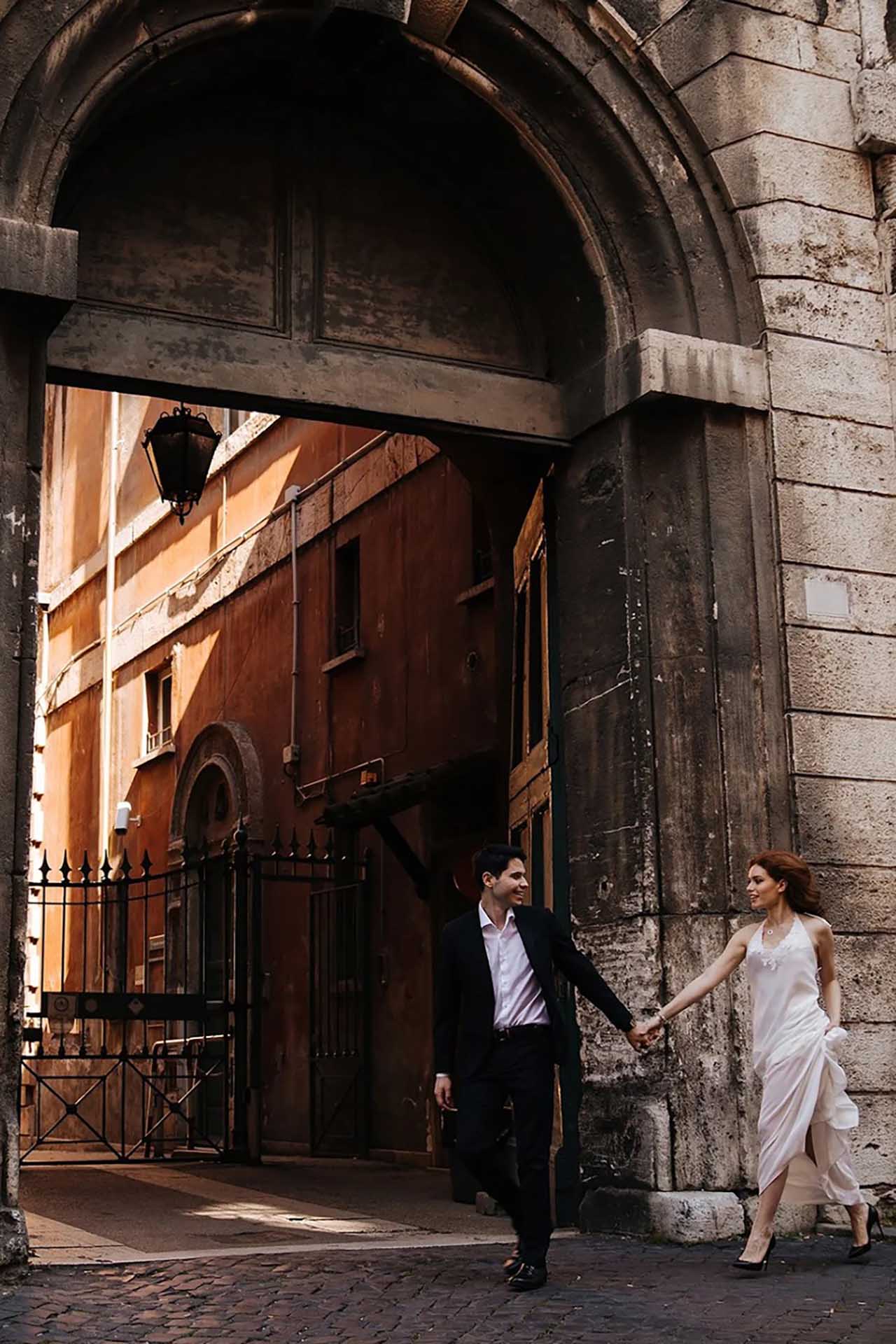
Luxury destination wedding photography sits at the intersection of editorial photography and cinematic filmmaking. Editorial sensibility means composed frames, intentional pacing, and images that could hold their own in a magazine spread. Cinematic storytelling adds movement, sound-aware sequencing, and color grading that gives the final film an emotional arc rather than a chronological record.
The hallmarks of high-end destination imagery are specific: deliberate use of golden hour and blue hour light, wide environmental frames that place the couple inside the landscape, tight portrait sequences with shallow depth of field, and motion-driven film sequences that carry the emotional weight of the day. Deliverables lean toward heirlooms — curated galleries, cinematic highlight films, and storytelling albums — rather than raw image dumps.
A short editorial and cinematic shot list for a destination weekend might include:
Wide establishing shots of the venue at golden hour
Detail sequences: florals, place settings, dress and accessories
Ceremony coverage from multiple angles, including drone aerials where permitted
Portrait sessions timed to the best ambient light of the day
Reception speeches and first dance in available light, supplemented by portable fill
Photographers who are unfamiliar with a venue often see creative possibilities that local vendors overlook — a fresh perspective that is one of the genuine benefits of destination photography.
Imagestudio’s approach, led by Dimitri, applies film-production-grade thinking to every destination weekend: pre-production calls, location research, and a shot list built around the couple’s visual language.
Planning and executing a destination shoot: the production checklist
Pre-trip scouting and client conversations are often the single biggest predictor of a smooth destination shoot. They reduce surprises and align the creative team with the couple’s priorities before anyone boards a plane.
Pre-trip checklist:
Confirm travel documents: passports, visas, and any gear import permits or carnets.
Research location permits for photography and drone use at the venue and surrounding areas.
Complete a remote or in-person scout to map golden hour positions, ceremony light, and contingency indoor spaces.
Coordinate with local vendors (florists, planners, caterers) to align on timing and access.
Build a detailed travel itinerary with buffer time before the first shoot day.
Confirm crew roles, equipment assignments, and communication protocols.
On-site workflow essentials:
Establish a daily setup cadence: gear check, battery charge, and card format before every shoot block.
Stage key portrait moments for golden hour; build a 15-minute buffer into every transition.
Identify a weather contingency location for every outdoor setup.
Run dual-card recording on all camera bodies throughout the event.
Phase
Key Actions
Timing
Pre-production
Scouting, permits, client calls, crew briefing
4 weeks before travel
Travel day
Gear check, customs, location arrival
1–2 days before first event
Shoot days
Multi-day coverage, daily backups
Wedding weekend
Post-production
Culling, editing, color grading, delivery
4 weeks after travel
What does the production timeline and deliverables look like?
A well-structured destination wedding production follows a clear schedule from first contact to final delivery.
Milestone
Client Touchpoint
Pre-production call
Creative brief, shot list approval
Travel and arrival
Venue walkthrough with couple
Welcome events
First coverage day, candid storytelling
Ceremony day
Full coverage, ceremony and portraits
Farewell brunch
Final coverage, wrap
Post-production week 2
Sneak-peek gallery (up to 20 images)
Post-production week 6
Full gallery review and feedback round
Final delivery
Edited gallery, highlight film, album files
Standard deliverables for high-end destination coverage include:
Curated edited gallery (300–600 images depending on days covered)
Social media cutdowns (60–90 seconds, vertical and horizontal formats)
Behind-the-scenes content for the couple’s personal use
Heirloom album design files
Optional: full ceremony edit, extended documentary film
Clients who prioritize legacy imagery over a simple event record consistently invest in the album and cinematic film combination. Those two deliverables carry the emotional weight of the weekend long after the event itself.
How pricing is typically structured for destination work
Destination wedding photography pricing has more moving parts than a local quote, and transparency on every line item protects both the studio and the client.
Core pricing components:
Base day rate (per photographer, per day of coverage)
Travel fees: flights, ground transport, and travel-day rates
Accommodation and per-diem (meals, incidentals)
Assistant or second-shooter day rates
Equipment insurance and gear transport costs
Licensing fees for commercial or editorial use
Post-production rates (editing, color grading, album design)
Essential contract clauses to include:
Travel cancellation and rebooking policy (who absorbs costs if dates shift)
Force majeure terms covering weather, political events, or venue closures
Usage and licensing terms specifying personal vs. commercial rights
Payment schedule: deposit, pre-travel balance, and final payment on delivery
Overtime rates for coverage that extends beyond contracted hours
Vendor coordination expectations and access requirements
Pro Tip:Present travel as an explicit line item, never absorbed into the day rate. Clients who see travel costs itemized understand the value of what they are paying for — and studios that absorb travel costs quietly tend to undercharge and resent the project.
For multi-day weekends, quote each day of coverage separately and add a travel-day rate at a reduced rate (typically 50% of the standard day rate). This structure is transparent, easy to adjust, and reflects the real cost of the production. Explore how photography and film packages can be structured for combined coverage.
Technical challenges and how to handle them
Destination environments test every piece of gear and every workflow decision. The most common challenges are harsh midday sun on beaches, low-light historic chapels, variable power supplies, humidity and sand ingress, and airport customs constraints for professional equipment.
Mitigation strategies:
Use portable battery packs and voltage converters for locations with unreliable power.
Run dual simultaneous card recording on every camera body; back up to SSDs on-site each night with checksum verification.
Weatherproof camera bodies with rain covers; use sealed lens options for beach and tropical environments.
Capture audio separately for film sequences using a dedicated recorder — venue acoustics vary wildly.
File drone permits and airspace authorizations at least two weeks before travel.
Challenge
Solution
Harsh beach sun
Shoot in open shade; use diffusion panels; time portraits to golden hour
Low-light chapel
Fast primes; portable LED panels; dual ISO bodies
Variable power
Portable battery stations; voltage adapters; fully charged backups
Humidity and sand
Sealed bodies and lenses; silica gel in gear bags; daily sensor checks
Customs and gear import
Carnet documentation; itemized gear list; arrive several days early
Scouting for optimal lighting — knowing when and where golden hour, blue hour, and indoor ambient peaks occur at the destination — lets the creative team plan cinematic moments that look effortless on delivery day.
What to look for in destination portfolios and rights agreements
A strong destination portfolio shows more than beautiful images. Look for a consistent visual language across different environments, evidence of multi-day storytelling (not just ceremony shots), and technical problem-solving in challenging light. A portfolio that only shows perfect-weather beach weddings tells you nothing about how the photographer handles a dimly lit chapel or a rainy mountain ceremony.
Portfolio signals worth prioritizing:
Consistent color grading and tonal style across diverse locations
Multi-day narrative sequences, not just ceremony highlights
Evidence of low-light, indoor, and mixed-light competence
Variety of cultural and environmental contexts
Cinematic film samples alongside still galleries
On rights and licensing, the standard split for personal-use clients is full personal use with no commercial rights. For brands or editorial clients, licensing terms should specify duration, exclusivity, territory, and permitted uses. Always request a credit-line clause and clarify whether the studio retains the right to use images in their own portfolio and marketing.
Point
Details
Portfolio consistency
Visual language and color grading should hold across every environment in the portfolio.
Multi-day storytelling
Look for sequences that cover welcome events through farewell, not just ceremony highlights.
Rights clarity
Personal use is standard; commercial or editorial use requires explicit licensing terms.
Credit lines
Confirm whether the studio requires credit on published images and in what format.
How do you choose the right destination wedding photographer?
The selection process for a luxury destination photographer is a production decision, not just a taste decision. Trust signals matter as much as aesthetics.
Trust signals to evaluate:
Years of experience and number of completed destination projects
Portfolio and showreel showing multi-environment, multi-day coverage
Awards and festival recognition for cinematic work
Published client testimonials that reference logistics and communication, not just image quality
Clear, itemized contract terms and transparent travel cost policies
Questions to ask in a discovery call:
How many destination weddings have you covered, and in how many countries?
Who travels with you, and what are their specific roles?
How do you handle gear failure or a second-shooter cancellation on-site?
What is your media backup workflow during and after the shoot?
What does your post-production timeline look like, and how many feedback rounds are included?
Can you share a full multi-day gallery (not just highlights) from a past destination project?
Red flags to watch for: vague deliverable descriptions, unwillingness to itemize travel costs, a portfolio that shows only one type of environment, and no clear answer on backup plans.
Pro Tip:Ask to see a complete multi-day gallery, not just a curated highlight reel. Consistency across 400 images tells you far more about a photographer’s real skill than 20 hero shots.
Key Takeaways
Destination wedding photography is a production-grade discipline that rewards studios and couples who treat it like one — with pre-production rigor, transparent pricing, and a cinematic creative vision from day one.
Point
Details
Core definition
A photographer travels to document a wedding outside their home city, covering multi-day events as a cohesive narrative.
Creative approach
Luxury destination work combines editorial photography with cinematic storytelling, producing heirloom galleries and highlight films.
Logistics essentials
Pre-trip scouting, dual-card media workflows, and itemized travel costs protect both the creative outcome and the budget.
Pricing transparency
Quote each coverage day and travel day separately; never absorb travel costs into the base rate.
Imagestudio
Imagestudio, led by Dimitri, brings extensive production-grade experience and National Geographic-level collaborations to destination wedding coverage.
Why the “just hire someone local” logic misses the point
The most common mistake creative buyers make is treating destination photography as a logistics problem to minimize rather than a storytelling opportunity to maximize. The argument for hiring locally — lower cost, no travel fees, someone who “knows the venue” — sounds practical until you consider what it actually costs in narrative terms.
A photographer who meets the couple for the first time on the wedding morning has no established creative relationship, no shared visual language, and no context for the emotional dynamics of the group. The resulting images can be technically competent and emotionally flat. That gap shows up most clearly in the film, where pacing and emotional arc depend entirely on the director’s understanding of the people on screen.
What Imagestudio and Dimitri bring to destination work is not just technical skill — it is the production-grade thinking that treats a wedding weekend the way a film director treats a shoot: with pre-production, a shot list, contingency planning, and a clear creative vision that holds across every day of coverage. The pre-wedding shoot, for instance, is not a nice-to-have — it is the session where the visual language gets established before the pressure of the wedding day arrives.
Imagestudio’s approach to cinematic destination coverage
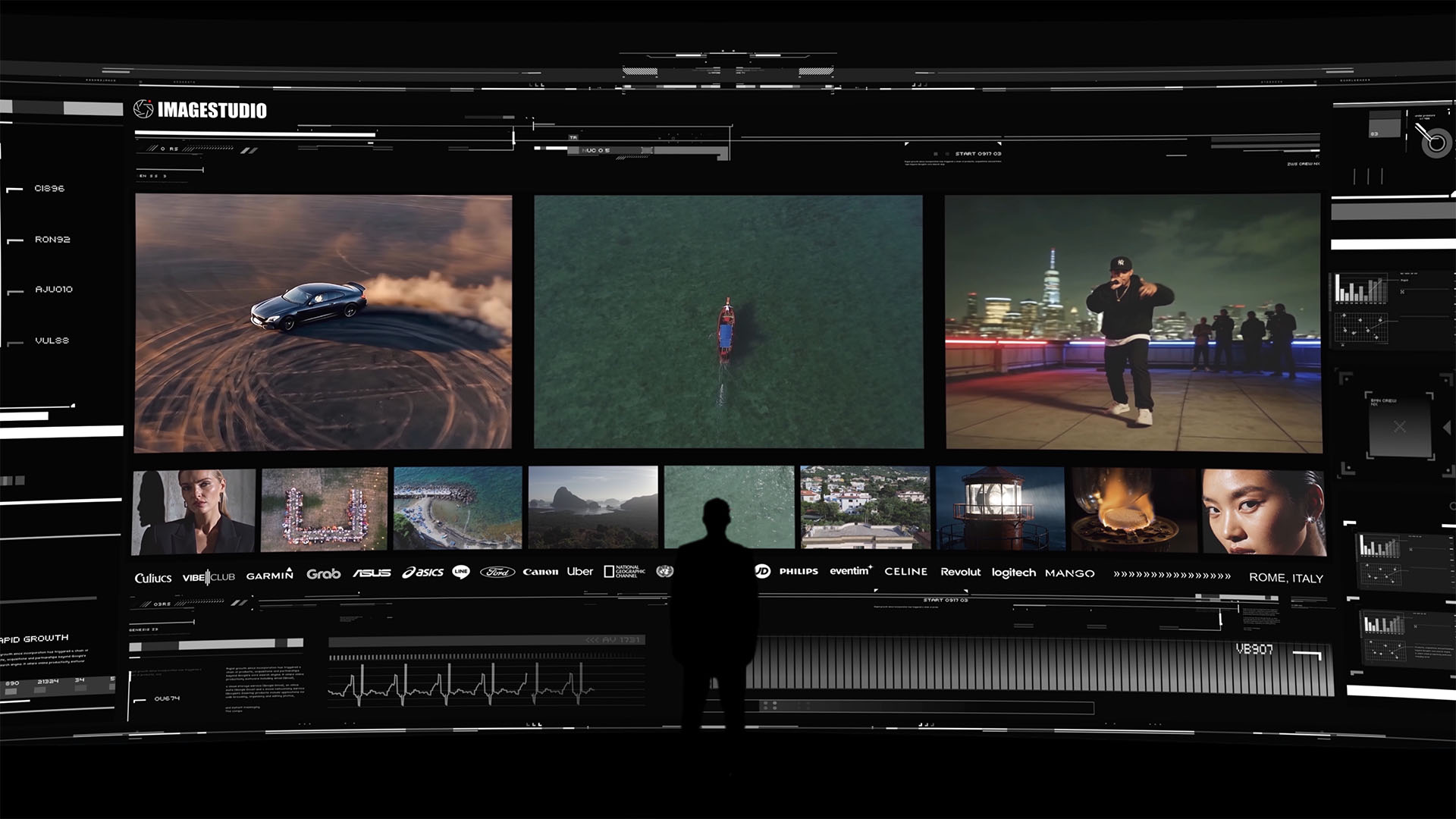
Imagestudio brings film-production-grade capabilities to destination wedding coverage — combining editorial photography, cinematic videography, and a logistics-first production mindset built across many years and numerous projects. The studio’s work has reached over 150 million views and earned recognition from prestigious film festivals, with collaborations including National Geographic that reflect the level of craft applied to every project.
A high-end cinematic portfolio experience by Image Studio featuring automotive visuals, aerial cinematography, urban storytelling, and premium brand collaborations.
For creative professionals and brands seeking destination wedding coverage that delivers heirloom imagery and a cinematic highlight film worth watching years from now, Imagestudio is the natural next step. Dimitri and the team handle the full production arc — from pre-trip scouting and permitting through post-production delivery — so the creative vision stays intact from the first call to the final frame. Visit Imagestudio’s film production services to review the showreel or request a production brief for your destination project.