
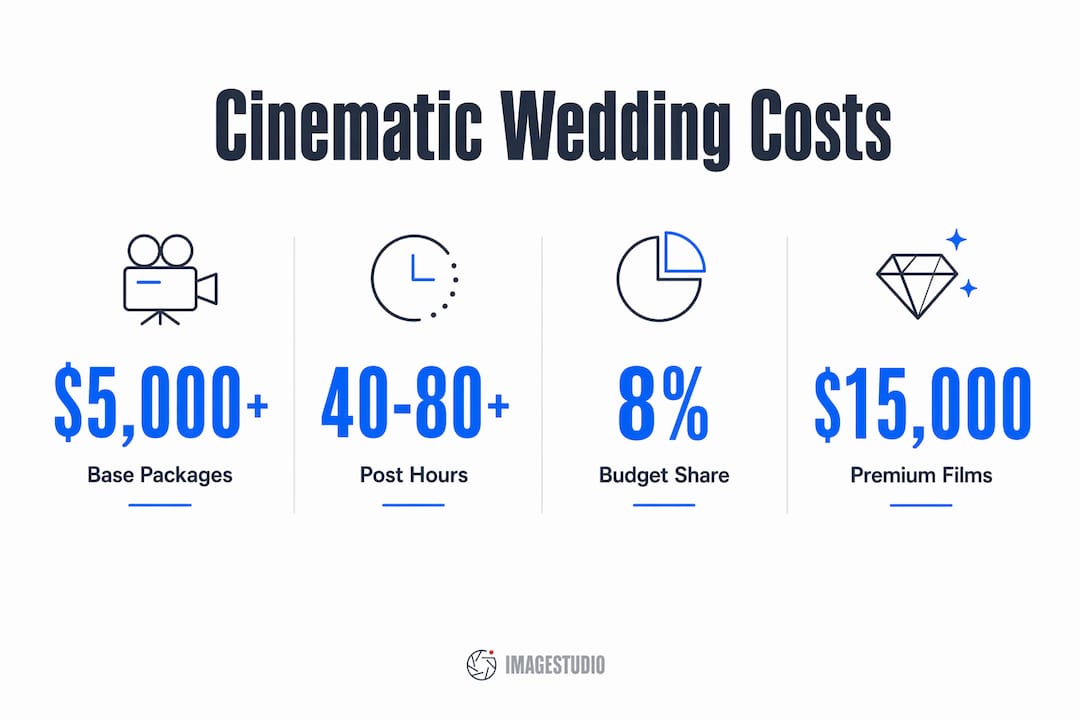
Cinematic wedding videography costs more because it combines cinema-grade equipment, multi-camera teams, professional storytelling, and 40–80+ hours of post-production to create a film-quality wedding experience.
← Back to Editorial
← Back to Editorial
Why Cinematic Weddings Cost More: a 2026 Breakdown
June 12, 2026
Cinematic wedding videography is a high-end film production process that costs significantly more than standard wedding coverage because it demands specialized equipment, multi-person teams, and 40 to 80+ hours of post-production per film. The industry term for this approach is cinematic filmmaking, and it differs fundamentally from documentary-style recording in that it prioritizes how the day felt, not just what happened. While a standard full-day videographer averages $2,500 to $5,000, cinematic packages typically start at $5,000 and can reach $15,000 or more depending on team size and deliverables. Understanding why cinematic weddings cost more helps you allocate your budget with confidence rather than sticker shock.
Why cinematic weddings cost more: the core drivers
The price gap between cinematic and standard wedding video comes down to three compounding factors: production-grade equipment, labor-intensive post-production, and the creative expertise required to direct a film rather than simply record an event. Each factor multiplies the others. A cinema-grade camera without a skilled colorist produces flat footage. A talented editor without quality source material has nothing to work with. Cinematic filmmaking is a system, and every part of that system carries a cost.
Wedding videography accounts for about 8% of the total wedding budget for most couples, with the 2026 Zola Wedding Cost Index placing average spend between $3,200 and $4,800. That figure rises sharply when couples choose cinematic production. The premium reflects real, measurable inputs: more gear, more people, more hours, and a higher level of artistic skill at every stage.
What technical equipment and gear drive cinematic wedding costs?
The gear list for a cinematic wedding shoot reads more like a film set inventory than a photography kit. Each item on that list carries purchase costs, maintenance fees, insurance, and the operator skill required to use it well.
Here is what separates a cinematic kit from a standard setup:
- Cinema-grade mirrorless and cinema cameras such as the Sony FX6, Canon EOS C70, or ARRI Alexa Mini produce the shallow depth of field and dynamic range that give cinematic films their distinctive look. These bodies cost $4,000 to $15,000 each, and most shoots require two or more.
- Fast prime lenses (35mm, 50mm, 85mm) at f/1.4 or f/1.8 create the soft background separation audiences associate with high-end films. A single quality prime lens runs $800 to $2,500.
- Gimbals and stabilization rigs like the DJI RS 3 Pro or Tilta Float allow the fluid, walking-with-the-couple shots that define the cinematic aesthetic. Dollies and sliders add further production value.
- Drone footage adds aerial perspectives that no ground-based camera can replicate. Multi-camera and drone add-ons cost $400 to $1,800 depending on permits and location. You can read more about how drone footage shapes the final film’s emotional arc.
- Professional audio systems including wireless lavalier microphones (Sennheiser EW 100, Rode Wireless GO II) and ambient recorders capture vows and speeches with broadcast-level clarity.
Pro Tip: Ask your videographer for a gear list before booking. A team shooting on cinema-grade bodies with professional audio rigs is investing in your film’s quality at every frame.
Equipment costs include ongoing maintenance, insurance, and replacement cycles. A single dropped gimbal or failed hard drive can cost hundreds of dollars to fix. Those operational costs are built into every cinematic package, and they are there for good reason.
How does post-production impact the price of a cinematic wedding film?
Post-production is where most couples underestimate the true cost of cinematic work. Editing a cinematic wedding film is not trimming clips and adding a song. It is a multi-stage creative process that can take 40 to 80+ hours per film, and that labor is the single largest line item in most cinematic packages.
Here is how that time breaks down across a typical cinematic project:
- Footage review and selects. A two-camera, full-day shoot generates 6 to 12 hours of raw footage. The editor watches everything, flags the best moments, and builds a story structure before a single cut is made.
- Narrative editing. Unlike documentary editing, cinematic editing builds emotional arcs. Vows are cut against reaction shots. The first dance is paced to musical peaks. This requires storytelling judgment, not just technical skill.
- Color grading. Achieving the warm, film-like tones associated with cinematic wedding films requires dedicated software like DaVinci Resolve and a colorist who understands how to match footage across multiple cameras and lighting conditions.
- Sound design and music licensing. Custom music scores or licensed tracks from platforms like Musicbed or Artlist cost $50 to $500 per song. Sound design layers ambient audio, music, and dialogue into a cohesive mix. More deliverables require proportionally more post-production time.
- Deliverables production. Highlight reels, full ceremony edits, same-day teasers, and social media cuts each require separate editing passes. A couple requesting four deliverables is effectively commissioning four films.
Pro Tip: When comparing packages, count the deliverables carefully. A package offering a highlight film, full ceremony edit, and same-day teaser represents three times the editing labor of a package offering only a highlight reel.
The technical complexity of cinematic post-production also demands high-end editing software, color grading suites, and sound engineering tools that represent significant ongoing workflow costs for any serious studio.
Why do multi-person teams increase cinematic wedding costs?
A solo videographer, no matter how talented, cannot be in two places at once. Cinematic storytelling requires simultaneous coverage of moments that happen in different rooms, at different angles, and at the same time. That coverage requires people.
The logistics of a multi-person cinematic team look like this:
- Dual or triple shooter setups allow one camera to cover the ceremony wide while a second captures close-up reactions and a third films the processional from a different angle. The result is a film with visual variety that a solo shooter simply cannot produce.
- Dedicated drone operators work separately from the main camera team, capturing aerial establishing shots during golden hour or the couple’s exit without pulling a primary shooter off the ground coverage.
- Second shooters at preparation coverage mean the groom’s getting-ready moments and the bride’s getting-ready moments are captured simultaneously, giving the editor rich parallel storytelling material.
- Team coordination requires a lead director who manages shot lists, communicates with the wedding planner, and keeps the team on schedule. That organizational role is a skilled position with its own fee.
Multi-person filming teams provide greater coverage and cinematic variety, but each additional shooter brings their own equipment, travel costs, and day rate. Full-day coverage of 10 or more hours compounds those costs further. The role of a wedding film director in coordinating all of these moving parts is what separates a cinematic production from a well-shot event recording.
How does artistic storytelling justify the higher price?
The most underappreciated cost driver in cinematic wedding videography is the creative preparation that happens before the wedding day even begins. Cinematic videographers act as directors, planning shots and scouting lighting ahead of the event. That preparation is billed into the package, and it is what makes the difference between a film that moves people and footage that documents them.
“Cinematic films are more than recordings. They are crafted stories designed to evoke emotion and create timeless memories.” This distinction is what couples are paying for when they choose cinematic production over standard videography.
The pre-production process for a cinematic wedding typically includes:
- Location scouting to identify the best natural light windows, architectural backdrops, and movement paths for key shots.
- Shot list development in collaboration with the couple to plan hero moments: the first look, the ring exchange, the golden hour portrait session.
- Coordination with the wedding planner to build a timeline that allows cinematic shots without disrupting the event’s natural flow. Cinematographers coordinate shot lists with event planners to optimize the day for film quality.
- Style alignment meetings where the couple shares reference films, music preferences, and emotional priorities so the editor knows what story to tell before shooting begins.
Selective storytelling is also a skill. A cinematic filmmaker chooses which moments to include and which to leave out, shaping a 5 to 8 minute film that holds emotional weight from the first frame to the last. That editorial judgment takes years to develop and is reflected in the price.
Key takeaways
Cinematic wedding videography costs more because it combines cinema-grade equipment, 40 to 80+ hours of post-production, multi-person teams, and director-level creative preparation into a single, film-quality deliverable.
| Point | Details |
|---|---|
| Equipment drives baseline costs | Cinema cameras, prime lenses, gimbals, drones, and audio systems each carry purchase, maintenance, and insurance costs. |
| Post-production is the largest labor cost | Editing, color grading, sound design, and multiple deliverables account for 40 to 80+ hours per film. |
| Multi-person teams multiply coverage | Dual or triple shooter setups capture simultaneous moments that a solo videographer cannot cover. |
| Creative preparation adds real value | Location scouting, shot lists, and planner coordination happen before the wedding day and are billed into every package. |
| Budget allocation matters | Wedding videography averages 8% of total wedding spend; cinematic packages typically start at $5,000 and scale with team size and deliverables. |
Why I think couples consistently underestimate this investment
By Dimitri
After working on hundreds of wedding films, the conversation I have most often is not about cameras or editing software. It is about time. Couples see a $8,000 package and compare it to a $2,500 package and ask what the difference is. The honest answer is: about 60 hours of skilled labor, $30,000 worth of gear, and a decade of creative judgment.
What I have found is that couples who prioritize videography in their initial budget planning, rather than treating it as a line item to trim, end up with something genuinely irreplaceable. Photos are beautiful. But a film that plays your vows back in your own voices, with the music you chose, cut to the moment your partner started crying? That is a different category of memory entirely.
My practical advice: book cinematic videographers 12 to 18 months in advance because the best teams fill their calendars early, and rushing the booking process means compromising on the creative collaboration that makes cinematic work worth the price. Have a real conversation with your filmmaker about reference films before you sign anything. Style alignment is not a luxury step. It is the difference between a film you love and a film you tolerate.
The couples I see most satisfied with their investment are the ones who came in knowing what they wanted and gave their filmmaker the creative trust to deliver it. The price is real. So is the result.
— Image Studio
See what cinematic wedding filmmaking looks like in practice
If you are planning a wedding and want to understand what a truly cinematic production looks like from first consultation to final film, Imagestudio’s team brings 14 years of experience and a multi-camera, drone-equipped approach to every project.
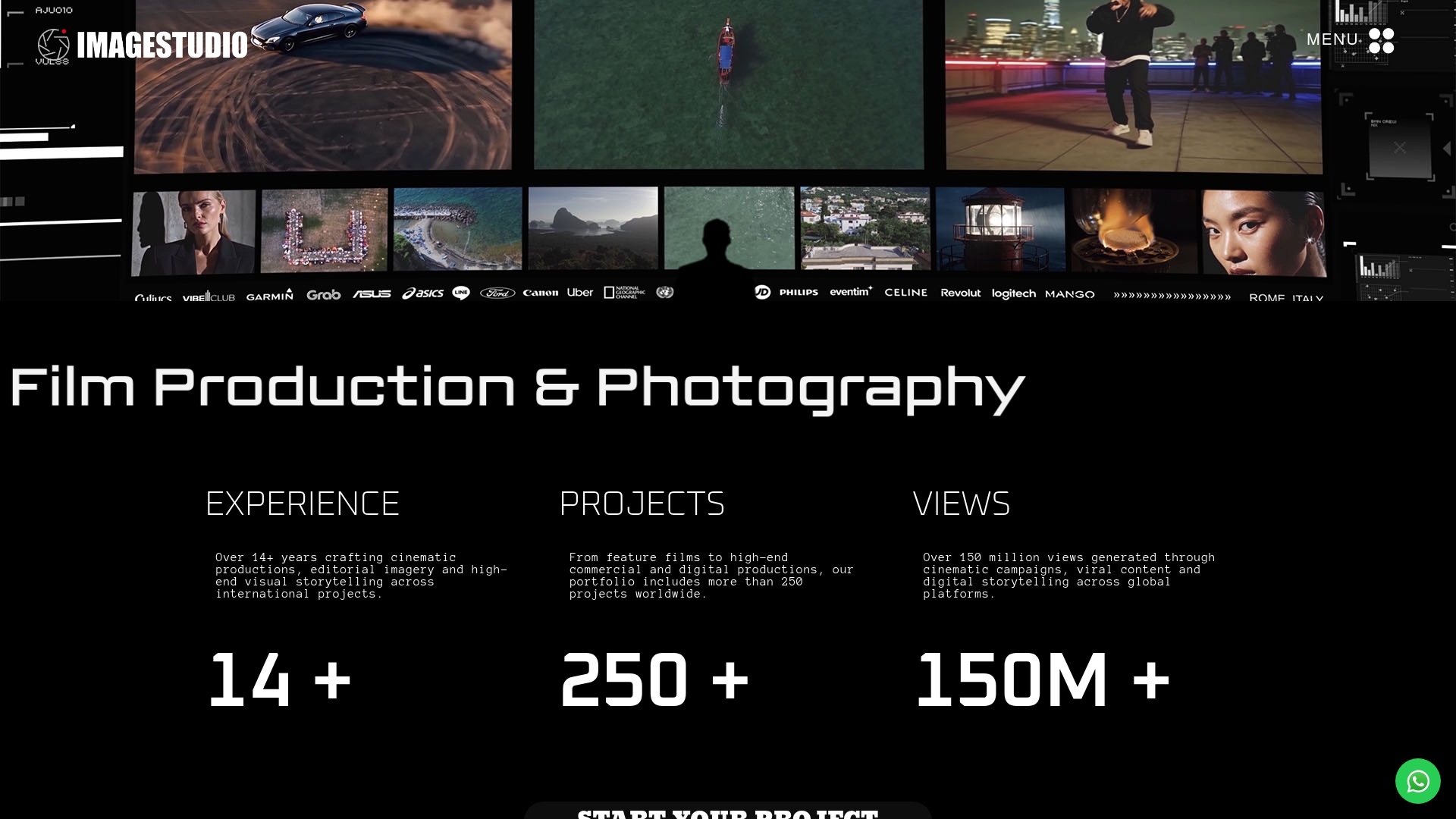
Imagestudio’s cinematic wedding film packages include multi-camera teams, licensed drone operators, full post-production with color grading and sound design, and a dedicated director who coordinates with your planner from day one. Whether you are planning an intimate ceremony or a large-scale destination wedding, the studio’s editorial approach ensures your film tells the story you actually lived. Explore packages or book a consultation at imagestudio.com/wedding to see how the process works from start to finish.
FAQ
What is cinematic wedding videography?
Cinematic wedding videography is a film production approach that prioritizes emotional storytelling, color grading, and narrative editing over simple event documentation. It uses cinema-grade cameras, multi-person teams, and 40 to 80+ hours of post-production to create a film-quality final product.
How much does a cinematic wedding video cost?
Cinematic wedding packages typically range from $5,000 to $15,000 or more, compared to a national median of around $2,400 for standard videography. The final price depends on team size, coverage hours, drone usage, and the number of deliverables included.
Why does post-production cost so much for cinematic films?
Post-production for a cinematic wedding film involves narrative editing, color grading in software like DaVinci Resolve, sound design, music licensing, and producing multiple deliverables. Each additional deliverable, such as a same-day teaser or full ceremony edit, adds a separate editing pass to the workflow.
Is a cinematic wedding video worth the higher price?
For couples who value emotional storytelling and a film they will watch repeatedly, the investment is well justified. The combination of director-level preparation, multi-camera coverage, and professional post-production produces a result that standard videography cannot replicate.
When should you book a cinematic wedding videographer?
Booking 12 to 18 months in advance is recommended because top cinematic teams have limited availability and require significant lead time for creative planning and coordination with your wedding planner.
