Wedding Photography in the Rain: How to Prepare in Italy
October 25, 2026
Rain on your wedding day in Italy can be beautiful, not a disaster. Here’s a practical guide to stunning rainy wedding photography, from covered locations to dress protection and working with your photographer.
Rain is a real possibility at any wedding in Italy, even in the height of summer. The forecast might look perfect one week, only to turn grey the next. For many couples, the thought of showers on the big day brings worry, will your photos be ruined, will you miss out on those dream Italian backdrops or golden hour portraits?
As a photographer who has worked across Italy’s regions, I can tell you: rain does not mean you have to give up beautiful, memorable images. Some of my favorite wedding stories have unfolded under umbrellas or inside historic palazzos as rain tapped on the windows. With the right planning and a creative approach, rainy wedding photography in Italy can add atmosphere, intimacy, and even a touch of magic to your wedding gallery.
This guide will walk you through how to prepare for and embrace rain, from choosing covered portrait spots and using soft light, to working with your photographer on a seamless plan. You will find practical advice for getting stunning images, whatever the weather brings on your Italian wedding day.
Covered and Indoor Portrait Locations: Planning Ahead
Venue Rain Plans: What to Ask
When you start planning for rainy wedding photography in Italy, the first step is to identify covered or indoor portrait locations at your venue or nearby. Ask your venue coordinator about sheltered spaces: are there loggias, arcades, or historic halls available for portraits? Many Italian villas and palazzos have beautiful interiors or cloistered courtyards that work perfectly for group shots and intimate couple photos when the weather turns. Some venues reserve access to certain rooms for special occasions, so confirm what’s possible in advance.
If you’re getting married in a town or city with historic architecture, keep in mind that many of the most photogenic spaces, like old churches, museums, or even charming hotel lobbies, require permission for professional photography. In Florence, Venice, or Rome, even setting up a tripod or small light can trigger a request for documentation. Always ask your venue if they have a standard rain plan for portraits and whether they can help with access or permits for indoor areas.
Permit and Access Considerations
Italy’s historic centers are protected, and permissions are strictly enforced. For example, a private sunrise photo session at Lago di Braies must be booked well in advance and costs €600 for 90 minutes before the park opens, these slots can sell out years ahead. In cities, shooting in venues like Taormina’s Teatro Antico or Isola Bella in Sicily requires a photo permit (typically €300 for stills), which covers the couple, the photographer, and an assistant. Always factor in permit costs and lead time when planning your rain backup locations.
Scouting backup locations with your photographer is key. Experienced teams like ours at Image Studio often suggest nearby options: a local church with an open nave, a museum foyer, or a design-forward hotel lobby can all provide elegant shelter. Some couples opt for portraits in their suite’s sitting room or under covered terraces that look out onto rain-washed gardens.
If moving between locations, plan for extra travel time, rain can slow everything, from foot traffic in Venice’s alleys to taxi waits in Rome. Make sure your timeline is flexible, and discuss logistics with your photographer. Having a clear, realistic schedule for moving between indoor spots will keep the day relaxed, even if the weather is unpredictable. This way, the rain simply becomes another beautiful detail in your Italian wedding story.
Using Soft Light and Rain: Turning Weather into an Asset
Soft Light: Why It Matters
Rainy weather is a gift for wedding photography in Italy. Clouds act as a giant natural diffuser, creating soft, even light that flatters skin and removes harsh shadows. Under this gentle light, portraits look romantic and timeless. You do not need to worry about squinting into the sun or unflattering lines on your face. Rain light wraps softly around you, smoothing skin and letting colors shine. In the heat of inland Italian summers, you would usually have to plan outdoor portraits before 16:00 to avoid harsh sunlight, but with rain and cloud cover, you can schedule portraits at almost any time of day. This flexibility is a relief when your timeline has to change at the last minute.
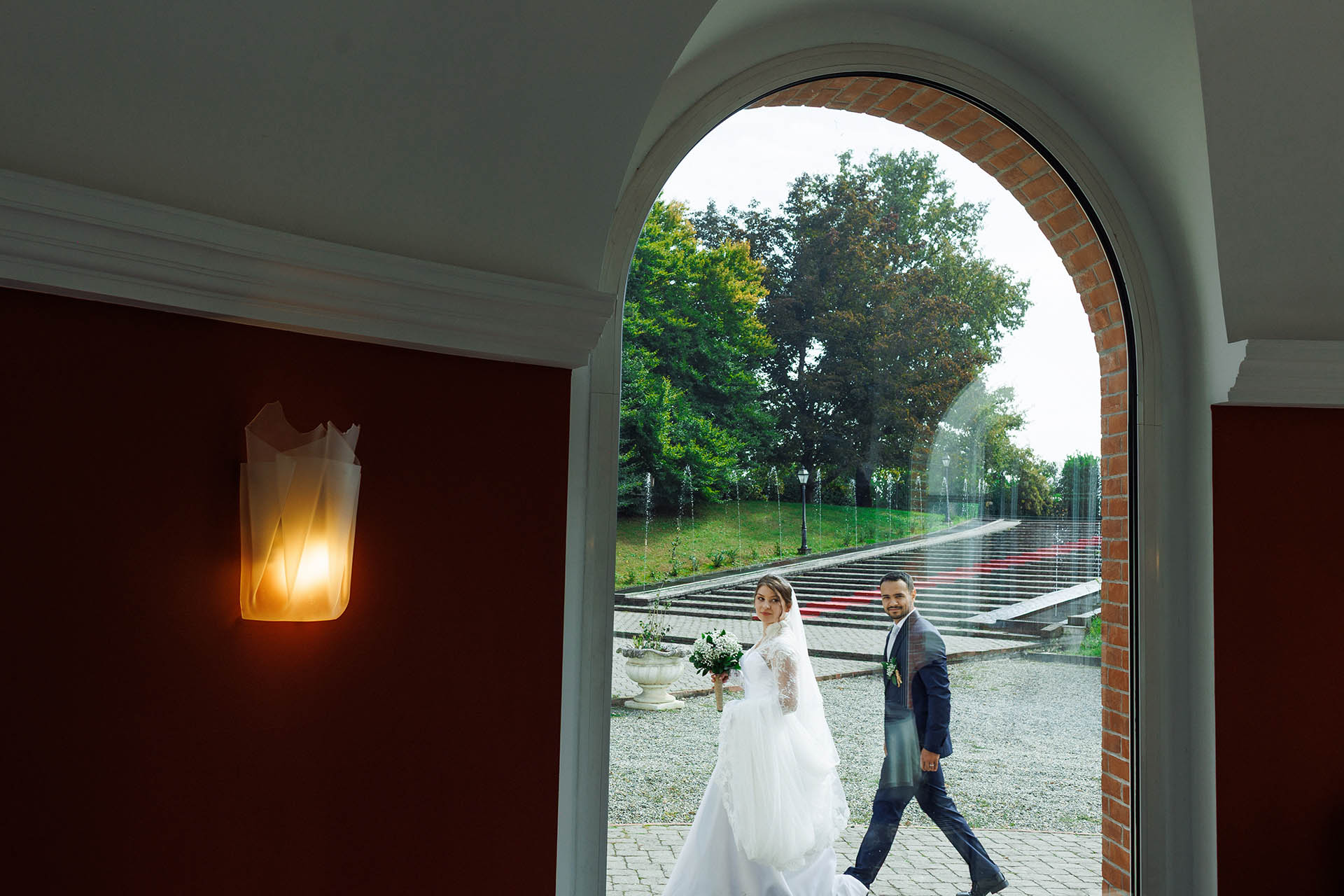
As a photographer, I look for this soft, diffused light wherever we are, whether it’s a covered terrace at a Lake Como villa, a colonnade in Florence, or under the arches of a Roman palazzo. Even the simplest window or doorway can become a beautiful frame, letting in just the right amount of natural light while protecting you from a downpour. If you are curious about how this looks in real weddings, you can see examples in our editorial wedding photography in Italy guide.
Creative Rainy Portraits
Rain opens up creative possibilities that sunshine rarely offers. Wet stone, glossy cobbles, and rain-soaked gardens have a depth and richness that make every image feel cinematic. I love using reflections in puddles, imagine the two of you, newly married, captured upside down in a mirror of water, with ripples echoing the movement of your dress. Raindrops on glass, whether it’s the window of a vintage car or your villa suite, create dreamy, layered portraits. Sometimes, the mist itself adds atmosphere, especially in the Dolomites or the rolling hills of Tuscany, where rain brings out the deep greens and softens the horizon.
Even when you need to stay under a portico or awning, there are ways to bring the outdoors in, framing you with the wet world in the background, or using the soft glow of cloudy light at the edges of a doorway. Rain adds emotion and story. When you embrace it, your wedding photos become uniquely yours: a memory of Italy, honest and beautiful, just as it happened.
Umbrellas, Dress Protection, and Staying Comfortable
What to Pack for a Rainy Wedding
Clear or White Umbrellas: Bring several sturdy, clear umbrellas, one for each couple and a few for the wedding party. Clear or white umbrellas are best for photos because they let light reach your faces and avoid any unwanted color on your skin or dress. If possible, opt for larger sizes to cover you and your partner comfortably.
Hand Towels and Microfiber Cloths: Pack a handful of small towels to dry hands, bouquets, or camera gear if needed. Microfiber cloths are perfect for quickly wiping raindrops from faces or lenses between shots.
Spare Shoes: Slip-on flats or waterproof boots are a lifesaver for moving between locations. You can switch back to your wedding shoes for indoor or covered portraits.
Waterproof Dress Wrap or Cape: A lightweight, transparent wrap protects your gown during walks. For more coverage, a simple plastic garment bag can be used when going between locations and removed just before photos.
Makeup and Hair Touch-Up Kit: Humidity and rain can test even the best styling products. Include blotting papers, travel-size hairspray, and extra pins or clips in your emergency kit.
Dress and Shoe Protection Tips
Moving Between Locations: Lay down a ground sheet or portable runner for outdoor walks, especially at villa gardens or city squares. An assistant or bridesmaid can help lift your dress to keep it out of puddles and mud.
Umbrella Coordination for the Wedding Party: Matching or neutral umbrellas for your attendants keep group photos tidy and timeless. Ask your florist to wrap bouquets with a protective layer to shield delicate flowers from the rain.
Keep Bouquets Dry: A simple cotton cloth can wrap stems during transport. Once under cover, remove the wrap and hand fresh bouquets to your wedding party.
Quick Touch-Ups: Plan short breaks for hair and makeup checks, especially if you move between outdoor and indoor spots. A trusted friend or stylist can help you stay photo-ready.
Your Photographer’s Role: At Image Studio, we always carry waterproof covers for our cameras and extra towels. We help coordinate umbrella handoffs, keep gear organized, and make sure everyone stays comfortable and in good spirits, even if the rain comes and goes. A calm, prepared photographer sets the tone and helps you focus on each other, not the forecast.
Lighting Plans for Rainy and Indoor Portraits
Indoor Lighting Options
When rain keeps you indoors or under cover, your photographer needs to adapt quickly. Natural window light is beautiful, but on a gloomy day, it may not be enough. This is where portable lighting tools come in: flash, reflectors, and LED panels all help create flattering portraits, even in dim rooms or historic interiors. The goal is to mimic natural daylight or add drama without making the scene look artificial.
Below is a table comparing the main options we use for rainy wedding photography in Italy. Each lighting method has strengths and limitations, depending on your venue and the mood you want for your images.
Lighting Type
Pros
Cons
Best For
Window Light
Soft, natural look. Flattering skin tones. No equipment setup. Works well for romantic, candid shots.
Limited direction and intensity. Depends on window size and weather. Not always available or predictable.
Bright or overcast days, villas, palazzos, rooms with large windows.
Bounced Flash
Adds fill light, mimics daylight. Flexible direction. Can brighten up dark corners.
Some venues restrict flash use. Can cause reflections on shiny surfaces. Needs a ceiling or wall to bounce from.
Dim churches, historic halls, evening receptions.
Continuous LED Panels
Constant light source. Easy to control intensity and color. No sudden bursts, so less distracting.
May require stands or assistants. Some bulbs can look harsh if not diffused. Can be heavy for moving between rooms.
Moody interiors, portraits after sunset, creative lighting effects.
Reflectors
Lightweight, no power needed. Softens shadows and adds gentle highlights. Good for quick setups.
Needs a helper to hold. Only works if some natural light is present.
Window-lit rooms, covered terraces, group portraits.
Working with Venue Rules
Many historic venues in Italy, especially in Venice, Florence, or Rome, have restrictions on flash, tripods, or bulky lighting setups. This is to protect artwork and interiors. Always check the venue’s photo policies in advance. Your photographer can help by scouting alternatives, such as using only natural light or small LEDs that do not disturb the surroundings. Sometimes, a permit is needed even for handheld video, as in places like Taormina’s Teatro Antico or Isola Bella, where entry for a small team is covered by the permit fee.
Allow extra time in your schedule for setting up lighting gear and moving between indoor spots. Rainy wedding photography in Italy often means working in tighter spaces and adapting quickly. We recommend planning at least 10 to 20 minutes at each main portrait location for setup and adjustments. This way, you get the best results without feeling rushed, and your photos will have the mood you want, whether soft, classic, or dramatic.
Coordinating with Your Photographer: Communication and Flexibility
Good communication with your photographer is the foundation for beautiful rainy wedding photography in Italy. When the weather is unpredictable, you need a clear plan and a flexible mindset. Here are steps that help you work together for the most natural, memorable images, even if the rain surprises you.
Timeline Flexibility
Share your priorities early. Let your photographer know which moments and locations matter most to you. If you have a must-have group portrait or a scenic spot you love, say so from the start.
Build in buffer time. Rain can slow things down. Add at least 10 to 20 minutes between main wedding day events or portrait locations. This gives you room to wait out a shower or move to a covered spot without feeling stressed. For more detail on structuring your day, see our guide on planning your wedding photoshoot timeline.
Stay open to change. If the weather shifts, your photographer may suggest swapping the order of portraits or moving a couple session indoors. Trust their experience, they know how to spot those magic breaks in the rain for a quick outdoor shot.
Permit and Logistics Checklist
Confirm permits for indoor or public locations. Many Italian sites, from historic gardens to city landmarks, require advance permission for professional photography, especially with lighting or tripods. Ask your photographer to help check which spots need permits and get them well ahead of time.
Discuss ZTL access and routes. If your wedding or portraits are in a city center with a limited-traffic zone, make sure you and your photographer talk about who can enter and where to park. Fines for crossing a ZTL without a permit go to whoever signed the rental agreement, so plan routes and transport in detail.
Review backup locations together. Walk through your options for covered terraces, hotel lobbies, or nearby museums that allow photos, so you are prepared if you need to switch quickly.
Finally, remember that the best images often come when you feel comfortable and trust your photographer to capture unexpected, joyful moments. A positive, collaborative approach means you will enjoy the day, even if the weather does not follow the script. If you are ready to plan rainy wedding photography in Italy that feels true to you, reach out to Image Studio for a conversation about your vision and next steps.
What if my wedding venue has no good indoor photo spots?
If your venue lacks suitable indoor spaces, work with your photographer to scout nearby alternatives. Options might include a local church, museum foyer, or even a hotel lobby, but keep in mind that many Italian locations require advance permission and sometimes a photo permit, especially in historic centers.
Do I need to pay extra for rainy day equipment or assistants?
Most professional photographers include basic rain protection for their gear as part of their service, but if your shoot requires extra lighting, assistants, or special permits for backup locations, these may add to your costs. Always clarify with your photographer what is included and discuss any potential extras in advance.
How do I keep my hair and makeup looking fresh in the rain?
Pack a touch-up kit with blotting papers, travel-size hairspray, and extra pins or clips. Schedule short breaks for quick checks, and if possible, have your stylist or a trusted friend on hand to help with adjustments between photos.
Can we still do a group photo outdoors if it’s raining heavily?
It is possible if you have enough clear or white umbrellas for everyone and a safe, non-slippery surface. However, for comfort and safety, it is often better to move group photos under a covered area or indoors until the rain eases.
What happens if we need to change locations last minute due to weather?
Flexibility is key. Build extra time into your schedule for moving between spots, and communicate with your photographer about backup locations in advance. In Italy, last-minute changes may also require quick coordination for permits or transport, so having a plan B ready will keep the day running smoothly.