Venice Wedding Photography Tips: How to Plan Your Photoshoot
November 22, 2026
A photographer-led guide to organizing your Venice wedding photoshoot: how to choose the best locations, time your session, and capture authentic, memorable images.
If you picture your wedding photos in Venice, you probably imagine empty bridges, golden light on the Grand Canal, and the quiet magic of St. Mark’s Square at sunrise. The truth is, those moments do not happen by chance. Venice is breathtaking, but it is also busy, with crowds and changing light that can make or break your portraits. As someone who has photographed couples in every corner of Italy, I know that Venice will reward you if you plan each step with care.
This article gives you a practical, photographer’s-eye view of how to organize your Venice wedding photoshoot. You will find real-world Venice wedding photography tips on timing, locations, logistics, and costs, all grounded in experience and up-to-date facts. Whether you are planning a grand wedding or a quiet elopement, you will learn how to make the most of Venice’s beauty and avoid its pitfalls. The goal: photos that capture both the city and your story, with none of the stress.
1. Choosing the Right Time: Light and Crowds in Venice
When you picture your wedding in Venice, you probably imagine quiet canals, morning mist, and golden light on ancient stones. The reality is that timing shapes every image. Venice is one of the world’s busiest cities, and light changes quickly here. To capture the most intimate and beautiful portraits, you need to plan your sessions around both the sun and the crowds.
Best Months for Venice Wedding Photography
Venice transforms with the seasons. If you want the city to feel like yours, consider planning your wedding photoshoot between October and April. These months offer a softer, diffused light that flatters skin and creates a painterly look. Crowds are much thinner, especially after rain, when the canals reflect the palazzi and sky. Early spring and late autumn mornings, in particular, are peaceful. During summer, sunrise comes very early, and by mid-morning, St. Mark’s Square and the bridges are packed. In winter, the city feels quieter and more intimate, with a blue-toned morning light that works beautifully for portraits.
Timing Your Session: Morning vs. Evening
For truly iconic Venice wedding portraits, early morning is your best friend. If you want St. Mark’s Square to yourself, your photographer will likely suggest starting about 20 to 30 minutes before sunrise. In June, this means a 5:15 AM start; in December, you can sleep in a little, with daylight breaking around 7:30 AM. You’ll have a precious window of about 45 to 60 minutes before the city wakes up and the crowds arrive. This is also when the light is soft and even, with the Grand Canal and bridges empty except for you.
Evening sessions are also possible, especially after 7 PM when gondola rides become more private and the golden hour light returns. However, Venice never really empties in the evening the way it does at dawn. That is why many couples choose to split their photoshoot into short, focused “pockets” of 5 to 10 minutes in key spots when the light is perfect and the crowds are low. This approach lets you enjoy the experience and keeps every frame natural and intimate, something we always recommend at Image Studio. The right timing unlocks the city’s quiet magic and gives you portraits that feel truly yours.
2. Iconic and Hidden Locations: Making Venice Your Own
Classic Venice Wedding Photo Spots
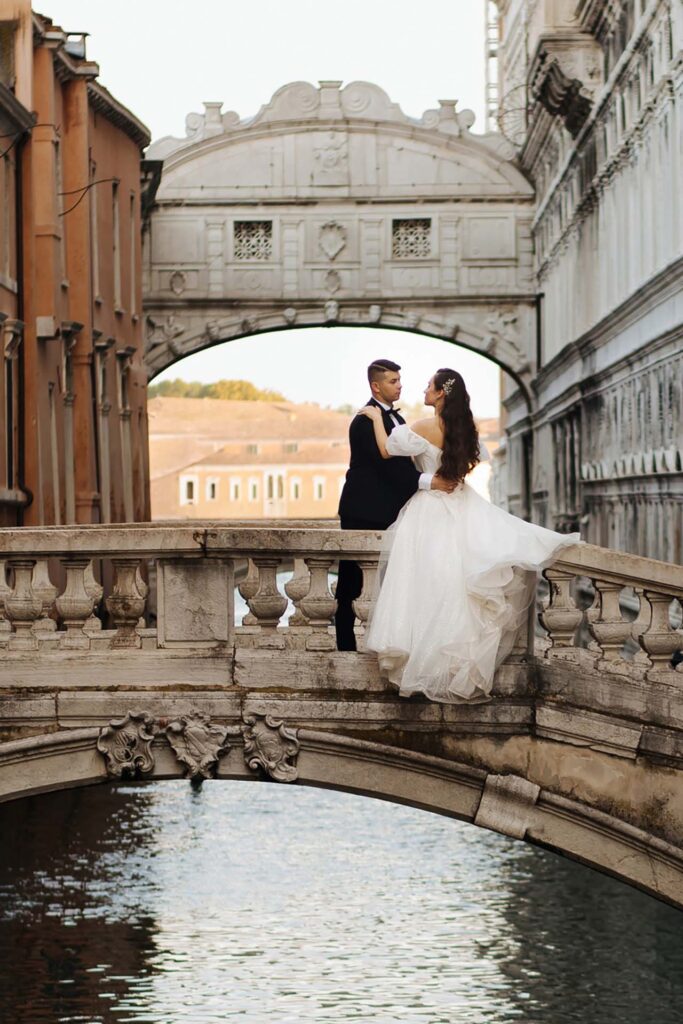
Venice is famous for its postcard views, and your wedding photos will feel timeless with the right backdrop. Most couples dream of portraits in St. Mark’s Square, with its grand basilica and the glow of sunrise brushing the stones. The square is nearly empty just after dawn, so you can capture that sense of intimacy without the usual crowds. The Rialto Bridge is another classic, arching over the Grand Canal with gondolas passing below. This spot is at its best early in the morning or late in the evening, before the day’s visitors arrive. The Grand Canal itself, seen from a water taxi or a gondola, gives your photos that unmistakable Venetian character.
These iconic places are popular for a reason, but they do fill up quickly. If you want to include them, plan for very short, focused sessions of 5 to 10 minutes in each location. Move efficiently, and be ready to take advantage of a few quiet moments when the light and the scene are just right.
Off-the-Beaten-Path Locations
Venice is built for wandering, and some of the best wedding photos happen in its quieter corners. Step away from the main squares and you will find narrow alleys, tiny bridges, and hidden courtyards where locals live their daily lives. These places offer a sense of discovery and authenticity. For example, the Dorsoduro and Cannaregio districts are less crowded but still full of beautiful canals and colorful facades. Fondamenta della Misericordia, with its peaceful waterway and local cafes, is a favorite for unscripted moments.
Balancing iconic and personal locations is key. Many couples choose to start with classic backdrops, then slip away to a quieter spot that holds meaning for them. If you are planning a wedding photoshoot timeline, consider mapping out a route that weaves both kinds of locations together. Venice is compact, but moving between sites can take longer than you expect, especially on foot or by gondola.
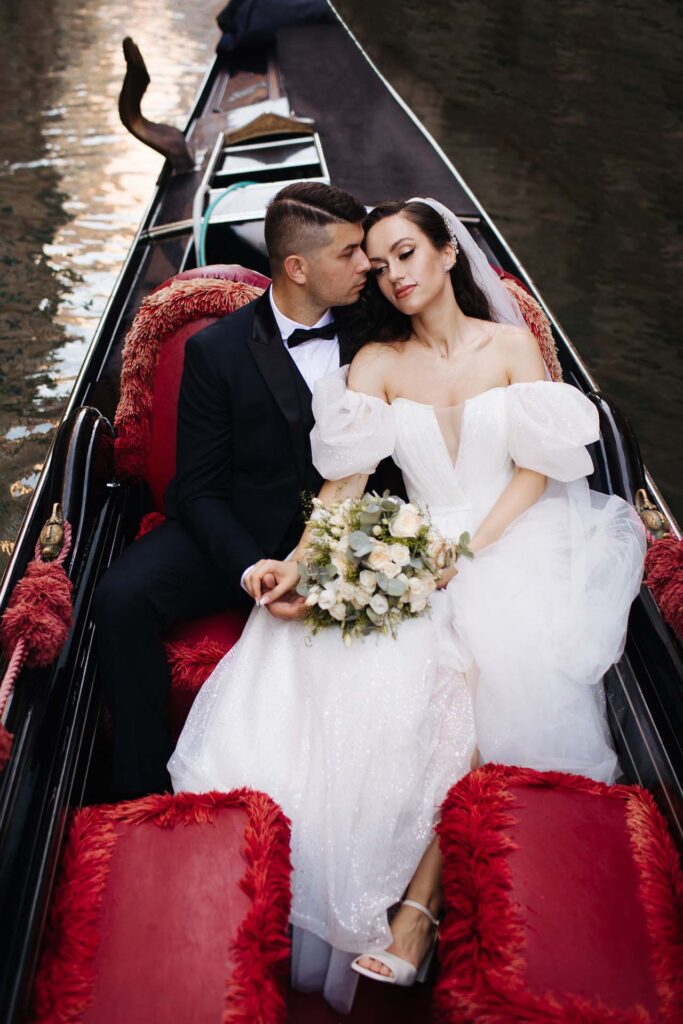
Speaking of gondolas, they are a romantic and practical way to reach hidden spots along the canals. Official city rates make planning simple, and after 7 PM gondola rides feel especially private. Just remember: for informal couple portraits in public spaces, you usually do not need a permit. Commercial shoots with extra gear or a large team may require city approval, and private venues always need the owner’s permission. Drones are not allowed, and even sitting on bridges or steps can lead to a fine, so always check the latest rules and work closely with your photographer for a smooth experience.
3. Logistics and Legalities: What You Need to Know
Gondola Photos: How It Works
Book at Official Rates: Gondola rides are set by the city, so you can plan your budget easily. Expect to pay €90 for 30 minutes during the day or €110 for 35 minutes after 7 PM. After sunset, the canals empty and you get a more intimate backdrop.
Plan Your Route: Let your gondolier and photographer know if you want to pass specific bridges or quieter canals. The best light is often just after sunrise or before sunset, which also helps avoid heavy boat traffic.
Keep It Simple: Gondolas have space for you, your partner, and a photographer with a small kit. Extra crew or bulky equipment is not practical on board.
Allow for Boarding Time: Stepping in and out of a gondola in wedding clothes takes a few extra minutes. Schedule accordingly, especially if you have multiple locations planned.
Permits and City Rules
Public Spaces: For informal couple portraits in public areas, you generally do not need a permit. However, the City of Venice asks photographers to notify them at least ten days in advance for small-scale sessions.
Commercial Shoots: If your shoot involves a tripod, lighting stands, or a larger team, you may need formal authorization from the city. Your photographer should handle these requests if needed.
Drones Are Banned: Drone use is not permitted anywhere in Venice. Leave aerial shots for other destinations.
Mind the Fines: Sitting on bridges or steps, blocking passageways, or setting up equipment in the wrong place can result in fines. Always follow your photographer’s guidance on where to stand or pose.
Private Venues: If you want photos inside a palazzo, hotel, or museum, you must get the owner’s permission. This is usually a straightforward process but may require extra time or a fee.
Work With an Experienced Photographer: Teams like Image Studio understand Venice’s rules and rhythms. They will communicate with authorities and venues, helping you focus on the moment instead of logistics.
4. Budget and Packages: What Venice Wedding Photography Costs
Venice Wedding Photography Price Table
Type of Coverage
Typical Price Range
What’s Included
Elopement Session (2-4 hours)
€1,500 to €4,000
Private couple or small group, 100-300 edited images, online gallery, travel within Venice
Full-Day Wedding (8-12 hours)
€2,500 to €7,500
Coverage from preparations to party, 400-800 edited images, two photographers, online gallery, USB delivery
Luxury/Editorial Packages
€8,000 to €20,000
Multi-day events, editorial portraits, albums, fine art prints, custom extras, expanded team
Hourly Rate (minimum 2 hours)
€220 to €345 per hour
20-40 edited images per hour, digital delivery, basic post-production
Mini Session (30 minutes)
~€260
20 edited images, short walking route, digital gallery
Compared to other Italian cities, Venice is at the higher end for photography because of logistics, early-morning or late-evening requirements, and the unique settings. Elopement packages here may cost more than in Florence or Rome, but the backdrop is unlike anywhere else. If you want gondola portraits, remember to budget €90 to €110 for the ride (set by the city, not the photographer).
How to Choose the Right Package
First, decide what moments matter most. If you dream of iconic sunrise portraits, book a package that allows for early starts. Most couples find good value in a half-day or full-day package, which covers both intimate moments and city wandering. Ask your photographer what their packages include: the number of edited images, delivery time, and whether extras like albums or second shooters are available.
If you are on a budget, consider a shorter session on a weekday from October to April, when Venice is quieter. Always clarify what is included, so you can focus on the experience rather than the clock. A studio like Image Studio can help you balance coverage and cost, guiding you to the package that fits your story and your budget.
5. Working With Your Photographer: Planning for Authentic Images
Creating Your Shot List
Start by sharing your vision and priorities with your photographer. What moments matter most to you? Is there a spot in Venice that means something to your story? Make a list of must-have shots, perhaps a quiet portrait on a bridge, an embrace in St. Mark’s Square at sunrise, or a candid gondola ride. A clear shot list helps your photographer understand what you love, but keep it flexible. Venice is full of surprises, mist on the canals, a sudden shaft of sunlight, or a quiet alley that calls for a spontaneous photo. Flexibility allows your photographer to catch those unexpected, magical moments. For help creating a practical list, you can read more about making a wedding photography shot list.
Tips for a Relaxed, Natural Session
Plan your timing with both your planner and photographer. Agree in advance on the key moments for portraits, and schedule them in short, calm pockets of 5 to 10 minutes. Early morning and late evening are ideal for natural light and quieter scenes. Let your photographer know if there are group photos or family combinations you want, but avoid overloading the list. The best images often happen between the planned shots, when you are simply yourselves.
Venice weather can change quickly. Pack an umbrella or shawl, and trust your photographer to adapt, reflections after rain can be stunning. Crowds are a factor in Venice, so your photographer may suggest shifting locations or waiting a few minutes for a clear frame. If something unexpected happens, like a sudden burst of tourists or a local parade, embrace it. These moments can become some of your favorite images.
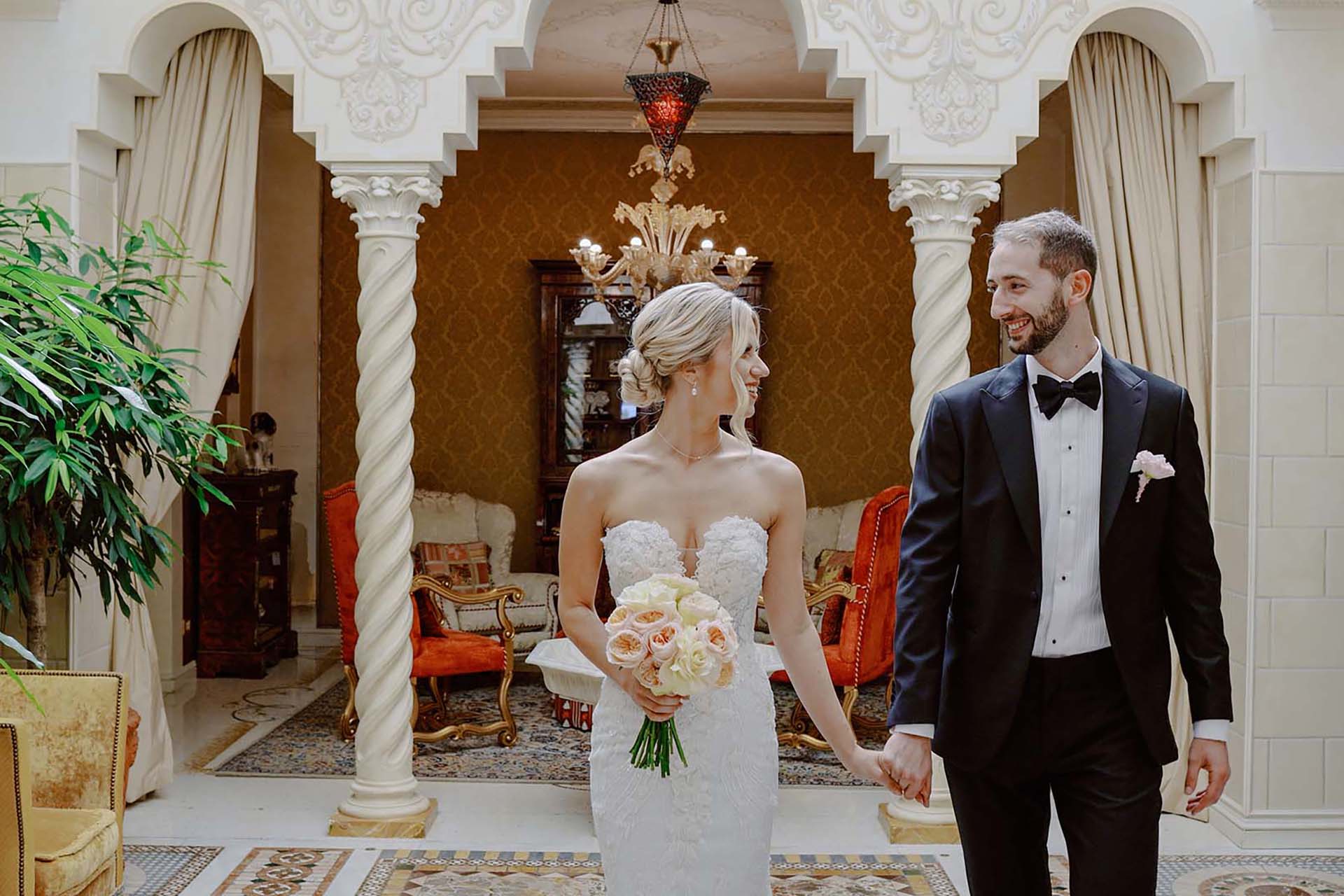
Local experience is priceless in Venice. A photographer who knows the city will guide you through hidden corners and navigate the legal details, like where permits are needed or how to avoid common fines. This knowledge helps you relax and enjoy the experience, knowing the logistics are in good hands.
If you want to make the most of your photoshoot, talk openly with your photographer and ask for their insight. If you are still searching for the right fit, or want advice on planning and budgeting, you can reach out to Image Studio for guidance. Your next step: gather your ideas, decide what feels authentic to you, and start a conversation that turns your vision into real, lasting images.
For informal couple portraits in public spaces, you usually do not need a permit, but the City of Venice asks photographers to notify them at least ten days in advance. If your shoot involves a large team, tripods, or extra lighting, formal authorization may be required.
Can we have wedding photos taken inside Venice churches or palazzos?
Yes, but you must get permission from the owner or institution before photographing inside any private venue, such as a church, palazzo, hotel, or museum. This process is usually straightforward but may require extra time or a fee.
What happens if it rains on our photoshoot day?
Venice is beautiful in the rain, with reflections on the canals and empty streets. Your photographer will adapt the plan, and sometimes these conditions create unique and memorable images, so bring an umbrella or shawl just in case.
How do we include family or group photos in Venice’s busy spots?
Plan group photos for early morning or late evening when crowds are lowest, and keep each session short, about 5 to 10 minutes. Your photographer will help organize everyone quickly and suggest quieter spots if needed.
Are there restrictions on wedding attire in public spaces in Venice?
There are no specific restrictions on wedding attire in public spaces, but you should avoid blocking passageways, sitting on bridges or steps, and always follow local rules to prevent fines. Your photographer will guide you on where it is safe and allowed to pose.