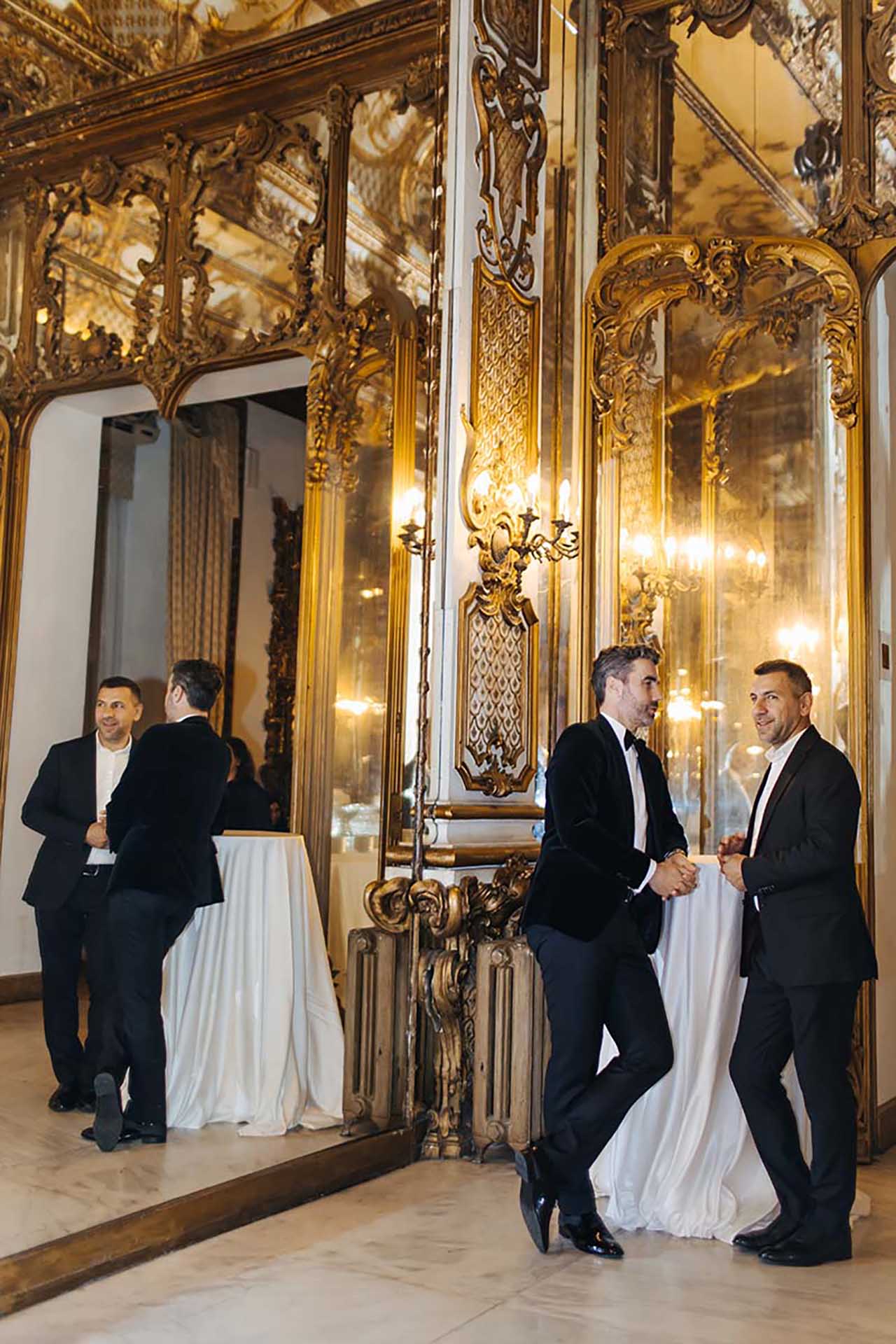
Discover how professional event videography services combine cinematic storytelling, expert production, and platform-ready deliverables to capture weddings, corporate events, luxury celebrations, and destination experiences with lasting impact.
You’re likely weighing two competing needs right now. You want a film that still feels moving years from now, and you also need footage that works immediately for guests, press, or social channels. Most event videography services claim they can do both. Fewer teams build their process so you can enjoy the event while they do it. That distinction matters more than is often assumed. A beautiful trailer means very little if the crew interrupts the rhythm of the day, misses key voices in the room, or delivers one polished film with nothing usable for digital distribution. The right team protects the atmosphere twice. First on the day itself, by working with quiet control. Then after the event, by turning what happened into assets with a clear purpose.
Table of Contents
Beyond Recording Capturing an Event’s Atmosphere
The difference between coverage and authorship
What clients usually want, even if they don’t phrase it that way
What Defines Cinematic Event Videography
Story before sequence
Light sound and movement
Understanding Coverage Types and Final Deliverables
Different events need different coverage logic
What each deliverable is actually for
The Production Workflow from Vision to Final Film
Creative direction before the event
On-site execution and post-production
How to Choose Your Event Videography Partner
What to evaluate beyond the portfolio
Questions that reveal how a team really works
The Art of Destination Videography in Italy
Why Italy changes the production equation
What experienced destination coverage looks like
Your Questions Answered and Next Steps
Beyond Recording Capturing an Event’s Atmosphere
A milestone event disappears while it’s happening. The speech lands, a parent exhales before a toast, guests turn toward a doorway, the room shifts when music starts. None of that can be restaged with the same energy. That’s why the difference between simple recording and considered filmmaking is so important. A basic operator documents sequence. A director-led team captures emotional texture. That means they’re not only asking what happened at 7:40 pm, but why that moment mattered, who was affected, and what visual language should carry that feeling into the final film. The market reflects that shift in expectations. The global event photography and videography market was estimated at USD 4,871 million in 2025 and is projected to grow at a CAGR of 8.9%, driven by demand for higher-quality cinematic storytelling in both personal and commercial settings, according to Archive Market Research on event photography and videography services.
The difference between coverage and authorship
At a wedding, documentation might mean filming the ceremony from the aisle and the speeches from the back of the room. Useful, yes. Memorable, not always. At a brand launch, documentation might mean a clean record of the keynote and some crowd shots. But if the event was designed to express identity, taste, and momentum, a simple recap won’t carry that intent forward.
Practical rule: If a videographer talks only about cameras and coverage hours, you’re hearing about recording. If they talk about pacing, atmosphere, and how the event should feel on screen, you’re hearing from someone thinking like a filmmaker.
For clients comparing vendors, it helps to review teams that understand both technical delivery and live-event logistics. For example, London Audio Visual Hire video services offer a useful reference point for how production support and event capture can intersect when the brief extends beyond a single camera package.
What clients usually want, even if they don’t phrase it that way
Most clients don’t ask for “coverage.” They ask for reassurance. They want to know the room will look as refined on film as it did in person. They want vows, speeches, reactions, and atmosphere preserved without feeling observed every second. They want the final film to feel intentional, not assembled. That’s what strong event videography services deliver. Not just footage. A version of the day that still holds its pulse.
What Defines Cinematic Event Videography
“Cinematic” gets used too loosely. In practice, it isn’t slow motion, drone shots, or a fashionable color grade. It’s a way of shaping real moments so the finished film has structure, beauty, and emotional pull.
Story before sequence
A cinematic film does more than move from arrival to dinner to dancing. It finds a thread. That thread might be anticipation, reunion, legacy, elegance, or transformation. For couples, that often means the film is built around emotional progression rather than the clock. For brands, it may mean the edit follows product reveal, guest reaction, and the social energy around the event. A useful companion read is this guide to cinematic wedding videography for couples, which explains how visual storytelling shifts when the goal is feeling rather than simple chronology. A team that understands narrative will ask better questions before the event:
What matters most emotionally: The vows, the parent speeches, the private in-between moments, or the collective energy of the room.
What must the film communicate: Intimacy, grandeur, brand confidence, or cultural detail.
Who will watch it later: Family, clients, internal stakeholders, press, or a social audience seeing the event for the first time online.
Light sound and movement
The second layer is visual and sonic control. In this aspect, technical choices stop being gear talk and start affecting the viewer’s experience. Professional event videography depends on cameras that can perform in difficult light without turning the room harsh or flat. High-sensitivity cameras with large sensors can reduce visual noise by 30 to 40 percent in low-light environments, and specialized microphones can suppress ambient noise by up to 25 dB, which helps preserve the clarity of vows or speeches, according to Sketchdeck’s overview of corporate event videography equipment and hiring considerations. That matters because luxury events rarely look their best under aggressive lighting. Candlelight dinners, historic interiors, evening receptions, and fashion-led launches all rely on atmosphere. A skilled crew preserves that atmosphere instead of flattening it. Here’s what usually separates cinematic coverage from ordinary coverage:
Intentional lighting decisions: The team respects the lighting design already in the room and supplements only when needed.
Immersive audio capture: Clean speech, room tone, applause, music transitions, and quiet reactions all shape memory.
Controlled movement: Gimbals, handheld work, locked-off frames, and multi-camera positioning each have a place. The wrong movement style can make elegant events feel frantic.
Editorial composition: Framing details, negative space, architecture, styling, and reaction shots turns footage into a visual language.
Good cinematography doesn’t announce itself on the day. You notice it later, when the film feels calm, precise, and emotionally exact.
Clients often think “cinematic” means a certain look. It’s more accurate to say it means disciplined choices. Every lens, mic position, and camera move serves the same goal. Make the event feel immersive without making the production feel intrusive.
Understanding Coverage Types and Final Deliverables
A package description doesn’t tell you much unless you know how the deliverables will be used. Many event videography services become vague at this stage. They promise “full coverage” and “edited film,” but leave out the essential question. What will you receive, in what formats, and for which audience?
Different events need different coverage logic
A destination wedding often needs multi-day thinking. Welcome dinner, rehearsal, ceremony, portrait time, reception, and farewell brunch all carry a different tone. A corporate summit needs something else. Main stage coverage, guest interviews, sponsor moments, room atmosphere, and fast social cut-downs are usually more important than a long feature edit. The crew structure should follow that reality. One camera operator can record. A coordinated team can separate priorities. One person stays close to key people, another covers environment and reactions, and another secures clean audio or social-first material. There’s also a real cost and scope range in the market. A standard event video package with multi-camera setup, eight-hour coverage, and highlight reel editing typically costs $1,200 to $1,500, while a premium tier with full-day shoot, professional editing, HD output, and multiple crew can exceed $8,000, according to Peak Bound Studio’s breakdown of typical event video packages. The same source notes that skipping pre-event scouting, detailed shot lists, and permissions increases the risk of missed key moments. That last point matters more than price. Clients usually regret under-planning before they regret adding another crew member.
What each deliverable is actually for
The cleanest way to evaluate event videography services is to separate memory assets from distribution assets.
Deliverable
Typical Length
Primary Purpose
Best For
Highlight Film
Short-form
Emotional summary with strong pacing and shareability
The most common failure point today is the gap between cinematic editing and digital usability. Clients want a refined film, but they also need vertical clips, short cut-downs, and fast delivery while the event still feels current. That’s the platform-first editing paradox. 74% of videographers fail to deliver platform-optimized cuts such as 9:16 edits within 48 hours, while studios using AI-powered workflows can achieve 90% faster turnarounds, according to the verified data provided for this topic. In practice, that means many clients end up repurposing raw footage themselves when the social window is already closing.
If a studio can’t describe its dual-output workflow, assume the “social edits” are an afterthought.
A strong delivery structure usually looks like this:
A core cinematic film: Built for longevity, not trends.
Fast social selects: Trimmed for vertical framing, pace, and immediate sharing.
Clean documentary edits: Full speeches, ceremony sections, or presentations.
Clear file organization: So planners, social teams, or families can use what they receive.
This is one area where a modern post workflow matters. Teams such as Image Studio integrate film, photo, and platform-ready delivery in the same production ecosystem, which is useful when the brief includes both an enduring film and immediate digital assets.
The Production Workflow from Vision to Final Film
The best event films feel effortless because the process behind them is highly structured. Clients should never have to guess what happens between the first call and final delivery.
Creative direction before the event
A serious workflow starts with alignment, not equipment. Before any shot list is built, the team needs to understand the event’s tone, priorities, schedule pressure points, and decision-makers. That early phase usually includes:
Discovery conversations about style, references, venue character, and the intended audience for the film.
Pre-production planning that maps timing, access, lighting conditions, audio needs, family or VIP dynamics, and vendor coordination.
Location review so the crew knows where the event opens visually, where sound will be strongest or weakest, and where movement can stay invisible.
One of the clearest ways to judge a videographer is to ask how they prepare before the event. If the answer is mostly about showing up early and filming what happens, the process is too thin.
The film is shaped long before the first frame is recorded. Planning decides whether the crew is reacting all day or directing with calm intent.
For clients who want a deeper sense of what happens after filming ends, this article on the role of post-production in wedding video gives a useful breakdown of how editing, sound, and pacing create the final emotional effect.
On-site execution and post-production
On the day itself, good crews are visible when needed and nearly invisible when it matters. They know when to step forward for direction and when to disappear into the room. That takes team choreography. One person may lead key interactions. Another stays ahead of timeline changes. Audio is monitored continuously, not treated as a backup concern. If the planner adjusts the schedule or weather shifts the location, the crew adapts without passing stress back to the client. Post-production is where separate pieces become a film. The sequence usually includes:
Ingest and sorting: Organizing footage, audio, and timeline notes.
Story edit: Selecting moments that carry narrative weight rather than assembling everything evenly.
Color grading: Unifying camera sources and refining mood.
Sound design and mix: Balancing dialogue, music, room tone, and transitions.
Review and delivery: Sharing cuts, gathering feedback, and exporting in the required formats.
What works is clarity. One point of contact, one delivery roadmap, and a realistic schedule. What doesn’t work is ambiguity. Vague promises about “a final video” usually lead to mismatched expectations.
How to Choose Your Event Videography Partner
A polished showreel can hide a weak process. The right videography partner isn’t just someone whose work looks expensive. It’s a team that can protect the event’s rhythm, communicate with precision, and deliver footage in forms you’ll use.
What to evaluate beyond the portfolio
The least discussed hiring factor is often the most important. Client cognitive load. Industry survey data cited in the verified brief shows 68% of clients report anxiety about missing moments due to poor communication, and that’s exactly what happens when a vendor requires constant supervision instead of running a clear hand-off process. For luxury celebrations and destination events, a team-led workflow matters because clients can’t also act as field producers. Look for these signals:
Process maturity: They can explain who leads communication, how the timeline is reviewed, and who handles decisions on the day.
Stylistic consistency: Their portfolio feels coherent across different venues and lighting conditions, not dependent on one perfect shoot.
Platform awareness: They understand both long-form storytelling and short-form editorial needs.
Inter-vendor behavior: They work smoothly with planners, photographers, venues, and entertainment teams.
Calm under pressure: Their language is specific and settled, not evasive.
Here’s a useful benchmark video on what clients should consider when reviewing vendors and expectations during production:
A strong vendor removes decisions from your plate. A weak one creates new ones all day.
If you’re planning abroad, local directories can help you compare regional specialists and styles before shortlisting. For instance, couples organizing an island celebration can use curated resources to find wedding videographers Mauritius and evaluate how destination vendors present their process, not just their highlights.
Questions that reveal how a team really works
Ask questions that force operational clarity.
Who is my point of contact on the event day? You want one answer, not a vague team reference.
How do you coordinate with the photographer? Good teams avoid competing for the same moment.
What happens if the timeline changes? Experienced crews already have a method for adapting.
How do you handle audio for vows, speeches, or presentations? If the answer sounds improvised, keep looking.
What exactly do you deliver for social use? Ask about vertical framing, turnaround, and file structure.
How do you make sure I’m not managing shots on the day? This question often tells you everything.
What works is a vendor who can answer directly. What doesn’t work is charm without operational detail.
The Art of Destination Videography in Italy
Italy raises the standard and the complexity at the same time. The visual reward is obvious. Historic villas, lake light, Roman architecture, coastal evenings, candlelit courtyards. What’s less obvious is how much coordination it takes to film those settings properly without slowing the event down.
Why Italy changes the production equation
A destination event in Italy often spans several days and multiple environments. A welcome dinner on a terrace has different sound demands than a ceremony inside a historic property. A portrait session in a cobblestone street calls for different movement and crowd management than a reception under chandeliers. There are also practical realities clients don’t always see at first:
Venue restrictions: Historic sites and private estates may limit access, timing, or placement.
Travel coordination: International planners, vendors, and families rarely move with perfect timing.
Light transitions: Summer ceremonies often begin in harsh daylight and end in low evening light.
Regional texture: The location shouldn’t just sit behind the event. It should become part of the film’s identity.
What experienced destination coverage looks like
The strongest destination films don’t reduce Italy to postcard imagery. They fold place into story. Lake reflections before guests arrive. Church bells in the sound bed. A narrow street that becomes a quiet reset between public moments. Linen moving in coastal wind. These details give the film specificity. That’s why locally informed production matters. Teams working across the country understand how Rome differs from Lake Como, how Milan differs from Puglia, and how pacing changes when an event is spread across multiple days. For couples exploring that kind of production approach, this guide to a luxury wedding film in Italy offers a detailed look at the creative and logistical expectations behind destination coverage. A destination film should feel rooted, not generic. Italy gives you the texture. An experienced crew knows how to translate it without turning the event into a travel commercial.
Your Questions Answered and Next Steps
How far in advance should you book event videography services? As early as you can once the date and venue are firm. The best teams don’t just reserve a day. They reserve planning time, crew availability, and post-production capacity. How should a videography team work alongside a photographer? With a shared plan. Good teams coordinate positions, respect each other’s lines of sight, and know when one medium takes priority. The event should never feel like two separate productions happening at once. What role should AI play in the process? A useful one, but a limited one. AI can accelerate sorting, selects, captioning, and platform-specific cut preparation. It shouldn’t replace editorial judgment, pacing, or human sensitivity to performance and emotion. What should you ask for in the proposal? Ask for coverage scope, crew structure, audio approach, revision terms, and a clear list of deliverables by format. If social content matters, ask for that in writing rather than assuming it’s included. The right team gives you more than a beautiful film. They give you room to be present, confidence that the important moments won’t slip away, and final assets that still work long after the event ends.
If you’re planning an event that deserves both cinematic storytelling and usable multi-platform delivery, Image Studio is one option to consider for film, photography, and post-production across Italy and international destinations. A consultation is the right next step when you want to define coverage, clarify deliverables, and build a production approach around how the event should feel, not just how it should look.